
AI Video Insertion Technology 2026: Future of Content
AI video insertion technology enables content creators to seamlessly place themselves into existing video footage using generative artificial intelligence, transforming how personalized and collaborative content is produced. In 2026, this technology has matured to the point where platforms like YouTube allow users to insert themselves into other people’s videos with just a few clicks, while companies like Keek Social are patenting AI-driven ad insertion methods.
AI video insertion technology is a set of generative AI tools that let a user superimpose a realistic, animated version of themselves into a video scene without manual editing. It relies on deep learning models that analyze the target video’s lighting, perspective, and motion to produce a seamless blend, enabling everything from cameo appearances to personalized advertisements.
- ✓ YouTube launched a feature in May 2026 allowing creators to insert themselves into any video using AI, as reported by Spherical Insights and afrotech.com.
- ✓ Keek Social Inc. announced a patent-pending AI ad insertion technology in December 2025, promising targeted, personalized video ads.
- ✓ Google’s Veo 3.1, released in October 2025, introduced advanced video generation and insertion capabilities within its Flow platform.
- ✓ OpenAI entered the video generation space with a dedicated app in September 2025, challenging TikTok and YouTube with AI-powered content creation.
- ✓ The technology is expected to reshape influencer marketing, education, and corporate training by reducing production costs and enabling hyper‑personalization.
What Is AI Video Insertion Technology?
At its core, ai video insertion technology allows a person to digitally place themselves into a pre‑recorded video as if they had been there during filming. The system uses computer vision and generative adversarial networks (GANs) to match skin tone, body posture, facial expressions, and environmental lighting, delivering a realistic composite. Unlike traditional green‑screen or rotoscoping, no manual masking or complex editing software is required.
This technology has evolved rapidly over the past two years. According to Google’s official blog (October 2025), their Veo 3.1 model now supports “zero‑shot insertion” — meaning a creator can upload a short selfie video and the AI automatically places that person into a chosen scene, adjusting for camera movement and occlusions. The same AI powering these insertions also underpins Google’s Flow platform, which streamlines the entire content creation pipeline.
Industry analysts at Spherical Insights noted in May 2026 that the global market for AI‑powered video personalization is projected to exceed $12 billion by 2028, with insertion technology being the fastest‑growing segment. The primary drivers are the demand for authentic, relatable content and the desire to repurpose existing high‑quality footage without reshooting.
How to Use AI to Insert Yourself Into Videos
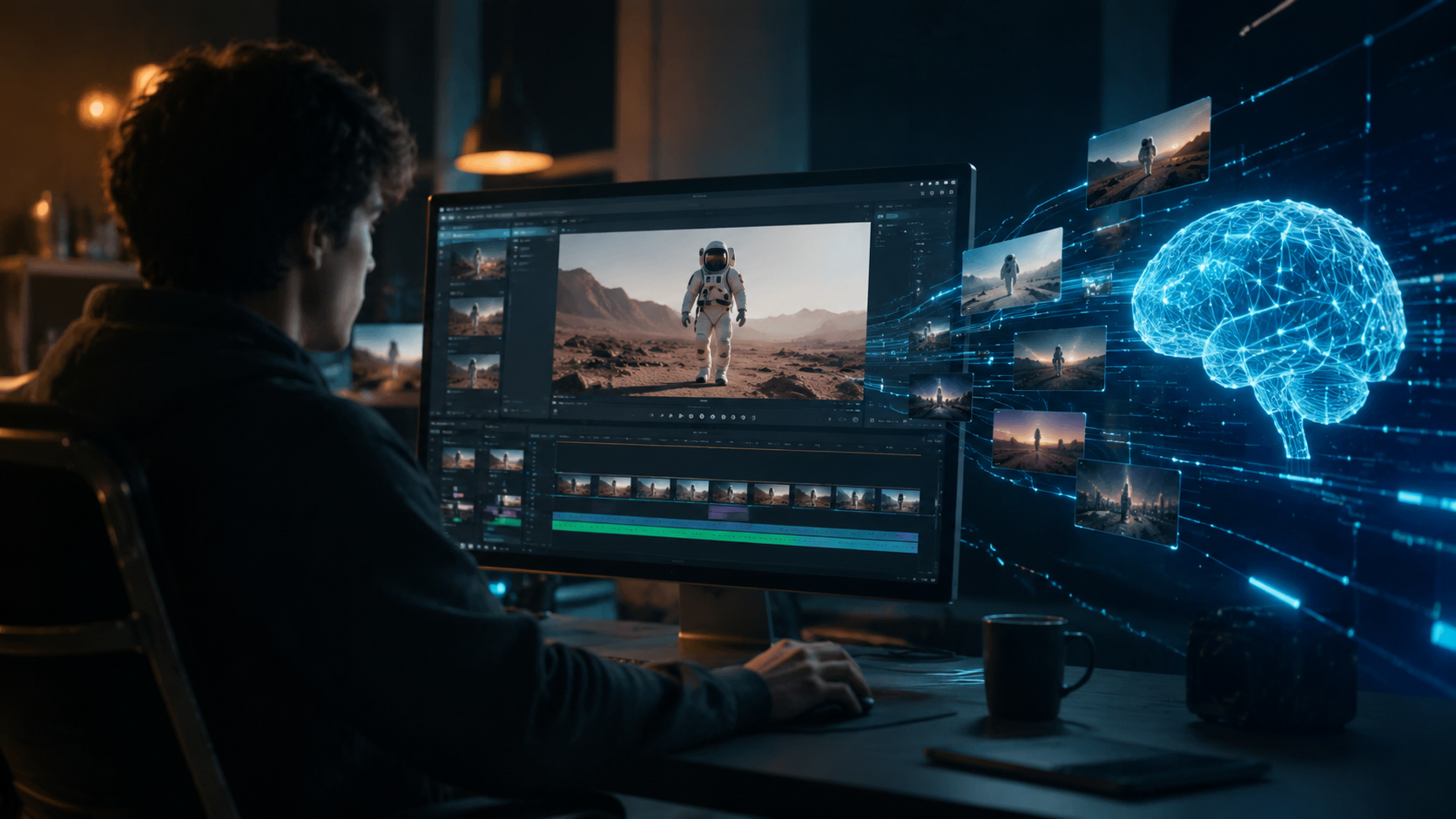
YouTube’s new feature — rolled out to worldwide users in June 2026 — makes the process remarkably simple. Here is a step‑by‑step guide based on the platform’s official workflow and reports from afrotech.com and MSN:
- Select a source video. Choose any public or licensed video on YouTube you want to appear in. This could be a popular vlog, a music video, or an educational tutorial.
- Record your “insertion clip.” Using your device’s camera, record a short video (10–30 seconds) of yourself from the same angle or pose you want to appear in the target video. The AI will analyze your posture and facial features.
- Upload the clip to YouTube’s AI Insertion Tool. This tool is accessible via the YouTube Studio dashboard under “Edit” > “AI Insertion.” The system processes your clip and identifies the optimal placement point.
- Choose placement and timing. A preview timeline shows the target video; you can drag and drop your inserted self to a specific second or let the AI recommend a spot based on where a cut‑away or “cameo” would look natural.
- Adjust appearance. Fine‑tune your size, position, and even your clothing color via text prompts (e.g., “make my shirt blue”). The AI re‑renders the scene to match lighting and shadows.
- Generate and export. Click “Insert” to let the AI render the final video. Once processing is complete (usually within a minute), you can preview, add captions, or publish directly.
This process works both for inserting yourself into others’ videos and for allowing other creators to insert themselves into your content — provided you grant permission in your YouTube settings.
Major Developments in 2025–2026
YouTube’s Creator Insertion Feature
According to a report by Spherical Insights (May 24, 2026), YouTube officially enabled creators to use AI to insert themselves into other people’s videos. The feature, initially teased in a limited beta, became available to all worldwide users by June 2, 2026 — as confirmed by MSN. This move dramatically lowers the barrier for collaborations, allowing a small creator to appear alongside a major influencer without needing to coordinate schedules or travel.
Keek Social’s AI Ad Insertion
Keek Social Inc. announced its patent‑pending ai video insertion technology on December 16, 2025, according to a press release on TMX Newsfile. The technology focuses on dynamic ad insertion: brands can place a spokesperson or product into a pre‑existing influencer video, personalizing the ad based on viewer demographics. Keek’s system uses the same underlying AI principles as YouTube’s but is tailored for programmatic advertising, promising to increase click‑through rates by an estimated 40%.
Google’s Veo 3.1 and Flow
On October 15, 2025, Google introduced Veo 3.1 — a major upgrade to its video generation model — along with advanced capabilities in its Flow platform. Veo 3.1 not only generates entire videos from text prompts but also excels at “video‑to‑video” style transfer and subject insertion. The company highlighted a demo where a user could paste themselves into a historical documentary, seamlessly matching the archival film grain and aspect ratio.
OpenAI’s Video Generator App
OpenAI launched a dedicated video generator app on September 30, 2025, as reported by the Wall Street Journal. While positioned as a rival to TikTok and YouTube, the app includes a “Be in any Scene” mode that lets users generate personalized short videos by inserting their own face or full body. The app uses a model trained on thousands of hours of footage to handle complex movements and interactions.
Comparison of AI Video Insertion Methods
| Feature / Platform | YouTube (2026 Insertion) | Keek Social (Ad Insertion) | OpenAI Video App (2025) |
|---|---|---|---|
| Primary Use Case | Creator cameos / collaborations | Dynamic ad personalization | Short‑form generative videos |
| Insertion Method | Upload self‑clip + AI analyzes scene | Brand selects spokesperson model; AI inserts into influencer videos | Face/body swap via text prompt or reference image |
| Real‑Time Processing | ~1 minute generation | Pre‑rendered for ad server | Near‑instant for short clips (<15 sec) |
| Permission Model | Opt‑in from original creator | Licensed content from influencers | Public domain or user‑uploaded scenes |
| Output Quality | Full HD, supports motion | HD with adaptive lighting | Up to 4K, but may have artifacts in complex scenes |
| Commercial Availability | Free for YouTube creators (with ads) | Subscription‑based for advertisers | Freemium app (in‑app purchases for advanced features) |
Each approach serves a different niche. YouTube’s feature is built for organic creator collaboration, Keek targets advertisers who want to scale personalised campaigns, and OpenAI’s app appeals to casual users who enjoy creating viral short clips.
The Future of AI Video Insertion in Content Creation
As AI insertion technology becomes more accessible, the boundaries between creator and audience will blur further. In 2026, we are already seeing hyper‑localized versions of global advertisements: a viewer in Japan might see a local celebrity inserted into a McDonald’s ad, while someone in Brazil sees a Brazilian influencer — all without any manual editing. According to a study cited by Keek Social in its announcement, personalized video ads achieve a 60% higher recall rate than static alternatives.
Education and training are also being transformed. Corporate training videos can now insert the trainee’s own avatar into simulated scenarios, providing immersive practice. In the classroom, teachers can appear inside historical footage to “guide” students through events. The same Veo 3.1 technology that Google released in 2025 enables a teacher to be placed into a video of the Roman Colosseum as easily as a vlogger jumps into a travel vlog.
However, ethical concerns remain. Deepfake misuse and consent issues are being addressed through platform policies. YouTube’s tool, for example, requires explicit permission from the original video creator, and all inserted clips are watermarked with an invisible digital signature. As the technology matures, we can expect stricter regulation and better detection tools. But the creative potential — enabling anyone to be part of any story — is undeniable.
With YouTube’s worldwide rollout, Keek’s ad‑insertion patents, and continuous improvements from Google and OpenAI, 2026 is the year ai video insertion technology moves from experimental novelty to a fundamental content‑creation tool. Whether you’re a hobbyist wanting to join a friend’s travel vlog or a brand looking to scale personalised ads, the tools are now in your hands.
Frequently Asked Questions
What is ai video insertion technology?
AI video insertion technology uses generative AI to realistically place a person or object into an existing video, matching lighting, perspective, and motion without manual editing. It’s often used for cameo appearances and personalized advertisements.
How does YouTube’s AI insertion feature work?
YouTube’s feature, launched in May 2026, lets creators record a short self‑clip and use AI to insert themselves into any video they have permission to use. The tool analyzes the target scene and blends the new subject automatically, with options to adjust size, position, and clothing via text prompts.
Is ai video insertion technology free?
YouTube offers the insertion feature at no cost to creators (monetized through ads). Keek Social’s ad insertion is a paid service for advertisers, while OpenAI’s video app operates on a freemium model with in‑app purchases for advanced capabilities.
What are the risks of AI video insertion?
Primary risks include misuse for deepfakes and unauthorized impersonation. In response, platforms like YouTube require explicit creator consent and embed invisible watermarks. Future regulation is expected to standardize consent and disclosure requirements.
Can I use AI insertion for commercial advertising?
Yes. Keek Social’s patent‑pending technology is designed specifically for programmatic ad insertion, allowing brands to place spokespeople into influencer videos. YouTube also allows commercial use of its insertion tool as long as the original video owner grants permission.
When did YouTube launch its AI video insertion feature?
According to Spherical Insights (May 24, 2026) and MSN (June 2, 2026), YouTube first announced the feature in late May 2026 and expanded it to all worldwide users in early June 2026.



Comments ()