
AI Video Generator vs Traditional Editing: 2026 Comparison
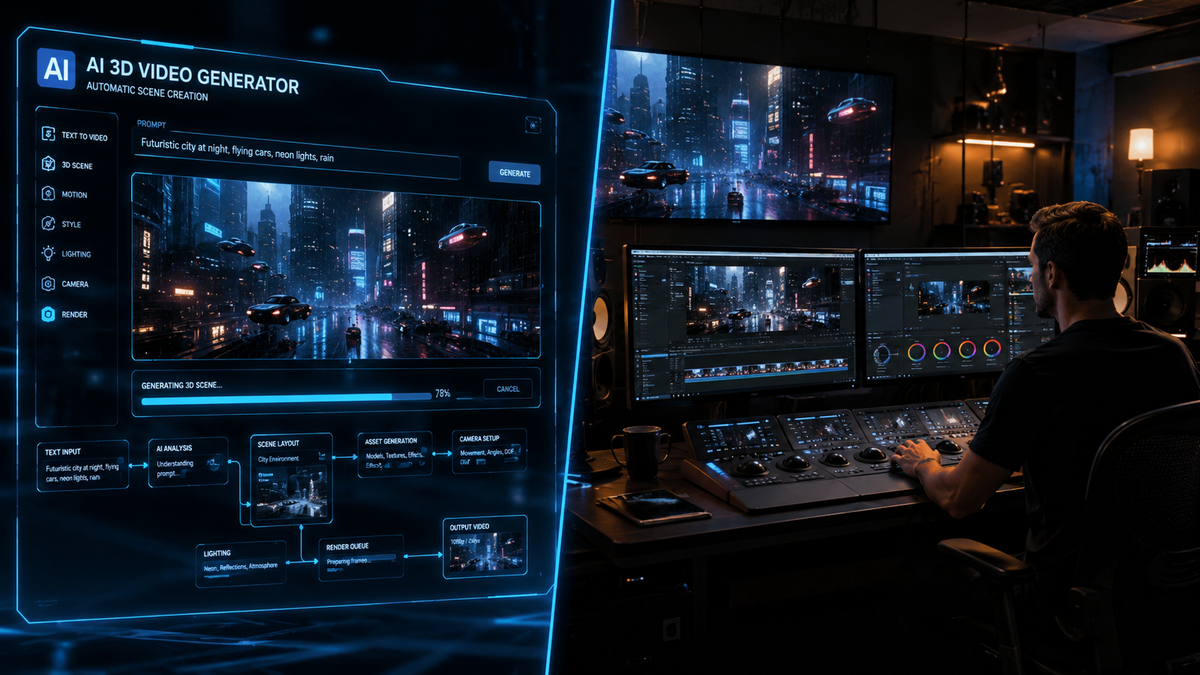
Choosing between an ai video generator vs traditional editing depends on whether your priority is rapid-scale content production or granular creative control. In 2026, AI video generators have evolved to produce cinematic-quality clips from simple text prompts in minutes, while traditional editing remains the gold standard for high-end film production and projects requiring complex, frame-accurate adjustments. While AI has drastically lowered the barrier to entry for creators, traditional workflows continue to offer a level of intentionality and bespoke artistry that automated systems cannot yet fully replicate.
An AI video generator is a software tool that uses generative models to transform text, images, or "talking photos" into high-definition video content automatically. Unlike traditional editing, which requires manual assembly of footage in a timeline, AI-powered creation focuses on prompt engineering and algorithmic synthesis to generate stunning visual content in a fraction of the time.
- ✓ AI video generators can produce high-quality cinematic content from text or static images in under five minutes.
- ✓ Traditional editing provides 100% control over every frame, making it essential for complex storytelling.
- ✓ Hybrid workflows—using AI for b-roll and traditional software for final assembly—are the 2026 industry standard.
- ✓ Free AI tools now offer advanced features like "AI Talking Photos" and text-to-shorts for social media creators.
The Evolution of Content Creation: AI Video Generator vs Traditional Editing
As we navigate through 2026, the landscape of digital media has undergone a seismic shift. The debate of ai video generator vs traditional editing is no longer about which is "better," but rather which is more appropriate for a specific objective. According to Tech Times, AI-powered video creation is fundamentally transforming content production by automating the most labor-intensive parts of the creative process, such as rotoscoping, color grading, and basic assembly.
Traditional editing, the bedrock of the film industry for decades, involves a human editor using non-linear editing (NLE) software to piece together raw footage. This process is deliberate and meticulous. In contrast, the modern AI video generator uses neural networks to "hallucinate" or synthesize pixels based on a massive dataset of visual information. This allows creators to build entire scenes that were never actually filmed, a feat that was once the exclusive domain of high-budget VFX houses.
The accessibility of these tools has also democratized the medium. As reported by PC Tech Magazine, even free AI video generators now allow users to create stunning visual content with "AI Talking Photos," a feature that breathes life into static portraits for educational and marketing purposes. This level of automation has forced traditional editors to adapt, often incorporating these AI tools into their existing workflows to remain competitive in a high-speed market.
How to Use an AI Video Generator in 2026
- Define Your Concept: Input a detailed text prompt describing the scene, lighting, and camera movement into the AI interface.
- Select Your Model: Choose between text-to-video, image-to-video, or "talking photo" modes based on your source material.
- Configure Parameters: Adjust the aspect ratio (e.g., 9:16 for Shorts or 16:9 for Cinematic) and the "motion intensity" to control how much the AI alters the frame.
- Generate and Iterate: Render the initial clip and use "seed" values or regional prompting to refine specific areas of the video.
- Final Export: Download the high-definition file or send it to a traditional editor for final color matching and sound design.
Comparing Features: Speed, Control, and Quality
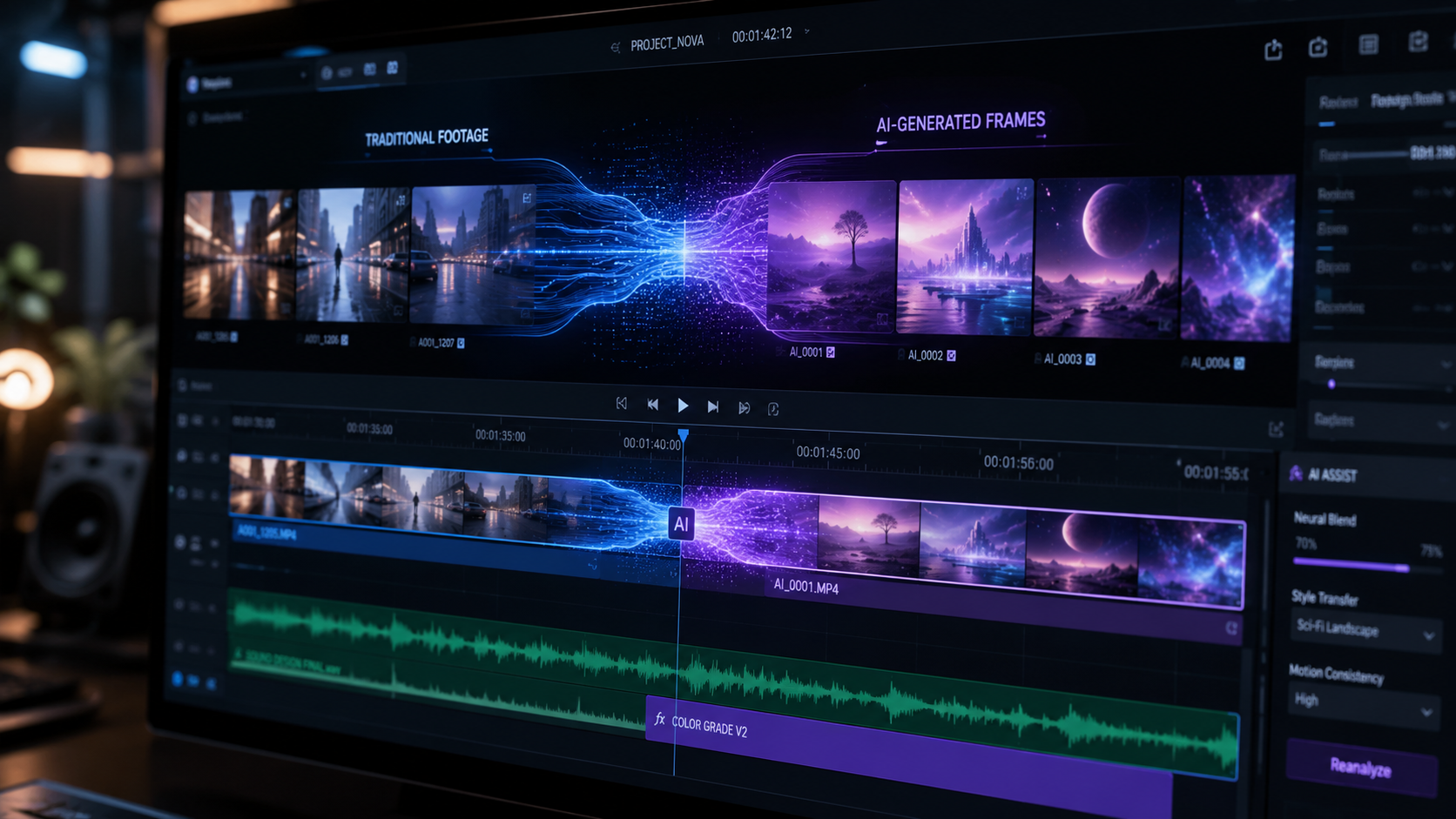
When analyzing the ai video generator vs traditional editing workflow, the most immediate difference is the time-to-output. A professional traditional editor might spend several hours just organizing footage and creating a rough cut. An AI tool, as noted by Analytics Insight, can generate multiple versions of a stunning clip in minutes. This speed is invaluable for social media managers and news outlets that need to react to trends in real-time.
However, the trade-off for speed is often precision. In traditional editing, if an editor wants a character to blink at exactly the 02:14 mark, they can make that happen. In generative AI, while control is improving, there is still an element of algorithmic randomness. Programming Insider highlights that while we can now create videos from images with high fidelity, the "temporal consistency"—ensuring objects don't morph between frames—remains a challenge that traditional footage simply doesn't have.
| Feature | AI Video Generator (2026) | Traditional Video Editing |
|---|---|---|
| Turnaround Time | Minutes | Hours to Weeks |
| Skill Requirement | Low (Prompt-based) | High (Software Mastery) |
| Creative Control | Directional / Algorithmic | Frame-by-Frame / Absolute |
| Cost | Subscription/Credit-based | Labor-intensive / High Software Cost |
| Best Use Case | Social Media, Prototyping, B-roll | Feature Films, Documentaries, Branding |
The Rise of Text-to-Video and Cinematic AI
In 2026, the "cinematic" output of AI generators has reached a point where it is often indistinguishable from filmed footage. Tycoonstory Media reports that the best free AI video generators of 2026 now include specialized modules for "Shorts" and "Cinematic Content," allowing users to specify lens types, f-stops, and film stock styles in their prompts. This has created a new category of "AI Cinematographers" who focus on the aesthetic direction rather than the technical operation of a camera.
This shift is particularly evident in the "talking photo" technology. Previously, animating a face required complex rigging and 3D modeling. Now, as Geek Vibes Nation explains, an AI video generator can transform a single headshot into a speaking avatar with realistic micro-expressions and perfect lip-syncing. This technology is being utilized by corporations for training videos and by creators to build digital personas without needing a studio setup.
Despite these leaps, the "soul" of a video often resides in the pacing and rhythm—elements that traditional editors excel at. Traditional editing is an exercise in psychology, knowing exactly when to cut to evoke an emotional response. While AI can suggest cuts based on beat detection, the nuanced storytelling of a human editor remains a premium service in the 2026 media economy.
Key Advantages of AI-Powered Production
One of the primary advantages of utilizing an ai video generator vs traditional editing is the ability to scale. A single creator can produce a dozen localized versions of an advertisement—changing the background, the language of the speaker, and the product featured—in the time it would take a traditional team to finish one. Studies show that companies using AI video tools have increased their content output by over 400% compared to 2024 levels.
Limitations of Generative Video
The limitations of AI in 2026 primarily revolve around long-form consistency. While a 15-second AI clip can look perfect, maintaining the same character's appearance and the environment's physics over a 10-minute video is still difficult without significant manual intervention. This is where traditional editing remains superior, as it handles long-form narrative structures with ease by using consistent, filmed assets.
Integration: The Hybrid Workflow of 2026
The most successful professionals today do not choose one over the other; they integrate both. The ai video generator vs traditional editing debate is being replaced by a "Centaur" model of creation. Editors use AI to generate b-roll or to extend the edges of a frame (outpainting), then bring those assets into a traditional NLE to perform the final assembly. This hybrid approach allows for the speed of AI and the precision of human oversight.
According to Tech Times, this transformation is most visible in the "text-to-video" pipeline. An editor might use an AI generator to create a dream sequence or a historical reenactment that would be too expensive to film, then treat that AI footage as "stock" material to be cut, color-corrected, and layered within their professional editing suite. This reduces the "blank page" syndrome and allows for faster prototyping of visual ideas.
Furthermore, AI tools are being embedded directly into traditional software. Features like "AI-based object removal" and "automated transcript-based editing" have become standard. In 2026, the line between an "AI tool" and a "traditional tool" is blurring, as almost every major editing platform now includes generative features to assist the human user.
Economic Impact on the Creative Industry
The economic implications of the ai video generator vs traditional editing shift are profound. The cost of high-quality video production has plummeted. In 2026, a startup can produce a broadcast-quality commercial using a "Free AI Video Generator" and minimal human oversight. This has led to a surge in video marketing across industries that previously relied on static images due to budget constraints.
For professional editors, the market has bifurcated. There is a high demand for "AI Content Technicians" who can pilot these tools effectively, and an equally high demand for "Master Editors" who provide the high-level creative direction that AI cannot replicate. As Analytics Insight suggests, the ability to "create stunning clips in minutes" has not replaced the need for good storytelling; it has simply changed the tools we use to tell those stories.
As we look toward the latter half of 2026, the focus is shifting toward "Interactive Video." AI generators are beginning to allow for real-time video generation based on viewer input, a feat impossible with traditional pre-rendered editing. This suggests that while traditional editing will always have a place in "pre-recorded" media, AI will dominate the future of personalized, real-time visual experiences.
Frequently Asked Questions
Is AI video generation better than traditional editing?
It depends on the goal. AI is better for speed, scale, and creating content from scratch (text-to-video), while traditional editing is superior for precise storytelling, emotional pacing, and long-form consistency.
Can I use an AI video generator for free in 2026?
Yes, many platforms offer free tiers for text-to-video and AI talking photos, though they often include watermarks or limit the resolution and length of the generated clips.
Will AI video generators replace human editors?
No, but they are changing the role of the editor. Editors in 2026 act more like directors or "AI pilots," using generative tools to handle repetitive tasks while they focus on the creative vision.
What is an AI talking photo?
An AI talking photo is a technology that uses generative AI to animate a static image of a person, making it appear as though they are speaking a specific script with realistic lip-syncing and facial expressions.
How long does it take to generate an AI video?
In 2026, most AI video generators can produce a high-definition, 10-to-15 second clip in approximately 2 to 5 minutes, depending on the complexity of the prompt and server load.



Comments ()