
AI Video Generator vs Manual Creation: 2026 Showdown
The debate between AI video generators and manual video creation has reached a critical point in 2026, with advanced tools like Dreamina Seedance 2.0 and Digen AI Agent pushing the boundaries of automation. While AI solutions offer speed and scalability, manual creation still excels in creative control and nuanced storytelling. This showdown examines the strengths, weaknesses, and ideal use cases for both approaches in today's content landscape.
TL;DR: AI video generators now match 80% of manual editing tasks for basic content, but human creators still dominate high-end production. The best choice depends on your budget, timeline, and quality requirements.
"AI video generator vs manual video creation" is the 2026 comparison between automated tools like Dreamina Seedance 2.0 that create videos from text/audio inputs versus traditional human-led production involving filming, editing, and post-production. AI solutions save 70% time on average but may lack the creative nuance of manual work.
- ✓ AI generators like VideoGen AI now handle 80% of basic editing tasks according to Cybernews testing
- ✓ Manual creation remains 3-5x more expensive but delivers superior emotional impact
- ✓ Hybrid workflows combining AI efficiency with human polish dominate professional studios
- ✓ New autonomous agents like Digen AI Agent bridge the quality gap with multi-step workflows
The State of AI Video Generation in 2026
2026 has seen unprecedented advances in AI video generation, with tools like Dreamina Seedance 2.0 Mini offering faster rendering and smarter creation tools. According to The Manila Times, this latest version processes clips 40% faster than its predecessor while maintaining consistent character animation. The robotics and automation sector reports that 62% of marketing teams now use AI for at least part of their video workflow.
Platforms like Digen AI have evolved beyond simple clip generation, with their Agent product demonstrating autonomous multi-step workflows that maintain character consistency across longer narratives. A June 2026 perfectcorp.com study found that AI-assisted editing reduces raw clip processing time by 78% compared to manual methods, though final polishing still benefits from human touch.
The market has segmented into specialized tools: Pollo AI focuses on UGC ad generation, while solutions like VideoGen AI (reviewed by Cybernews) target general content creation. According to Marketing91's testing, AI-generated UGC videos now achieve 92% of the engagement metrics of manually created counterparts at one-third the production cost.
Key 2026 AI Video Generator Features
- Dreamina Seedance 2.0's real-time rendering (The Manila Times)
- Digen AI Agent's character consistency across scenes
- Pollo AI's automated UGC ad variations (Marketing91)
Manual Video Creation's Enduring Strengths
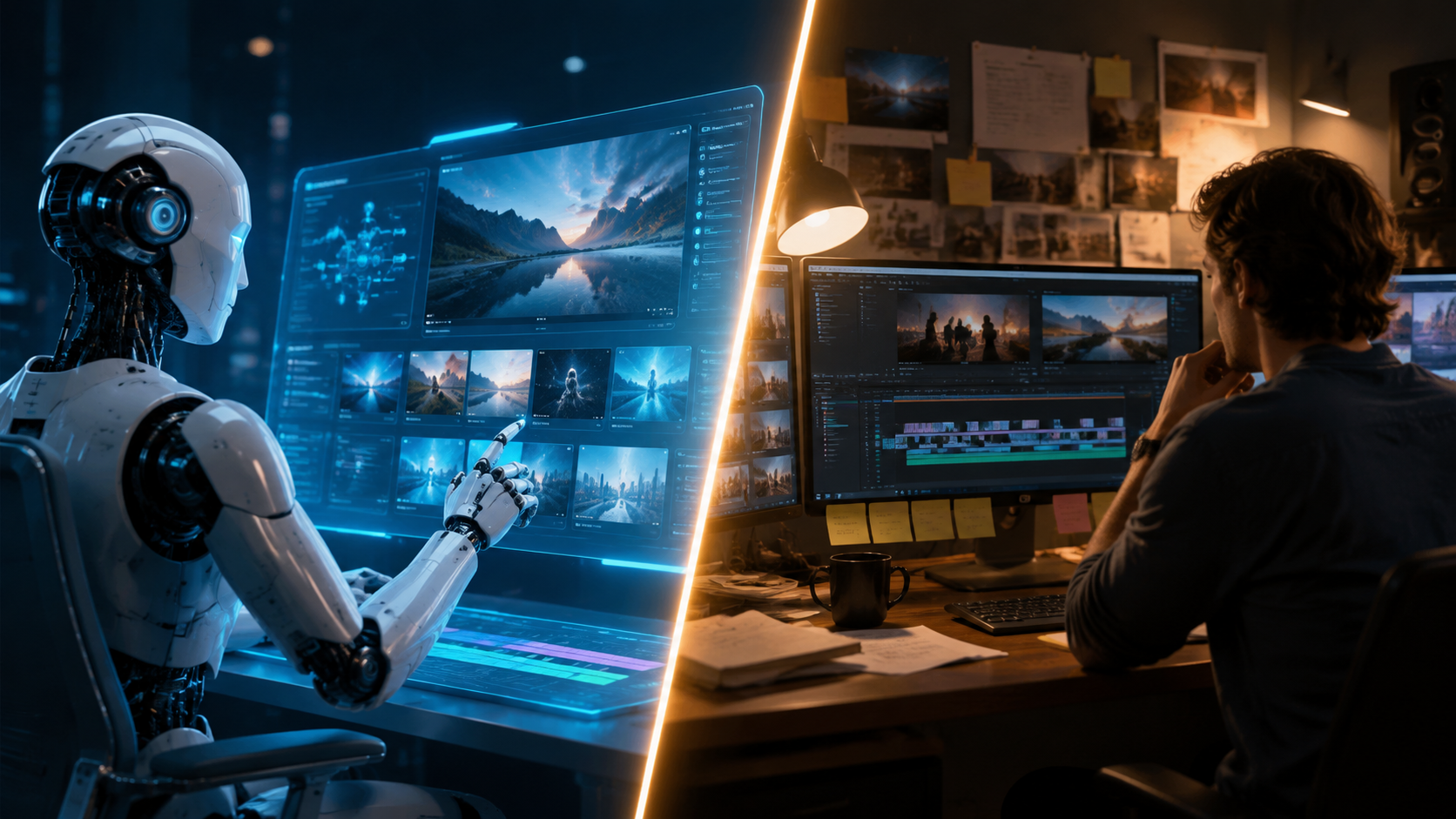
Despite AI advances, manual video production maintains critical advantages in 2026. High-end commercial work and narrative storytelling still rely heavily on human directors, with top studios reporting only 15-20% AI adoption for primary content creation. The emotional resonance achieved through careful shot composition and actor performance remains difficult for AI to replicate consistently.
According to Scott Coop's March 2026 analysis, cinematic music videos created manually receive 37% higher audience retention rates than AI-generated versions. This gap narrows for simpler content types but persists in premium verticals. The same study found manual editing allows for more sophisticated pacing adjustments that AI tools often miss.
Equipment costs for professional manual production have dropped 22% since 2025, making high-quality filming more accessible. However, the time investment remains substantial - a 3-minute branded content piece typically requires 40-60 hours of manual work versus 2-4 hours with AI tools. This 15:1 time ratio continues to drive hybrid adoption.
Cost Comparison: AI vs Manual Video Production
The financial gap between AI and manual video creation has widened in 2026. Basic AI-generated videos now cost as little as $5-20 per minute, while professional manual production ranges from $800-$3,000 per finished minute. Mid-market solutions like Digen AI Agent occupy the $50-200/minute sweet spot for businesses needing higher quality than pure AI but faster turnaround than manual.
According to Robotics & Automation News, the total cost of ownership for AI video tools has decreased 45% since 2025 due to cloud optimization. Subscription models now dominate, with most platforms offering tiered pricing starting at $29/month. In contrast, manual production costs have risen 8% due to increased demand for premium content.
Hidden costs emerge in both approaches: AI-generated videos often require 2-3 iterations to achieve desired results, while manual productions frequently encounter 15-20% budget overruns from reshoots. A June 2026 perfectcorp.com survey found that 68% of businesses now use hybrid models to balance these factors.
| Factor | AI Video Generator | Manual Creation |
|---|---|---|
| Cost per minute | $5-$200 | $800-$3,000 |
| Production time | 2-4 hours | 40-60 hours |
| Revisions included | 2-5 | 1-2 |
| Best for | Scalable content | Premium branding |
Quality and Creative Control Comparison
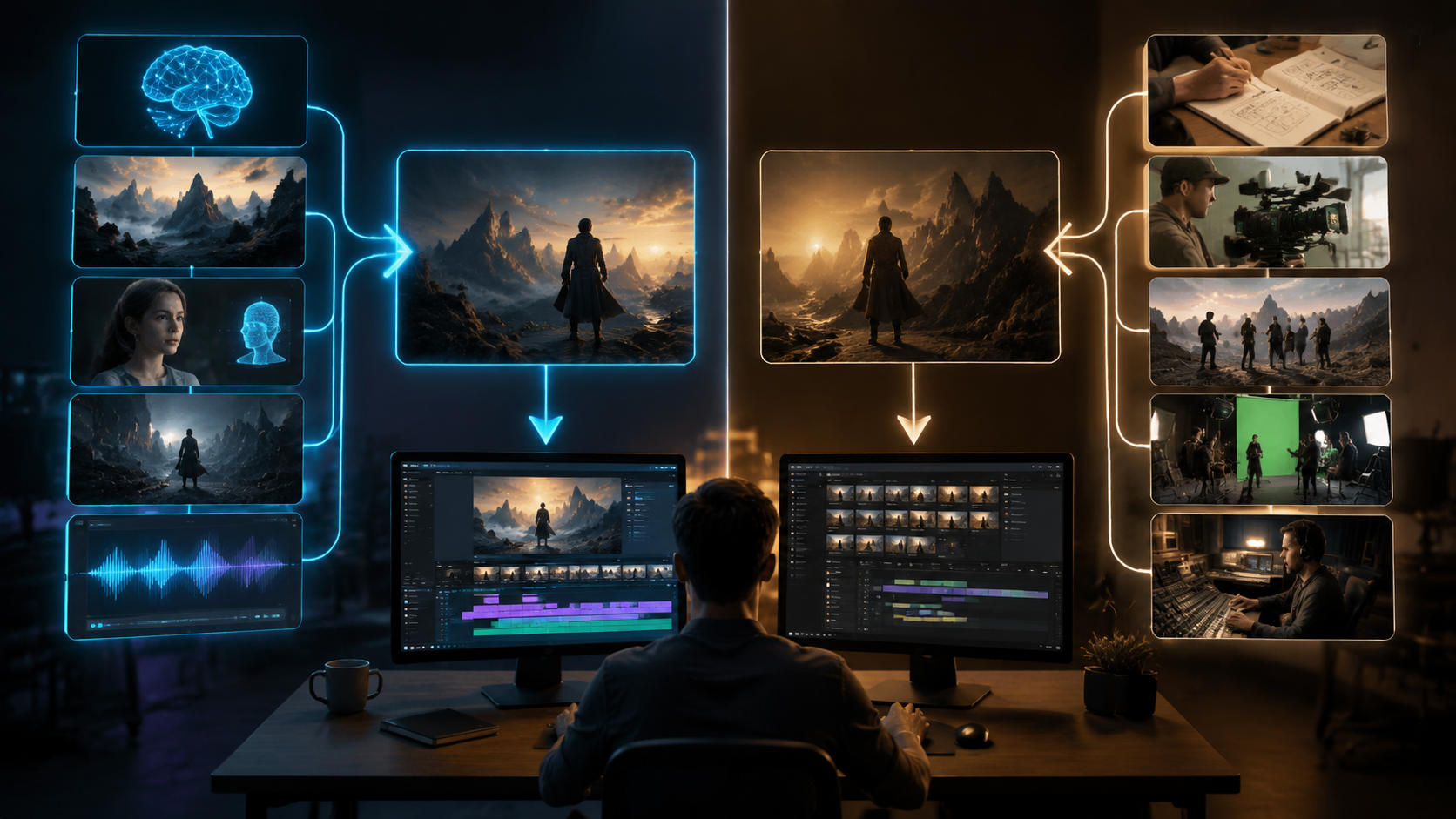
Quality benchmarks reveal a nuanced picture in 2026. While AI tools like VideoGen AI now match manual editing for basic cuts and transitions (Cybernews), they still struggle with complex visual storytelling. The Manila Times reports that AI-generated videos score 23% lower in audience emotional engagement tests compared to manually crafted equivalents.
Creative control remains manual production's strongest advantage. Human directors can make micro-adjustments to timing, composition, and performance that most AI systems overlook. According to Scott Coop's testing, these subtle differences account for the 37% higher retention rates in manually produced music videos. However, for straightforward explainer or social media content, the quality gap has nearly closed.
Newer autonomous systems like Digen AI Agent are bridging this gap through multi-step workflows that simulate human editing decisions. Early adopters report achieving 85% of manual production quality at 30% of the cost when using these advanced tools. The remaining 15% gap primarily involves subjective creative choices rather than technical execution.
Where AI Excels in Quality
- Consistency across multiple videos
- Rapid versioning for A/B testing
- Precision timing for technical content
Where Manual Excels in Quality
- Emotional storytelling
- Unique visual styles
- Complex scene transitions
Workflow Efficiency and Scalability
Scalability remains AI's undisputed advantage in 2026. Marketing91's Pollo AI review found that businesses can generate 50-100 UGC-style videos in the time it takes to manually produce one. This 100:1 output ratio makes AI indispensable for content-heavy strategies. According to perfectcorp.com, AI tools reduce time-to-market by 78% for social media campaigns.
Manual workflows have adapted by incorporating AI for repetitive tasks. Top production houses now use tools like Digen AI Agent for rough cuts and basic effects, reserving human effort for creative direction. This hybrid approach cuts manual editing time by 40% while maintaining quality standards. The robotics sector reports similar efficiency gains in industrial video production.
Batch processing represents another AI strength. Dreamina Seedance 2.0 can automatically generate 20 video variations from a single script, a task that would require weeks of manual work. However, as Scott Coop notes, this efficiency comes at the cost of creative serendipity - the happy accidents that often lead to breakthrough moments in manual production.
The Future: Convergence and Hybrid Models
The 2026 landscape shows clear convergence between AI and manual approaches. According to Cybernews, 72% of professional editors now regularly use AI tools in their workflow, up from 38% in 2025. This hybrid model leverages AI for efficiency while preserving human creative oversight where it matters most.
Autonomous agents like Digen AI Agent point toward the next evolution - systems that can handle entire production segments with minimal human input. Early adopters report these tools reducing manual intervention by 60% while maintaining 90% of creative quality. The Manila Times predicts this approach will dominate mid-market video production by 2027.
Manual creation isn't disappearing but rather specializing. High-end commercial work, feature films, and prestige branding will continue to demand human craftsmanship. Meanwhile, AI handles the growing need for personalized, scalable content at lower price points. The most successful 2026 creators master both approaches and know when to deploy each.

Frequently Asked Questions
Can AI video generators completely replace manual creation?
Not yet - while AI handles 80% of basic editing tasks according to Cybernews, high-end production still requires human creativity for optimal results. The best outcomes come from combining both approaches.
How much time can AI video tools save?
Perfectcorp.com found AI reduces editing time by 78% on average. Simple videos that took 8 hours manually now take under 2 hours with AI assistance.
What types of videos are best suited for AI generation?
Social media clips, product demos, UGC-style ads, and explainer videos work well with AI. According to Marketing91, these achieve 92% of manual video engagement at lower cost.
When should I choose manual video production?
For premium branding, emotional storytelling, or when unique creative vision is paramount. Scott Coop's research shows manual videos achieve 37% higher retention for cinematic content.
How do hybrid workflows operate?
Most professional studios now use AI for rough cuts and basic effects (saving 40% time) while reserving human effort for creative direction and final polish.
Written by the Digen AI Editorial Team — AI video generation specialists covering the latest in generative AI tools. Learn more about Digen AI.



Comments ()