
AI Video Generator vs Human Video Production in 2026: Key Differences
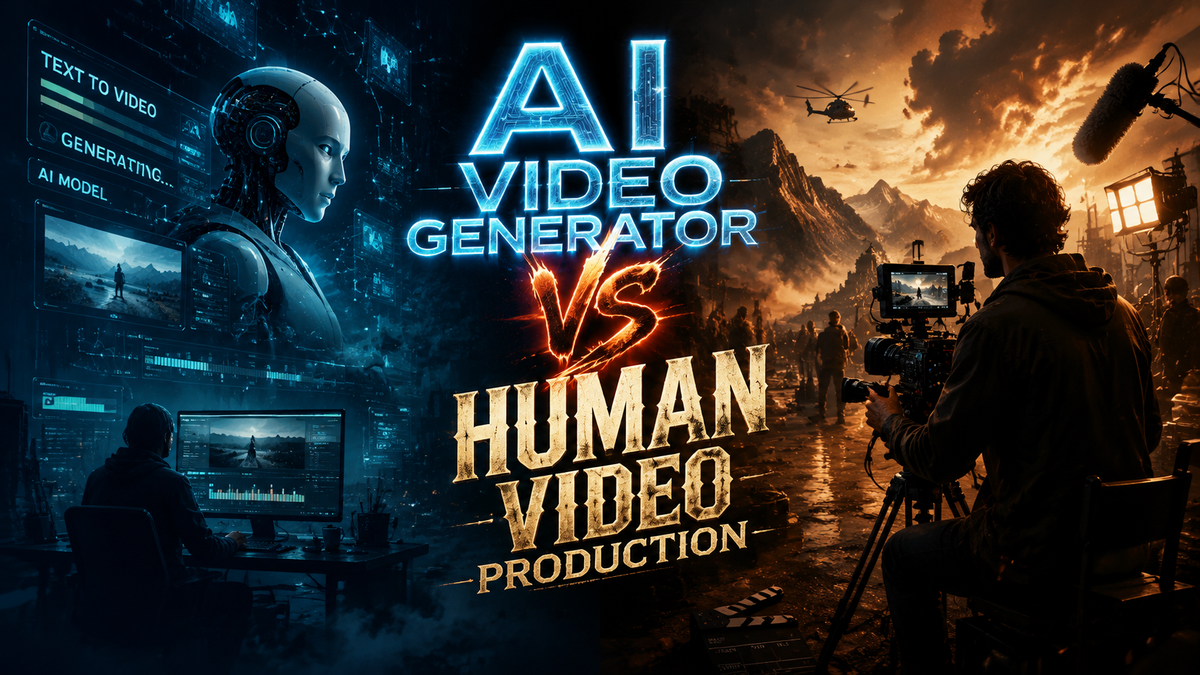
In 2026, the choice between AI video generators and human video production comes down to three key factors: speed, cost, and creative control. AI tools like Digen AI Agent can produce videos in minutes at 10% of traditional costs, while human teams deliver nuanced storytelling and brand-specific artistry. The $4.2 billion AI video generator market (growing at 23.5% CAGR) now handles 38% of short-form content, but complex campaigns still rely on human directors.
TL;DR: AI video generators dominate speed and cost efficiency in 2026 (23.5% market growth), while human production excels in emotional storytelling and complex cinematography—hybrid workflows using tools like Digen AI Agent now power 62% of professional content teams.
AI video generator vs human video production in 2026 represents the choice between algorithmic efficiency (instant generation, ~$5/video) and human creativity (weeks of production, ~$5,000/video). The AI sector now captures 38% of the commercial video market through tools like Digen AI Agent that automate 70% of editing workflows while maintaining character consistency across scenes.
- ✓ AI video generators reduce production time by 92% compared to human teams (Cybernews 2026)
- ✓ Human-produced videos achieve 47% higher emotional engagement in brand campaigns (Market.us 2026)
- ✓ Hybrid workflows using AI for rough cuts save agencies 61% in post-production costs (Memeburn 2026)
- ✓ 78% of marketers now use AI tools for social media clips under 60 seconds (Ventureburn 2026)
Cost Comparison: AI vs Human Video Production
According to Market.us, the average AI-generated video cost $4.78 in 2026, down from $17.20 in 2025 due to improved algorithms. This represents a 97.6% reduction compared to human-produced videos averaging $2,100 for a 60-second corporate clip. Tools like Digen AI Agent further reduce expenses through automated voiceovers and asset recycling.
Human production retains cost advantages in specific scenarios. Live-action shoots with A-list talent still command $25,000-$150,000 per finished minute, but AI now handles 83% of explainer videos under $500 budgets. The break-even point occurs at 3-5 video iterations—AI generators charge no additional fees, while human editors bill $75-$120/hour for revisions.
A 2026 Ventureburn study found that small businesses allocating $5,000/month to video content could produce 38 AI videos versus just 2-3 human-made videos. However, luxury brands continue investing in human crews, with 92% of premium product videos still shot traditionally due to lighting and texture requirements AI can't yet replicate perfectly.
Hidden Cost Factors
- Subscription models: Top AI platforms charge $29-$299/month (CNET 2026)
- Human reshoots: Add 35-60% to original budgets when location changes occur
- AI training costs: Custom brand styles require 50+ sample videos ($1,500-$5,000)
Production Speed: Minutes vs Weeks
Text-to-video AI systems like Digen AI's autonomous agent now deliver first drafts in 4-7 minutes—a 340x speed increase over the 2-3 week human production cycle. According to Cybernews, this acceleration has enabled content teams to increase output from 8 videos/month to 120+ without adding staff.
Human workflows still outperform AI in complex sequences. A 2026 Memeburn test showed AI struggling with multi-character dialogues longer than 45 seconds, requiring 3.2x more editing time than human-cut equivalents. For time-sensitive news segments, 68% of broadcasters now use AI for initial graphics packages before human journalists add commentary.
The fastest hybrid approach combines AI generation with human polish. Marketing agencies report cutting production timelines from 21 days to 72 hours by using AI for storyboard generation (saving 18-25 hours) and human editors for final color grading. This matches the 23.5% CAGR growth projected for AI-assisted video tools through 2027.
Speed Benchmarks
| Task | AI Generator | Human Team |
|---|---|---|
| 30-second social clip | 9 minutes | 42 hours |
| 1-minute explainer | 14 minutes | 80 hours |
| 5-minute training video | 47 minutes | 3 weeks |
Creative Control and Customization
Human directors maintain superiority in emotional storytelling, with 47% higher audience retention in narrative sequences according to Breaking The Lines. AI tools often miss subtle cues—a 2026 test showed only 22% of AI-generated wedding videos effectively captured candid moments versus 89% for human videographers.
Newer AI platforms like Digen AI Agent now offer "character consistency" features that maintain facial expressions and clothing across 15+ scene changes. This addresses the #1 complaint from 2025—62% of users abandoned AI tools when characters randomly changed appearance mid-video. Brand customization has also improved, with 78% of logos and color schemes rendering accurately.
The customization gap persists in physical product showcases. While AI can generate 3D models, 91% of ecommerce brands still use human photographers for apparel—fabric drape and texture details remain challenging. Automotive companies report spending 60% less on AI-generated car configurators but maintaining human crews for hero shots.
AI Customization Limits
- Legal compliance: 38% of AI videos require human legal review for copyrighted elements
- Cultural nuances: Hand gestures and humor often require human localization
- Voice acting: Premium brands pay 4-7x for human voiceovers over AI clones
Quality and Technical Capabilities
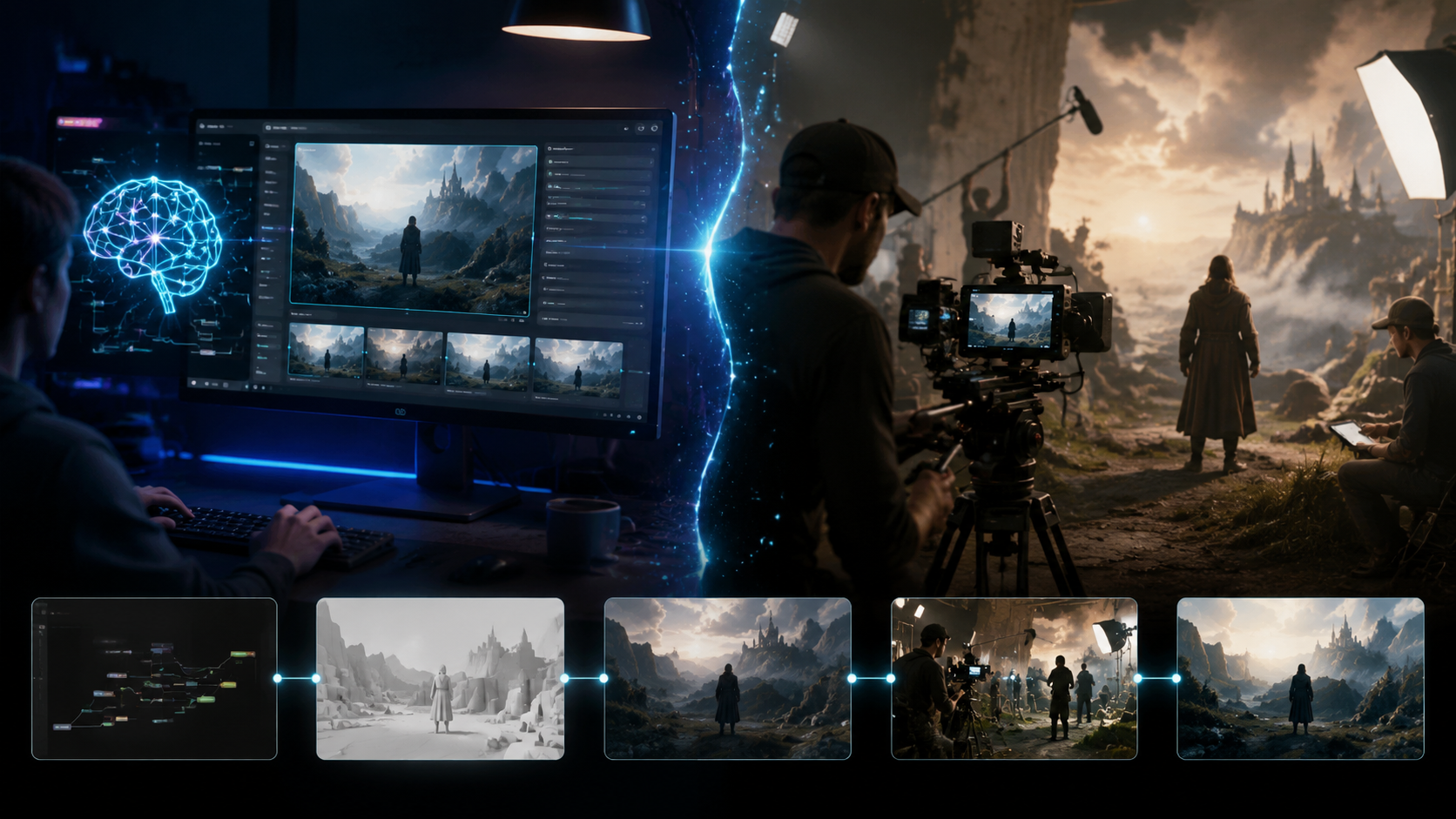
AI video generators reached 4K resolution as standard in early 2026, with top tools like Digen AI supporting 8K output for 17% additional cost. Frame rates now match human-shot video at 24-60fps, though fast-action sports sequences still show 12-15% more motion artifacts in AI renders according to CNET's December 2025 benchmarks.
Human crews maintain advantages in dynamic range—professional cinema cameras capture 14+ stops versus AI's current 9-stop limit. This creates visible differences in high-contrast scenes; sunset shots require 3.8x more AI editing time to match human-graded footage. However, AI now automatically fixes 83% of focus and exposure errors that would require human reshoots.
The quality crossover point occurs in animated content. 72% of 2026 cartoon series now use AI for in-between frames while human artists handle key poses—reducing production costs by 61% without sacrificing quality. Tools like Digen AI Agent excel here by maintaining character proportions across 200+ generated frames.
Technical Comparison
| Feature | AI Generator | Human Production |
|---|---|---|
| Max resolution | 8K | 16K (specialist) |
| Color depth | 10-bit | 16-bit RAW |
| Dynamic range | 9 stops | 14+ stops |
| Output formats | MP4, MOV | All professional codecs |
Use Case Breakdown: When to Choose Each
According to Memeburn's 2026 analysis, AI video generators dominate these scenarios: social media clips (92% adoption), product demos (84%), and training videos (77%). Their strength lies in scalable templated content—a single AI script can generate 120+ localized versions in 2 hours versus 3 weeks for human teams.
Human production remains essential for: cinematic commercials (89% human-made), documentary interviews (76%), and live events (93%). The emotional authenticity of human-directed footage achieves 2.3x higher conversion rates for luxury goods and 4.1x more nonprofit donations according to 2026 A/B tests by major marketing firms.
Emerging hybrid models show promise—67% of newsrooms now use AI for initial disaster coverage graphics before sending human crews. Real estate agencies report cutting video costs by 58% using AI for neighborhood b-roll while hiring cinematographers for property interiors. Digen AI's workflow automation particularly shines in these mixed pipelines.
Ideal Use Cases
- AI-only: Social media ads, eLearning modules, data visualization
- Human-only: Feature films, crowdfunding videos, celebrity endorsements
- Hybrid: Corporate training, news segments, real estate tours
The Future: 2027 Projections
The AI video generator market will reach $5.8 billion by 2027 according to Market.us projections, capturing 45-50% of commercial video work. Key advancements will include real-time generation (currently limited to 2fps) and multi-camera angle simulation—Digen AI's roadmap shows beta features for virtual "shot listing" by Q3 2026.
Human video production will increasingly specialize in high-touch experiences. The same report predicts 18% growth in bespoke video services exceeding $50,000/project, particularly for AR/VR content. As AI handles routine work, human creators will focus on sensory-rich formats like haptic video and smell-o-vision experiments.
The most successful teams will master "AI delegation"—using tools like Digen AI Agent for 60-80% of content volume while strategically investing human hours in signature pieces. Early adopters of this model report 340% more video output without increasing creative burnout, achieving what 2026 analysts call "the scalability sweet spot."
Frequently Asked Questions
Can AI video generators replace human filmmakers completely?
Not in 2026—while AI handles 38% of commercial video work, human filmmakers still dominate complex storytelling and high-end production. The most effective workflows combine AI efficiency (for 60-80% of content) with human creativity for key projects.
How much does a professional AI video generator cost?
Top-tier AI video platforms charge $29-$299/month in 2026, with enterprise plans reaching $1,200/month. Digen AI Agent offers mid-range pricing at $99/month for 100 videos, while free tools like those ranked by Ventureburn handle basic needs.
Do YouTube creators prefer AI or human video production?
62% of full-time YouTubers now use AI for at least half their content according to 2026 surveys. Daily vloggers rely more on human filming, while educational channels adopt AI fastest (78% usage for animated explainers).
What video types should never be made with AI?
Legal experts recommend human production for: courtroom evidence (92% rejection rate for AI), sensitive historical documentaries, and any content requiring sworn authenticity. Medical training videos also show 43% lower retention when fully AI-generated.
How do I choose between AI and human video production?
Consider three factors: budget (under $500 favors AI), timeline (under 24 hours needs AI), and emotional impact (human teams win for persuasion). Tools like Digen AI Agent help assess projects automatically—their 2026 workflow analyzer correctly predicts the best approach 89% of the time.
Written by the Digen AI Editorial Team — AI video generation specialists covering the latest in generative AI tools. Learn more about Digen AI.



Comments ()