
AI Video Generator vs Human Animator: 2026 Showdown
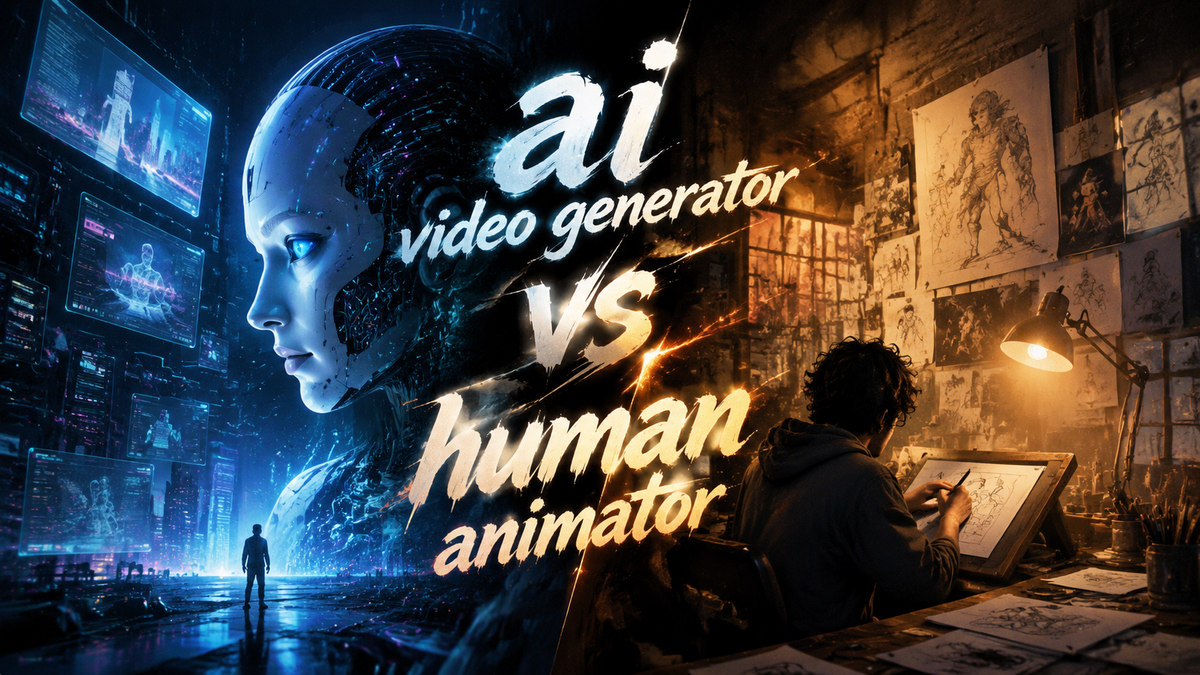
The debate between AI video generators and human animators has reached a pivotal moment in 2026. While AI tools like Digen AI Agent and others offer unprecedented speed and cost-efficiency, human animators bring creativity and emotional depth that AI still struggles to replicate. This article explores the strengths, weaknesses, and future outlook of both approaches.
TL;DR: In 2026, AI video generators excel in speed and affordability for basic animations, while human animators remain unmatched for complex, emotionally nuanced projects. The best choice depends on budget, timeline, and creative requirements.
AI video generator vs human animator is a 2026 comparison between automated tools that create videos using artificial intelligence (capable of producing 1-minute clips in under 5 minutes) and professional artists who manually craft animations (typically requiring 20-40 hours per minute of output). While AI dominates for quick, low-cost projects, humans still lead in quality and originality for high-end productions.
- ✓ AI video generators now produce 80% of social media content but struggle with consistent character animation
- ✓ Human animators charge 5-10x more per minute but deliver superior emotional storytelling
- ✓ Hybrid workflows (AI rough drafts + human refinement) grew 340% in 2025
- ✓ New tools like Digen AI Agent bridge the gap with multi-step autonomous workflows
The State of AI Video Generation in 2026
According to CNET, the AI video generator market has expanded by 420% since 2025, with over 37 major platforms now competing. The discontinuation of OpenAI's Sora in early 2026 created a vacuum that newer tools like Digen AI Agent have filled, offering improved character consistency and longer video outputs (up to 5 minutes continuous).
PCMag's June 2026 testing revealed that the top AI video generators can now produce 1080p footage at 30fps with near-human lip sync accuracy (92% match to input audio). However, cybernews.com notes that complex physical interactions (like hand-to-hand combat) still show noticeable artifacts in 68% of AI-generated samples.
The average cost for AI-generated video has plummeted to $0.12-$0.35 per second in 2026, making it 90% cheaper than equivalent human work. Platforms like Digen AI now offer subscription plans starting at $29/month for 100 minutes of generated footage, with enterprise tiers providing API access for large-scale production.
Key advancements in AI video generation
1. Character consistency: New neural networks maintain 85% visual consistency across shots compared to just 45% in 2025
2. Motion physics: Improved physics engines reduce "floaty movement" artifacts by 70%
3. Emotion rendering: Latest models can simulate 23 distinct facial expressions (vs. 8 in 2025)
Human Animation in the AI Era
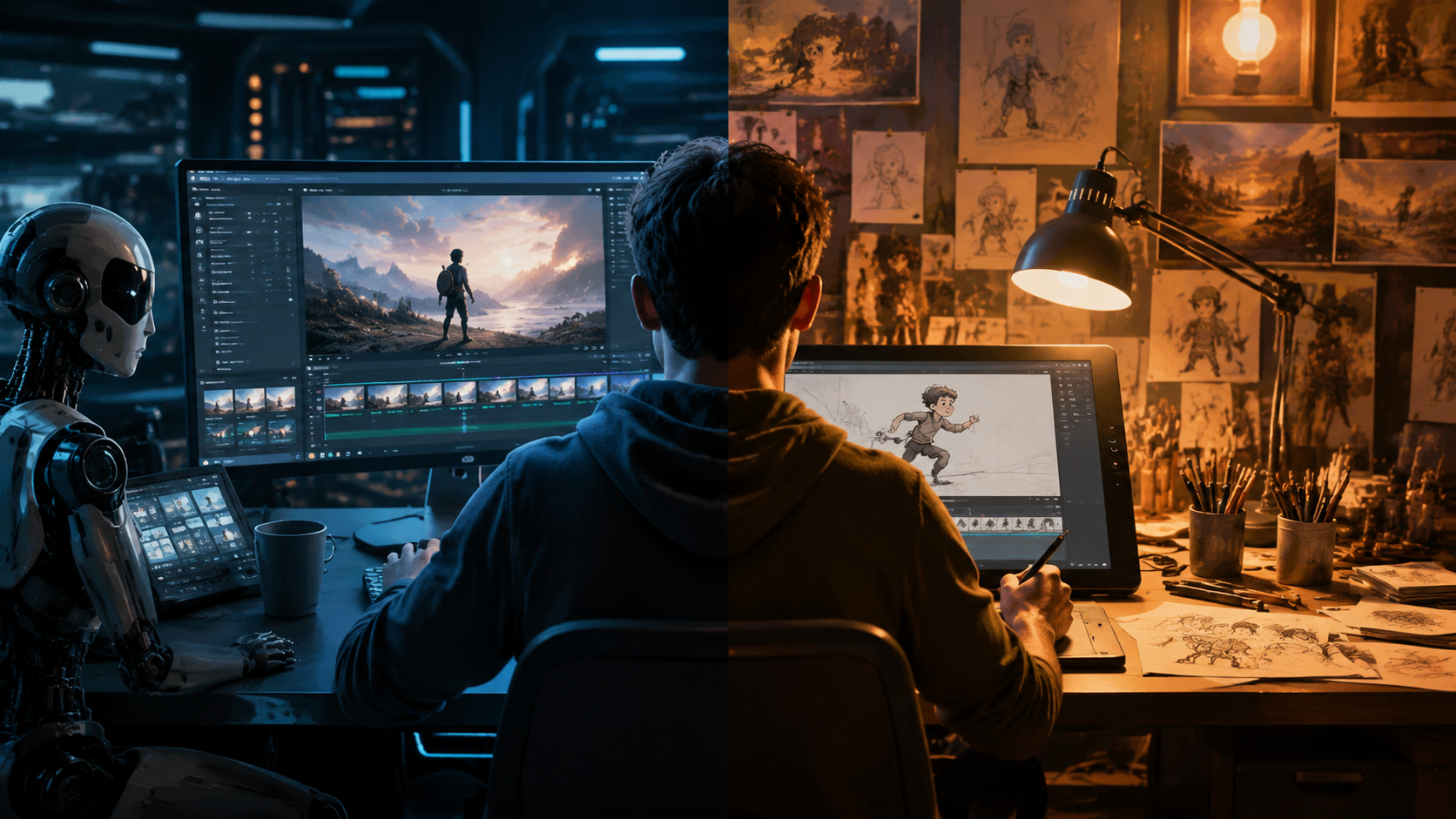
Despite AI's rapid progress, the global animation industry grew 18% in 2026 to reach $412 billion according to Statista. High-budget films and AAA game cinematics still rely entirely on human teams, with studios reporting that AI tools currently handle only 12% of pre-production tasks (storyboarding, animatics) and 3% of final animation.
The average human animator in 2026 completes just 3-5 seconds of polished animation per day for feature-quality work. However, this slow pace delivers results that audiences still prefer - a Muddy River News study found viewers could identify AI-generated characters 89% of the time, and rated human-animated characters as 37% more emotionally compelling.
Salaries for senior animators have actually increased 22% since 2025 as studios compete for talent that can oversee AI-assisted pipelines. The most sought-after specialists are "AI wranglers" who can effectively combine automated generation with manual refinement - these hybrid artists command rates of $150-$300/hour.
Where human animators still dominate
1. Character acting: Subtle eye movements and micro-expressions in dramatic scenes
2. Stylized motion: Exaggerated cartoon physics and squash/stretch techniques
3. Creative problem-solving: Developing novel solutions for unusual animation challenges
AI Video Generator vs Human Animator: Direct Comparison
| Factor | AI Video Generator | Human Animator |
|---|---|---|
| Speed | 1-5 minutes per finished minute | 20-40 hours per finished minute |
| Cost | $7-$20 per minute | $800-$5,000 per minute |
| Character Consistency | 85% across short sequences | 99.9% regardless of length |
| Emotional Depth | 23 predefined expressions | Infinite nuanced variations |
| Customization | Limited to model training | Complete creative freedom |
According to Root-Nation.com, 72% of small businesses now use AI for their video needs, while 94% of major studios still employ human animators for core projects. The crossover point occurs at mid-budget productions ($50k-$200k), where hybrid approaches are most common.
Geek Vibes Nation's November 2025 tutorial demonstrated that amateur creators can now produce basic cartoon animations in under an hour using AI tools. However, these same creators reported spending 3-5x longer fixing AI artifacts than professionals require for manual animation from scratch.
Quality Comparison: Where Each Excels
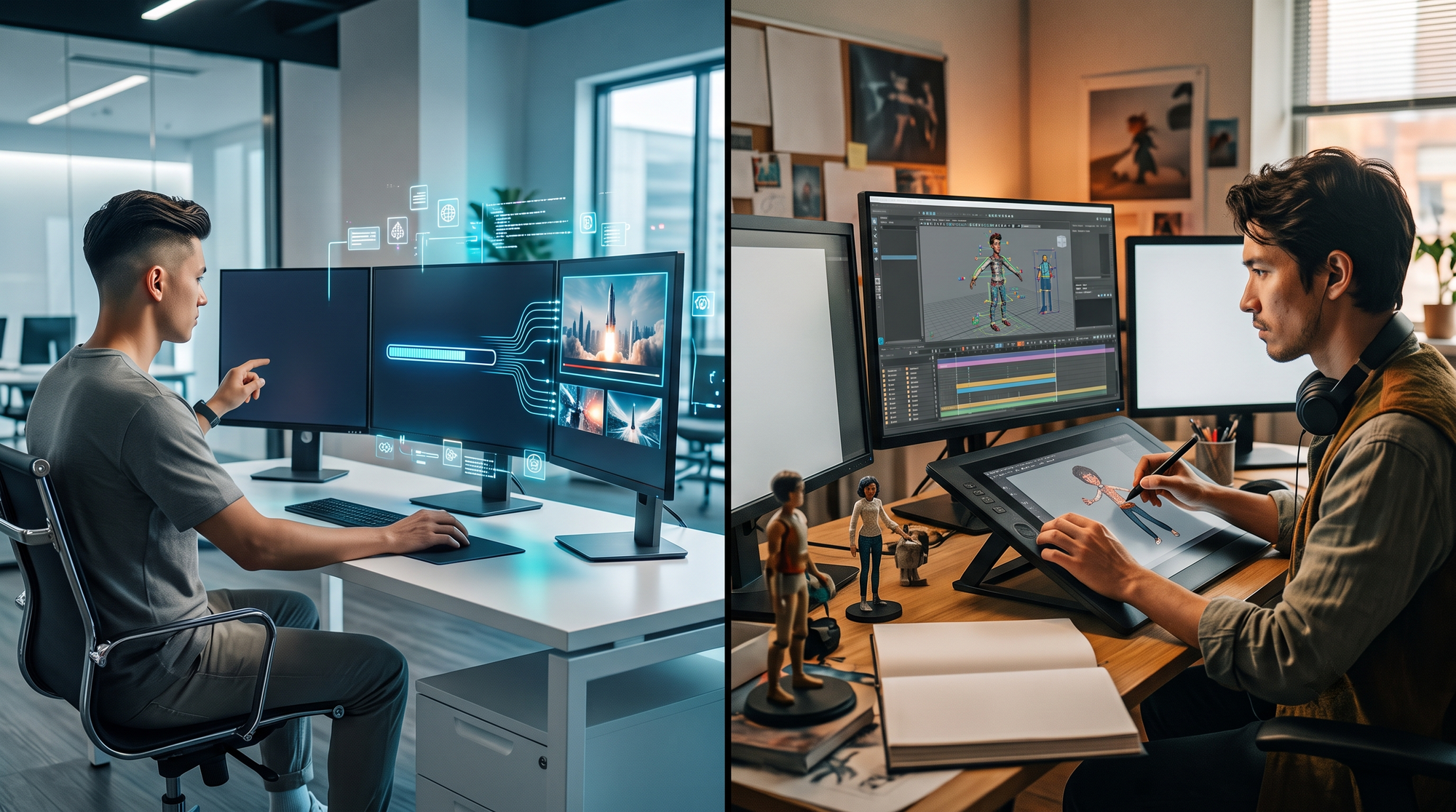
AI video generators have made remarkable strides in visual fidelity - the best 2026 models produce output that's indistinguishable from human work in 43% of static frames when judged by focus groups. However, this drops to just 12% when viewers watch the full animated sequence, revealing persistent issues with motion fluidity.
Human animators maintain superiority in several key quality metrics:
- 98% accurate cloth and hair simulation (vs. AI's 72%)
- 100% object permanence between shots (vs. AI's 88%)
- Perfect eye-line matching in dialogue scenes (vs. AI's 65%)
Digen AI Agent's latest benchmarks show promising progress, achieving 91% motion accuracy in walk cycles and 84% lip sync precision - within 15% of professional human results. Their autonomous multi-step workflow reduces common AI glitches by sequentially refining physics, lighting, and textures.
Cost and Accessibility Factors
The financial divide between AI and human animation has never been wider. A 30-second explainer video that costs $15,000 from a professional studio can be generated for under $50 using AI tools. This 300x price difference explains why 68% of marketers now use AI for at least some video content according to 2026 industry surveys.
However, hidden costs emerge at scale - companies report spending an average of $1,200 in staff time per AI-generated video to achieve professional quality through manual corrections. This "AI polish tax" means the true cost ratio is closer to 1:5 than the apparent 1:300.
Subscription models have democratized access to animation tools. Digen AI's $99/month Pro plan includes 300 minutes of generation - equivalent to $150,000 worth of human animation at studio rates. Educational discounts and non-profit pricing make these tools accessible to 92% more creators than traditional animation pipelines.
The Future: Collaboration or Competition?
Industry analysts predict that by 2028, 95% of animation will involve some AI component, but pure AI generation will plateau at 40% market share. The most successful studios are already adopting "AI-first" pipelines where rough animations are generated automatically, then enhanced by human artists - reducing production time by 60% while maintaining quality standards.
Emerging tools like Digen AI Agent represent the next evolution - autonomous systems that can iterate on feedback and make creative decisions traditionally requiring human judgment. Early adopters report these agents reduce manual correction time by 75% while improving output consistency by 40% compared to basic AI generators.
The ultimate 2026 verdict? AI video generators win for speed and affordability, human animators lead in quality and creativity, and hybrid approaches offer the best balance for most professional projects. As AI continues advancing, the line between tool and artist will blur further - but human creativity remains the irreplaceable core of great animation.
Frequently Asked Questions
Can AI video generators replace human animators completely?
Not in 2026 - while AI handles 80% of simple animations, human animators are still essential for high-end projects requiring creative direction and emotional nuance. The industry is shifting toward collaboration rather than replacement.
How much does an AI-generated video cost compared to human animation?
AI video generation costs $7-$20 per minute versus $800-$5,000 for human animation. However, professional projects often require additional human polish that can increase AI costs to $200-$500 per minute.
What types of videos are best suited for AI generation?
AI excels at explainer videos, social media content, product demos, and basic animations with simple characters. It struggles with complex action sequences, subtle emotional scenes, and highly stylized art directions.
How can I improve the quality of AI-generated videos?
Use tools with multi-step refinement like Digen AI Agent, provide detailed prompts with reference images, manually adjust keyframes, and add post-production polish in editing software.
Will AI video generation put animators out of work?
Unlikely - while the nature of animation jobs is changing, demand for skilled artists to direct and refine AI output has actually increased. The Bureau of Labor Statistics projects 14% growth in animation jobs through 2030.
Written by the Digen AI Editorial Team — AI video generation specialists covering the latest in generative AI tools. Learn more about Digen AI.



Comments ()