
AI Video Generator vs Human: The 2026 Creative Showdown
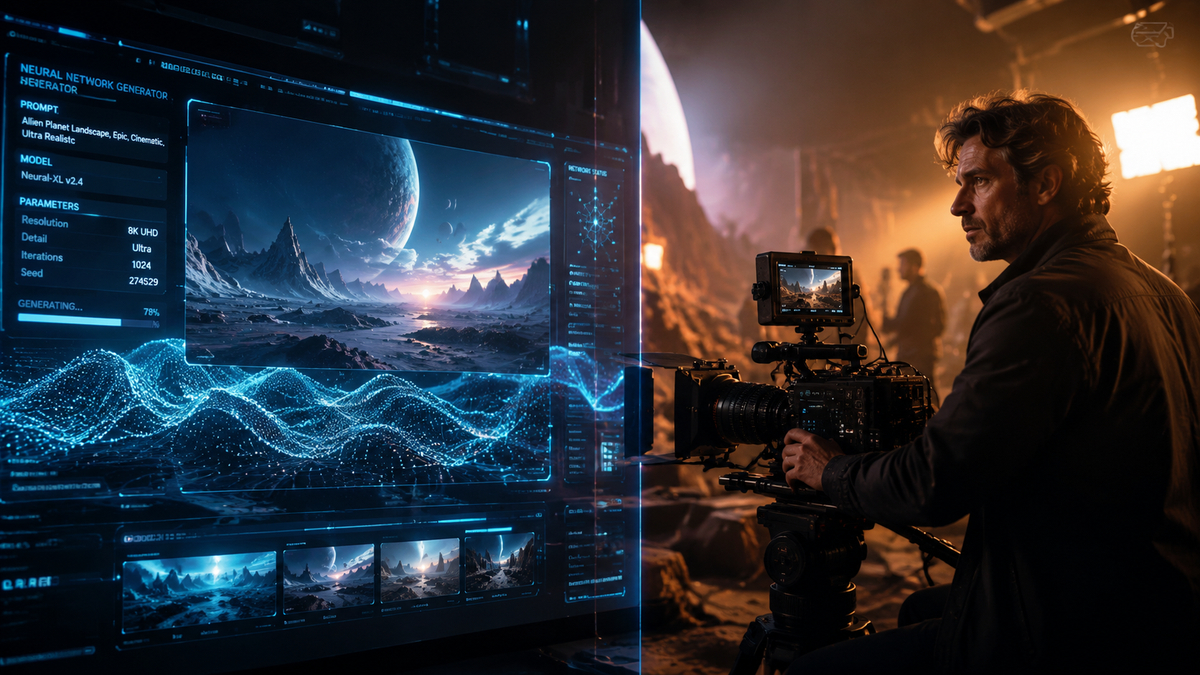
The debate of ai video generator vs human creativity has reached a fever pitch in 2026 as generative models achieve near-perfect cinematic fidelity. While AI video generators now offer instantaneous rendering and hyper-realistic physics, human creators provide the emotional nuance, strategic intent, and legal copyright protections that algorithms still struggle to replicate. In the current landscape, the winner isn't a single entity, but rather the hybrid workflow that leverages machine speed with human oversight.
An AI video generator is a software tool that uses deep learning models to transform text prompts or static images into high-definition video content. In 2026, the primary difference between AI and human video production lies in the source of creativity: AI excels at rapid visual synthesis and data-driven iteration, while humans excel at storytelling, emotional resonance, and navigating complex copyright laws.
- ✓ AI video generators in 2026 can produce 8K cinematic footage in minutes, significantly reducing production costs.
- ✓ Human creators remain essential for brand consistency, ethical storytelling, and intellectual property ownership.
- ✓ New tools like Seedance 2.0 and the latest models reviewed by CNET have surpassed early pioneers like Sora in temporal consistency.
- ✓ Legal frameworks in 2026, as noted by Built In, still favor human-authored content for full copyright protection.
The Current State of AI Video Generator vs Human Production
As of April 2026, the technological gap between machine-generated imagery and traditional cinematography has narrowed to a sliver. According to recent reviews by CNET, the best AI video generators of 2026 now feature advanced "world physics" engines that prevent the warping and "hallucinations" common in earlier versions. This allows creators to generate consistent characters across multiple scenes, a feat that was once the exclusive domain of human editors and VFX artists. However, the ai video generator vs human comparison is no longer about which is "better," but rather which is more appropriate for specific project goals.
Human production teams still dominate the high-stakes world of narrative filmmaking and high-budget advertising. The reason is simple: intentionality. While an AI can generate a beautiful sunset, a human director chooses a specific lighting setup to evoke a precise memory or feeling. Furthermore, Programming Insider reports that the integration of AI video generators with AI voice generators has created a "one-stop shop" for automated content, yet these systems often lack the spontaneous "happy accidents" that occur on a physical film set, which often lead to iconic cinematic moments.
The economic shift is also impossible to ignore. In 2026, a small business can produce a high-quality social media campaign for the price of a monthly subscription, whereas a human crew would require thousands of dollars in equipment and labor. This democratization of video production has led to an explosion of content, making the human touch—the ability to stand out through unique, non-algorithmic perspective—more valuable than ever before.
How to Integrate AI Video Generators into Your Workflow
- Define the Narrative: Start with a human-written script to ensure brand voice and emotional arc are maintained.
- Select the Tool: Choose a top-rated 2026 generator such as Seedance 2.0 or the latest PCMag-recommended models based on your specific style needs.
- Prompt Engineering: Input detailed prompts including camera angles, lighting (e.g., "Rembrandt lighting"), and specific motion vectors.
- Iterative Refinement: Use the generator’s "in-painting" features to fix specific frames while keeping the human-led vision intact.
- Post-Production: Finalize the edit in a traditional NLE (Non-Linear Editor) to add human-composed music and nuanced pacing.
Comparing Features: AI Video Generator vs Human Creators
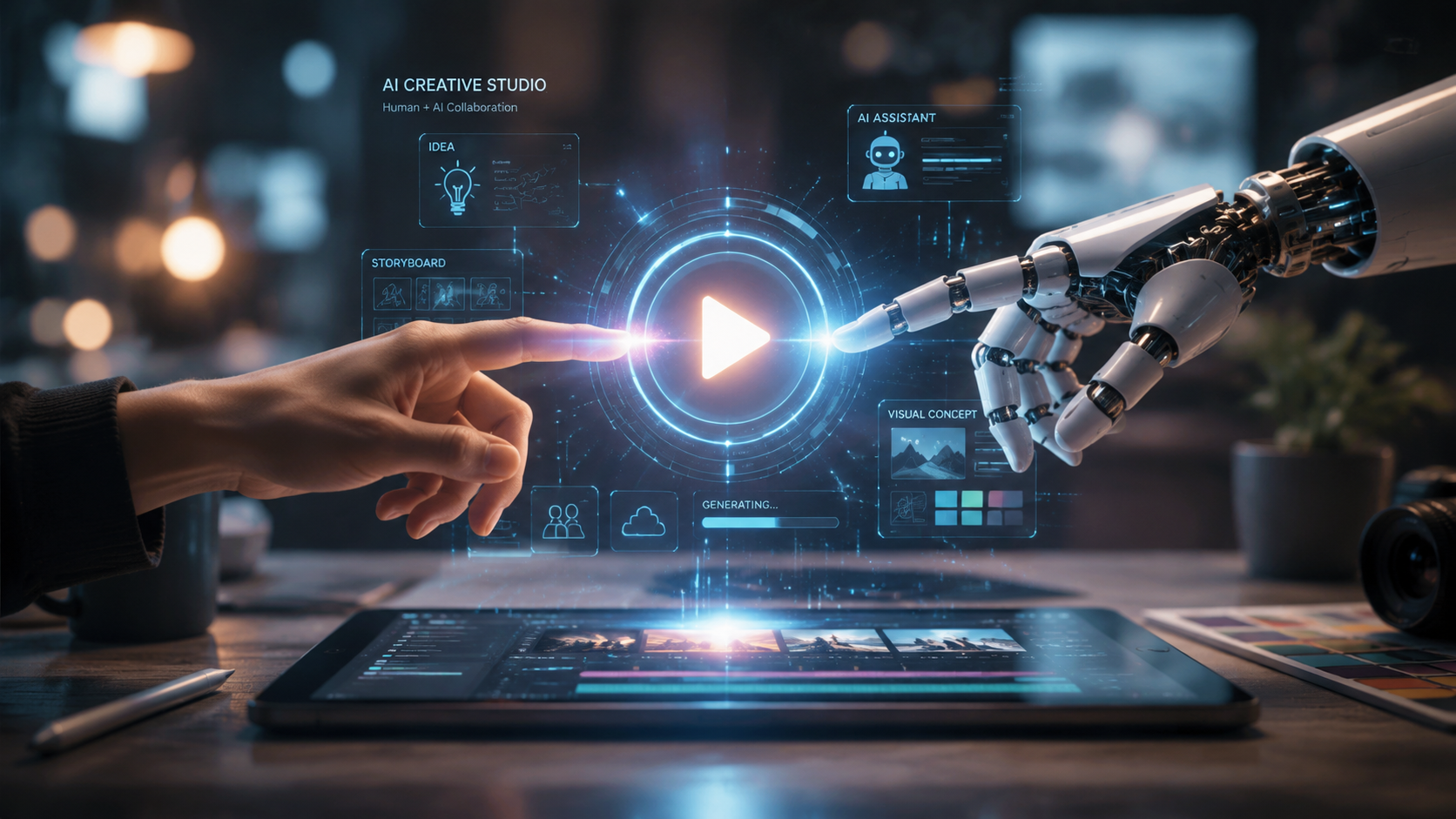
To understand where to invest your resources, it is helpful to look at the technical and creative capabilities of both sides. PCMag Middle East recently highlighted that 2026 models have solved the "long-form" problem, now capable of generating up to 10 minutes of continuous, coherent footage. However, human creators still hold the edge in "contextual intelligence"—understanding the cultural zeitgeist and ensuring that content doesn't inadvertently offend or miss the mark.
| Feature | AI Video Generator (2026) | Human Video Creator |
|---|---|---|
| Production Speed | Minutes to Hours | Days to Weeks |
| Cost Per Minute | $0.05 - $2.00 | $500 - $5,000+ |
| Copyright Ownership | Limited/Uncertain (Built In) | Full Legal Ownership |
| Emotional Depth | Pattern Mimicry | Authentic Expression |
| Scalability | Infinite | Limited by Personnel |
| Consistency | High (Seedance 2.0 Tech) | Variable/Artistic |
The Legal Landscape: Copyright and Ownership in 2026
One of the most significant hurdles in the ai video generator vs human debate is the question of intellectual property. According to Built In, as of April 30, 2026, copyright law continues to evolve, but the core principle remains: "human authorship" is a requirement for standard copyright protection. This means that if a studio generates a full-length movie using only AI, they may find it difficult to prevent others from pirating or repurposing that content, as the law does not recognize a machine as an author.
This legal reality has created a new professional role: the "AI-Human Hybrid Producer." These individuals document their creative choices—such as prompt sequences, manual edits, and storyboarding—to prove significant human intervention. This documentation is crucial for securing the legal rights to content. Without a human in the loop, the commercial value of AI-generated video is capped by its inability to be protected as a unique asset.
Furthermore, ethical considerations regarding training data remain a hot topic. While the "So Long, Sora" era of 2026 has seen the rise of ethically-trained models that compensate artists, many human creators still feel the "creative showdown" is unfair. The industry is currently moving toward a "Watermark Standard," where all AI-generated content must be tagged, allowing viewers to distinguish between synthetic and organic media. This transparency is vital for maintaining trust in digital journalism and brand communications.
Seedance 2.0 and the Evolution of Generative Consistency
In early 2026, the release of Seedance 2.0 marked a turning point in the industry. As noted by Cybernews, this version introduced "Temporal Anchor Technology," which allows for the same digital actor to appear in different lighting and environments without losing their facial structure. This was previously the biggest advantage human actors had over AI—the ability to be a consistent "brand face."
With these upgrades, the ai video generator vs human rivalry has moved into the realm of "Digital Twins." Many human actors are now licensing their likeness to AI companies, allowing them to "perform" in thousands of videos simultaneously. This creates a strange paradox: the video is AI-generated, but the "human" element is still present in the form of licensed data. For businesses, this means the cost of celebrity endorsements is dropping, as stars can now "work" 24/7 without ever stepping onto a film set.
However, Cybernews also points out that Seedance 2.0 requires significant computing power. While the output is stunning, the "human" advantage of being able to film with a simple smartphone and a good idea still holds weight for creators who lack the budget for high-end enterprise AI subscriptions. The "Creative Showdown" is thus also a battle of accessibility versus high-end computational power.
The Human Advantage: Why Strategy Beats Algorithms
Despite the staggering speed of AI, humans possess an "empathy engine" that no GPU can replicate. Video production is rarely just about moving images; it is about solving a problem or telling a story that resonates with a specific audience. A human director understands the "why" behind a shot. They can pivot mid-production if a scene doesn't feel right, whereas an AI video generator can only follow the parameters of its training data and the specific prompt provided.
In the ai video generator vs human context, the human role has shifted toward high-level creative direction. Think of the human as the conductor and the AI as the orchestra. The conductor doesn't play every instrument, but they are responsible for the harmony, the tempo, and the emotional impact of the performance. Without the conductor, the orchestra is just a collection of sounds. In 2026, the most successful brands are those that use AI to handle the "grunt work" of rotoscoping and color grading, while keeping humans in charge of the narrative heart.
Studies show that audiences are becoming increasingly "AI-aware." As synthetic content floods the internet, there is a growing premium on "authentic" human experiences. Live-action footage, hand-drawn animations, and unscripted human interactions are seeing a resurgence in value precisely because they are difficult for AI to perfectly simulate. The "Showdown" of 2026 is teaching us that while AI can create a perfect image, only humans can create a perfect connection.
Conclusion: The Future is Collaborative, Not Competitive
The "2026 Creative Showdown" has revealed that the ai video generator vs human conflict is a false dichotomy. The most powerful creative outputs of this year are coming from teams that refuse to choose one over the other. By using AI for its speed and humans for their soul, the industry is entering a "Golden Age" of content where the only limit is the imagination, not the budget.
As we look toward the latter half of 2026, expect to see even more integration. AI video generators will likely become standard features within traditional editing suites, making the distinction between "AI" and "Human" video almost invisible. For creators, the message is clear: don't fear the machine; master it. For businesses, the goal is to find the balance that maintains brand integrity while embracing the efficiency of the future.
Is AI video generation better than human filming in 2026?
It depends on the metric. AI is superior for speed, cost-efficiency, and creating fantastical environments, while humans remain superior for emotional storytelling, legal copyright protection, and brand authenticity.
Can I copyright video made by an AI video generator?
According to 2026 legal standards cited by Built In, pure AI-generated content is generally not copyrightable. Significant human creative input or editing is required to claim ownership of the final work.
What is the best AI video generator in 2026?
Recent rankings from CNET and PCMag suggest that Seedance 2.0 and the latest enterprise models are the current leaders, offering the best temporal consistency and physics simulation available.
Will AI video generators replace human actors?
While AI can create realistic digital humans, many actors are transitioning to licensing their likeness. Humans are still preferred for high-end performances that require genuine emotional depth and improvisational skills.
How much does it cost to use a professional AI video generator in 2026?
Pricing varies, but most professional-grade tools offer subscription tiers ranging from $30 to $500 per month, depending on the rendering resolution and the amount of "compute minutes" required.



Comments ()