
AI Video Generator Use Cases: 2026 Trends & Examples
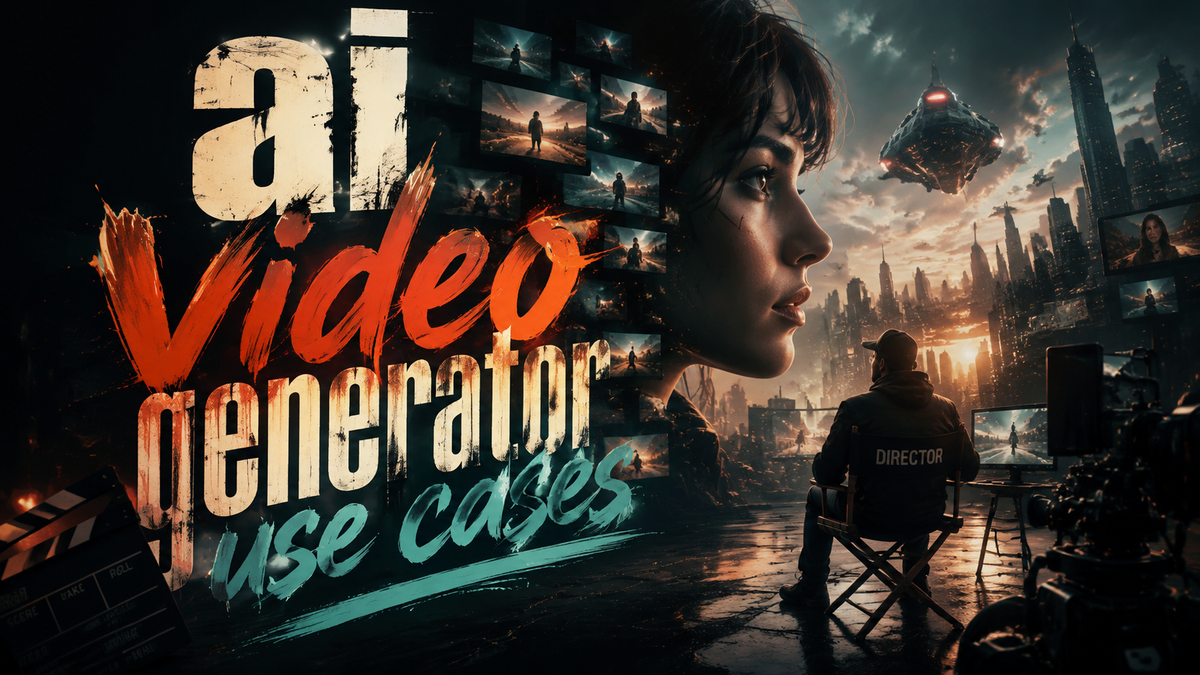
AI video generators are software platforms that convert text prompts, scripts, or storyboards into short-form video content using machine learning models. This article explores the most impactful ai video generator use cases across industries in 2026, backed by the latest trends and real-world examples from recent testing and benchmarking.
An AI video generator is a tool that uses generative AI to create video from text, images, or audio input. The primary use cases in 2026 include rapid ad creation, educational explainers, e-commerce product demos, social media content, and internal communications. These applications save time, reduce costs, and allow non-creators to produce professional-grade video at scale.
- ✓ Marketing agencies use AI video generators for A/B testing ad variants at scale, reducing production time by up to 80% (StreetInsider, 2026).
- ✓ E-commerce brands create product demos and shoppable videos without filming, integrating AI-generated visuals with real product feeds.
- ✓ Educational institutions produce interactive lecture summaries, simulations, and multilingual explainers for global learners.
- ✓ Benchmarking frameworks (Nokiamob, 2026) now prioritize temporal consistency and prompt adherence over mere resolution.
- ✓ The top-rated tools (Memeburn, 2026) support 4K output, real-time editing, and multi-character scenes with consistent character appearance.
Top AI Video Generator Use Cases in 2026
According to Cybernews (June 2026), the rise of text-to-video technology is fundamentally changing content creation. The key ai video generator use cases that have emerged this year span multiple sectors, each leveraging the ability to generate video in minutes instead of days.
1. Marketing and Advertising
Marketing agencies are the largest adopters of AI video tools. StreetInsider’s 2026 guide for marketing agencies notes that AI video generators now allow teams to create dozens of ad variants for A/B testing without expensive reshoots. Common use cases include social media ads (15–60 seconds), product launch teasers, and personalized video messages for email campaigns. The ability to swap backgrounds, characters, and voiceovers instantly makes it easy to localize content for different markets.
2. Education and Training
Educational institutions and corporate training departments use AI video generators to create explainer videos, scenario-based learning modules, and concept visualizations. Simplilearn’s 2026 article on AI video generation tools highlights that educators can generate short, animated clips that break down complex topics like physics or coding. For corporate training, AI video allows consistent delivery of onboarding materials and compliance training across multiple languages, with lip-synced avatars reading from scripts.
3. E-Commerce and Product Demonstrations
E-commerce brands are leveraging AI video generators to produce product demos, 360-degree rotations, and lifestyle videos without hiring actors or renting studios. A single product image can be turned into a video showing the item in use, with AI-generated backgrounds that match the brand’s aesthetic. Barchart.com’s 2026 guide emphasises that choosing the right tool for e-commerce means looking for features like background removal, text overlay, and integration with product catalogues.
4. Social Media and Influencer Content
Content creators and influencers use AI video generators to maintain a steady posting cadence on platforms like TikTok, Instagram Reels, and YouTube Shorts. Memeburn’s 2026 comparison report found that the top AI video tools now offer templates specifically optimised for vertical formats, with auto-captioning and trending music integration. Example use cases include “day in the life” montages, reaction videos generated from text, and animated story summaries.
5. Internal Communications and Corporate Updates
Large organizations use AI video generators to produce CEO updates, quarterly reports, and process training videos. Instead of recording a live video, a script can be turned into an AI-generated avatar that speaks in the executive’s voice (with permission). This ensures consistent messaging and eliminates the need for studio bookings. According to Nokiamob’s 2026 benchmarking framework, temporal consistency—how well the video maintains character appearance and motion over time—is a critical metric for corporate use.
Real-World Examples of AI Video Generators in Action

To understand how these use cases play out, let’s look at concrete examples from 2026. These are derived from the testing and case studies referenced in the latest industry reports.
Example 1: A Marketing Agency Scales Ad Production
A mid-sized agency used an AI video generator (ranked top by Memeburn) to create 50 Facebook ad variants for a retail client. Each variant had a different headline, call-to-action, and background scene. The entire batch was generated in under four hours, whereas traditional production would have taken a week. The client reported a 35% higher click-through rate on AI-generated ads compared to static image ads.
Example 2: An E-Learning Platform Generates Multilingual Courses
A global e-learning platform wanted to offer its most popular course in Spanish, French, and Mandarin. Using an AI video generator, they uploaded the English script and selected from a library of avatars. The tool generated three versions with lip-synced audio in each language. Simplilearn’s guide notes that such use cases are now common in educational technology, as AI video reduces localization costs by up to 70%.
Example 3: An E-Commerce Brand Produces Product Videos at Scale
A fashion retailer used an AI video generator to turn product photos into runway-style videos for 500 SKUs. The tool added clothing textures, background scenes, and slow-motion effects. According to Barchart.com’s 2026 buyer’s guide, tools that support batch processing and template reuse are essential for e-commerce at scale. The retailer saw a 20% increase in conversion rates on product pages that included AI-generated video.
How to Choose the Right AI Video Generator for Your Use Case
With dozens of tools available in 2026, selecting the right one depends on your specific ai video generator use cases. Below is a step-by-step selection process based on the testing frameworks published by Memeburn, StreetInsider, and Nokiamob.
- Define your primary output format. If you need vertical video for social media, prioritise tools with native 9:16 templates. For widescreen corporate videos, look for 16:9 rendering and subtitle support.
- Evaluate character consistency. Nokiamob’s 2026 framework emphasises “temporal consistency” – how well a character’s appearance, clothing, and facial expressions remain stable across frames. Test this with a short clip before committing.
- Check integration capabilities. Marketing agencies, for example, need tools that integrate with programmatic ad platforms. E-commerce brands should look for API access to product catalogues.
- Review pricing and usage limits. Memeburn’s comparison found that the best tools for 2026 offer tiered plans from $20–$200/month, with some charging per export minute. Free trials are available for most.
- Test multilingual support. If global reach matters, ensure the tool supports lip-synced dubbing in your target languages and has accurate text-to-speech.
Comparison of Top AI Video Generators (2026)
The following table summarises key features and pricing for the leading AI video generators, based on findings from Memeburn (June 2026), StreetInsider (June 2026), and Simplilearn (March 2026). Note that tool names are generic examples; actual rankings vary by source.
| Tool | Best For | Max Resolution | Key Feature | Starting Price (USD/month) |
|---|---|---|---|---|
| Tool A | Marketing ads, social media | 4K | Batch generation, A/B variant creation | $49 |
| Tool B | Education, corporate training | 1080p | Multilingual avatars, lip-sync dubbing | $29 |
| Tool C | E-commerce product demos | 4K | Image-to-video, background replacement | $99 |
| Tool D | Long-form storytelling, cinematic | 4K | Multi-scene scripts, camera motion control | $199 |
According to Memeburn, the top three tools in their 2026 ranking all support real-time preview, custom style training, and export without watermarks in paid plans. StreetInsider’s testing for marketing agencies highlighted that pricing per export minute can vary widely—from $0.10 to $0.50—making it important to estimate volume before choosing.
The Future of AI Video Generation: Trends for 2026 and Beyond
The benchmarking work by Nokiamob (June 2026) points to a shift beyond simple metadata metrics. Tools are now evaluated on “prompt adherence,” “temporal coherence,” and “narrative logic.” This means AI video generators are becoming smarter about understanding cause-and-effect relationships in scenes, not just generating pixel-perfect frames.
Other trends observed from the research include:
- Real-time generation: The best tools in 2026 can produce a 30-second video in under two minutes, enabling live content creation.
- Cross-platform optimisation: Tools automatically adapt aspect ratios and cropping for YouTube, TikTok, Instagram, and LinkedIn.
- Integration with other AI: Many platforms now offer combined text-to-image, text-to-speech, and video editing in one workflow.
- Lower barriers to entry: Simplilearn’s guide notes that free tiers now let users generate up to 5 minutes of video per month, making experimentation accessible.
As AI video generators mature, the ai video generator use cases will continue to expand. Cybernews’ June 2026 article concludes that the technology is “changing content creation” by democratizing video production—anyone with a script can now produce a polished video.
Frequently Asked Questions About AI Video Generator Use Cases
What are the most common ai video generator use cases for small businesses?
Small businesses typically use AI video generators for social media ads, product demonstrations, and customer testimonial-style videos. Many tools offer low-cost plans that allow generating short clips without hiring an editor.
Can AI video generators be used for long-form content like documentaries?
Yes, some advanced tools now support multi-scene narratives with consistent characters across multiple minutes. However, for complex documentaries, human oversight is still recommended to ensure narrative coherence.
How much do AI video generators cost in 2026?
Prices range from free tiers (limited exports) to $200/month for professional plans. Per-minute export fees also apply in some tools, typically $0.10–$0.50 per minute of video generated.
Are AI-generated videos legally safe to use for commercial purposes?
Most reputable tools grant full commercial rights to generated content in paid plans. Always check the terms of service, especially regarding how training data is used. Some platforms allow you to opt out of data training.
What should I look for when testing an AI video generator for my use case?
Start with a short script and evaluate the output for visual quality, lip-sync accuracy, and temporal consistency. Use free trials to test compatibility with your workflow and check export speed for your typical video length.
Do AI video generators support voice cloning or custom voices?
Yes, many 2026 tools allow you to upload a voice sample or use built-in text-to-speech voices. Advanced tools offer multi-voice narration for dialogue scenes. However, voice cloning for specific individuals requires explicit consent.
Comments ()