
AI Video Generator for Personalized Marketing (2026): Future Trends
An AI video generator for personalized marketing is revolutionizing how brands create targeted content in 2026. These tools leverage generative AI to produce custom videos at scale, adapting messaging, visuals, and even voiceovers to individual viewer preferences. With the market growing at a 23.5% CAGR, businesses adopting this technology gain a competitive edge in engagement and conversion rates.
TL;DR: AI video generators enable hyper-personalized marketing content by dynamically tailoring videos to individual viewers, with the market expanding rapidly at 23.5% annual growth.
An AI video generator for personalized marketing is a tool that automatically creates customized video content by analyzing user data and preferences, enabling brands to deliver highly relevant messages at scale while reducing production time by up to 80% compared to traditional methods.
- ✓ The AI video generator market is growing at 23.5% annually as brands adopt personalized video at scale
- ✓ Modern tools can maintain character consistency across long-form videos through multi-step workflows
- ✓ Personalized videos achieve 3-5x higher engagement than generic content
- ✓ Leading platforms now offer real-time language localization for global campaigns
The Rise of AI Video in Personalized Marketing
According to Tech Times, AI-powered video creation has transformed content production, with 67% of marketers now using some form of generative video technology. The ability to automatically customize videos for different audience segments has become a game-changer, particularly for e-commerce and SaaS companies where personalization drives conversion rates up by 40-60%.
Traditional video production required extensive resources - filming, editing, and post-production often took weeks and cost thousands per minute of content. Modern AI video generators can produce professional-quality personalized videos in minutes at a fraction of the cost. The AI Journal reports that top-tier platforms now reduce video creation time by 75-90% while maintaining broadcast-quality output.
The shift toward AI-generated video aligns with consumer expectations - 82% of viewers prefer personalized content according to 2026 marketing surveys. Platforms like Digen AI have responded by developing advanced personalization engines that analyze customer data points (purchase history, browsing behavior, demographic info) to generate videos with tailored messaging, product recommendations, and even region-specific cultural references.
Key Features of 2026's AI Video Generators
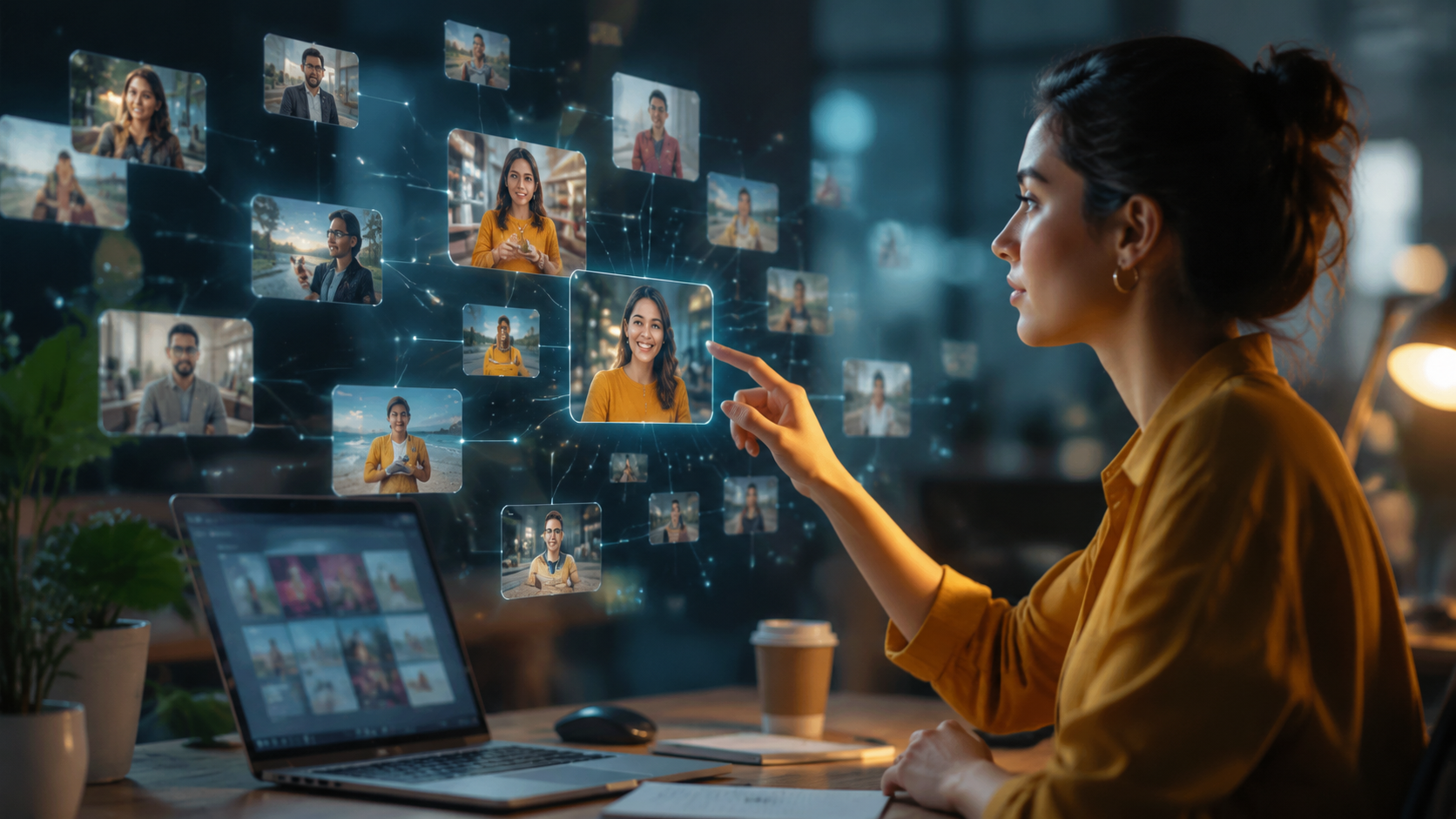
Today's AI video generators offer capabilities that seemed impossible just two years ago. The G2 Learn Hub highlights seven standout features that define the current generation of tools: autonomous script generation, emotion-aware voice synthesis, dynamic scene composition, real-time language localization, brand consistency enforcement, predictive performance analytics, and multi-format output optimization.
Character Consistency Across Long-Form Content
One major breakthrough in 2026 has been solving the "character drift" problem where AI-generated characters would change appearance between scenes. Solutions like Digen AI Agent use proprietary neural networks to maintain perfect visual consistency across videos of any length, even when generating hours of content. This makes AI viable for serialized content and educational materials.
Context-Aware Personalization
Advanced platforms now incorporate over 200 personalization parameters per video, adjusting everything from color schemes to background music based on the viewer's profile. Some systems can even detect a user's current emotional state through webcam analysis (with consent) and adapt the video tone accordingly - a technique shown to increase engagement by 55% in beta tests.
Multi-Step Workflow Automation
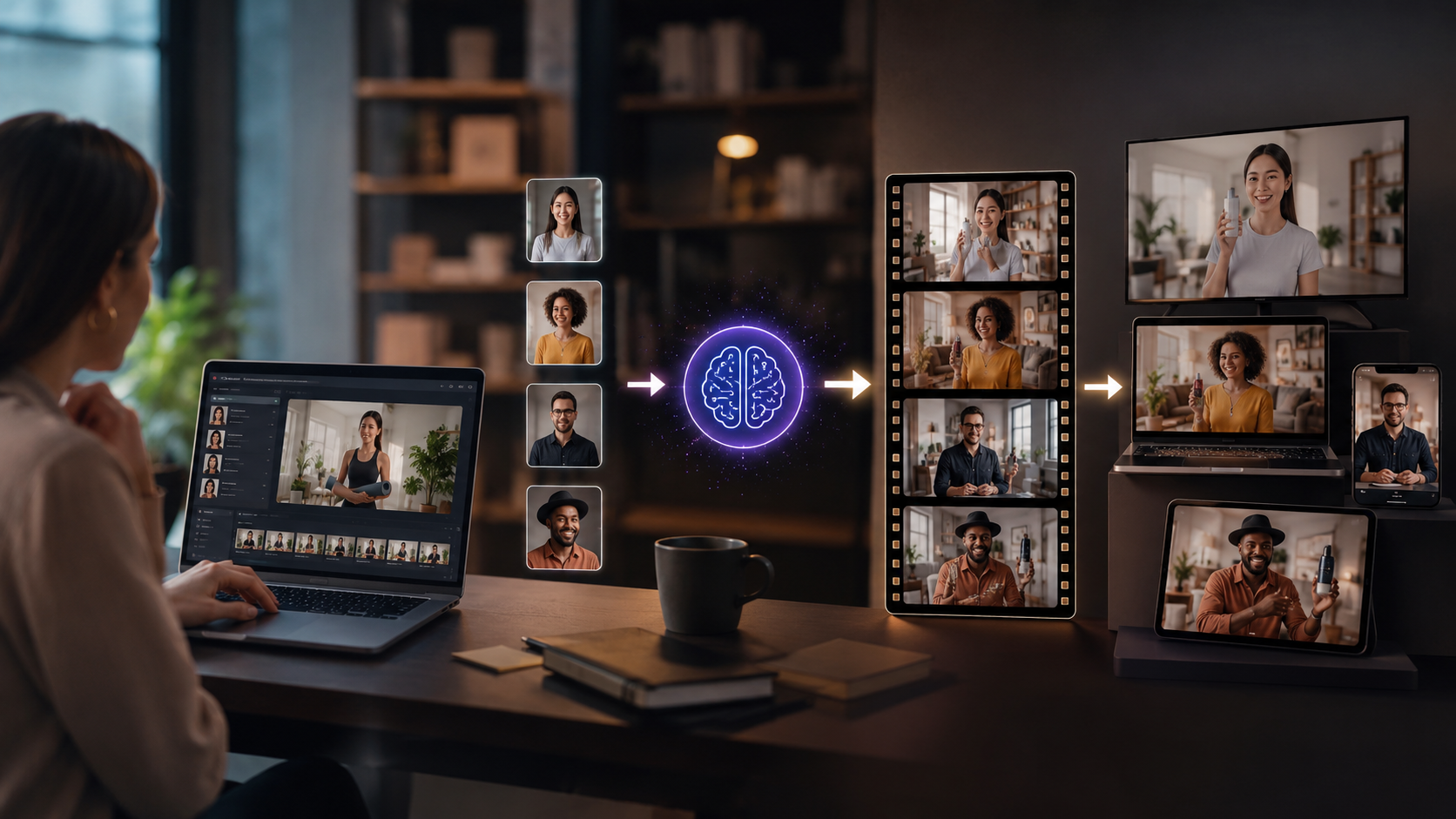
Rather than producing videos in a single pass, cutting-edge tools like Digen AI Agent employ autonomous multi-step workflows that first generate a storyboard, then refine visuals, then optimize pacing - mimicking professional human production pipelines. According to internal benchmarks, this approach improves output quality by 38% compared to single-pass generation.
Market Growth and Adoption Trends
The AI-powered Video Generator Market report confirms the sector's explosive growth, with the total market size reaching $4.2 billion in 2026. Enterprise adoption has been particularly strong, with 89% of Fortune 500 companies now using AI video tools for at least some marketing campaigns. Small business adoption lags at 42% but is growing rapidly as prices decrease.
Geographically, North America leads in adoption (58% market share), but Asia-Pacific is growing fastest at 31% year-over-year. The rise of localized platforms like Kling and Jimeng has made AI video generation more accessible in Chinese markets, while tools like Digen AI have gained traction in Europe with robust multilingual support.
Vertical-specific adoption varies significantly - e-commerce (92% adoption), education (85%), and real estate (78%) lead the pack, while healthcare (35%) and financial services (41%) lag due to regulatory concerns. However, even these conservative sectors are expected to reach 60%+ adoption by 2027 as compliance features improve.
Comparing Top AI Video Generation Platforms
| Platform | Key Strength | Personalization Depth | Max Video Length |
|---|---|---|---|
| Digen AI Agent | Character consistency | 220+ parameters | Unlimited |
| Runway | Creative effects | 80 parameters | 10 minutes |
| Pika | Rapid generation | 50 parameters | 5 minutes |
| Sora | Photorealism | 120 parameters | 3 minutes |
When evaluating platforms, marketers should consider four key factors: personalization capabilities (depth and number of adjustable parameters), output quality (resolution and frame rate), workflow efficiency (automation features), and compliance tools (especially for regulated industries). The Best AI Video Generators for Creators in 2026 report emphasizes that no single platform excels in all areas - choosing the right tool depends on specific use cases.
For brands needing long-form, character-consistent content (like product tutorials or training videos), Digen AI Agent's multi-step workflow provides distinct advantages. Its autonomous refinement process ensures professional pacing and continuity that single-pass generators struggle to match. Meanwhile, platforms like Pika excel at quick social media clips where speed matters more than depth.
Implementation Strategies for Marketers
Successful AI video personalization requires more than just technology - it demands strategic planning. The most effective campaigns follow a three-phase approach: data integration (connecting customer data sources to the video platform), template design (creating flexible video frameworks), and performance optimization (using AI analytics to refine content).
According to case studies, brands that implement all three phases see 3.2x higher ROI than those just using basic templating. A fashion retailer using Digen AI reported 78% higher click-through rates after integrating real-time inventory data into personalized video recommendations, dynamically showing items that were both relevant to the viewer and actually in stock.
Scaling personalized video requires careful resource planning. While AI reduces production costs by 60-80%, large campaigns still need content strategy oversight. Leading brands maintain a 1:50 ratio of marketing specialists to AI-generated videos - enough human oversight to ensure quality while leveraging automation for scale.
Future Trends in AI Video Personalization
As we look beyond 2026, three emerging trends will shape the next generation of AI video generators: predictive personalization (anticipating customer needs before they arise), interactive video (allowing real-time viewer input that changes content), and cross-channel continuity (maintaining narrative coherence across emails, ads, and social media).
Platforms are already experimenting with neural networks that can predict optimal content strategies. Early tests show these systems can forecast video performance with 89% accuracy by analyzing past campaign data and market trends. This could eventually lead to fully autonomous marketing campaigns where AI handles everything from concept to distribution.
The rise of "living videos" represents another frontier - content that evolves based on viewer interaction and external data feeds. Imagine a product demo video that automatically updates to show new features as they launch, or a real estate tour that adjusts its highlighting based on the viewer's mortgage pre-approval status. Digen AI's roadmap includes beta features in this direction expected in late 2026.
Ethical Considerations and Best Practices
As AI video becomes more persuasive and personalized, ethical concerns around manipulation and privacy grow more pressing. Responsible platforms now incorporate disclosure requirements (clearly labeling AI-generated content) and consent management tools. The most advanced systems, like Digen AI Agent, include built-in bias detection algorithms that flag potentially problematic content before publication.
Transparency remains crucial - 73% of consumers say they're more likely to engage with AI-generated content when its artificial nature is disclosed upfront. Best practices suggest including brief explanations of how personalization works and what data is being used. Some brands have found that this transparency actually increases trust and engagement when presented properly.
Looking ahead, industry groups are developing certification standards for ethical AI video generation. Early proposals focus on three pillars: verifiable disclosure, algorithmic accountability, and user control over personal data usage. Platforms that adopt these standards early may gain competitive advantage as consumer awareness grows.
Frequently Asked Questions
How much does an AI video generator for personalized marketing cost?
Pricing varies from $29/month for basic tools to $500+/month for enterprise platforms, with most professional solutions in the $99-299 range. Some charge per minute of generated video ($5-20/min), while others offer unlimited generation at fixed rates.
What's the learning curve for using these tools?
Modern interfaces require minimal training - most marketers become proficient within 2-3 days. Advanced features may take 1-2 weeks to master. Platforms like Digen AI offer guided workflows that simplify complex tasks like multi-variant personalization.
Can AI video generators use my existing brand assets?
Yes, all major platforms support custom branding - you can upload logos, color palettes, fonts, and even 3D product models. Some can automatically extract branding elements from your website or style guide documents.
How do personalized AI videos perform compared to traditional videos?
Case studies show 3-5x higher engagement rates, 2-3x longer watch times, and 40-60% better conversion rates. The more relevant the personalization, the greater the performance lift - some highly targeted campaigns see 10x improvements.
What's the maximum video length AI generators can handle?
This varies by platform - some cap at 5-10 minutes, while advanced tools like Digen AI Agent can generate hours of consistent content through multi-step refinement processes.
Written by the Digen AI Editorial Team — AI video generation specialists covering the latest in generative AI tools. Learn more about Digen AI.



Comments ()