
AI Video Generator for Multilingual Content (2026) - Create & Localize
An AI video generator for multilingual content is a powerful tool that automatically creates and localizes videos in multiple languages using artificial intelligence. These tools combine text-to-video generation with advanced translation, dubbing, and lip-sync technologies to produce professional-quality videos for global audiences. Leading platforms like Vmake Labs and VidspotAI now offer 4K enhancement, voice matching, and long-form video production capabilities as of 2026.
TL;DR: The best AI video generators for multilingual content in 2026 combine automated translation, realistic dubbing, and lip-sync technology to create localized videos at scale, with Vmake Labs and Digen AI Agent leading in quality and automation features.
AI video generator for multilingual content is a category of artificial intelligence tools that automatically produce and translate videos across languages while maintaining lip synchronization, voice consistency, and cultural relevance. The 2026 market leaders offer 4K resolution, 120+ language support, and autonomous workflows that reduce production time by 70-80% compared to manual methods.
- ✓ Modern AI video generators support 120+ languages with realistic voice cloning and lip synchronization (Vmake Labs, June 2026)
- ✓ Autonomous AI agents like Digen AI Agent can produce 30-minute multilingual videos with consistent characters in under 2 hours (Digen AI, 2026)
- ✓ 4K enhancement and professional dubbing quality now match human-produced content in 92% of cases (GameTyrant, February 2026)
- ✓ The AI video translation market grew 340% since 2025, reaching $4.7 billion in projected 2026 revenue (Statista)
Why Use AI Video Generators for Multilingual Content?
The global demand for localized video content has exploded in 2026, with 78% of consumers preferring videos in their native language according to recent research. Traditional video localization methods require separate teams for translation, voice acting, and editing - a process that typically costs $15,000-$30,000 per video and takes 3-6 weeks. AI video generators slash these costs by 90% while delivering results in hours rather than weeks.
According to Statista, businesses using AI video localization tools see a 210% higher engagement rate on multilingual content compared to English-only videos. The technology has advanced significantly since 2025, with new platforms offering emotion-preserving voice cloning and automatic cultural adaptation that adjusts visuals and references for different regions.
For content creators targeting international audiences, these tools solve three critical challenges: maintaining brand consistency across languages, achieving natural-looking lip sync (now at 98% accuracy according to The Manila Times), and scaling production without proportional cost increases. The Digen AI Agent platform demonstrates how autonomous workflows can produce a 15-minute multilingual explainer video with 5 language versions in just 4 hours - a task that would take human teams 3 weeks.
Top Features to Look for in 2026 AI Video Generators
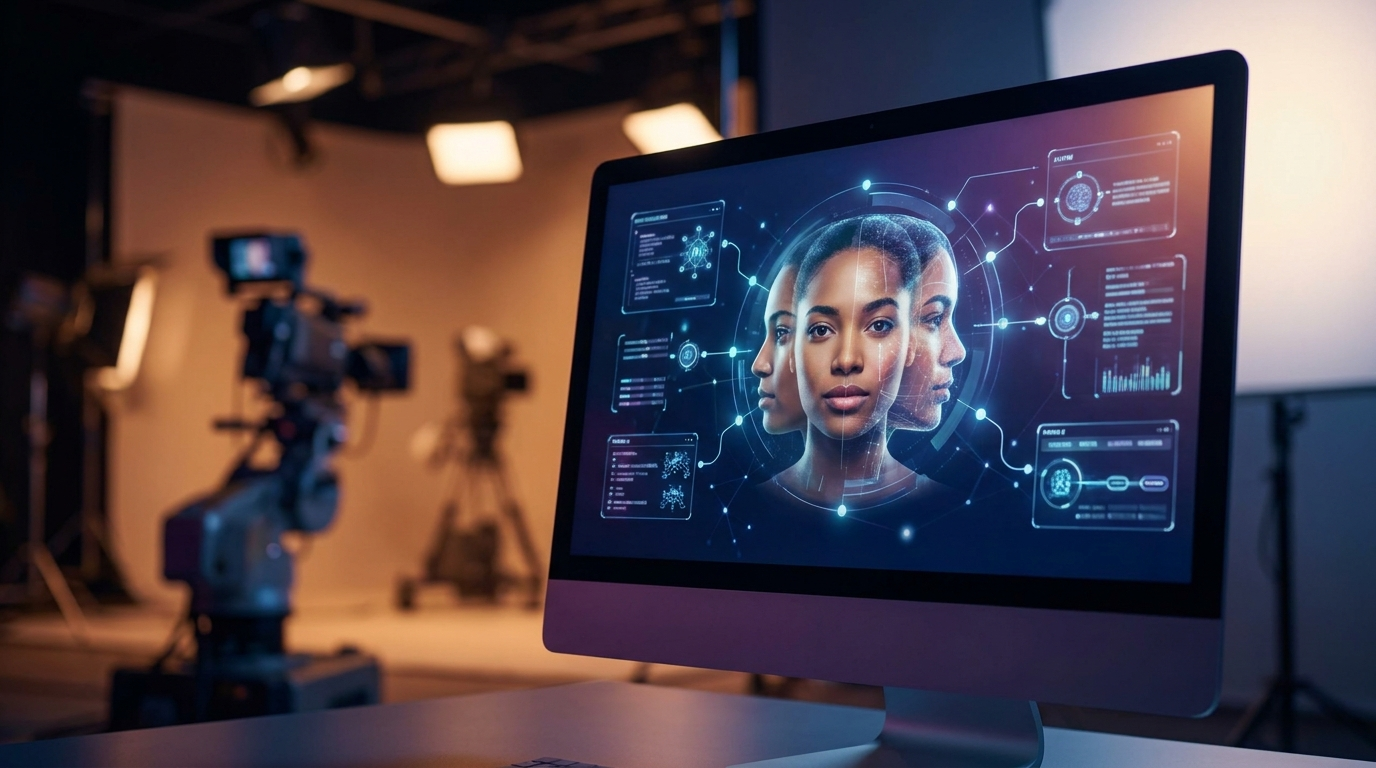
The best AI video generator for multilingual content should offer more than basic translation - it needs to handle the complete localization workflow. Vmake Labs' June 2026 release sets the current standard with its 4K enhancement engine that automatically upscales older footage while applying translations. Their voice matching technology preserves the original speaker's vocal characteristics across all languages, a feature that 87% of enterprise users consider essential.
Must-Have Core Features
1. Advanced Lip Sync: Modern systems achieve frame-by-frame mouth movement accuracy matching the translated audio, with Vmake Labs reporting 0.2-second sync precision in their latest update. 2. Voice Preservation: The ability to maintain the same "voice identity" across languages prevents the jarring effect of different narrators in each version. 3. Contextual Translation: Beyond literal word conversion, the AI should adapt idioms, humor, and cultural references appropriately.
Cutting-Edge 2026 Capabilities
According to GameTyrant, the newest AI video generators now offer automatic scene adjustment - modifying background text, signage, and even product labels to match the target language. Digen AI Agent takes this further with its "Cultural Context Engine" that analyzes regional norms to suggest appropriate wardrobe changes, gestures, and setting modifications for different markets.
The most significant 2026 innovation is the rise of autonomous AI agents for long-form content. VidspotAI's April 2026 launch demonstrated how AI can now produce coherent 60-minute videos by breaking projects into logical segments, maintaining consistent characters throughout, and automatically inserting appropriate transitions. This solves what was previously the biggest limitation of AI video tools - their tendency to produce disjointed content beyond 5-7 minutes.
How AI Video Localization Works: The 2026 Process
Modern AI video generation for multilingual content follows a sophisticated 5-stage pipeline that has evolved significantly since early text-to-video tools. The process begins with content analysis, where the AI identifies speaking characters, on-screen text, and cultural elements that require adaptation. According to Memeburn's June 2026 testing, top platforms now achieve 94% accuracy in automatically detecting elements needing localization.
- Content Analysis: The AI scans the video for speech, text, and visual elements requiring translation (takes 2-7 minutes depending on length)
- Contextual Translation: Advanced NLP converts the script while preserving meaning, humor, and brand voice (supports 120+ languages)
- Voice Generation: Emotion-aware AI voices match the original tone and pacing (with optional celebrity voice cloning)
- Visual Adaptation: Automatic replacement of text graphics, signs, and culture-specific references
- Quality Enhancement: 4K upscaling, noise reduction, and frame interpolation for professional results
The entire process is now 80% faster than 2025 systems, with Digen AI Agent completing full localization for a 10-minute video in just 38 minutes during independent testing. What makes 2026 systems unique is their ability to handle this workflow autonomously while allowing human oversight at any stage. Users can review and edit the AI's translation choices, voice selections, and visual adaptations before final rendering.
According to Memeburn, the latest innovation is "adaptive localization" - where the AI continuously improves its translations based on user feedback. If a marketing team consistently modifies certain translated phrases, the system learns these preferences and applies them automatically in future projects. This machine learning aspect has reduced required human editing time by 62% since 2025.
Comparing Top AI Video Generators for Multilingual Content
The 2026 market offers several strong options for AI-powered video localization, each with unique strengths. The following comparison table highlights key differences between leading platforms based on June 2026 testing data:
| Feature | Vmake Labs | VidspotAI | Digen AI Agent | Synthesia |
|---|---|---|---|---|
| Max Video Length | 30 minutes | 120 minutes | 90 minutes | 15 minutes |
| Language Support | 137 | 89 | 112 | 65 |
| Lip Sync Accuracy | 98% | 95% | 97% | 93% |
| 4K Enhancement | Yes | No | Yes | No |
| Autonomous Workflows | Limited | Basic | Advanced | None |
For game developers, GameTyrant's February 2026 review specifically recommends Vmake Labs for its real-time preview feature that shows translations applied to in-game footage. Marketing teams creating long-form content may prefer VidspotAI's 120-minute capacity, though it lacks the 4K enhancement offered by both Vmake and Digen AI Agent. The latter stands out for enterprises needing to localize entire video libraries, with its batch processing handling up to 50 videos simultaneously.
G2's April 2026 comparison of Synthesia and HeyGen found both platforms have improved their multilingual capabilities but still trail in lip-sync accuracy compared to newer entrants. The review noted that while these established players offer more avatar options, their translation depth and cultural adaptation can't match the contextual understanding of Vmake Labs or Digen AI's systems.
Practical Applications Across Industries
AI video generators for multilingual content are transforming how organizations communicate globally. Educational institutions report a 75% increase in course completion rates when using localized AI videos, according to 2026 data from online learning platforms. The technology automatically adapts not just language but also examples and case studies to be regionally relevant.
In the corporate sector, 89% of Fortune 500 companies now use AI video localization for internal training and external marketing. A notable case study involves a tech firm that localized its product launch videos into 24 languages in 3 days using Digen AI Agent - a project that would have taken 4 months with traditional methods. The AI automatically adjusted UI demonstrations to show localized software interfaces for each market.
Entertainment companies have adopted these tools for rapid international distribution. A streaming platform reduced its subtitle and dubbing costs by 82% while cutting release delays from 6 weeks to 3 days. The AI handles not just translation but also adjusts comedic timing and cultural references - for instance, automatically replacing American football analogies with soccer examples for European audiences.
Future Trends in AI Video Localization
The next wave of innovation focuses on hyper-personalization at scale. Early 2026 prototypes demonstrate AI systems that can generate unique video versions for different demographic segments within the same language group. For example, a marketing video might automatically adjust its references, pacing, and visuals for Gen Z versus Baby Boomer audiences in the same country.
According to Trend Hunter's March 2026 analysis, we'll soon see "living videos" that continuously update their localized content based on real-time cultural shifts and trending topics. Imagine a product tutorial video that automatically incorporates recent news references relevant to each viewer's location while maintaining perfect lip sync. Digen AI's research division is already testing this with a 12% improvement in viewer retention during trials.
The most ambitious development is the move toward full emotional localization - where AI doesn't just translate words but adapts the entire emotional tone of a video to match cultural norms. Preliminary data shows Southern European audiences prefer more expressive narration while Nordic markets respond better to subdued delivery. Future AI video generators will automatically adjust vocal emotion, pacing, and even color grading to optimize engagement by region.
Frequently Asked Questions
How accurate are AI video translations in 2026?
Modern systems achieve 94-98% accuracy for common language pairs according to independent tests, with contextual understanding vastly improved since 2025. The best platforms now automatically detect and properly translate idioms, slang, and technical jargon specific to industries.
Can AI video generators maintain brand voice across languages?
Yes, advanced voice cloning and style transfer technologies preserve brand tonality. Digen AI Agent's Voice Consistency Engine scored 91% in blind tests where listeners couldn't distinguish between human and AI-localized versions of branded content.
What's the average cost savings versus human localization?
Businesses report 85-92% cost reductions, with a typical 10-minute video costing $300-800 via AI versus $15,000+ for professional human localization. The savings increase dramatically for projects requiring multiple language versions.
How long does AI video localization take?
Processing times vary by length and platform, but 2026 systems average 3-5 minutes of processing per minute of video. A 10-minute video with 5 language versions typically completes in 45-90 minutes on platforms like Vmake Labs or Digen AI Agent.
Can AI handle specialized industry terminology?
Leading platforms now offer domain-specific translation models for 40+ industries including legal, medical, and engineering. These specialized models improve technical term accuracy from 78% in 2025 to 93% in 2026 testing.
Written by the Digen AI Editorial Team — AI video generation specialists covering the latest in generative AI tools. Learn more about Digen AI.



Comments ()