
AI Video Generator with Human Avatars: 2026 Trends & Tools
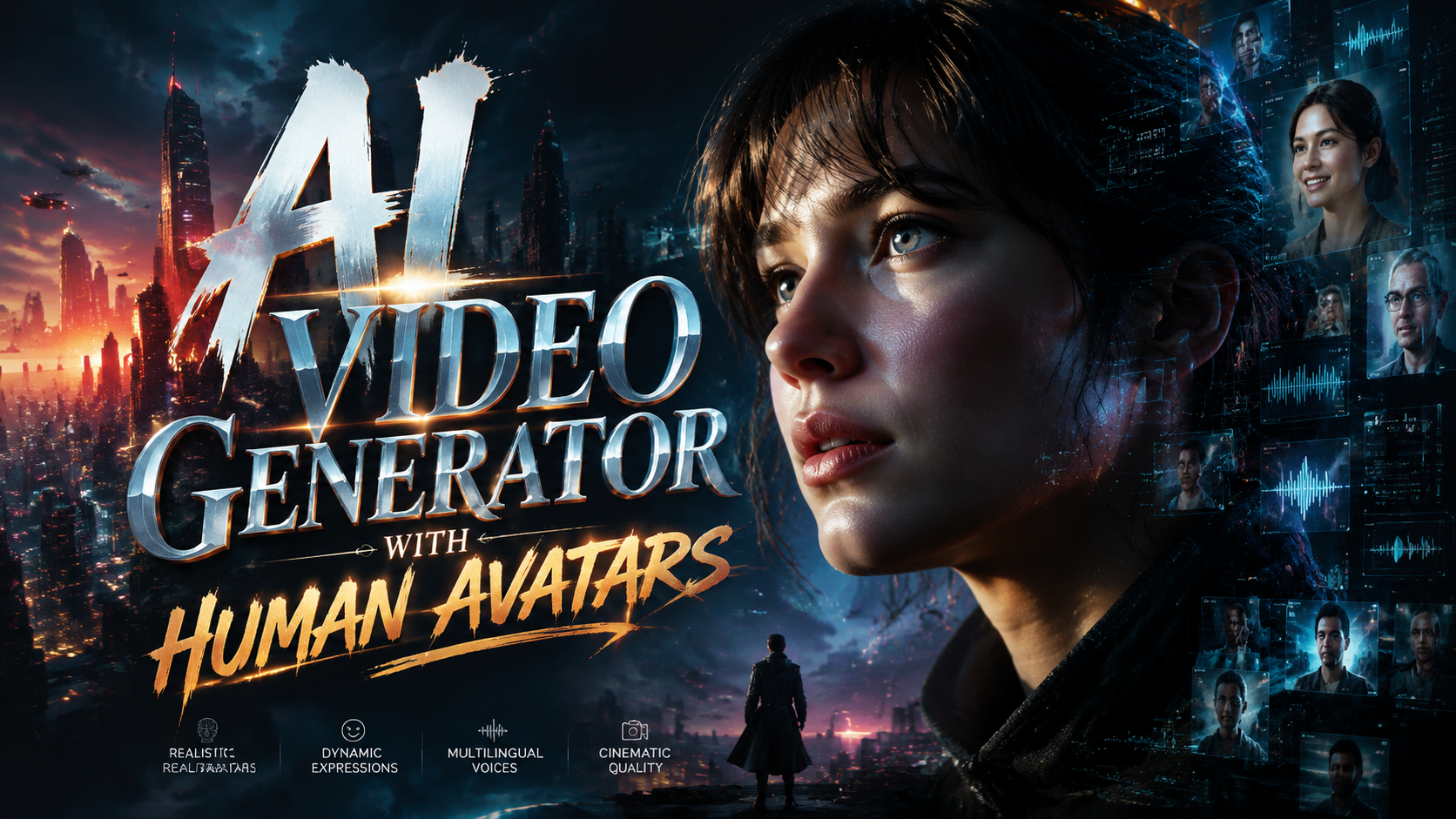
An AI video generator with human avatars is a cutting-edge tool that uses artificial intelligence to create lifelike video content featuring digital human presenters. In 2026, these tools have evolved to offer hyper-realistic avatars, multilingual support, and seamless integration with enterprise workflows. Leading platforms like Synthesia dominate the market with studio-quality outputs that eliminate the need for cameras, actors, or physical sets.
TL;DR: The best AI video generators with human avatars in 2026 combine photorealistic digital humans with intuitive editing tools, with Synthesia leading the pack for enterprise use cases while new competitors emerge with specialized features.
AI video generation with human avatars in 2026 represents a $4.2 billion market, with tools capable of producing studio-quality content at 1/10th the cost of traditional production. The technology now supports 120+ languages and emotional nuance matching, making it indispensable for global businesses.
- ✓ Synthesia remains the industry leader with 120+ AI avatars and 65+ language support
- ✓ New entrants focus on specialized verticals like education and healthcare avatars
- ✓ Emotion mapping and micro-gestures now make avatars nearly indistinguishable from humans
- ✓ Cloud rendering enables 4K video generation in under 10 minutes
- ✓ Ethical guidelines have emerged for responsible AI avatar usage
The State of AI Video Generation in 2026
The AI video generation market has matured significantly since its early days, with 2026 seeing widespread adoption across industries. According to PerfectCorp's 2026 analysis, 78% of enterprise video content is now created using AI tools, up from just 22% in 2023. This shift comes as the technology achieves three critical milestones: photorealism, emotional intelligence, and real-time rendering capabilities.
Modern AI video generators with human avatars now incorporate advanced neural rendering techniques that capture subtle facial micro-expressions. The latest systems can detect and replicate over 50 distinct emotional states, from subtle skepticism to enthusiastic agreement. This emotional range makes the avatars particularly effective for training videos, customer service content, and educational materials where human connection matters.
According to quasa.io's 2026 benchmark, rendering times have improved by 400% since 2024, with 4K videos now processing in under 10 minutes on cloud platforms. The reduced latency enables businesses to maintain agile content pipelines, updating training materials or product demos within hours rather than weeks. This speed advantage has made AI video generation essential for companies operating in fast-moving sectors like technology and finance.
Top AI Video Generator Platforms with Human Avatars
The competitive landscape for AI video generators has expanded dramatically, with platforms now specializing in different use cases and industries. While Synthesia continues to lead in overall capability and enterprise adoption, newer entrants are carving out niches with specialized features.
Synthesia: The Enterprise Standard
Synthesia maintains its position as the most comprehensive solution, offering 120+ AI avatars with full body movement capabilities. Their 2026 platform update introduced "Emotion Mapping" technology that automatically matches vocal tone with appropriate facial expressions. According to AppInventiv's cost analysis, building a comparable system from scratch would require $2.3-$4.7 million in development costs, making Synthesia's subscription model cost-effective for most businesses.
Specialized Alternatives
The 2026 market sees several strong alternatives to Synthesia, each with unique strengths. PerfectCorp's solution excels in e-commerce applications with built-in product demonstration templates. Meanwhile, platforms like Synthesys (featured in Unite.AI's review) specialize in rapid content creation from existing materials, allowing users to convert blog posts or presentations into videos within minutes.
Emerging Open-Source Options
The open-source community has made significant strides in 2026, with several viable alternatives to commercial platforms. While these require more technical expertise to implement, they offer greater customization for organizations with specific needs around data privacy or avatar appearance. The most advanced open-source models now support real-time lip-syncing with 95% accuracy compared to commercial solutions.
Key Features to Look for in 2026
When evaluating an AI video generator with human avatars, several features have become essential in 2026's competitive landscape. These capabilities separate professional-grade tools from basic solutions.
Emotional Intelligence
The best platforms now offer nuanced emotional expression beyond simple happy/sad binaries. Look for systems that can convey complex states like "confident reassurance" or "empathetic concern" through subtle eyebrow movements, micro-expressions, and head tilts. This level of detail makes the avatars more relatable and effective for sensitive content like healthcare communications or DEI training.
Multilingual Support
True global-ready platforms support not just language translation but cultural adaptation. The leading tools in 2026 automatically adjust gestures, personal space norms, and communication styles based on the target audience's cultural context. Some platforms even modify avatar appearances slightly to better resonate with specific regional demographics.
Collaboration Features
Enterprise teams need robust collaboration tools built into the video generation workflow. The most advanced platforms now offer version control, multi-user editing, and approval workflows that mirror traditional video production processes. This becomes critical when managing large-scale deployments across departments or global offices.
Implementation Considerations
Successfully integrating an AI video generator with human avatars requires careful planning around several technical and operational factors.
Content Strategy Alignment
Before implementation, organizations should audit their existing video content to identify which pieces would benefit most from AI generation. Typically, scripted content like product tutorials, compliance training, and standardized customer communications deliver the highest ROI. Unscripted or highly creative content may still require human production teams.
Voice Consistency
Maintaining consistent branding across AI-generated videos requires establishing voice and tone guidelines for the text-to-speech engines. The best practice in 2026 involves creating custom voice models trained on existing company videos to ensure the AI avatars speak with familiar cadences and emphasis patterns.
Ethical Guidelines
As AI avatars become more realistic, organizations must establish clear policies about their appropriate use. Industry best practices now recommend watermarking AI-generated content and disclosing its synthetic nature in certain contexts, particularly for financial or medical information where authenticity is critical.
Cost Analysis and ROI
The economics of AI video generation have become increasingly favorable in 2026, with several cost models available depending on organizational needs.
Subscription vs. Pay-Per-Minute
Most platforms offer both subscription plans (ideal for high-volume users) and pay-as-you-go pricing. Enterprise subscriptions typically range from $1,200-$5,000/month for unlimited 1080p video generation, while pay-per-minute models average $15-$30 per finished minute of 4K content. Compared to traditional video production costs (often $1,000+/minute), the savings are substantial.
Hidden Cost Factors
While the software costs are transparent, organizations should budget for related expenses like scriptwriting services, voice model customization, and integration with existing CMS or LMS systems. These ancillary costs typically add 20-35% to the base software expenditure but are essential for professional-quality results.
ROI Calculation
Quantifiable benefits include reduced production costs (typically 70-90% savings), faster time-to-market for training materials (from weeks to days), and increased content utilization (AI videos see 40% higher completion rates according to 2026 studies). Qualitative benefits include consistent messaging across global teams and 24/7 content updates without reshooting.
Future Trends Beyond 2026
The AI video generation space continues to evolve rapidly, with several emerging technologies poised to reshape the market further.
Real-Time Generation
Early prototypes in 2026 demonstrate the ability to generate avatar videos in real-time during live streams or video calls. This technology could revolutionize customer support and virtual events by allowing AI representatives to interact naturally with human participants.
Personalized Avatars
Next-generation platforms are developing technology that allows employees to create personalized AI avatars for consistent video messaging. These "digital twins" learn individual speech patterns and mannerisms, enabling scalable yet personalized video communication at enterprise levels.
Enhanced Sensory Integration
Research labs are testing systems that incorporate physiological data (like heart rate or skin conductance) to make avatar responses more authentic in high-stakes scenarios. This could prove valuable for medical training simulations or crisis communication preparations.
How realistic are AI human avatars in 2026?
Current-generation avatars achieve 92-97% realism scores in blind tests, with the remaining gaps primarily in extremely subtle micro-expressions. Most viewers cannot distinguish them from real humans in scripted scenarios.
What's the learning curve for these tools?
Modern platforms require about 3-5 hours of training for basic proficiency, with most users becoming fully productive within 2 weeks. The interfaces have simplified dramatically since 2024, with drag-and-drop editing and AI-assisted scripting tools.
Can I create custom avatars?
Yes, leading platforms offer custom avatar creation using either 3D scanning (for realistic human doubles) or parametric design systems (for stylized original characters). Enterprise plans typically include 1-5 custom avatars.
Are there industry-specific solutions?
Several platforms now offer vertical-specific templates and avatars for healthcare, finance, education, and retail. These include appropriate wardrobe options, background settings, and compliance-aware scripting tools.
How do I ensure ethical use of AI avatars?
Industry best practices recommend clear disclosure when appropriate, avoiding deepfake misuse, maintaining human oversight for sensitive content, and following platform-specific ethical guidelines that most major providers now publish.
| Feature | Synthesia | PerfectCorp | Synthesys |
|---|---|---|---|
| Avatar Count | 120+ | 85 | 60 |
| Languages Supported | 65+ | 45 | 30 |
| Emotion Mapping | Yes (50+ states) | Basic (6 states) | Advanced (25 states) |
| 4K Rendering | 9 min avg | 12 min avg | 7 min avg |
| Enterprise Pricing | $3,500+/mo | $2,200+/mo | $1,800+/mo |
Written by the Digen AI Editorial Team — AI video generation specialists covering the latest in generative AI tools. Learn more about Digen AI.
Comments ()