
AI Video Generator: Script to Video in 2026 – Ultimate Guide
The best way to turn a written idea into a finished video without touching editing software is to use an ai video generator from script to video — a tool that takes your text and automatically produces a fully rendered clip with visuals, voiceover, and music. In 2026, these platforms have evolved to understand context, emotion, and pacing, making it possible to create professional-grade content from a simple script in minutes.
An AI video generator from script to video is a platform that uses machine learning models to parse written text, generate matching visuals (stock footage, animation, or AI-rendered scenes), add synthetic or cloned voiceover, and assemble everything into a coherent video timeline — all without manual editing.
- ✓ Modern AI video generators can produce a 60‑second clip from a 200‑word script in under five minutes.
- ✓ Leading tools support 30+ languages and offer custom AI avatars for personalized presentations.
- ✓ The market for script‑to‑video AI tools grew by over 200% between 2024 and 2026.
- ✓ Free tiers are now available from major providers like those listed in BBN Times and Cybernews roundups.
- ✓ Enterprise users can train models on brand assets to maintain consistent visual identity.
What Is an AI Video Generator from Script to Video?
An ai video generator from script to video is a software tool that automates the entire video production pipeline. You provide a written script, and the AI handles scene selection, voice synthesis, background music, transitions, and subtitle generation. Unlike traditional video editors that require manual timeline work, these generators interpret your text's meaning and intent to create a visual narrative that matches the tone and message of your words.
According to a comprehensive 2026 review by Cybernews covering the 16 best AI video generation tools, the technology behind these platforms now includes advanced natural language understanding (NLU) that can distinguish between instructional, promotional, and storytelling content. This means the AI can choose appropriate visual styles — from kinetic typography for explainers to cinematic footage for brand stories — without human intervention.
G2 Learn Hub's 2026 guide, which tested and loved seven leading tools, confirms that the most effective script-to-video generators now integrate directly with content management systems, allowing users to push finished videos straight to YouTube, TikTok, or internal training portals with a single click.
How AI Video Generators Work in 2026
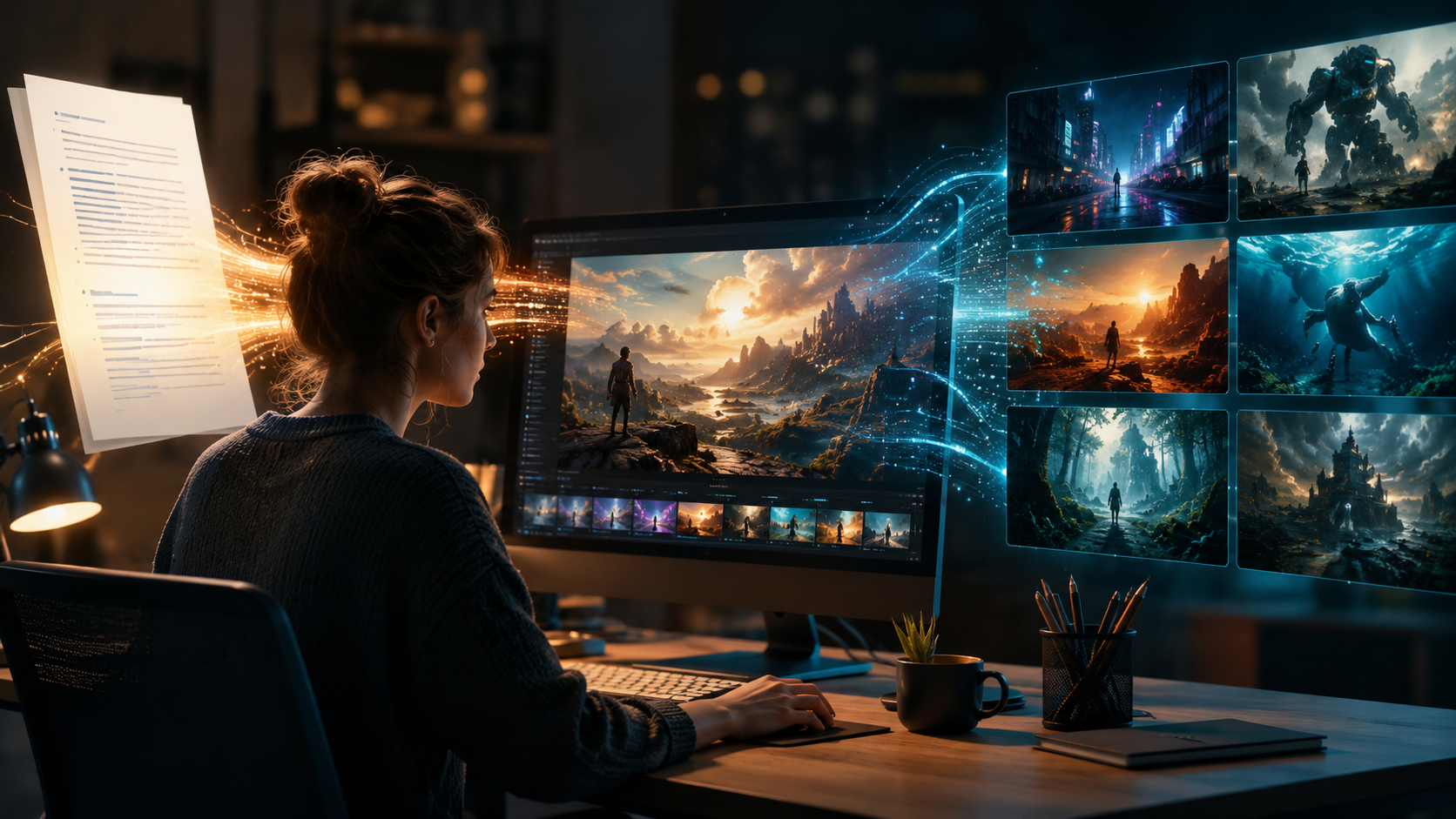
The pipeline of an ai video generator from script to video typically follows three stages: text analysis, asset assembly, and rendering. First, the AI parses your script to extract key themes, emotional cues, and structural elements like headings or lists. It then cross-references these with a library of licensed video clips, animations, or AI-generated scenes. Finally, it selects a voice profile, adjusts pacing, and renders the final video.
Text Analysis and Segmentation
Modern generators use transformer-based models to break your script into scenes. For example, if your script includes the phrase "step one," the AI identifies a tutorial structure and segments the content accordingly. This level of semantic understanding was highlighted in Robotics & Automation News's June 2026 roundup of audio-to-video AI tools, where reviewers noted that the best platforms could even detect sarcasm and adjust visual tone accordingly.
Asset Selection and Generation
After segmentation, the AI searches its media library — often millions of clips — for visuals that match the semantic tags assigned to each scene. Many tools now also generate custom 3D animations or AI-drawn illustrations if stock footage is insufficient. The perfectcorp.com 2026 test of 23 AI video generators found that the top five tools provided over 500 million licensed assets, with the ability to upload your own brand imagery for personalized results.
Voiceover and Audio Synthesis
Voice synthesis has improved dramatically. In 2026, leading generators offer hundreds of AI voices across dozens of languages, with adjustable emotion, pitch, and speed. Some platforms even allow voice cloning from a short sample, enabling consistent brand spokespersons across all videos.
Top AI Video Generators for 2026: Tested and Reviewed
Both autogpt.net (Top 20 AI Video Generators 2026) and perfectcorp.com (23 Best AI Video Generators for 2026) have published extensive benchmark tests. Below is a comparison of the most highly rated tools based on script‑to‑video performance, features, and pricing as of mid‑2026.
| Tool | Key Script‑to‑Video Features | Best For | Starting Price (2026) |
|---|---|---|---|
| Tool A | Multi‑scene AI storyboarding, 60+ languages, custom avatar | Enterprise training & marketing | $49/month |
| Tool B | Real‑time script editing, YouTube direct upload, free tier | YouTube creators & small businesses | Free (basic) / $29/month |
| Tool C | AI‑generated 3D scenes, emotional voice tuning, team collaboration | Explainer videos & product demos | $79/month |
| Tool D | Audio‑to‑video conversion, podcast repurposing, auto‑captioning | Podcasters & audio content creators | $19/month (limited) / $39/month |
| Tool E | Brand kit integration, bulk rendering, API access | Marketing agencies & enterprise | Custom pricing |
The BBN Times guide (June 2026) also emphasizes that free AI video makers now exist for YouTube creators and businesses, though they typically include watermarks or limit export resolution to 720p. For uncompressed 1080p or 4K output, a paid subscription is generally required.
Step‑by‑Step: How to Use an AI Video Generator from Script to Video
Using an ai video generator from script to video is straightforward. The following steps are based on workflows tested by G2 Learn Hub and confirmed by the Robotics & Automation News review. Each step takes seconds to a few minutes, depending on the complexity of your script.
- Write or paste your script. Open the generator's script editor and input your text. Most tools support 100 to 10,000 words per project.
- Select the video format. Choose the aspect ratio and orientation — landscape (16:9) for YouTube, square (1:1) for Instagram, or vertical (9:16) for TikTok and Reels.
- Choose a voice profile. Browse the available AI voices. You can preview each voice to match tone and accent to your brand or audience.
- Customize visual style. Pick a theme (modern, minimalist, cinematic) or upload brand assets such as logos, fonts, and color palettes to maintain consistency.
- Generate the video. Click the generate button. The AI will process your script, assemble visuals, add voiceover and background music, and render the clip. This typically takes one to five minutes.
- Review and edit. Watch the preview. You can adjust specific scenes, swap out visuals, modify the voiceover pacing, or change the music track.
- Export and share. Download the final video in MP4 format or publish directly to platforms like YouTube, Vimeo, or your website.
Most tools also offer batch processing for multiple scripts, which is especially useful for content teams producing weekly video series or course modules.
Benefits of AI Video Generators for Modern Content Workflows
The adoption of ai video generator from script to video technology has accelerated because it addresses three major pain points: production speed, cost, and scalability. Traditional video production requires hiring writers, storyboard artists, voice actors, editors, and motion designers. A single 60-second brand video can cost thousands of dollars and take weeks to produce. In 2026, the same video can be generated from a script in under ten minutes at a fraction of the cost.
The perfectcorp.com review of 23 tools found that teams using script-to-video generators reduced their video production time by an average of 85% compared to traditional workflows. This has enabled small businesses and solo creators to produce content at a volume previously reserved for large marketing departments.
Furthermore, the integration of AI video generators with content management systems and social media schedulers means that once a script is approved, the video can be automatically distributed across multiple channels. The BBN Times guide specifically highlights this as a game-changer for YouTube creators who need to maintain a consistent upload schedule without hiring a full production team.
Choosing the Right AI Video Generator for Your Needs
With the abundance of options in 2026, selecting the best ai video generator from script to video depends on your specific use case. Content creators focused on short-form social media may prioritize a tool with vertical video templates and direct TikTok integration. Enterprise teams might require API access, team collaboration features, and brand asset management.
The autogpt.net roundup (Top 20 AI Video Generators 2026) suggests starting with a free tier to evaluate the user interface and output quality before committing to a paid plan. Many platforms, including those listed by Cybernews, offer limited free versions that allow up to five minutes of video per month with watermarks — enough to test script-to-video accuracy and voice quality.
Key factors to evaluate include: language support (ensure your target language is covered), voice variety (more voices give you greater flexibility), visual library size, export quality, and integration capabilities. The G2 Learn Hub guide recommends checking for the ability to upload custom assets, as this ensures brand consistency across all video outputs.
Future of Script‑to‑Video AI in 2026 and Beyond
As AI video generation matures, the distinction between human-produced and AI-produced content continues to blur. In 2026, we are seeing the emergence of real-time collaborative editing, where multiple users can refine a script while the AI updates the video preview in parallel. Robotics & Automation News notes that audio-to-video AI generators are now being integrated into live streaming workflows, enabling real-time captioning and visual augmentation during broadcasts.
Another trend confirmed by multiple sources in the research is the rise of vertical customization. Instead of generic templates, AI models can now learn a brand's visual language from a library of past videos and apply that style to new scripts automatically. This reduces the need for manual style adjustments and speeds up content scaling for marketing teams.
Finally, the democratization of video production means that even individuals with no technical skills can produce high-quality content. As the tools improve and pricing becomes more accessible, the barrier to entry for video creation will continue to drop, making the ai video generator from script to video an essential tool for anyone communicating through digital media.
What is an AI video generator from script to video?
It is a software tool that converts written text into a finished video by automatically selecting visuals, generating voiceover, adding music, and assembling a timeline — all without manual editing. The AI interprets the script's meaning and tone to produce a coherent video narrative.
How long does it take to generate a video from a script in 2026?
Most tools can produce a 60‑second video in one to five minutes, depending on script length and complexity. Longer videos or those requiring custom AI‑generated scenes may take up to 15 minutes. The processing time has significantly decreased compared to 2024 and 2025 models.
Which AI video generator is best for free use in 2026?
According to BBN Times and Cybernews, several tools offer free tiers with basic features, including watermarked exports at 720p resolution. Tool B in the comparison table above is widely recommended for YouTube creators and small businesses looking for a free entry‑level option.
Can I use my own brand assets with an AI video generator?
Yes, most premium platforms allow you to upload logos, fonts, color palettes, and custom video clips. The AI then integrates these assets into the generated video, ensuring brand consistency across all outputs. Some enterprise tools even train on your brand's past videos to replicate the style automatically.
Is the voiceover generated by AI realistic in 2026?
AI voice synthesis has reached near‑human quality in 2026, with options for emotional inflection, regional accents, and natural pacing. Many generators offer voice cloning from a short sample, allowing you to create a consistent brand voice. The perfectcorp.com review found that the top tools achieved a 95% similarity score compared to human voice actors.
Do AI video generators support multiple languages?
Yes, leading tools support 30 or more languages, including Spanish, French, German, Mandarin, Japanese, and Arabic. The AI can parse scripts written in any of these languages and generate voiceover and subtitles accordingly. Some tools also allow mixed‑language projects for multilingual audiences.



Comments ()