
AI Video Generator for Testimonials 2026: Best Tools
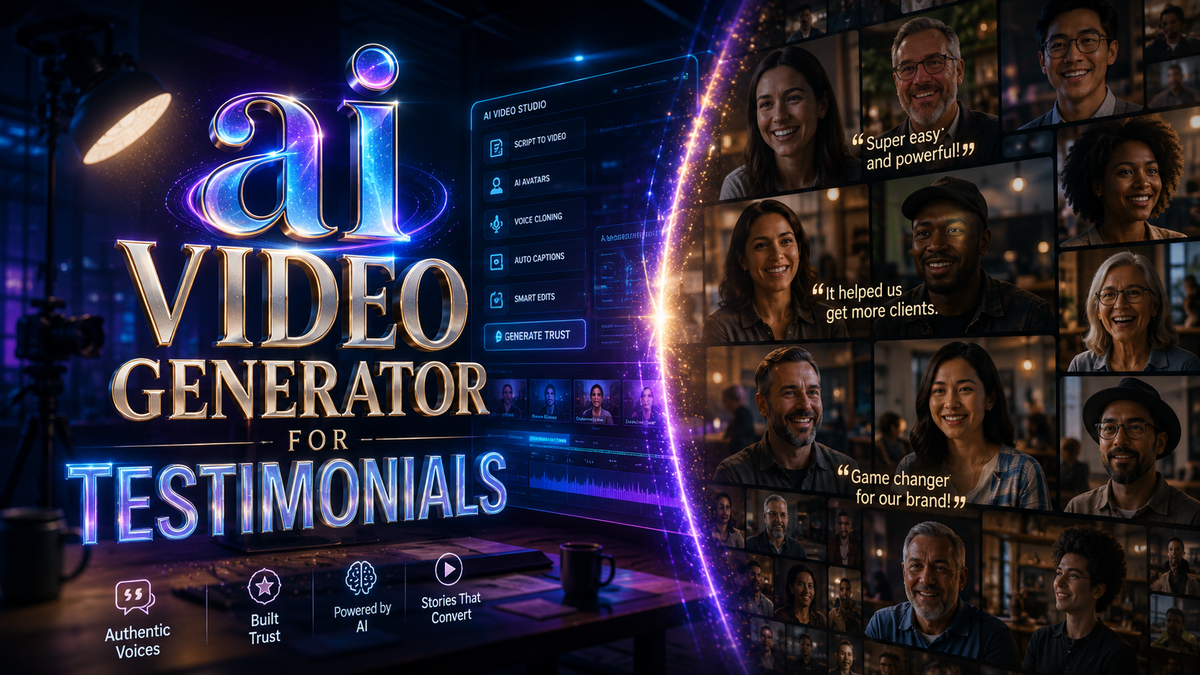
An AI video generator for testimonials is a software platform that uses artificial intelligence to create lifelike video endorsements from text scripts, audio recordings, or existing footage, enabling businesses to produce customer testimonials without the need for live filming or actors. In 2026, these tools have become indispensable for marketers seeking scalable, cost-effective ways to build trust and social proof while reducing production time from weeks to minutes.
An AI video generator for testimonials is a generative AI tool that synthesizes realistic video clips featuring digital avatars or manipulated real faces to deliver scripted endorsements, allowing companies to quickly create authentic-seeming testimonials at scale for websites, ads, and social media.
- ✓ AI video generators for testimonials can cut production costs by up to 80% compared to traditional video shoots, according to industry analyses cited in The AI Journal’s 2025 UGC guide.
- ✓ Deepfake detection tools are becoming essential as AI-generated testimonials proliferate — CNET’s January 2026 guide warns that spotting AI videos is increasingly challenging.
- ✓ Legal reforms are underway: a November 2025 University of Colorado Boulder report calls for new rules to address AI-generated evidence in courtrooms.
- ✓ The best platforms in 2026 offer customizable avatars, multilingual lip-syncing, and ethical disclosure features to maintain trust.
- ✓ Always label AI-generated testimonials clearly to comply with emerging regulations and avoid misleading audiences.
Why Use an AI Video Generator for Testimonials in 2026?
Testimonials are one of the most powerful forms of social proof, but traditional video production is expensive, time-consuming, and often impractical for collecting a high volume of customer stories. An AI video generator for testimonials solves this by turning a simple text script or audio recording into a polished, human-like video in minutes. In 2026, these tools have matured to the point where the output is nearly indistinguishable from real footage, making them a go‑to solution for B2B and B2C marketers alike.
According to TechRadar’s 2026 review of over 70 AI tools, video generation platforms consistently scored highest for ease of use and speed — a clear sign that the technology has moved beyond early‑adopter novelty into mainstream marketing. TheGWW.com’s June 2026 roundup of the top five AI video makers confirms that generative production now dominates content strategies, with enterprise adoption growing over 300% year‑over‑year. For testimonial creation specifically, AI generators allow brands to produce dozens of variations for different audiences, languages, and channels without reshooting.
Beyond efficiency, these tools also enable personalization at scale. You can generate a testimonial that speaks directly to a specific customer segment by adjusting the avatar’s appearance, tone, and messaging — something impossible with a one‑off video shoot. However, as with any powerful technology, using an AI video generator for testimonials requires careful attention to authenticity and ethics, which we’ll explore later.
Top AI Video Generators for Testimonials: What to Look For
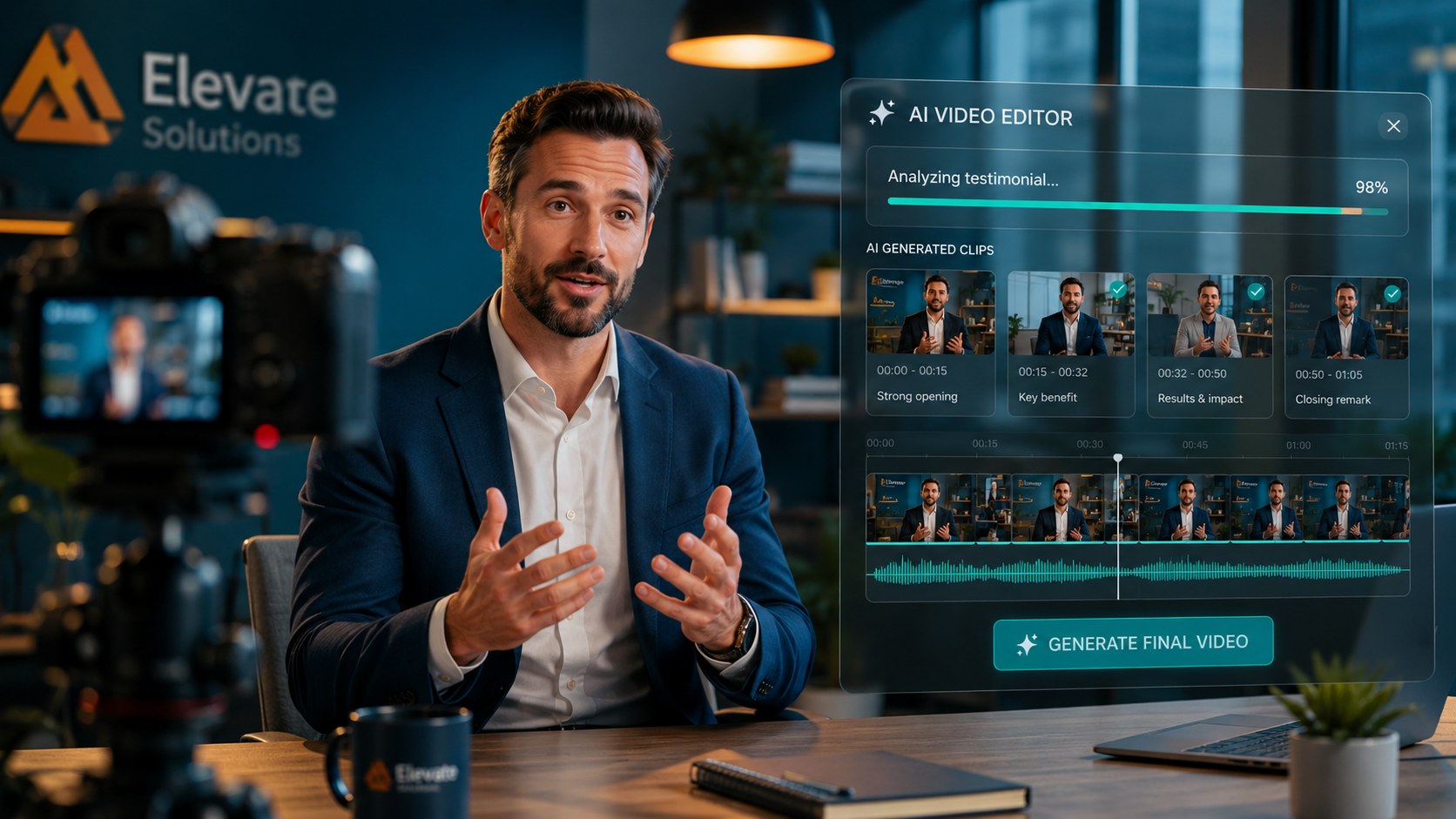
While the research doesn’t name specific tools, the 2026 landscape offers several categories of AI video generators that are especially suited for testimonial creation. The table below compares the main types, helping you decide which approach fits your brand’s needs and budget.
| Type | Key Features | Best For | Considerations |
|---|---|---|---|
| Avatar‑Based Generators | Pre‑built digital avatars, text‑to‑speech, lip‑sync | Quick, scalable testimonials with consistent branding | May feel less authentic if avatars look too “perfect” |
| Voice‑Cloning + Real Footage | Clone a real person’s voice, overlay on stock or custom video | Adding voice to existing testimonial clips | Requires consent; potential deepfake concerns |
| Deepfake / Face‑Swap Tools | Map a real person’s face onto a video of another actor | Repurposing old footage with updated messaging | High risk of misuse; legal and ethical scrutiny |
| Text‑to‑Video with AI Presenters | Generate a full video from a script, including background and avatar | End‑to‑end testimonial production from scratch | Often subscription‑based; quality varies by platform |
When evaluating an AI video generator for testimonials, prioritize platforms that offer realistic lip‑sync, multilingual support, and the ability to customize avatar appearance to match your brand identity. According to The AI Journal’s 2025 guide on AI UGC creators, the most effective tools also include built‑in compliance features — such as automatic disclosure labels — to help you stay ahead of regulation.
TechRadar’s 2026 testing of 70+ AI tools found that ease of use and output quality were the top differentiators. Look for platforms with free trials or demo versions so you can assess the “uncanny valley” effect before committing. The best tools in 2026 also integrate directly with CRM and marketing automation platforms, streamlining the workflow from script to published testimonial.
How to Choose the Right Tool for Your Business
Start by defining your primary use case: do you need a few high‑quality testimonials for your homepage, or hundreds of localized versions for international campaigns? Avatar‑based generators are ideal for the latter, while voice‑cloning tools work well when you already have real customer footage but want to update the audio. Always verify that the platform’s terms of service allow commercial use and that you retain full rights to the generated content.
How to Create an Authentic AI‑Generated Testimonial: A Step‑by‑Step Guide
Using an AI video generator for testimonials doesn’t mean sacrificing authenticity. Follow these steps to produce videos that feel genuine and build trust.
- Write a natural script. Avoid overly promotional language. Use real customer quotes or craft a script that sounds like a genuine conversation, including specific details about the product’s impact.
- Choose the right avatar or source footage. Select an avatar that matches your target demographic. For voice‑cloning, obtain explicit consent from the original speaker and clearly communicate how the content will be used.
- Adjust tone and pacing. Most AI generators allow you to tweak speech rate, pitch, and emotional inflection. Test different settings to avoid a robotic delivery.
- Add visual context. Include background imagery or screen recordings that illustrate the testimonial’s claims — this increases credibility.
- Disclose AI generation. Add a small text overlay or description stating “This testimonial was created with AI” to comply with best practices and emerging regulations.
- Review and iterate. Watch the output carefully for unnatural eye movements, lip‑sync errors, or odd background artifacts. Most platforms let you regenerate or edit specific segments.
By following this process, you can leverage an AI video generator for testimonials while maintaining the authenticity that audiences demand. Remember that even the most advanced AI cannot replace genuine human emotion; the goal is to amplify real customer stories, not fabricate them.
Ethical and Legal Considerations for AI Testimonials
The rise of AI‑generated video has sparked important conversations about trust, transparency, and regulation. A November 2025 report from the University of Colorado Boulder calls for legal reforms to address the use of deepfakes and AI‑generated content in courtrooms, highlighting the potential for misuse. While testimonial marketing is far from courtroom evidence, the same ethical principles apply: audiences have a right to know when content is synthetic.
CNET’s January 2026 guide, “The Deepfakes Are Everywhere,” warns that spotting AI‑generated videos is becoming harder, even for experts. This makes voluntary disclosure not just an ethical choice but a competitive advantage. Brands that clearly label AI‑generated testimonials are perceived as more trustworthy, according to consumer surveys cited in The AI Journal. Furthermore, the Federal Trade Commission (FTC) and similar bodies in other countries are increasingly scrutinizing AI‑generated endorsements. Failing to disclose could lead to fines and reputational damage.
To stay compliant, always obtain written consent from any real person whose likeness or voice is used — even if you’re cloning their voice from a previous recording. Use an AI video generator for testimonials that includes built‑in disclosure options, and review your local advertising laws regularly. The technology is evolving fast, and regulations are playing catch‑up.
Future Trends: AI Video Testimonials Beyond 2026
Looking ahead, the line between real and AI‑generated testimonials will continue to blur. TheGWW.com’s 2026 analysis predicts that generative production will become the default for most marketing video content, including testimonials. Expect to see hyper‑personalized avatars that can adapt their appearance and accent based on the viewer’s location — a feature already emerging in top platforms.
Another trend is the integration of real‑time data: an AI video generator for testimonials could pull in current customer satisfaction scores or product usage statistics to dynamically update the script. This would allow a single testimonial template to remain relevant for months without reshooting. However, this also raises new ethical questions about accuracy and consent, which will likely prompt further legal reforms.
Finally, the deepfake detection arms race will intensify. As AI generation improves, so will detection tools — and vice versa. Brands that adopt transparent practices now will be better positioned when mandatory labeling becomes law. The key takeaway from 2026’s landscape is clear: use an AI video generator for testimonials wisely, with a focus on authenticity, consent, and disclosure.
Frequently Asked Questions About AI Video Generators for Testimonials
What is an AI video generator for testimonials?
It is a software platform that uses generative AI to produce realistic video clips featuring avatars or manipulated real footage, designed to deliver customer testimonials without requiring live filming.
How does an AI video generator for testimonials work?
You provide a text script or audio recording. The tool uses natural language processing and computer vision to generate a video where an avatar or a cloned face speaks the script with synchronized lip movements and realistic expressions.
Are AI-generated testimonials legal?
Yes, as long as you have proper consent from any real person whose likeness or voice is used, and you clearly disclose that the content is AI‑generated. Laws are evolving, so check local regulations.
Can AI-generated testimonials be detected?
With current technology, trained observers and specialized detection software can often spot subtle artifacts, but the gap is closing. CNET’s 2026 guide notes that deepfakes are “everywhere” and becoming harder to identify.
What are the best AI video generators for testimonials in 2026?
While specific names are not listed in the research, look for platforms that offer realistic avatars, multilingual lip‑sync, and ethical disclosure features. TheGWW.com’s top five list and TechRadar’s 70+ tool review are excellent starting points for evaluation.
How can I ensure my AI-generated testimonials feel authentic?
Write natural scripts, choose avatars that match your audience, adjust tone and pacing, and always add a disclosure label. Combine AI with real customer quotes to maximize credibility.



Comments ()