
AI Video Generator for Short Films in 2026: Reviews & Tips
The AI video generator for short films in 2026 is a specialized generative AI tool that transforms text prompts, storyboards, or reference images into complete short film scenes with consistent characters, camera motions, and narrative coherence. In 2026, these tools have evolved far beyond simple clip generation to produce film-quality output, but creators must navigate legal uncertainties and creative limitations — a reality highlighted by recent industry events such as ByteDance's debut at Cannes and OpenAI's troubled Pixar-style attempt.
An AI video generator for short films is a software platform that uses deep learning models — often trained on massive video datasets — to synthesize original footage from text descriptions, audio, or image inputs. In 2026, top tools offer scene-level control, character consistency across shots, and integration with traditional editing workflows, making them viable for indie filmmakers, studios, and content creators.
- ✓ ByteDance's generative AI films debuted at Cannes 2026, signaling mainstream market acceptance.
- ✓ OpenAI's attempt at an AI-generated Pixar-style movie encountered major production issues, highlighting gaps in narrative consistency.
- ✓ Chinese AI video generators are rapidly influencing global culture, offering affordable alternatives to Hollywood tools.
- ✓ Legal battles, like Hollywood's threats against ByteDance's Seedance tool, are shaping which features remain available.
- ✓ The best AI video generator for short films in 2026 balances output quality, character consistency, and licensing clarity.
The State of AI Video Generators for Short Films in 2026
The landscape of AI-generated short films experienced a landmark shift in 2026. At the Cannes Film Festival, ByteDance brought generative AI films into the market, showcasing short movies produced with its internal video generator. According to Tubefilter (May 26, 2026), this marked the first time a major tech company's AI filmmaking tool was formally presented at a top-tier festival, blurring the line between algorithmic creation and traditional auteur cinema. Meanwhile, OpenAI's much-hyped attempt at an AI-generated Pixar-style movie "is in shambles," as reported by Futurism on the same day. The project suffered from consistency failures — characters changed appearance between scenes, physics behaved erratically, and narrative logic broke down — underscoring that even the most advanced models still struggle with long-form storytelling.
China's AI video generators have also made global headlines. A report from radii.co (April 22, 2026) detailed how platforms like ByteDance's Seedance and other Chinese tools are "hacking global culture" by offering hyper-realistic yet affordable short film generation, often bypassing Hollywood's creative gatekeepers. However, this expansion has not come without friction. In February 2026, The Hollywood Reporter noted that ByteDance pledged to curb its AI video generator tool Seedance after legal threats from Hollywood studios over copyright and unlicensed training data. These developments collectively define the current state: the technology is powerful enough to produce short films that can screen at Cannes, but legal and technical hurdles remain significant.
Why Use an AI Video Generator for Short Films? Key Benefits in 2026
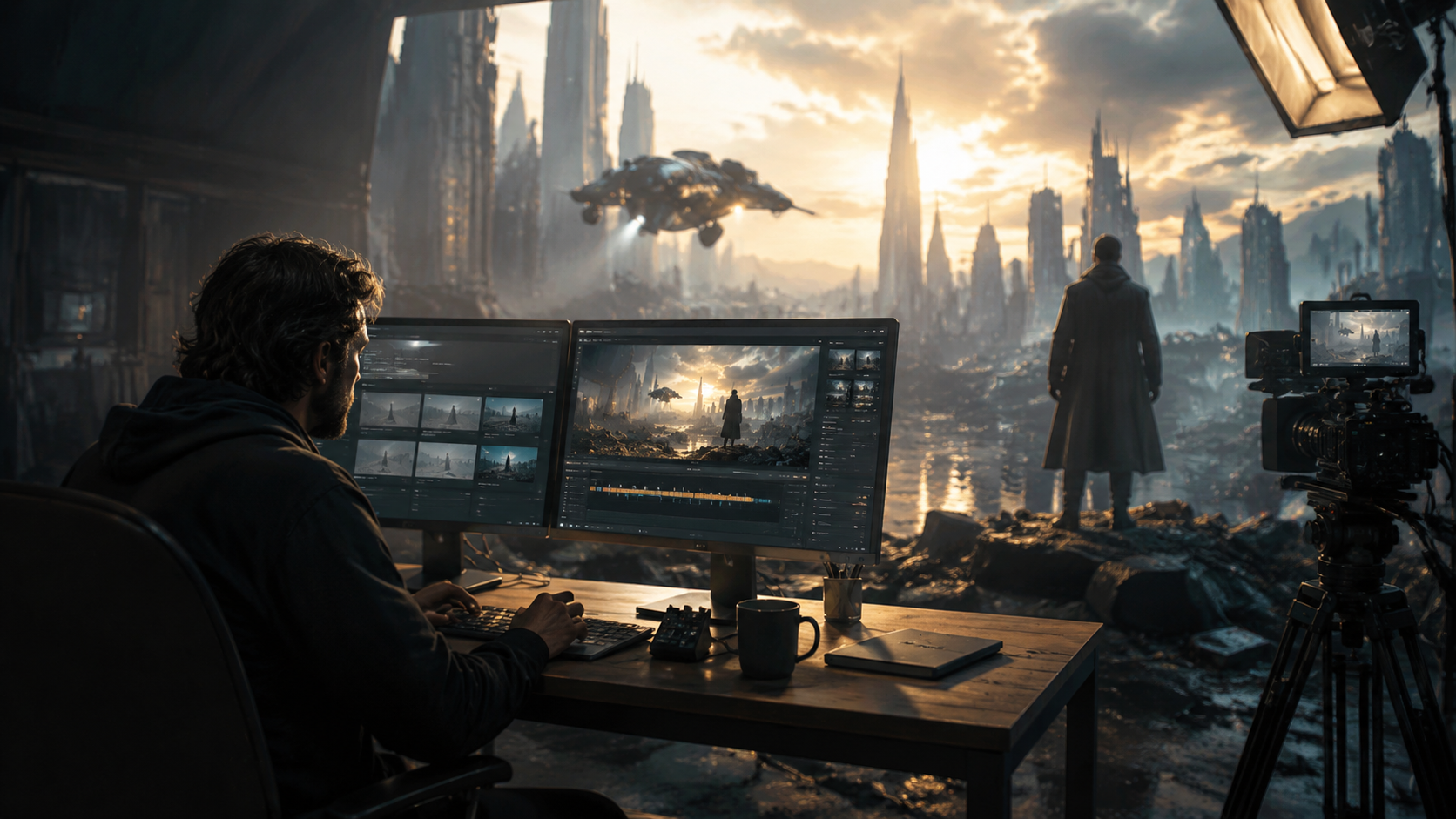
For independent filmmakers and small studios, an AI video generator for short films dramatically reduces production costs and timelines. Instead of spending weeks on pre-production, casting, and shooting, a single creator can generate an entire five-minute short in a matter of hours by iterating on prompts and adjusting scene parameters. According to a roundup of 11 powerful best AI video generators in 2026 published by My Everyday Tech (May 29, 2026), tools now offer resolution up to 4K, multi-shot storyboarding, and even voice cloning for character dialogue.
Beyond speed, these generators enable experimentation with visual styles that would be prohibitively expensive with live action — such as hyper-detailed fantasy landscapes, period settings, or non-human protagonists. The TRT World report (September 16, 2025) framed the central question: "Will these tools end creativity or start a new era?" Evidence from 2026 suggests they are enabling a new era of rapid prototyping, allowing filmmakers to test narratives visually before committing to full production. However, the same report cautioned that reliance on AI can homogenize visual language if creators do not actively curate and refine outputs.
Top AI Video Generators for Short Films: A Comparison
| Tool / Platform | Key Features | Output Quality | Legal & Licensing | Pricing (2026) |
|---|---|---|---|---|
| ByteDance Seedance | Multi-character consistency, scene-level control, Cannes showcase | Cinematic (4K, 60fps) | Under Hollywood scrutiny; limited commercial use | Subscription (reported ~$30–$50/month for indie tier) |
| OpenAI’s video generation (internal tool) | Highly realistic single-shot generation, no long-form consistency | Impressive for short clips, fails for multi-scene | Not yet publicly released; legal gray area | N/A (not commercially available) |
| Chinese AI generators (multiple unnamed) | Affordable, fast, culturally diverse styles | HD to 4K, variable consistency | Often no clear copyright; risk of IP infringement | Freemium or pay-per-generation (as low as $0.10/clip) |
| Established video AI tools (e.g., Runway Gen-3, Pika 2.0) | Proven editing workflows, good consistency; not short-film specific | Excellent for short scenes and transitions | More established licensing; commercial use allowed | Subscription $15–$100/month depending on usage |
Note: The table above summarizes publicly available information as of June 2026. Features and pricing are subject to change.
How to Choose the Right AI Video Generator for Your Short Film
Selecting the best AI video generator for short films depends on your production needs, budget, and tolerance for legal risk. Follow these five steps to narrow your options:
- Define your film’s length and complexity. For a 3-minute short with multiple characters and location changes, you need a tool that supports character consistency across scenes — Seedance or next-generation systems like those from Chinese developers may work. For a single-shot atmospheric piece, simpler generators suffice.
- Check character and scene consistency guarantees. Ask if the tool uses "reference characters" or "storyboards" that persist across generations. Many 2026 tools now offer a "character lock" feature; test it with a free trial before committing.
- Evaluate legal safety. If you plan to distribute on YouTube or festivals, use tools with clear commercial licensing and no history of litigation. ByteDance's Seedance, while impressive, carries ongoing risks due to Hollywood lawsuits. Opt for platforms that train on licensed or public domain data.
- Assess editing integration. The best AI video generators export as standard video files (MP4, ProRes) or provide direct plugins for Premiere Pro, DaVinci Resolve, or Final Cut Pro. This saves hours of re-encoding.
- Test output resolution and frame rate. For theatrical or festival submission, look for 4K at 24fps (cinematic) or 60fps for action scenes. Some cheaper tools cap at 1080p, which may not meet short film standards.
Tips for Getting the Best Results from Your AI Video Generator for Short Films
1. Craft Detailed Scene Descriptions
Generic prompts like "a knight in a forest" produce generic output. Instead, describe lighting, camera angle, character emotions, and temporal context. For example: "Low-angle shot of a weary knight in rusted armor walking through a foggy pine forest at dusk, sword dragging on the ground, lens flare from setting sun." The more detail you provide, the closer the AI adheres to your vision.
2. Use Reference Images for Consistency
Most 2026 tools allow you to upload reference images of characters or environments. Provide at least three angles of your main character (front, side, action pose) to help the model understand their visual identity. This is crucial for avoiding the "OpenAI shambles" problem of characters morphing between shots.
3. Iterate with Seed Variation
Generate multiple versions of the same scene (usually 3–5) and select the best one. Tools typically have a "seed" or "style variance" slider. Lower variance keeps frames consistent; higher gives creative surprises but risks inconsistency. Use low variance for dialogue scenes and higher for action montages.
4. Edit After Generation, Don’t Rely on One-Take
Treat AI footage as raw material. Cut, combine, add sound design, color grade, and even add live-action overlays. The most successful AI short films at Cannes 2026 used traditional post-production to polish the AI output, according to industry reports.
5. Stay Informed on Legal Updates
The legal landscape is fluid. Subscribe to filmmaker forums and follow news from sources like The Hollywood Reporter. If your short film plans to be monetized or festival-distributed, consult an attorney familiar with AI-generated content copyright. ByteDance's pledge to curb Seedance after legal threats shows that tools can change their terms overnight.
The Future of AI-Generated Short Films: Creativity or Crisis?
The Cannes debut and the OpenAI debacle illustrate the dual nature of AI video generators for short films in 2026. On one hand, they democratize filmmaking — a single individual with a strong story can now produce visual content that rivals low-budget indie productions. On the other hand, the technology threatens to devalue human craftsmanship and raise ethical questions about data provenance. The TRT World report presciently asked whether these tools would end creativity or start a new era; the answer so far is "both."
As Chinese AI video generators rapidly improve and become embedded in global content pipelines, Western studios are scrambling to either partner with or litigate against them. For the short film maker, the pragmatic path is to embrace these tools as powerful assistants, not replacements. Use them to visualize rough cuts, generate B-roll, or create concept art — but retain final creative control. By doing so, you can harness the speed of AI without sacrificing the soul of your story.
Frequently Asked Questions About AI Video Generators for Short Films
What is an AI video generator for short films?
It is a generative AI tool designed to produce short film footage — typically up to 3–10 minutes — from text prompts, images, or audio. In 2026, these tools offer scene-level control, character consistency, and cinematic output.
Can I use an AI video generator for short films commercially in 2026?
It depends on the tool's license. Some platforms like ByteDance's Seedance are under legal restrictions after Hollywood lawsuits, while others offer clear commercial terms. Always check the terms of service and consult a lawyer if you plan to distribute or monetize your film.
How do I ensure character consistency across scenes?
Upload reference images of your characters from multiple angles, use tools with a "character lock" or "coherence" mode, and generate scenes with low seed variance. Avoid drastic changes in lighting or camera angle that might confuse the model.
Are there free AI video generators for short films in 2026?
Some tools offer free tiers with watermarked export or limited resolution. For example, several Chinese generators provide pay-per-generation as low as $0.10 per clip, effectively free for testing. However, free tiers often lack commercial licensing and character consistency features.
What are the biggest drawbacks of AI-generated short films?
Gaps in narrative logic, visual inconsistencies (especially in longer films), limited control over subtle emotions, and legal uncertainty. OpenAI's failed Pixar-style movie in 2026 is a prime example: the technology could generate beautiful individual frames but could not maintain a coherent story or character identities.
Will AI video generators replace human filmmakers?
No — they are best used as pre-visualization and rapid prototyping tools. The most successful AI short films at Cannes 2026 were heavily edited and directed by human artists who treated the AI output as raw material. Filmmaking requires creative decision-making that AI cannot replicate.



Comments ()