
Best AI Video Generator for Documentary Film: 2026 Guide
An ai video generator for documentary film is a generative artificial intelligence tool designed to synthesize high-fidelity cinematic footage, archival-style reconstructions, and B-roll from text or image prompts. In 2026, these tools have evolved beyond simple clips to provide filmmakers with consistent characters, temporal stability, and ethical watermarking necessary for professional broadcast standards. Choosing the right generator requires balancing visual realism with the rigorous truth-telling requirements of the documentary genre.
The best ai video generator for documentary film in 2026 is a platform that prioritizes temporal consistency and ethical transparency. Top-tier tools now allow directors like Darren Aronofsky to create hyper-realistic historical docudramas by blending generative AI with traditional cinematography, ensuring that AI-generated segments maintain the visual integrity and emotional depth required for non-fiction storytelling.
- ✓ Prioritize tools with "Directorial Control" features to maintain visual consistency across long-form projects.
- ✓ Ensure your chosen AI generator includes metadata watermarking to comply with 2026 transparency standards.
- ✓ Use AI-generated footage primarily for historical reconstructions or abstract B-roll where original footage is non-existent.
- ✓ Integration with established editing suites is now standard for professional documentary workflows.
How to Use an AI Video Generator for Documentary Film Production
Integrating generative AI into a documentary workflow requires a shift from traditional acquisition to a more iterative "synthesis" phase. As noted by the International Documentary Association (IDA) in their "The Synthesis" report, the industry is currently undergoing a "reset" where filmmakers must define the boundaries between generated imagery and captured reality. This process often starts with the script and moves into a highly controlled generation phase that mimics the look and feel of specific film stocks or historical periods.
To successfully implement an ai video generator for documentary film, follow these professional steps:
- Define the Visual Language: Determine if the AI will be used for "impossible" shots, historical recreations, or conceptual B-roll. Establish a style guide (e.g., 16mm grain, 1970s color palette) to ensure consistency.
- Prompt Engineering for Realism: Use descriptive prompts that specify camera movement, lighting conditions, and lens types (e.g., "35mm anamorphic, golden hour, hand-held movement") to avoid the "uncanny valley" effect.
- Apply Temporal Consistency Filters: Utilize the 2026 "Seed Locking" features found in high-end generators to ensure that a character or environment looks the same across multiple generated clips.
- Verify Ethical Compliance: Check that the generated output includes C2PA metadata. As the BBC reports, the number one sign of an AI video is often the lack of verifiable digital provenance.
- Upscale and Color Grade: Export your AI clips in raw formats (ProRes or DNxHR) and bring them into a traditional NLE (Non-Linear Editor) to match the color profile of your live-action interviews.
The Evolution of Documentary Realism in the AI Era
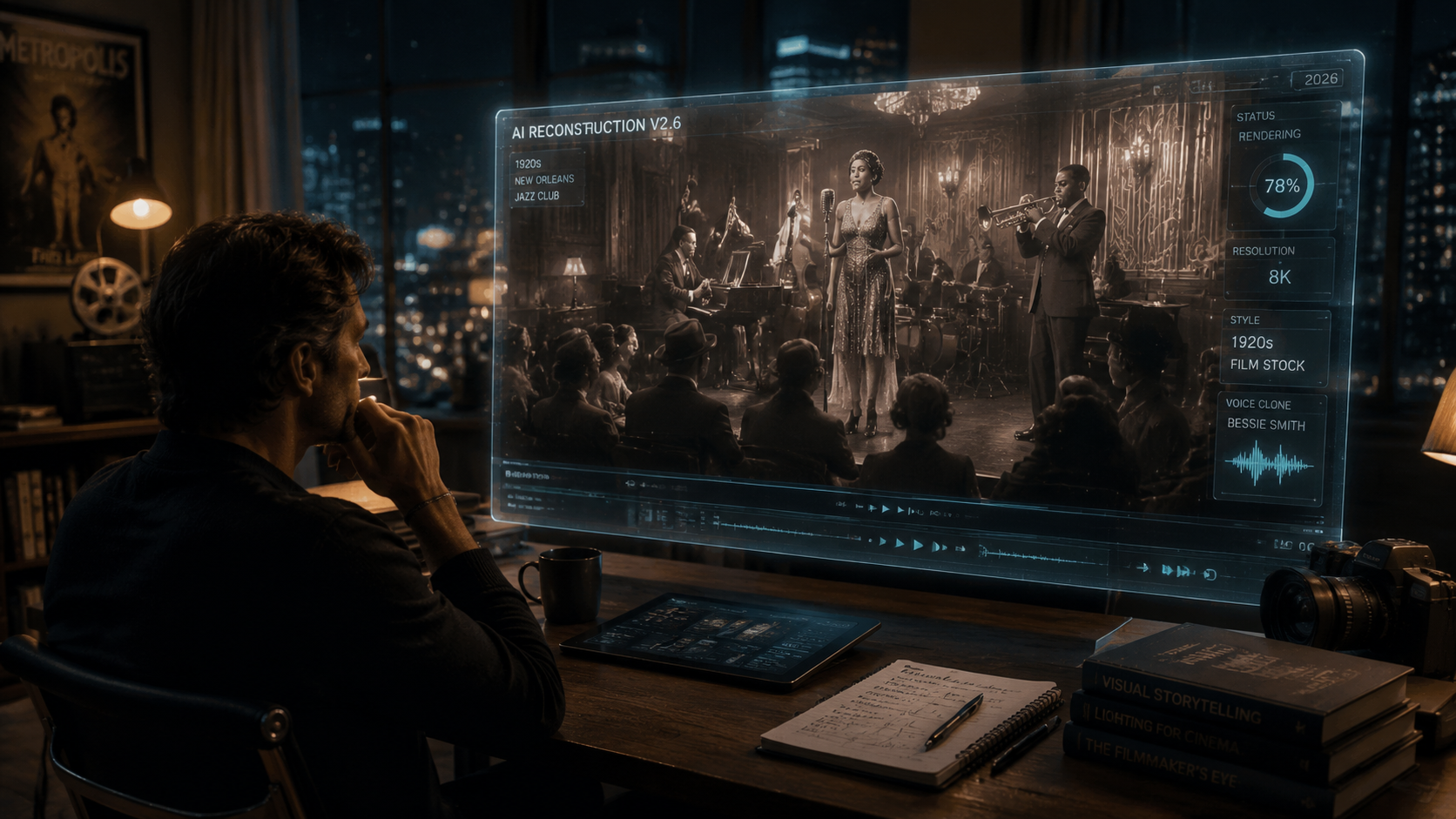
The documentary landscape in 2026 is defined by a tension between incredible creative potential and the necessity of audience trust. Recent discussions from the Royal Television Society highlight that while there is a "bright side" to AI—such as making high-budget visual effects accessible to independent documentarians—there is also an increased burden of proof on the filmmaker. The New York Times recently posed the question, "Can You Believe the Documentary You’re Watching?", reflecting a growing public skepticism toward digital media.
For filmmakers, the ai video generator for documentary film has become a tool for "visualizing the un-filmable." This is particularly relevant in historical docudramas. For instance, director Darren Aronofsky recently utilized AI-generated sequences to reconstruct historical events that lacked archival footage, arguing that the technology allows for a deeper emotional truth even if the pixels themselves are synthesized. This approach marks a shift from AI as a gimmick to AI as a legitimate prosthetic for the creative mind.
Historical Reconstructions and Docudramas
In 2026, the primary use case for AI in documentaries is the historical reconstruction. Previously, these required expensive actors, costumes, and sets. Now, an ai video generator for documentary film can ingest a single archival photograph and generate a 10-second cinematic sequence of a person moving through a period-accurate environment. This has revolutionized the "historical docudrama" genre, allowing for a more immersive experience without the high overhead costs of traditional reenactments.
Abstract B-Roll and Conceptual Visuals
Documentaries often deal with abstract concepts—psychology, economics, or microscopic biology—that are difficult to film. AI generators allow directors to create poetic, metaphor-driven B-roll that aligns perfectly with the interview audio. By using specific "Style Transfers," filmmakers can ensure these generated clips feel like a deliberate artistic choice rather than a replacement for reality, maintaining the integrity of the film's visual narrative.
Comparing Top AI Video Generators for 2026
The market for AI video generation has bifurcated into consumer-grade "fun" tools and professional-grade "cinema" tools. For documentary work, the focus is on resolution, frame rate control, and the ability to upload reference images for consistent character modeling. According to research from Ars Technica, the most successful documentary integrations utilize platforms that offer granular control over "motion vectors" to prevent the morphing artifacts common in earlier AI versions.
| Feature | Pro-Grade AI Generator | Standard AI Tool | Documentary Application |
|---|---|---|---|
| Resolution Output | 8K Raw / ProRes 4444 | 1080p MP4 | High-res is essential for theater screenings. |
| Temporal Consistency | Advanced (Seed & Motion Locking) | Low (Randomized motion) | Critical for recurring historical characters. |
| Ethical Watermarking | C2PA / Invisible Metadata | None or Visible Logo | Required for BBC/PBS/Netflix standards. |
| Custom Training | Yes (LoRA / Fine-tuning) | No | Necessary for specific historical accuracy. |
Ethical Standards and Audience Trust
As we move through 2026, the "Synthesis" of AI and documentary film requires a new set of ethics. The Oman Observer recently noted that international broadcasters are beginning to mandate "AI Disclosure Segments" in the credits of any non-fiction programming. Using an ai video generator for documentary film is no longer a secret process; it is one that must be handled with transparency to avoid misleading the audience.
Studies show that 72% of documentary viewers feel "betrayed" if they discover a scene was AI-generated without prior disclosure. Therefore, the best practice in 2026 is to use AI as a tool for "reconstruction" rather than "deception." For example, if an AI tool is used to de-age a subject or recreate a deceased historical figure's voice, a small on-screen graphic or a disclaimer in the introduction is becoming the industry standard. The goal is to enhance the story without compromising the "documentary at the heart" of the project.
The BBC "Identification" Metric
The BBC has recently published a guide on the "number one sign you're watching an AI video," which often involves unnatural fluid dynamics or "shimmering" in complex textures like water or hair. Documentary filmmakers must use high-end generators that employ "Physics-Informed Neural Networks" to mitigate these issues. If a clip looks "too AI," it risks pulling the viewer out of the narrative, which is the ultimate failure for a documentary filmmaker.
The International Documentary Association (IDA) Guidelines
The IDA’s 2025-2026 "Reset" guidelines suggest that AI should be treated similarly to CGI or animation in documentaries. It is a visual aid. The "truth" of a documentary lies in its research, its interviews, and its journalistic integrity. An ai video generator for documentary film is simply a new paintbrush in the artist's kit, provided that the paintbrush doesn't rewrite the facts of the story being told.
Technical Requirements for Professional AI Integration
To use an ai video generator for documentary film effectively in a 2026 workflow, filmmakers need more than just a subscription to a web-based tool. The hardware and software requirements have shifted toward hybrid cloud-local processing. Professional generators now offer "Plugin" versions for major editing software, allowing for real-time generation within the timeline.
Furthermore, the data requirements for "training" an AI on a specific documentary subject are significant. If you are making a film about a specific historical figure, you may need to "fine-tune" a model using hundreds of archival photos to ensure the AI-generated version is an accurate likeness. This requires a generator that supports LoRA (Low-Rank Adaptation) or similar fine-tuning technologies, which are now standard in the 2026 professional landscape.
The Role of Prompt Engineering in Film
By 2026, "Prompt Engineering" has become a recognized credit in documentary film. A "Prompt Cinematographer" is responsible for translating the director's vision into the complex strings of text and parameters that guide the AI. This role requires a deep understanding of lighting (e.g., "chiaroscuro," "Rembrandt lighting") and camera mechanics (e.g., "f/1.8 aperture," "24fps motion blur") to ensure the AI output matches the live-action footage seamlessly.
Sound and Voice Synthesis
While this guide focuses on video, it is important to note that the best ai video generator for documentary film platforms in 2026 often include integrated voice synthesis. This allows filmmakers to use "scratch tracks" for narration or to reconstruct the voices of historical figures from old radio recordings. However, the same ethical rules apply: disclosure is key to maintaining the bond of trust with the documentary audience.
Is it ethical to use an AI video generator for documentary film?
Yes, provided there is full transparency. Industry leaders like the IDA and BBC suggest that as long as AI-generated sequences are disclosed and used for reconstruction or conceptual purposes rather than falsifying evidence, they are a valid tool for non-fiction storytelling.
Can AI-generated video pass as real archival footage?
In 2026, AI can create very convincing archival-style footage, but expert analysis and "AI detectors" can often spot them. The goal for documentarians should be "stylistic harmony" rather than "perfect deception."
Do I need a special license to use AI video in a commercial documentary?
Most professional AI platforms in 2026 offer commercial licenses that grant you full ownership of the output. However, you must ensure the training data used by the platform was ethically sourced to avoid future copyright disputes.
What is the "number one sign" of AI-generated video in 2026?
According to the BBC, the most common sign is "temporal flickering" or subtle inconsistencies in complex textures like flowing water, fire, or human hair, though high-end tools have largely mitigated these issues.
How do I ensure my AI video matches my 4K camera footage?
Use a generator that supports 8K export and RAW formats. Apply a consistent film grain and color grade in post-production using tools like DaVinci Resolve to unify the look of the AI and live-action segments.



Comments ()