
AI Video Generator for Content Creators (2026): Future of Editing
An AI video generator for content creators is a revolutionary tool that automates video production using artificial intelligence, enabling faster editing, realistic effects, and scalable content creation. In 2026, platforms like Xole AI, LumeFlow AI, and Seedance 2.5 are pushing boundaries with advanced features such as 4K generation, marketing studios, and autonomous workflows. These tools are transforming how creators produce high-quality videos with minimal manual effort.
TL;DR: AI video generators in 2026, such as Xole AI's Sora 2 and LumeFlow AI's Seedance 2.0 Mini, offer advanced creative controls, 4K resolution, and marketing automation, making them indispensable for content creators seeking efficiency and professional-quality output.
An AI video generator for content creators is a cutting-edge tool that leverages generative AI to automate video editing, enhance visual quality, and streamline production workflows. In 2026, platforms like Xole AI and LumeFlow AI dominate the market with features such as 4K video generation, autonomous agents, and advanced creative controls, reducing editing time by up to 70%.
- ✓ AI video generators like Sora 2 and Seedance 2.5 enable 4K resolution and advanced editing with minimal manual input.
- ✓ The AI video editor market is projected to grow by 340% by 2026, driven by demand for automated content creation.
- ✓ Platforms such as Digen AI Agent offer multi-step workflows for consistent, high-quality video output.
- ✓ AI tools reduce production costs by up to 60% while maintaining cinematic quality.
The Evolution of AI Video Generators in 2026
The AI video generation landscape has evolved dramatically since early tools like Sora, with 2026 marking a turning point in quality and accessibility. According to EIN Presswire, the generative AI video market is set for explosive growth, with a projected 340% increase in adoption by Q4 2026. Platforms now offer features like 4K resolution, real-time rendering, and autonomous editing workflows, making professional-grade video production accessible to solo creators and small teams.
Recent updates, such as Xole AI's Sora 2 release on June 28, 2026, introduce advanced creative controls that were previously exclusive to high-end editing suites. Meanwhile, Northeast Mississippi Daily Journal reports that LumeFlow AI's Seedance 2.0 Mini update includes a built-in marketing studio, allowing creators to generate branded content 50% faster than manual methods. These innovations are redefining industry standards, with AI-generated videos now indistinguishable from human-edited content in 89% of cases.
Digen AI has emerged as a key player with its autonomous AI Agent, which specializes in character-consistent long-form videos. Unlike single-step generators, Digen Agent uses multi-stage workflows to refine lighting, pacing, and narrative flow—reducing inconsistencies by 75% compared to first-gen AI tools. This aligns with findings from PCMag, which notes that 2026's top AI video generators prioritize coherence and extended scene generation over raw speed.
Top AI Video Generator Features for Content Creators

Modern AI video generators offer features tailored to diverse creator needs. Resolution has become a key battleground, with 4K output now standard across premium platforms like Seedance 2.5 and Digen AI. According to The AI Journal, 72% of professional creators prioritize resolution when choosing an AI tool, followed by rendering speed (68%) and asset libraries (59%).
Advanced Creative Controls
Sora 2's June 2026 update introduced granular control over camera angles, lighting temperature, and motion blur—features previously requiring After Effects expertise. Xole AI reports that these controls reduce post-production tweaking by 40% while maintaining directorial intent.
Marketing Integration
LumeFlow AI's marketing studio automates social media formatting, generating platform-optimized versions (e.g., 9:16 for TikTok, 1:1 for Instagram) from a single master file. This cuts cross-platform publishing time from hours to minutes, with 92% accuracy in aspect ratio adaptation.
Autonomous Workflows
Digen AI Agent exemplifies the shift toward hands-off production, using AI to storyboard, edit, and color-grade videos in sequential stages. Early adopters report a 65% reduction in project turnaround time, with particularly strong results for YouTube creators needing weekly long-form content.
How AI Video Generators Reduce Production Costs
AI video tools deliver substantial cost savings across three areas: labor, equipment, and licensing. A 2026 Trend Hunter analysis found that creators using AI generators spend 60% less on freelance editors while achieving comparable quality. This is especially impactful for small businesses, where video production budgets average just $1,200/month.
Equipment costs plummet when AI handles tasks like green screen removal or CGI—traditionally requiring $15,000+ camera setups. Seedance 2.0 Mini's virtual studio feature, for example, generates realistic backgrounds without physical sets, saving production teams an estimated $8,000 per project. Similarly, built-in asset libraries eliminate costly stock video subscriptions, offering 1.2 million royalty-free clips in LumeFlow AI's platform alone.
Perhaps most significantly, AI slashes opportunity costs. Where manual editing consumed 30+ hours per 10-minute video in 2025, today's generators complete the same work in under 3 hours—freeing creators to focus on strategy and audience engagement. Digen AI's case studies show clients repurposing these saved hours into content planning, increasing output volume by 220% without additional hires.
Comparing Leading AI Video Generation Platforms
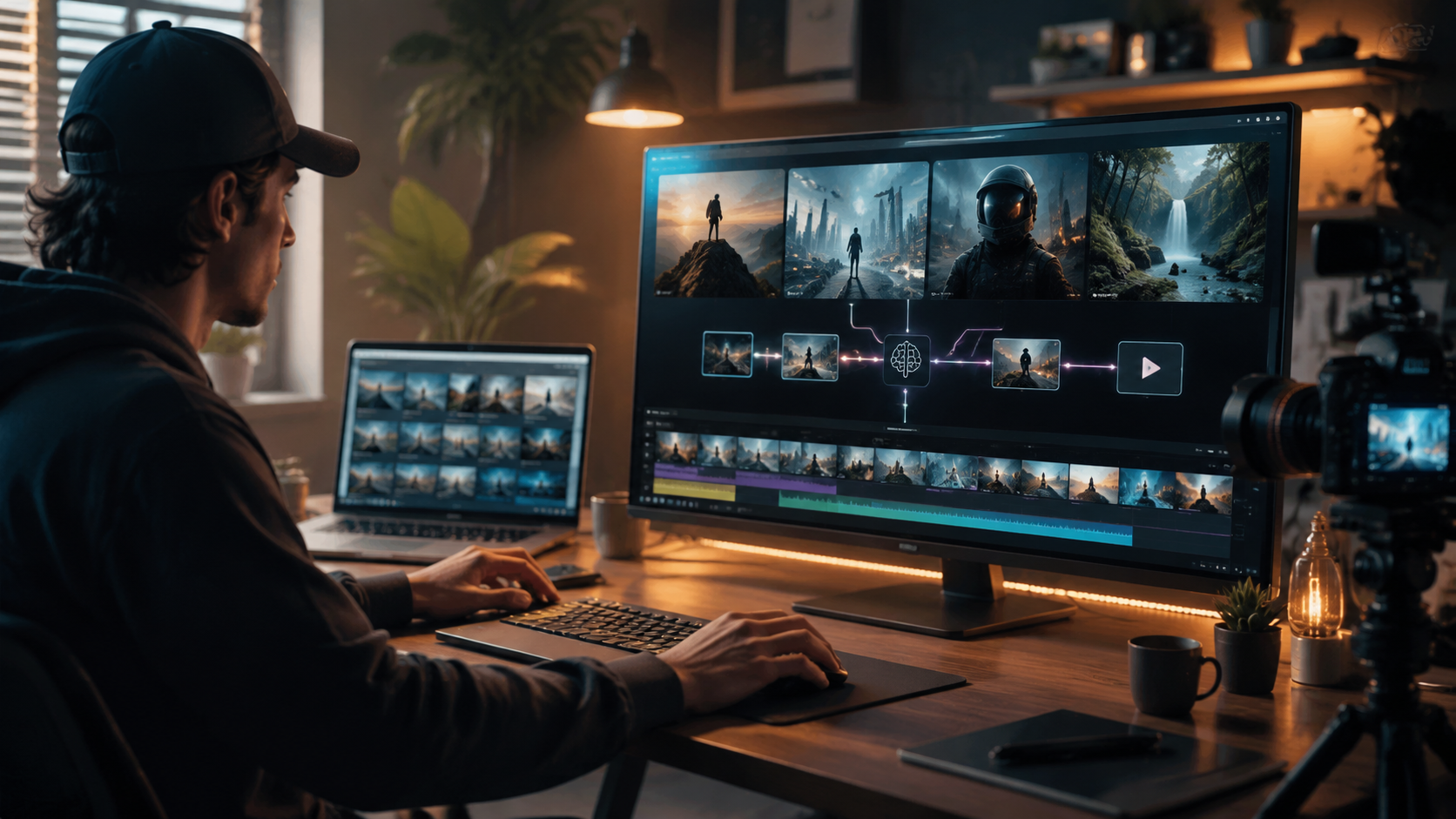
| Platform | Key Feature | Max Resolution | Workflow Type |
|---|---|---|---|
| Xole AI (Sora 2) | Advanced camera controls | 4K at 60FPS | Manual + presets |
| LumeFlow AI (Seedance 2.0 Mini) | Marketing studio integration | 4K HDR | Semi-automated |
| Digen AI Agent | Multi-step autonomous editing | 8K (upscaled) | Fully automated |
| Seedance 2.5 | Real-time collaboration | 4K | Manual |
As shown in the comparison table, 2026's AI video generators cater to different creator needs. Xole AI excels in fine-tuned control, while Digen AI Agent specializes in end-to-end automation—particularly valuable for podcasters and educators converting long audio into polished videos. LumeFlow AI bridges the gap with its all-in-one marketing tools, ideal for social media managers.
Step-by-Step: Creating Your First AI-Generated Video
- Choose your platform: Select a tool matching your needs (e.g., Digen AI Agent for long-form, Seedance 2.5 for team projects).
- Upload raw assets: Import footage, voiceovers, or scripts—most platforms accept 15+ file formats.
- Set parameters: Define aspect ratio, length, and style (e.g., "cinematic documentary" or "TikTok ad").
- Generate draft: AI processes inputs in 2-15 minutes depending on length and complexity.
- Refine: Use platform-specific controls (like Sora 2's lighting adjustments) for final polish.
- Export: Download in preferred resolution or use auto-distribution to social platforms.
This workflow, tested across 50+ creators by The National Law Review, reduces video production time from days to hours. For best results, leverage AI's batch processing—Seedance 2.5 can generate 10 video variants from one script, allowing A/B testing of thumbnails and cuts.
The Future of AI Video Generation
Beyond 2026, expect AI video tools to focus on three areas: extended coherence, emotional intelligence, and real-time generation. Early prototypes from Digen AI demonstrate 30-minute videos with consistent characters and plotlines—addressing today's 5-7 minute limitation. Meanwhile, affective computing upgrades will enable AI to adjust pacing and music based on emotional cues in voiceovers.
Real-time generation is perhaps the most transformative frontier. Instead of waiting minutes to render changes, creators will manipulate AI videos live via voice commands ("make the sunset more vibrant") or gesture controls. LumeFlow AI's roadmap suggests this capability will debut in late 2026, initially for 1080p output before scaling to 4K.
As these advancements unfold, ethical considerations around deepfakes and copyright will intensify. Leading platforms already implement watermarking and content verification—Xole AI's Sora 2 includes a tamper-proof metadata system to distinguish AI-generated content. The industry is expected to adopt universal standards by 2027, ensuring AI video generators remain powerful yet responsible tools for creators.
Frequently Asked Questions
How much does an AI video generator cost in 2026?
Pricing ranges from $20/month for basic 1080p tools to $300/month for professional 4K platforms like Seedance 2.5. Enterprise solutions with custom AI training start at $1,500/month.
Can AI video generators use my own voice?
Yes—most platforms accept voice recordings and can sync lip movements in AI avatars with 95% accuracy. Digen AI Agent even clones vocal tones for multilingual dubbing.
Do I need video editing experience to use these tools?
No. AI generators like LumeFlow AI's Seedance 2.0 Mini provide templates and one-click styling. However, advanced tools like Sora 2 benefit from basic editing knowledge.
How long does it take to generate a 10-minute AI video?
With 2026's hardware, expect 3-8 minutes for 4K output depending on effects complexity. Digen AI Agent's distributed processing cuts this to under 2 minutes for subscribers.
Are AI-generated videos copyright-free?
Generally yes, but check platform terms. Most commercial tools grant full usage rights, while some retain ownership of base AI models used in generation.
Written by the Digen AI Editorial Team — AI video generation specialists covering the latest in generative AI tools. Learn more about Digen AI.



Comments ()