
AI Video Generator Explained: The Future of Content in 2026
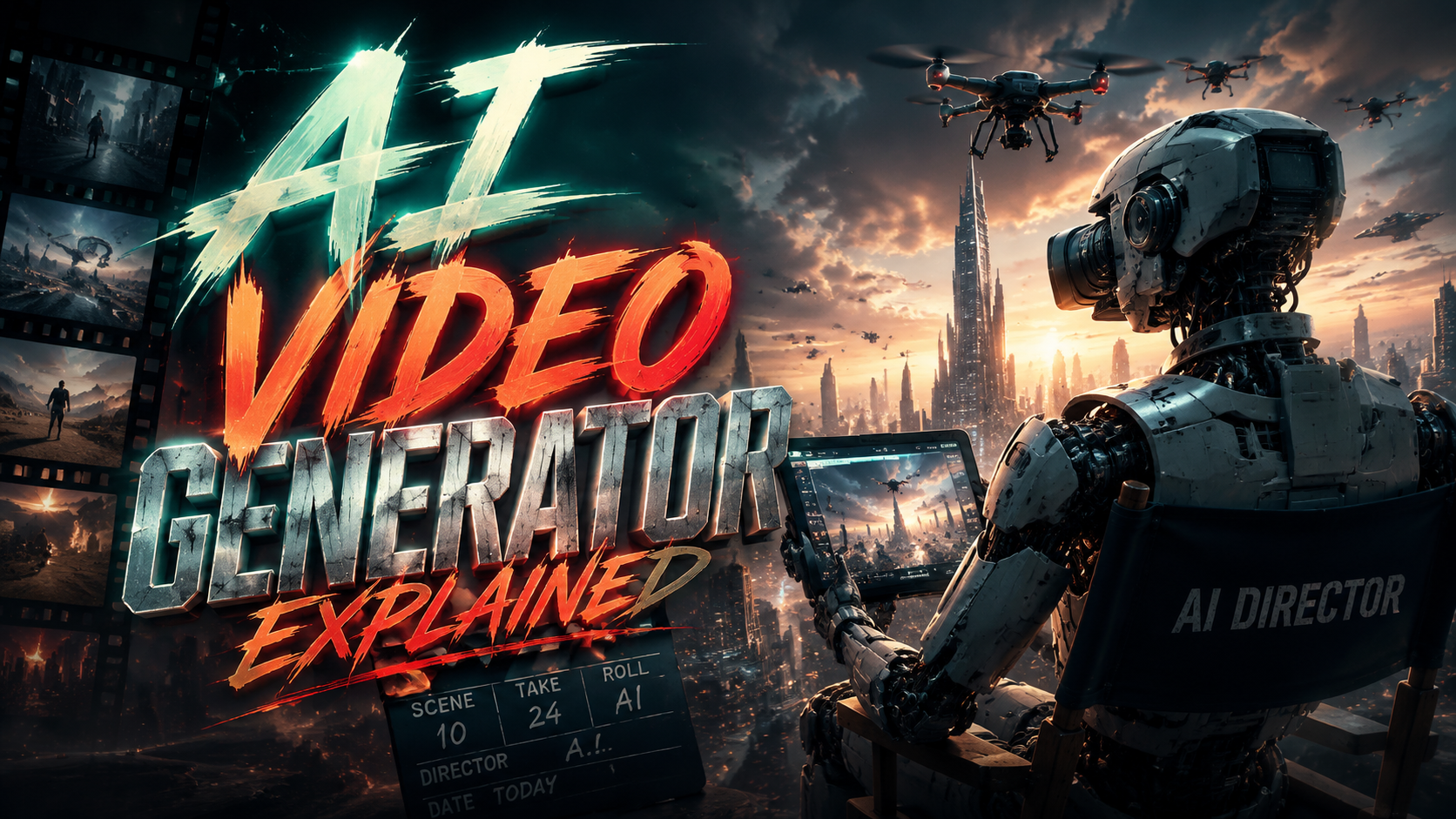
An AI video generator is a type of artificial intelligence that automatically creates videos from text prompts, images, or other inputs. By 2026, these tools have evolved to produce high-quality, realistic videos with minimal human intervention, transforming industries from marketing to entertainment. This article explains how modern AI video generators work, their key advancements, and their growing role in content creation.
TL;DR: AI video generators in 2026 leverage advanced neural networks to create realistic videos from text or images, with breakthroughs like Varya AI and Seedance 2.0 leading the market. These tools are reshaping content creation by automating video production while maintaining high quality.
AI video generator is a cutting-edge technology that uses machine learning models to synthesize videos from textual descriptions, images, or other media inputs. In 2026, systems like Varya AI and Seedance 2.0 demonstrate unprecedented capabilities in generating coherent, high-resolution videos with realistic motion and audio synchronization.
- ✓ AI video generators now produce studio-quality output with minimal human input
- ✓ India's Varya AI represents a major leap in text-to-video technology
- ✓ ByteDance's Seedance 2.0 signals a shift toward more efficient generative models
- ✓ xAI's Grok Imagine combines image and video generation in one platform
- ✓ MIT research confirms modern AI can generate videos with accurate physics simulation
How AI Video Generators Work in 2026
The latest AI video generators use a combination of diffusion models and transformer architectures to create coherent video sequences. According to MIT Technology Review, these systems first analyze the input text or images to understand the desired content, then generate frames while maintaining temporal consistency across the sequence. Advanced models like Seedance 2.0 can now produce videos up to 60 seconds long with smooth transitions between scenes.
Modern systems employ a three-stage process: content understanding, frame generation, and post-processing. During content understanding, the AI interprets prompts using large language models similar to those in chatbots. Frame generation then occurs through specialized neural networks that predict motion and visual changes between frames. Finally, post-processing enhances video quality through super-resolution techniques and artifact removal.
According to Cybernews, ByteDance's Seedance 2.0 introduced a breakthrough "temporal attention" mechanism that better preserves object consistency across frames. This addresses a major limitation of earlier models where objects would morph or disappear unexpectedly. The system also uses 40% less computational power than its predecessor while delivering higher output quality.
Key Technical Components
1. Diffusion models: Gradually refine random noise into coherent video frames through iterative denoising steps
2. Temporal transformers: Specialized neural networks that understand and maintain consistency across time sequences
3. Physics engines: Some models incorporate basic physics simulations to make motion more realistic
The Evolution of AI Video Generation
AI video generation has progressed dramatically since its early days of producing blurry, seconds-long clips. The Economic Times reports that Varya AI from Avataar AI represents India's first commercially viable text-to-video system capable of generating 30-second marketing videos at 1080p resolution. This marks a significant milestone for the technology's practical applications.
In 2026, we're seeing the third generation of AI video tools that address previous limitations around duration, quality, and coherence. Early models struggled with maintaining consistent lighting and object permanence beyond a few seconds. Current systems like Grok Imagine from xAI can generate seamless 45-second videos while preserving character identities and environmental details throughout the sequence.
The field has also seen specialization emerge, with different platforms focusing on particular use cases. Some excel at product demonstrations, others at animated explainers, and some at photorealistic human avatars. This specialization reflects the technology's maturation as it moves beyond being a novelty to becoming a practical content creation tool across industries.
Leading AI Video Generator Platforms in 2026
The AI video generator market has expanded significantly, with several notable platforms emerging as leaders:
| Platform | Developer | Key Feature | Max Duration |
|---|---|---|---|
| Varya AI | Avataar AI | Specialized for Indian languages and contexts | 30 seconds |
| Seedance 2.0 | ByteDance | Temporal attention for consistency | 60 seconds |
| Grok Imagine | xAI | Combined image and video generation | 45 seconds |
| Odysseus AI | Unknown | Focus on educational content | 90 seconds |
Varya AI stands out for its localization capabilities, offering support for multiple Indian languages and cultural contexts. According to findarticles.com, this makes it particularly valuable for regional marketing campaigns where cultural relevance is crucial. The platform also includes pre-built templates for common video types like product promotions and social media ads.
Seedance 2.0 represents the cutting edge in technical capability, with its ability to generate longer videos while maintaining quality. ByteDance's model is particularly adept at handling complex scenes with multiple moving elements, making it popular for entertainment and social media content creation. The system also integrates seamlessly with TikTok's creation tools.
Practical Applications of AI Video Generators
AI video generators are transforming content creation across multiple industries. Marketing teams now use these tools to rapidly produce product videos, testimonials, and promotional content without expensive production crews. According to industry reports, some brands have reduced video production costs by 70% while increasing output volume by 400% using AI generation.
Education represents another major application area. Odysseus AI specifically targets this sector, allowing educators to quickly create instructional videos, animated explanations, and visual aids. The platform includes specialized features like automatic caption generation and knowledge-check questions that can be embedded directly into videos.
Entertainment companies are using AI video generators for storyboarding, pre-visualization, and even final content production. While fully AI-generated feature films remain rare, many studios now use these tools to create background elements, special effects, and animated sequences that would be cost-prohibitive to produce manually.
Top Use Cases
1. Social media content: Quickly generating platform-optimized videos for TikTok, Instagram, and YouTube
2. Product marketing: Creating demonstration videos for e-commerce sites and digital ads
3. Corporate communications: Producing consistent training and internal messaging videos
Ethical Considerations and Limitations
As AI video generation becomes more sophisticated, concerns about misuse have grown. The ability to create realistic-looking videos of people saying or doing things they never actually did raises significant ethical questions. Many platforms now include watermarking and digital fingerprinting to identify AI-generated content, though these measures aren't foolproof.
Current systems still struggle with certain physical interactions and complex emotional expressions. While they can generate convincing human faces and basic movements, subtle gestures and nuanced performances often appear unnatural upon close inspection. These limitations make AI unsuitable for many high-end production needs where human authenticity is paramount.
There are also concerns about the environmental impact of training these large models and the potential for job displacement in creative fields. The industry is working on more efficient training methods and exploring ways to augment rather than replace human creators, but these issues remain unresolved as of 2026.
The Future of AI Video Generation
Looking ahead, experts predict AI video generators will become even more integrated into standard content creation workflows. Future developments may include real-time generation capabilities, allowing for interactive video experiences that adapt to viewer input. There's also ongoing research into multi-modal systems that can simultaneously generate video, audio, and text narratives in a cohesive package.
Accessibility improvements are another likely direction, with tools becoming available to smaller businesses and individual creators. As the technology becomes more democratized, we may see an explosion of personalized video content tailored to individual viewers' preferences and needs.
Ultimately, AI video generation is expected to become as ubiquitous as word processors are today - a standard tool that enhances human creativity rather than replacing it. The most successful implementations will likely be those that combine AI efficiency with human oversight and creative direction.
How long does it take an AI video generator to create a video?
Most current systems can generate a 30-second video in 2-5 minutes, depending on complexity. High-resolution outputs or longer durations may take up to 15 minutes.
Can AI video generators create content in multiple languages?
Yes, advanced systems like Varya AI support multiple languages, with some specializing in particular linguistic or cultural contexts for better localization.
Do I need technical skills to use an AI video generator?
Most platforms are designed for non-technical users, offering simple interfaces where you input text prompts and select from generated options.
How much does AI video generation cost?
Pricing varies widely, from free tiers with watermarks to enterprise plans costing thousands monthly. Most platforms offer subscription models based on video length and quality.
Can AI video generators use my own images or footage?
Many platforms allow you to upload custom assets that the AI can incorporate into generated videos, though results depend on the quality and composition of your source material.
Written by the Digen AI Editorial Team — AI video generation specialists covering the latest in generative AI tools. Learn more about Digen AI.



Comments ()