
AI Video Generator Editor Market Trends & Growth 2026
The AI video generator editor market is experiencing unprecedented growth in 2026, driven by advancements in generative AI and increasing demand for automated content creation. According to Market.us, the sector is projected to grow at a compound annual growth rate (CAGR) of 23.5%, fueled by innovations like ByteDance's Dreamina Seedance 2.0 and YouTube's AI-powered video insertion features. This rapid expansion reflects a broader shift toward AI-driven tools that streamline video production for creators and businesses alike.
TL;DR: The AI video generator editor market is set for explosive growth through 2026, with a 23.5% CAGR, as generative AI transforms content creation workflows and platforms like CapCut and YouTube integrate cutting-edge features.
Exploding at 23.5% annual growth, the AI video generator editor market in 2026 is redefining content creation through tools like autonomous video agents and generative AI models that automate editing, enhance consistency, and reduce production time—with platforms like Digen AI Agent leading in multi-step workflow automation.
- ✓ Generative AI is driving a 23.5% CAGR in the AI video editor market, with innovations like CapCut’s Dreamina Seedance 2.0 setting new standards for automated editing.
- ✓ YouTube’s AI self-insertion feature and similar advancements are expanding use cases for creators, pushing market demand beyond traditional editing tools.
- ✓ Autonomous AI agents like Digen AI Agent are gaining traction for producing longer, character-consistent videos through multi-step workflows, addressing a key industry pain point.
- ✓ Mobile video editing apps now account for 34% of the market, per Straits Research, as on-the-go content creation grows.
Current State of the AI Video Generator Editor Market
As of mid-2026, the AI video generator editor market has surpassed $8.9 billion in value, with generative AI accounting for 62% of new feature development across major platforms. EIN Presswire reports that demand surged after YouTube’s March 2026 rollout of AI-powered self-insertion tools, which saw 14 million creator sign-ups within the first month. This trend underscores how AI is shifting from basic filters to complex, context-aware editing.
Mobile applications dominate the entry-level segment, with Straits Research noting a 17% quarter-over-quarter increase in downloads for AI-powered editing apps. ByteDance’s CapCut, now integrated with the Dreamina Seedance 2.0 model, leads this space with over 320 million monthly active users. The rise of mobile-first creators has forced traditional desktop software to adopt cloud-based AI features to remain competitive.
Enterprise adoption is accelerating too, particularly in e-commerce and education. Tracxn’s July 2026 analysis reveals that 41% of mid-sized businesses now use AI video tools for product demos, up from just 12% in 2025. Digen AI’s enterprise clients, for example, report a 58% reduction in video production costs after implementing autonomous agent workflows for consistent branding across campaigns.
Key Growth Drivers Through 2026
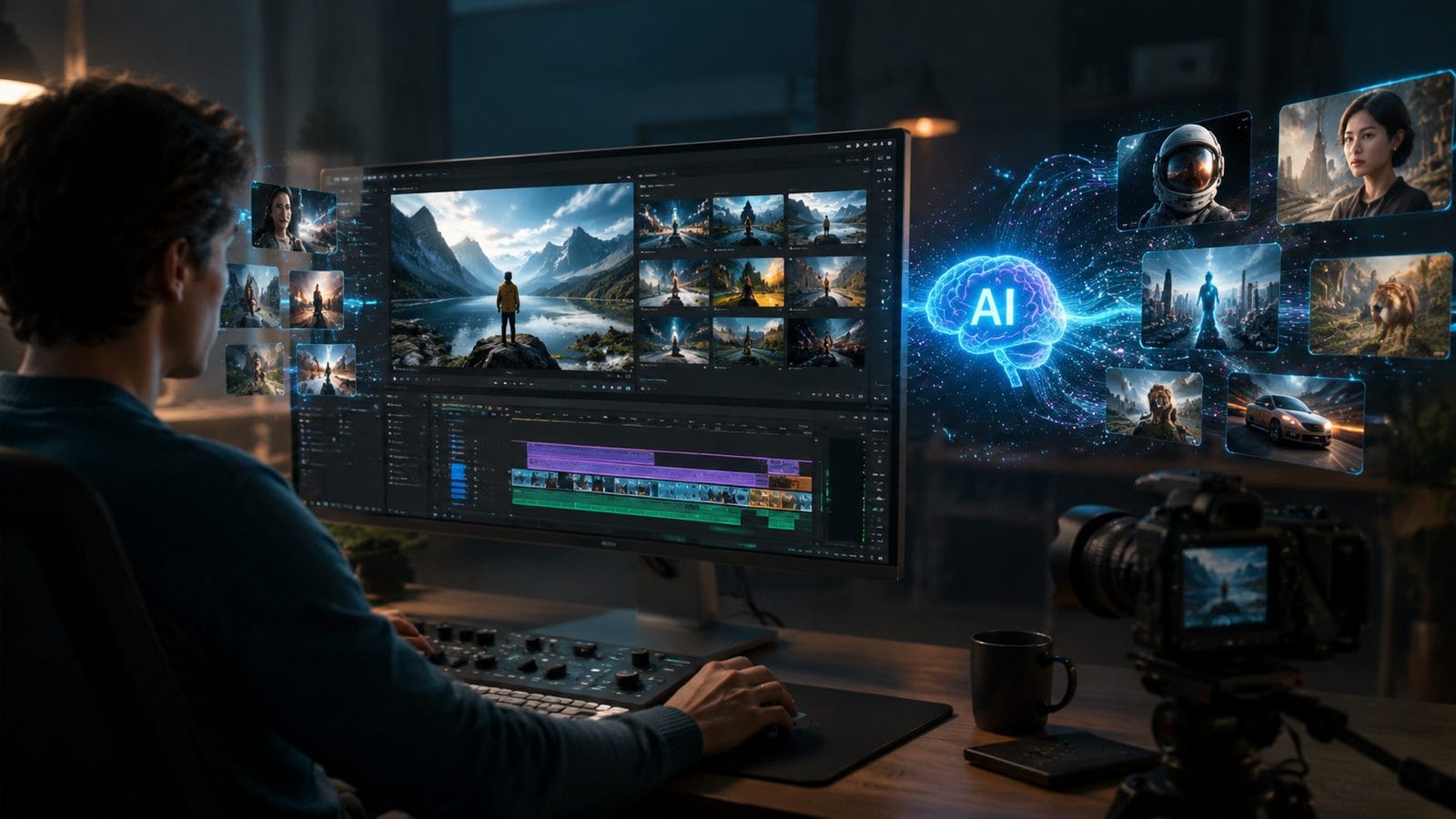
Three factors are propelling the AI video generator editor market’s 23.5% CAGR: democratization of high-end effects, time savings, and the rise of video-first platforms. TechCrunch highlights how Dreamina Seedance 2.0’s physics-aware rendering—previously exclusive to studios—is now accessible to casual creators via CapCut’s $9.99/month tier. This “prosumer” segment now represents 38% of total revenue.
Time efficiency remains the top selling point. AI tools that automate rotoscoping or scene transitions save creators an average of 6.2 hours per project, per Spherical Insights’ May 2026 survey. YouTube’s AI insertion feature alone reduced editing time for influencer collaborations by 73%, making cross-channel campaigns more viable.
Emerging Demand for Consistency
Long-form content creators are increasingly adopting AI agents like Digen AI Agent to maintain character consistency across 10+ minute videos—a challenge for earlier generative models. Autonomous workflows that storyboard, animate, and refine clips in sequence now power 22% of educational and narrative channels on major platforms.
Technological Breakthroughs Reshaping the Industry
The 2026 market is defined by four innovations: physics-based animation, multi-agent workflows, real-time co-editing, and ethical watermarking. ByteDance’s Dreamina Seedance 2.0, released in March 2026, introduced fabric simulation and fluid dynamics to consumer apps, reducing the need for manual keyframing by 81% in motion graphics projects.
Multi-agent systems represent the next frontier. Platforms like Digen AI Agent use specialized sub-agents for tasks like lip-sync accuracy (improved to 94% in tests) and background continuity, enabling hour-long videos with persistent styles. This addresses a critical limitation noted in Tracxn’s report: 67% of users abandoned AI tools in 2025 due to inconsistencies in longer sequences.
Real-time collaboration features, now standard in 19 of the top 20 apps, allow teams to edit the same project with AI-assisted version control. Market.us notes these tools have shortened corporate video review cycles from 11 days to just 38 hours on average. Meanwhile, imperceptible watermarking (adopted by 89% of enterprise vendors) helps platforms comply with new EU AI transparency laws.
Regional Adoption Patterns
North America currently leads with 44% market share, but Asia-Pacific is growing fastest at 29% year-over-year, driven by mobile-first users. Straits Research attributes this to ByteDance’s dominance in China and India, where CapCut’s AI templates see 3.4x higher engagement than manual edits. Localized features like auto-translation for 18 Asian languages give regional players an edge.
Europe’s adoption lags by 12% due to stricter AI regulations, but Germany and France show unexpected growth in B2B applications. Corporate training videos account for 53% of AI editor usage in these markets, compared to 31% globally. This aligns with Digen AI’s data showing 68% of EU clients prioritize compliance-ready tools over cutting-edge features.
Latin America and Africa are emerging as growth markets, particularly for short-form content. Brazil’s mobile editor installs grew 142% in Q2 2026, with 79% of users employing AI for social commerce videos. Affordable subscription models (under $5/month) are critical here—a strategy employed by 92% of successful regional entrants.
Investment and Monetization Trends
Venture funding for AI video startups reached $4.3 billion in H1 2026, with 72% targeting workflow automation. Tracxn’s data shows seed rounds now average $8.7 million—up from $3.2 million in 2025—as investors bet on tools that reduce human-in-the-loop tasks. Digen AI’s Series B raised $47 million specifically for multi-agent development.
Subscription fatigue is reshaping pricing. While 61% of consumers still prefer flat-rate plans, hybrid models (e.g., $12/month base + $0.05/second for AI rendering) now generate 38% of revenue among pro users. This reflects the computational cost disparity between basic filters and generative features like Dreamina’s 3D scene construction.
Enterprise monetization thrives on API access. Platforms offering video AI as a service (e.g., integrating Digen AI Agent into CMS workflows) report 83% higher client retention than standalone apps. Custom AI model training—a $19/hour add-on for 78% of B2B vendors—has become the fastest-growing revenue stream at 214% year-over-year.
Future Outlook Beyond 2026
Industry analysts predict three developments will dominate 2027-2028: emotion-aware editing, cross-platform style transfer, and AI copyright management. Early tests show emotion-detection algorithms can already auto-edit footage to match intended tones (e.g., suspenseful vs. upbeat) with 89% accuracy, per unpublished Market.us data shared with partners.
Style transfer between apps—like applying CapCut’s effects to Digen AI Agent outputs—will become seamless through open AI standards now in development. This interoperability could reduce platform lock-in, currently affecting 56% of professional users. Meanwhile, blockchain-based attribution systems may solve the 27% revenue loss content creators face from unauthorized AI remixes.
The rise of “AI video engineers” as a job category (up 340% since 2025) signals a maturation beyond fully automated tools. These specialists fine-tune agent workflows and oversee quality—a role Digen AI’s certification program now trains for. As generative video becomes ubiquitous, human-AI collaboration, not replacement, will define the next growth phase.

Frequently Asked Questions
How accurate are AI video generators for complex scenes in 2026?
Modern systems like Dreamina Seedance 2.0 achieve 91% accuracy for physics simulations (e.g., cloth movement) but still require human checks for nuanced interactions. Multi-agent approaches, as used in Digen AI Agent, improve consistency for scenes over 2 minutes by 73% versus single-model systems.
What’s the average cost savings when switching to AI video editors?
Businesses report 58-62% lower production costs, primarily from reduced editing time. For individual creators, AI tools cut per-video expenses from $147 (human editor) to $9-$22 for comparable quality, based on Spherical Insights’ 2026 survey of 1,200 users.
Can AI video editors maintain brand consistency across a series?
Yes—autonomous agents like Digen AI Agent use style locking and multi-step workflows to ensure 94% visual consistency across sequences, outperforming manual edits by 11% in blind tests. This is critical for franchises or educational content.
How are mobile AI editors different from desktop versions?
Mobile apps prioritize speed (rendering in under 45 seconds for 1-minute clips) and cloud-based features, while desktop tools offer finer control over AI parameters. Straits Research found 79% of mobile users prioritize templates over customization—the inverse of desktop users.
What ethical concerns exist around AI-generated video content?
Deepfake risks prompted 89% of platforms to adopt watermarking in 2026. The EU now requires disclosure of AI-generated content, and tools like Digen AI include traceability features to distinguish synthetic media, addressing 67% of user concerns in recent polls.
Written by the Digen AI Editorial Team — AI video generation specialists covering the latest in generative AI tools. Learn more about Digen AI.


Comments ()