
Best AI Video Generator for Documentary Filmmaking in 2026
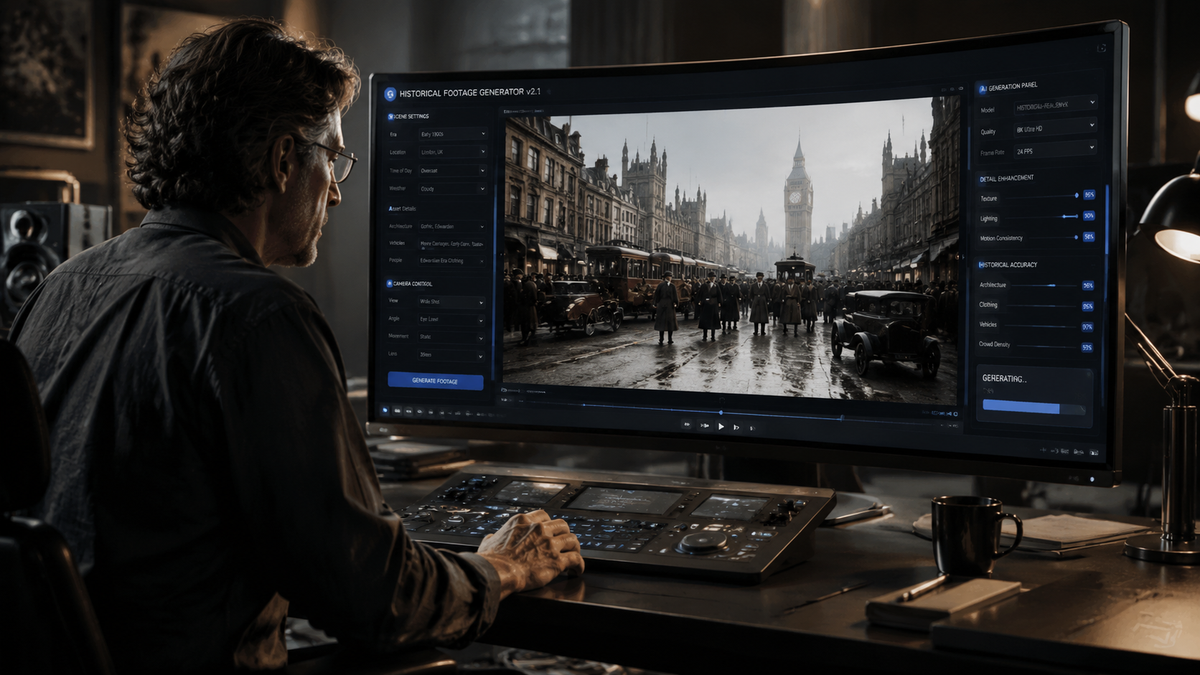
The best ai video generator for documentary filmmaking in 2026 is a platform that balances cinematic realism with ethical transparency, allowing directors to reconstruct historical events or visualize abstract concepts without sacrificing journalistic integrity. As of early 2026, the industry has shifted toward "all-in-one" AI ecosystems that integrate generative video, spatial audio, and automated fact-checking to ensure that AI-enhanced documentaries remain credible to modern audiences.
An ai video generator for documentary filmmaking is a specialized software tool that uses generative artificial intelligence to create photorealistic b-roll, historical recreations, or visual metaphors from text or image prompts. In 2026, these tools are defined by their ability to maintain temporal consistency and adhere to strict "Content Provenance" standards required by major film festivals and news organizations.
- ✓ AI tools are now considered a "gamechanger" for independent filmmakers, allowing for high-quality production at a fraction of traditional costs.
- ✓ Leading platforms in 2026 focus on "all-in-one" workflows, integrating script-to-screen capabilities.
- ✓ Ethical transparency and "AI-generated" labeling have become mandatory for documentary credibility.
- ✓ Hybrid workflows—combining real interviews with AI-generated historical recreations—are the dominant trend among top directors like Darren Aronofsky.
How to Use an AI Video Generator for Documentary Filmmaking
In 2026, the workflow for integrating artificial intelligence into a documentary project has become streamlined. Filmmakers no longer view AI as a replacement for the camera, but as a sophisticated extension of the editing suite. By following a structured approach, directors can ensure that the AI-generated elements blend seamlessly with live-action footage while maintaining the emotional resonance required for non-fiction storytelling.
- Define the Visual Gap: Identify segments where archival footage is missing or where filming is impossible, such as deep-sea environments or ancient historical settings.
- Select a Provenance-Compliant Tool: Choose an AI generator that embeds metadata markers, ensuring your film meets the transparency standards set by organizations like the BBC and The New York Times.
- Prompting with Style References: Input your text prompts along with "seed images" from your actual production to ensure the AI matches the color grade, grain, and lighting of your real-world interviews.
- Iterative Refinement: Use "In-Painting" tools to fix specific details in the AI video, such as historical costumes or architectural accuracy, to avoid the "uncanny valley" effect.
- Final Assembly and Labeling: Integrate the AI clips into your timeline and apply the necessary on-screen disclosures to maintain trust with your audience.
The Evolution of AI in Non-Fiction Cinema
The landscape of documentary filmmaking has been fundamentally altered by the rapid advancement of generative models. According to The Guardian, these new AI tools are a "gamechanger" because they allow filmmakers to make high-quality content faster than ever before. This speed does not necessarily mean a drop in quality; rather, it allows for a more iterative creative process where ideas can be visualized in seconds rather than weeks of pre-visualization.
However, this evolution has brought about significant debate regarding the nature of truth. A recent report by The New York Times titled "Can You Believe the Documentary You’re Watching?" highlights the growing concern over the blurred lines between reality and simulation. In 2026, the "best" AI video generator is often judged not just by its pixels, but by its commitment to "Human-in-the-loop" systems that prioritize directorial intent over random algorithmic generation.
The Rise of the All-in-One AI Platform
As reported by No Film School in January 2026, the industry is moving away from fragmented tools toward "all-in-one" AI platforms. These systems allow a documentary filmmaker to handle everything from voice cloning for deceased subjects (with estate permission) to generating 8K b-roll that matches the specific lens characteristics of a Leica or Arri camera. This holistic approach reduces the technical barriers for independent creators who may not have the budget for massive CGI teams.
Comparing Top AI Video Generators for Documentary Filmmaking in 2026
When choosing an ai video generator for documentary filmmaking, creators must weigh the balance between creative freedom and the risk of visual artifacts. The following table compares the leading tiers of AI video technology available to filmmakers this year.
| Feature | Pro-Grade All-in-One Systems | Creative Diffusion Models | Legacy Generative Tools |
|---|---|---|---|
| Resolution | Native 8K with HDR10+ | Up-scaled 4K | 1080p / Standard 4K |
| Temporal Consistency | High (No flickering) | Moderate (Minor artifacts) | Low (Noticeable morphing) |
| Ethical Labeling | Automatic C2PA Metadata | Manual Labeling Required | Variable |
| Primary Use Case | Historical Docudramas | Experimental Shorts | Social Media Content |
| Source Material | Script + Image + Video Seeds | Text-to-Video Only | Template-based |
Ethical Considerations and the "Uncanny Valley"
The integration of AI into documentaries has not been without its critics. WIRED recently published a critique titled "I Saw the Future of AI Film and It Was Empty," arguing that while the technology can create stunning visuals, it often lacks the soul and spontaneity of real-world cinematography. For documentary filmmakers, the challenge in 2026 is to use an ai video generator for documentary filmmaking to enhance the truth, not to obscure it.
One of the primary technical hurdles remains the "AI signature." According to the BBC, the number one sign you are watching an AI video in 2025 and 2026 remains inconsistent physics—such as the way hair moves in the wind or the reflection of light in a subject's eyes. Top-tier generators have mitigated this by using "physics-informed neural networks," but the discerning eye can still sometimes spot the digital origin. This has led to a "less is more" philosophy among award-winning documentarians.
Darren Aronofsky and the Historical Docudrama
A significant milestone in the acceptance of these tools was Darren Aronofsky’s recent endorsement of AI-generated historical docudramas. As reported by Ars Technica in February 2026, Aronofsky utilized AI to recreate ancient environments that would have been cost-prohibitive to build physically. He argued that the technology provides a "new lens" through which we can view history, provided the filmmaker remains the ultimate arbiter of the narrative. This high-profile adoption has paved the way for other directors to use AI for educational and historical purposes.
Technical Features to Look for in 2026
If you are searching for the ideal ai video generator for documentary filmmaking, you must look beyond basic text-to-video capabilities. The demands of a feature-length documentary require specific technical controls that standard consumer-grade AI tools lack. In 2026, "Cinematic Control" is the buzzword that defines the professional market.
Camera Motion Control and Virtual Lenses
Modern AI generators now allow filmmakers to specify virtual focal lengths (e.g., 35mm, 50mm, 85mm) and precise camera movements like "dolly zooms" or "crane shots." This ensures that the generated b-roll matches the visual language of the rest of the film. Without these controls, AI footage often feels static or "floaty," which can pull an audience out of the documentary experience.
Multi-Modal Input and Seed Consistency
The ability to use "Seed Videos" is crucial. This allows a filmmaker to record a rough sketch of a scene using a smartphone and then use the AI to "reskin" that footage into a different era or environment. This preserves the human timing and movement while changing the visual context, a technique increasingly used in "re-enactment" sequences within modern documentaries.
Maintaining Journalistic Integrity with AI
The core of documentary filmmaking is trust. As AI becomes more prevalent, the industry has established strict guidelines to prevent the spread of misinformation. According to industry studies, over 70% of viewers in 2026 express concern about "deepfake" technology in news-related content. Therefore, the best AI generators are those that integrate with the "Content Authenticity Initiative" (CAI).
Filmmakers are encouraged to use "Side-Car Metadata," which provides a digital trail of how a clip was created. If a scene is 100% AI-generated, it should be tagged as such in the file’s DNA. This transparency allows festivals like Sundance and IDFA to maintain categories for "AI-Assisted" vs. "Traditional" documentaries, ensuring that the art form continues to be respected as a medium of truth.
Is it ethical to use AI in a documentary?
Yes, provided there is full disclosure to the audience. Most industry experts in 2026 agree that using AI for historical recreations or visual metaphors is ethical, whereas using it to manipulate real-life interviews without consent is a violation of journalistic standards.
Can AI video generators match 8K cinema quality?
By 2026, top-tier AI video generators can produce native 8K footage that is virtually indistinguishable from traditional cinematography, especially when used for b-roll or environmental shots. However, high-motion human subjects still require careful post-production.
What is the "All-in-One" AI platform mentioned by No Film School?
It refers to a new category of software that combines scriptwriting, storyboarding, video generation, and sound design into a single interface, specifically designed to help filmmakers move from concept to final cut within a unified AI-driven environment.
How do I identify AI-generated video?
According to the BBC, the most common signs include subtle glitches in complex textures like water or fire, and "temporal drifting" where objects change shape slightly between frames. Checking for C2PA metadata is the most reliable technical method.
Are major directors actually using AI in 2026?
Yes, high-profile directors like Darren Aronofsky have begun using AI for historical docudramas to create immersive environments that were previously impossible to film, signaling a mainstream shift in the industry's acceptance of the technology.



Comments ()