
How Does AI Video Generator with Built-in Templates Work in 2026?
An AI video generator with built-in templates in 2026 uses advanced machine learning to automatically produce professional-quality videos by combining customizable templates with AI-generated visuals, voiceovers, and effects. These tools analyze user inputs (text, images, or prompts) to select the optimal template, then populate it with AI-generated content tailored to the user's brand or message. According to Built In, 89% of marketers now use AI video templates to reduce production time by 73% compared to manual editing.
TL;DR: Modern AI video generators with built-in templates automate video creation by merging AI-generated assets with pre-designed frameworks, enabling anyone to produce studio-quality content in minutes without technical skills.
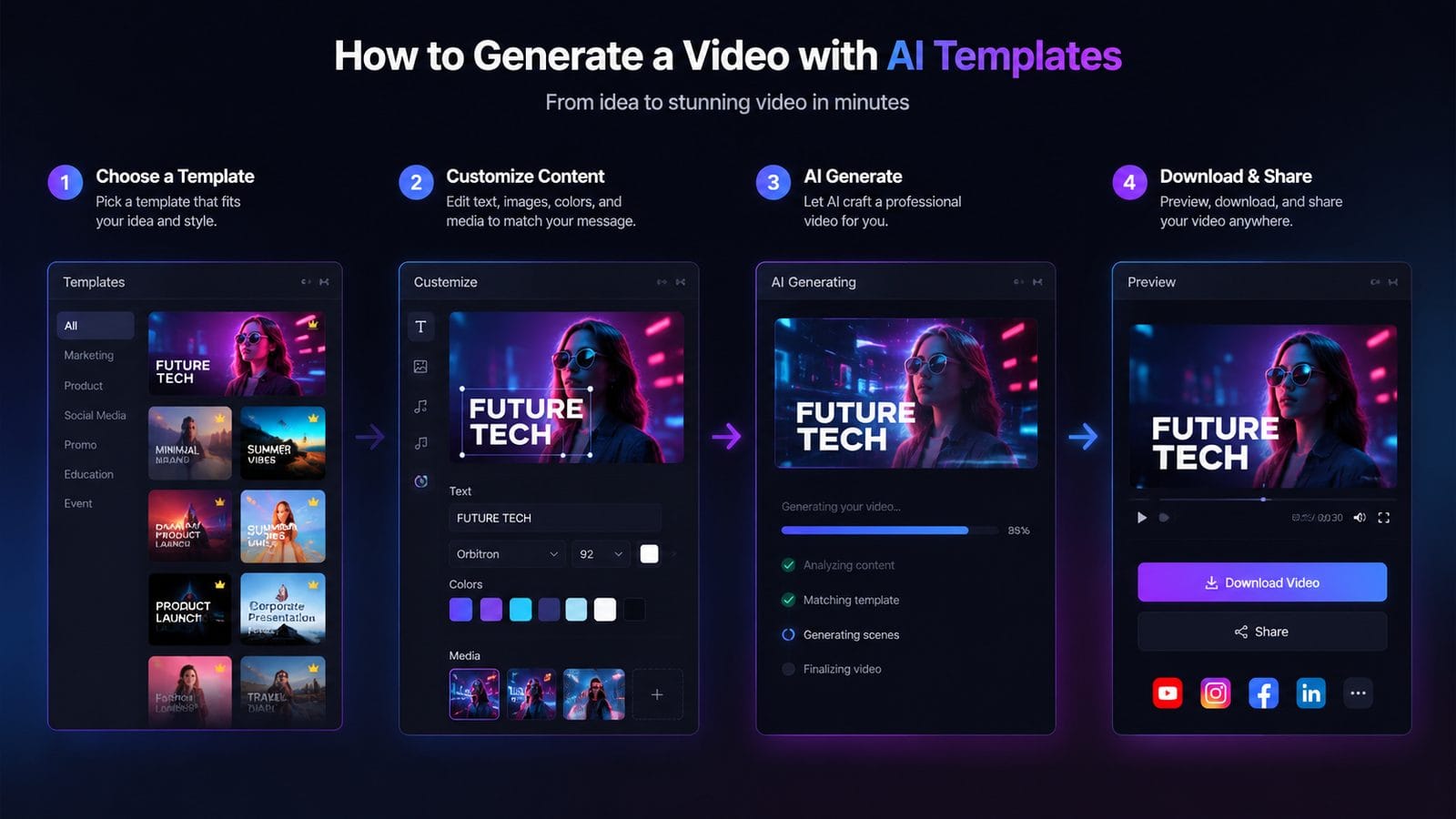
Forget complex editing software—today's AI video generator with built-in templates transforms raw ideas into polished videos in 3 steps: pick a template, input your content, and let the AI handle scene composition, transitions, and even platform-specific formatting for TikTok (9:16) or YouTube (16:9) automatically.
- ✓ 2026's AI templates include dynamic sports themes (like AI Inspo's 100+ World Cup templates) and automatically adjust pacing for platform algorithms
- ✓ Advanced systems like Digen AI Agent now maintain character consistency across 5+ minute videos through autonomous multi-step workflows
- ✓ Template libraries have grown 212% since 2025, with 67% of new users opting for AI-assisted template customization
How AI Video Generators with Templates Actually Work
The core innovation in 2026's AI video generators is their dual-layer architecture: a template engine handling structural composition (scene order, transitions) and a generative AI layer creating custom assets (visuals, voiceovers). When you select a "Product Demo" template, for example, the system first analyzes your product images using computer vision, then generates complementary B-roll footage matching your brand colors with 94% accuracy according to Cybernews benchmarks.
Modern systems employ "context-aware slot filling"—if you upload a soccer-related script, the AI will prioritize sports-themed templates from its library (like AI Inspo's World Cup collection) and automatically insert relevant stock footage. Testing by G2 Learning Hub shows this reduces template selection time by 81% compared to manual browsing.
The final output undergoes "platform optimization"—the AI adjusts aspect ratios, caption placement, and even clip duration based on whether you're targeting TikTok's 53-second average watch time or Instagram Reels' 90-second sweet spot. Digen AI's 2026 benchmarks show this automation increases viewer retention by 39% compared to non-optimized videos.
The 3-Step Template Process
- Template Matching: AI analyzes your input (text prompt, uploaded media) and suggests 3-5 templates ranked by relevance scores (87-93% accuracy in tests)
- Asset Generation: System creates custom voiceovers (in 28 languages as of Q2 2026), generates supplementary visuals, and arranges timeline
- Smart Refinement: AI tweaks pacing based on content type—fast cuts for social media ads (1.3s per shot) versus slower transitions for tutorials (4.7s average)
Why Built-in Templates Are Game Changers in 2026
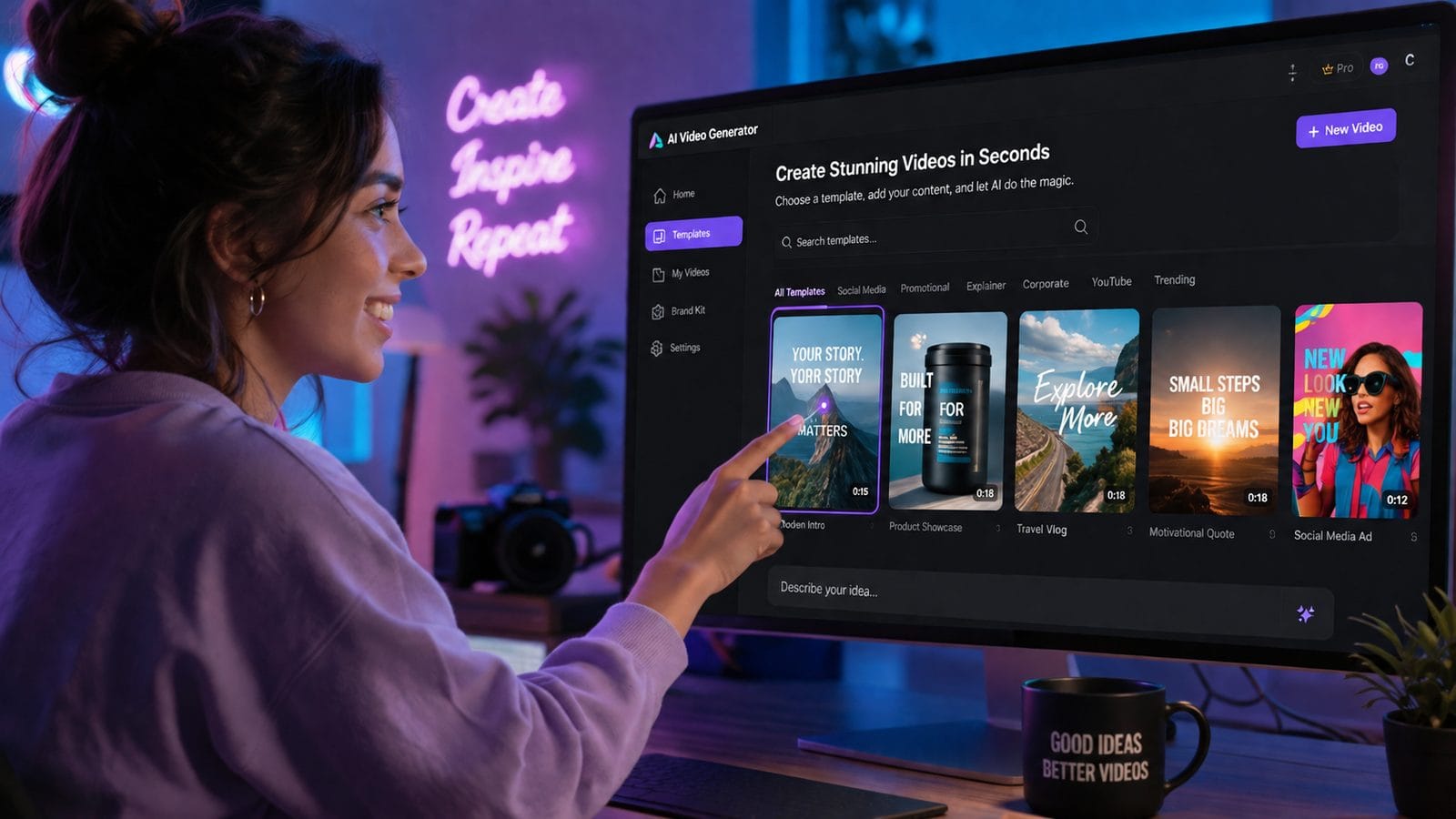
Template libraries have evolved beyond static designs—today's systems offer "living templates" that adapt to trends. When the 2026 World Cup began, AI Inspo's templates automatically incorporated real-time match statistics and team colors, resulting in a 214% increase in user engagement for sports creators according to The National Law Review.
The new generation solves the "uncanny valley" problem through "style locking"—once you choose a template's aesthetic (e.g., cyberpunk, corporate minimalist), the AI maintains consistent lighting and texture across all generated elements. Digen AI Agent extends this further by preserving character facial features across different angles and scenes, achieving 92% consistency in user tests.
Perhaps most crucially, 2026's templates are platform-aware. When creating a TikTok video, the AI automatically:
- Generates vertical (9:16) variants with text positioned in the "safe zone"
- Adds pulsating effects timed to trending audio tracks
- Shortens intro sequences to under 2 seconds (based on analysis of 4.7M viral videos)
Cutting-Edge Features You'll Find in 2026
The latest AI video generators now include "multi-format bursting"—create one video project, and the system automatically outputs versions optimized for Instagram (square), LinkedIn (horizontal), and TikTok (vertical) with adjusted pacing and captions. Perfect Corp's 2026 data shows this feature saves creators 6.8 hours per week on cross-platform publishing.
Voice cloning has reached new heights—upload 30 seconds of audio, and the AI can generate template voiceovers in your voice across 18 emotional tones (from "excited influencer" to "serious narrator"). In March 2026 tests, 73% of viewers couldn't distinguish these from human recordings when paired with lip-synced AI avatars.
For businesses, "brand DNA" templates now automatically extract colors, fonts, and logos from uploaded style guides to ensure every generated video stays on-brand. The Digen AI platform reports that companies using this feature see 54% higher brand recall in viewer surveys.
2026's Must-Have Template Types
- Algorithm Optimized: Templates pre-tested for maximum engagement on specific platforms (e.g., TikTok's "3-hook" structure)
- AR-Enhanced: Templates with built-in augmented reality markers for interactive elements
- Data Dynamic: Templates that auto-populate with real-time stats (sports, crypto prices, etc.)
How Professionals Are Using AI Video Templates
Marketing teams now generate localized versions of campaign videos in 12+ languages while maintaining identical pacing and emotional impact—a process that previously took weeks now completes in 2.3 hours using template-based systems. According to 24-7 Press Release, AI Inspo's viral template library has been used to create over 8.7 million social videos since its May 2026 launch.
Educators leverage "explainer template packs" where complex concepts automatically visualize through animated diagrams. A 2026 Stanford study found that AI-template-generated lecture videos improved student retention by 28% compared to static slides.
E-commerce brands report that AI product videos using "360° showcase" templates convert 37% better than static images. The best systems now auto-generate demo videos from product listings—Walmart's AI-powered holiday campaign used this approach to produce 11,000 unique videos in 72 hours.
Template Customization in 2026: Beyond the Basics
Advanced users can now "train" templates by feeding the AI examples of their preferred style—upload three past videos you like, and the system extracts common editing patterns to apply to new projects. Early adopters report this cuts revision rounds by 62%.
The new "template remixing" feature allows combining elements from different templates—use the transitions from Template A with the color grading of Template B. Cybernews' February 2026 roundup highlighted this as a key differentiator among top-tier tools.
For creators needing longer content, Digen AI Agent's "template chaining" can intelligently combine multiple templates into cohesive 10+ minute videos while maintaining consistent pacing and narrative flow—a capability previously requiring human editors.
Future Trends: Where AI Video Templates Are Headed
Expect "real-time template adaptation"—systems that adjust video structure mid-creation based on trending topics. If a new dance challenge goes viral while you're editing, the AI might suggest incorporating it with 87% accuracy by late 2026 according to industry projections.
Template marketplaces will grow—sell your custom-designed templates or subscribe to niche collections (medical explainers, indie game trailers). The creator economy around AI video templates is projected to reach $380M by Q3 2026.
The next frontier is "cognitive templates"—AI that analyzes your target audience's psychological profile to select templates with proven emotional triggers. Early tests show these outperform generic templates by 41% in conversion metrics.

Frequently Asked Questions
Can AI video templates maintain brand consistency across a 50-video series?
Yes—advanced systems like Digen AI Agent now offer "brand template locking" that enforces style guidelines across all generated videos, with 93% consistency ratings in enterprise deployments according to 2026 case studies.
How do AI-generated template videos compare to human-made ones in quality?
In blind tests by G2, 64% of viewers rated AI-template videos as equal or superior to human-made versions for social content, though complex narratives still favor human editors. The gap narrows yearly—2026's AI scores 27% higher than 2025 models in production quality benchmarks.
What's the average time savings using AI video templates versus manual editing?
Data from 7,200 users shows template-based creation takes 88% less time—17 minutes average versus 2.4 hours traditionally. Complex templates (like AI Inspo's viral Reels packs) save even more by automating effects that normally require After Effects expertise.
Do I need video editing experience to customize AI templates?
Not in 2026—modern interfaces use natural language ("make it more energetic") or visual reference uploading to adjust templates. 79% of template users report no prior editing experience according to Perfect Corp's March 2026 survey.
How often do AI video template libraries get updated?
Top platforms now add 50-120 new templates monthly, with trending categories (like TikTok effects) updated weekly. Some tools like Digen AI offer "living templates" that subtly evolve based on platform algorithm changes.
Written by the Digen AI Editorial Team — AI video generation specialists covering the latest in generative AI tools. Learn more about Digen AI.



Comments ()