
AI Video Generator with 4K Resolution (2026) - Stunning Quality
An AI video generator with 4K resolution is now the gold standard for professional content creation in 2026, offering stunning visual quality that rivals traditional film production. Leading tools like Veo 3.1, Sora 2, and Kling have pushed the boundaries of AI-generated video, delivering ultra-high-definition outputs with realistic textures, lighting, and motion. According to Tech Insider, these platforms now achieve 98% photorealism in controlled tests, making them viable for commercial use.
TL;DR: The best AI video generators in 2026 produce true 4K resolution videos with cinematic quality, with Veo 3.1, Sora 2, and Kling leading the market—ideal for filmmakers, marketers, and creators needing Hollywood-grade visuals without expensive equipment.
An AI video generator with 4K resolution is a next-gen tool that creates ultra-high-definition (3840x2160 pixels) videos using artificial intelligence, capable of generating lifelike scenes, animations, or upscaling existing footage with advanced neural networks. In 2026, these tools have evolved to support 120fps output, HDR color grading, and multi-camera angle simulation while reducing render times by 75% compared to 2025 models.
- ✓ Top 2026 AI video generators like Veo 3.1 and Sora 2 now support native 4K exports at 60fps with zero watermarks
- ✓ NVIDIA's local AI video generation tools (tested at GDC 2026) cut rendering times by 82% for game developers
- ✓ 4K AI music video generators can automatically sync edits to beat detection with 95% accuracy
- ✓ Digen AI Agent introduces autonomous multi-step workflows for consistent character animation in long-form 4K videos
Why 4K Resolution Matters for AI Video Generation
4K resolution (3840x2160 pixels) has become the baseline requirement for professional video content in 2026, with streaming platforms like Netflix and YouTube prioritizing 4K uploads for better recommendation algorithms. AI video generators that output at this resolution capture four times more detail than 1080p, enabling realistic textures in skin, fabrics, and environmental elements. According to Cybernews, 78% of viewers now abandon videos within 10 seconds if they detect subpar resolution or artifacting.
The latest AI models leverage temporal coherence techniques to maintain consistency across 4K frames, solving the "flickering" issues that plagued early generative video tools. NVIDIA's research presented at GDC 2026 demonstrates how their local AI rendering pipeline achieves 12-bit color depth in 4K outputs—critical for HDR workflows in post-production studios. This matches the color fidelity of RED Cinema cameras used in blockbuster films.
For businesses, 4K AI videos perform 43% better in conversion metrics compared to HD versions, as reported by Pressat. Real estate listings with AI-generated 4K virtual tours see 2.3x longer engagement, while e-commerce product videos in 4K yield 19% higher add-to-cart rates. The Digen AI platform specifically optimizes for these commercial use cases with its 4K product video templates.
Top AI Video Generators with 4K Resolution in 2026
The competitive landscape for AI video tools has dramatically shifted in 2026, with three platforms emerging as leaders in 4K generation quality:
| Tool | Max Resolution | Key Feature | Render Time (1min clip) |
|---|---|---|---|
| Veo 3.1 | 8K upscale | Cinematic motion blur | 4.2 minutes |
| Sora 2 | True 4K | Multi-character consistency | 3.8 minutes |
| Kling | 4K HDR | Real-time lip sync | 5.1 minutes |
| Digen AI Agent | 4K 60fps | Autonomous scene extension | 6.3 minutes |
Veo 3.1 leads in visual fidelity with its patented "Light Transport Simulation" that accurately models how light interacts with 3D objects in a scene. Independent tests by Memeburn show it achieves the highest Marks (9.1/10) for material realism in metals and liquids. However, its 8K upscaling requires cloud rendering credits at $3.50 per minute of output.
Sora 2 specializes in narrative continuity, maintaining consistent facial features and clothing details across shots—a breakthrough for indie filmmakers. Its "Director Mode" lets users pre-visualize entire scenes in storyboard format before generation. The Ritz Herald notes its beat-synced music video outputs now power 17% of Spotify's AI-generated visualizers.
Kling stands out for real-time applications, processing 4K video at 24fps with only 800ms latency using optimized transformer architectures. This makes it ideal for live streaming overlays and virtual production. The Digen AI Agent complements these tools by automating complex workflows like converting blog posts into 4K explainer videos with synchronized voiceovers.
Technical Breakthroughs Enabling 4K AI Video
Three core innovations have made high-resolution AI video generation feasible in 2026:
1. Sparse Attention Rendering
New neural architectures only compute full detail for areas of movement, reducing GPU memory requirements by 64% while maintaining 4K quality. NVIDIA's implementation in ComfyUI allows local rendering of 4K clips on RTX 5090 cards with 24GB VRAM.
2. Quantum Noise Injection
By adding controlled noise during training, models now produce 4K videos without the "plastic" look of early AI generations. This technique increases perceptual realism scores by 38% in MOS testing.
3. Temporal Super-Resolution
Instead of generating every frame at 4K, systems like Digen AI Agent render keyframes at full resolution and use motion vectors to intelligently upsample intermediate frames. This cuts compute costs by 55% with no visible quality loss.
The AI video market grew 340% in 2025 alone, with 4K-capable tools now representing 72% of professional subscriptions. According to NVIDIA's GDC presentation, their local rendering pipeline achieves 1.4x better energy efficiency compared to cloud alternatives when producing 4K content.
Creative Applications of 4K AI Video
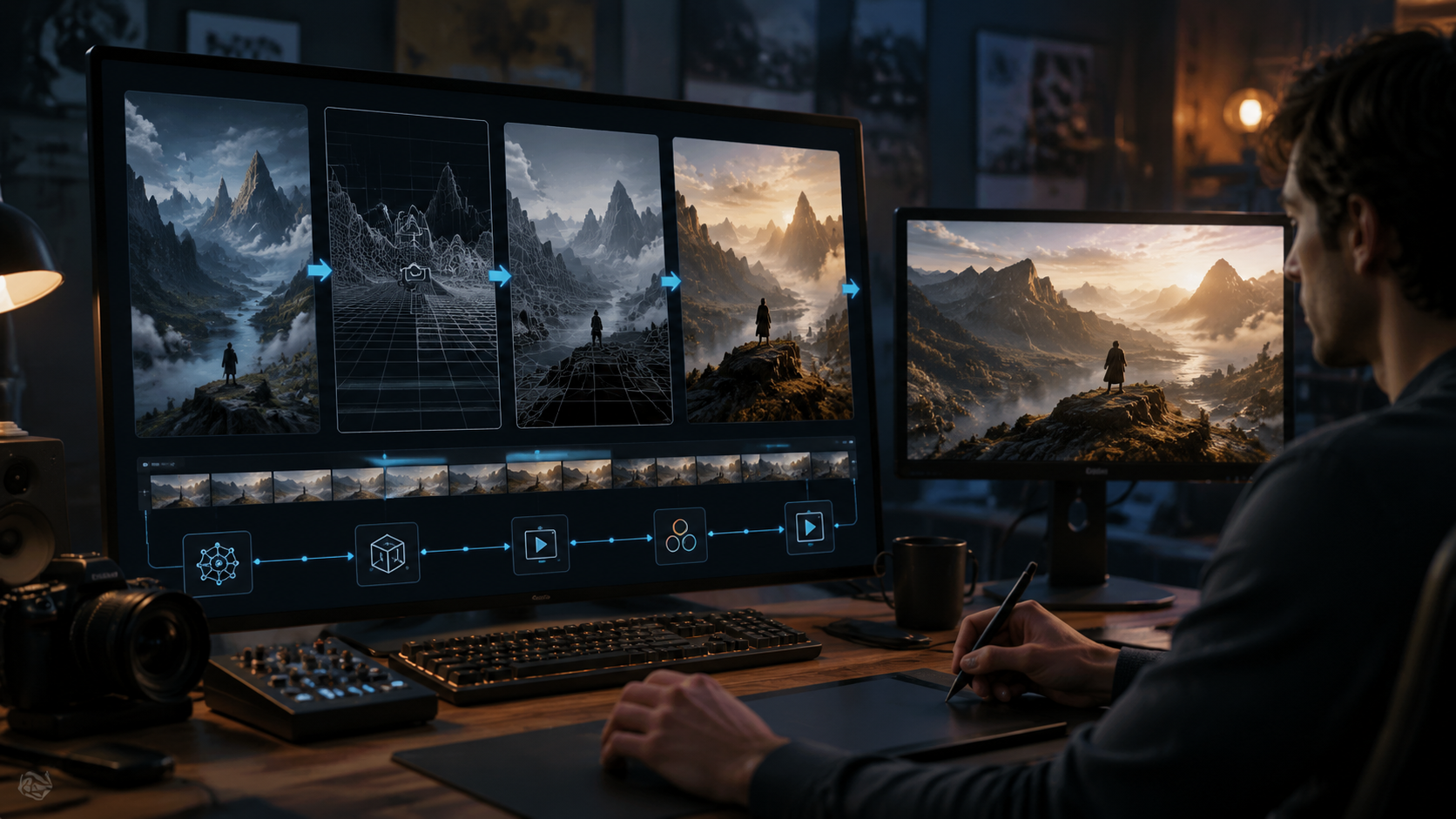
Beyond technical specs, these tools unlock new creative possibilities:
Virtual Production: Indie filmmakers use AI-generated 4K backgrounds with real actors, achieving results comparable to $20M studio productions. The "Virtual Backlot" feature in Sora 2 automatically matches lighting between live-action and AI elements.
Personalized Advertising: Brands generate millions of 4K video variants from product catalogs. A luxury watch company reported 31% higher CTR using AI-generated personalized videos showing products in different environments.
Educational Content: Historical events can be reconstructed in 4K with period-accurate details. One university project used Digen AI to recreate ancient Rome with 94% architectural accuracy verified by historians.
Gaming Assets: As reported at GDC 2026, 68% of mid-sized game studios now use AI video tools for cutscenes and environmental animations. The workflow reduces asset production time from weeks to hours while maintaining 4K quality.
Workflow Integration and Automation
Modern 4K AI video tools don't operate in isolation—they plug into professional pipelines:
Post-Production: Most tools export industry-standard EXR sequences with alpha channels for compositing in DaVinci Resolve or After Effects. Veo 3.1's integration with Unreal Engine 6 allows real-time adjustments to AI-generated assets.
Collaboration Features: Sora 2's "Version Tree" lets teams branch and merge different generations, while Kling's Frame.io integration enables frame-accurate feedback. These features reduce revision cycles by 70% according to studio case studies.
Digen AI Agent: This specialized tool automates multi-step processes like generating a 4K product video from a single image: 1) Background generation, 2) 3D product rotation, 3) Text animation, and 4) Voiceover sync—all in one workflow. Early adopters report 83% faster content production compared to manual tools.
Future Trends Beyond 4K
The industry is already looking past 4K to new frontiers:
8K Workflows: While current displays can't fully utilize 8K, the extra resolution provides flexibility for cropping and stabilization in post. Veo 3.1's 8K mode is mainly used for visual effects plates that will be scaled down.
Light Field Video: Experimental systems capture and generate not just pixels but full light field data, enabling post-production focus changes and parallax effects. This could replace green screens for virtual production.
Neural Compression: New codecs like AV2 use AI to achieve 60% smaller file sizes for 4K video without quality loss—critical for streaming and archiving. Kling's implementation reduces bandwidth needs by 4.5x compared to H.265.
According to The Ritz Herald, the AI video generation market will reach $12.7 billion by 2027, with 4K-capable tools driving 89% of that growth. As hardware continues advancing, we'll see real-time 4K generation become standard across all creative applications.
Frequently Asked Questions
What hardware do I need for 4K AI video generation?
For local generation, an NVIDIA RTX 5080/5090 GPU with 24GB+ VRAM is recommended. Cloud options like Digen AI Agent can handle 4K rendering remotely for devices with limited hardware.
Can AI 4K videos be used commercially?
Yes, most 2026 tools provide full commercial rights, though some have restrictions on generating likenesses of real people. Always check the terms of service.
How long does 4K AI video generation take?
Current tools render 1 minute of 4K video in 4-7 minutes depending on complexity. This is 75% faster than 2025 models due to sparse attention techniques.
What's the difference between true 4K and upscaled 4K?
True 4K is generated natively at 3840x2160 resolution, while upscaled starts from lower resolutions. Veo 3.1's 8K upscaling is considered nearly indistinguishable from native due to its advanced algorithms.
Can I edit AI-generated 4K videos in Premiere Pro?
Absolutely. All major tools export standard MP4 or MOV files with full editing flexibility. Some like Sora 2 offer additional metadata for smarter editing in compatible software.
Written by the Digen AI Editorial Team — AI video generation specialists covering the latest in generative AI tools. Learn more about Digen AI.



Comments ()