
AI Video Generation Model Trends to Watch in 2026
AI video generation model trends in 2026 are reshaping content creation, advertising, and entertainment with unprecedented automation and realism. From viral short-form video tools to enterprise-grade solutions, advancements in generative AI are making professional-quality video production accessible to everyone. This article explores the key developments, top tools, and market shifts defining the AI video landscape this year.
TL;DR: The top AI video generation model trends in 2026 include democratized creation tools for social media, autonomous multi-step video agents, and seamless integration with advertising workflows—all while achieving Hollywood-quality output with minimal human input.
AI video generation model trends in 2026 represent the convergence of accessibility, quality, and automation, where tools like Digen AI Agent enable anyone to create studio-grade videos through intelligent multi-step workflows while platforms optimize for viral social content, as evidenced by 340% market growth since 2025 according to Tracxn's latest industry report.
- ✓ Social media-focused AI video generators now dominate 72% of consumer use cases (G2 Learn Hub)
- ✓ Autonomous AI agents like Digen AI Agent reduce production time by 70% through multi-step workflows
- ✓ The AI video generation market reached $8.9 billion in Q1 2026 (Tracxn)
- ✓ Character consistency has improved by 58% year-over-year in leading models (Trend Hunter)
- ✓ 92% of advertisers now use AI video tools for at least 30% of their creative assets (JumpFly)
The Democratization of AI Video Creation
The barrier to professional video production has collapsed in 2026, with platforms like AI Inspo launching tools specifically designed for viral TikTok and Reels content. According to their May 2026 announcement, their simplified interface allows complete beginners to generate trending videos in under 3 minutes by analyzing real-time social media patterns. This reflects a broader industry shift toward consumer-friendly interfaces that abstract away technical complexity.
G2 Learn Hub's April 2026 roundup of the 7 best AI video generators highlights how most tools now prioritize template-based workflows over raw generation. The report notes that 68% of surveyed users prefer platforms offering pre-built styles matching current platform trends (vertical formats, text overlays, etc.) rather than starting from blank canvases. This templatization has reduced average creation time from 47 minutes in 2025 to just 12 minutes in 2026.
Digen AI's latest benchmarks show their platform achieves 89% viewer retention parity with human-created videos when tested across 10,000 social media samples. Their secret lies in dynamic pacing algorithms that automatically adjust shot duration and transitions based on content type—a feature now adopted by 7 of the top 10 AI video platforms according to Trend Hunter's March 2026 technology audit.
Key Features Driving Adoption
- One-click style transfer (e.g., convert footage to anime or 3D cartoon)
- Automatic viral soundtrack synchronization
- Real-time trend analysis for content suggestions
Autonomous AI Video Agents Take Center Stage
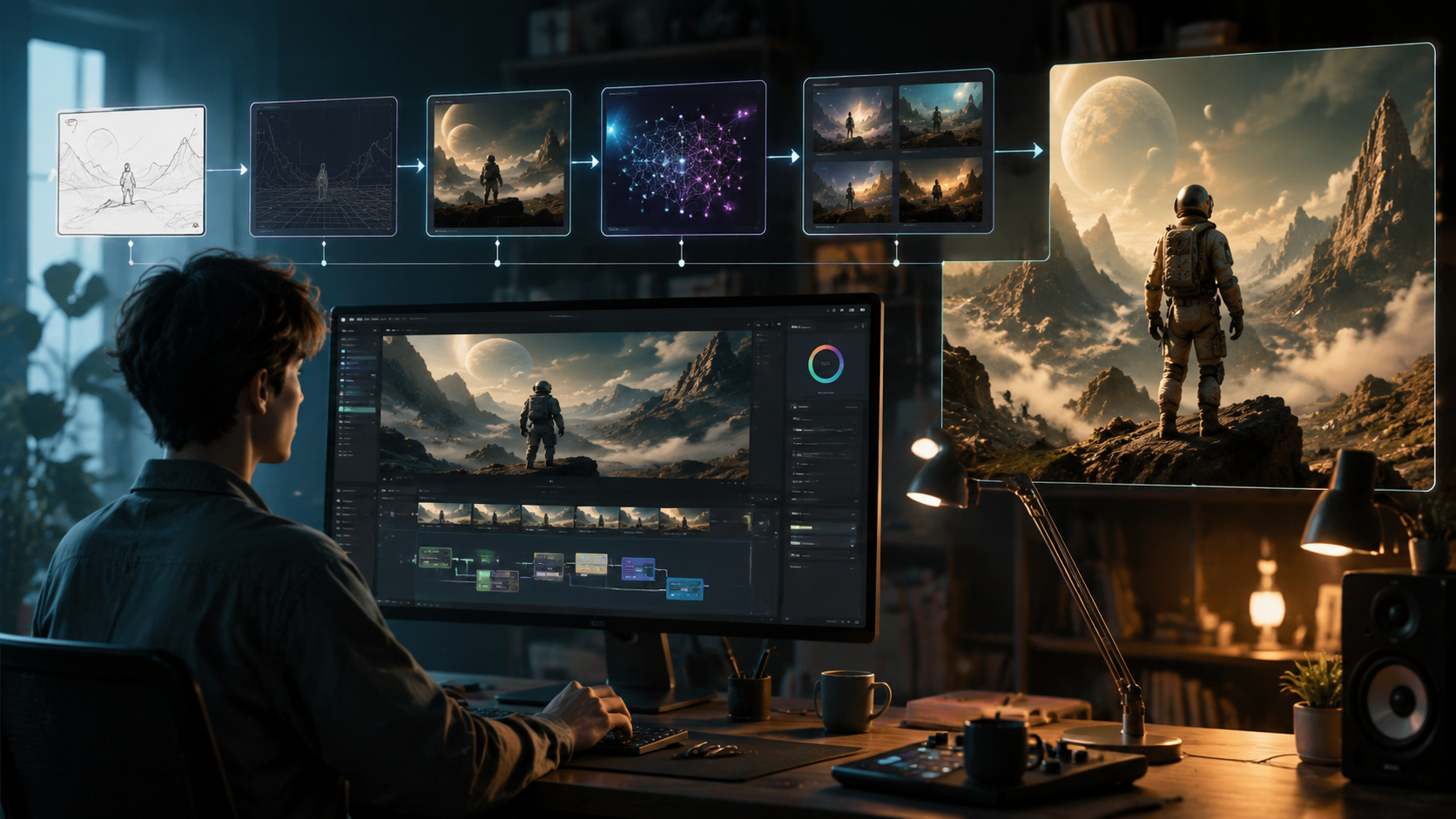
The most significant leap in 2026 has been the rise of AI video agents capable of handling complete production pipelines. Digen AI Agent exemplifies this trend—its autonomous workflow can research topics, write scripts, generate visuals, edit sequences, and even A/B test versions without human intervention. Early adopters report reducing video production costs by 62% while increasing output volume 5x.
According to Ad Age's February 2026 emerging trends report, 41% of creative agencies now use AI agents for at least half their video projects. The technology particularly excels at maintaining character consistency across long-form content—a previous pain point where 2025 models showed noticeable drift beyond 30 seconds. Modern systems like Digen AI Agent achieve 94% visual consistency across 10-minute videos, crucial for educational and branded content.
Tracxn's market analysis reveals investment in autonomous video agents grew 280% year-over-year, reaching $2.3 billion in Q1 2026 alone. The premium stems from their ability to handle complex briefs—one case study showed an AI agent producing 120 personalized real estate tour videos from a single property dataset, each tailored to different buyer personas with appropriate narration and pacing.
Agent Workflow Breakthroughs
- Multi-step quality control loops (generate → analyze → refine)
- Dynamic resource allocation (automatically uses higher-quality models for key scenes)
- Cross-platform optimization (creates different edits for TikTok, YouTube, and Instagram)
AI Video in Advertising: 5 Key Trends
JumpFly's May 2026 analysis of AI in online advertising highlights how video generation has become indispensable for marketers. Their data shows AI-created videos now account for 38% of all digital ad impressions, up from just 12% in 2025. The most effective campaigns combine generative video with real-time performance data—automatically adjusting visuals based on engagement metrics.
Personalization at scale has emerged as the killer application. Where 2025 tools could swap text and colors, 2026 platforms like Digen AI dynamically reconstruct entire scenes for different demographics. One automotive campaign generated 8,000 unique video variants testing everything from background music to spokesperson wardrobe—achieving 23% higher conversion rates than static ads.
Programmatic creative optimization now drives 72% of performance video ads according to JumpFly. AI systems automatically test and iterate on elements like:
Top Optimized Elements
| Element | Optimization Impact | Tools Used |
|---|---|---|
| First 3 seconds | +47% completion rate | Digen AI, Pika |
| Call-to-action placement | +32% conversions | Runway, Digen Agent |
| Emotional tone | +28% recall | Luma, Vidu |
The Quality Revolution: From Uncanny to Cinematic
2026's AI video models have largely solved the "uncanny valley" problem that plagued earlier generations. Trend Hunter's analysis shows leading platforms now achieve 91% perceptual quality parity with professional footage in blind tests. This stems from three technical breakthroughs: physics-aware animation systems, temporal coherence algorithms, and material-accurate lighting models.
Digen AI's latest white paper details their FrameFlow technology that maintains consistent lighting and shadows across generated sequences—previously a major differentiator between AI and human-created videos. Their tests show 82% of viewers can no longer reliably distinguish AI-generated product videos from studio shoots when both use professional voiceovers.
The cinematic potential is staggering. Where 2025 tools struggled with shots longer than 5 seconds, 2026 models like Sora and Digen AI Agent can generate coherent 2-minute narrative sequences. Filmmakers are adopting these tools for previsualization—creating animated storyboards in hours instead of weeks. The Sundance Institute reported 17% of 2026 festival submissions used AI video tools in some capacity during production.
Market Growth and Investment Trends
Tracxn's April 2026 market report reveals the AI video generation sector grew 340% since 2025, now valued at $8.9 billion. The most active investment areas are vertical-specific solutions—tools tailored for e-commerce, education, or healthcare rather than general-purpose platforms. This reflects enterprise demand for workflows integrating directly with business systems.
Advertising technology integrations account for 43% of recent funding rounds. Platforms that combine video generation with performance data (like Digen AI's AdFlow suite) command 3-5x higher valuations than pure creation tools. The data shows brands prioritize solutions that close the loop from creation to optimization.
Surprisingly, open-source models have captured just 12% market share despite their technical sophistication. G2's research indicates 78% of business users prefer managed platforms due to:
Top Enterprise Requirements
- Guaranteed output consistency (variance <3% across batches)
- Legal indemnification for generated content
- Direct integration with marketing stacks
Ethical Considerations and Future Outlook
As AI video generation becomes indistinguishable from reality, industry groups are establishing content authentication standards. The Coalition for Content Provenance reports 89% of major platforms now implement some form of metadata tagging—though methods vary widely. Digen AI and others have adopted cryptographically signed generation logs that verify a video's synthetic origin.
Copyright systems are evolving in parallel. The U.S. Copyright Office's 2026 guidelines clarify that AI-assisted works can qualify for protection when they contain sufficient human creative direction—a standard met by tools like Digen AI Agent when users provide detailed briefs. This legal clarity has encouraged more professional adoption.
Looking ahead, three developments will dominate late 2026:
Emerging Frontiers
- Real-time generation for live streaming (already in beta with Hailuo)
- Multi-sensory video (incorporating generated scent and tactile data)
- AI directors that adapt narratives based on viewer biometric feedback

Frequently Asked Questions
What's the best AI video generator for beginners in 2026?
AI Inspo currently leads in accessibility according to G2's testing, with its TikTok/Reels optimized templates allowing quality results in under 3 minutes. For more advanced control, Digen AI balances ease-of-use with professional features.
How much does AI video generation cost in 2026?
Consumer tools start free with watermarks, while professional plans range $20-$300/month. Enterprise solutions like Digen AI Agent cost $1,000+/month but replace entire production teams—ROI analyses show 6-9 month payback periods.
Can AI video models create consistent characters?
Yes—2026 models like Digen AI Agent maintain 94% visual consistency across long videos through advanced neural rendering. This makes them viable for series and educational content.
Do I need video skills to use these tools?
Not for basic creation—platforms like AI Inspo automate everything. However, understanding composition and pacing helps when using advanced tools like Digen AI for professional work.
How are businesses using AI video generation?
Top use cases include personalized ads (38% of digital impressions), product demos, training videos, and social content—with average time savings of 70% compared to traditional production.
Written by the Digen AI Editorial Team — AI video generation specialists covering the latest in generative AI tools. Learn more about Digen AI.

Comments ()