
AI Video Generation Model Explained: The Future in 2026
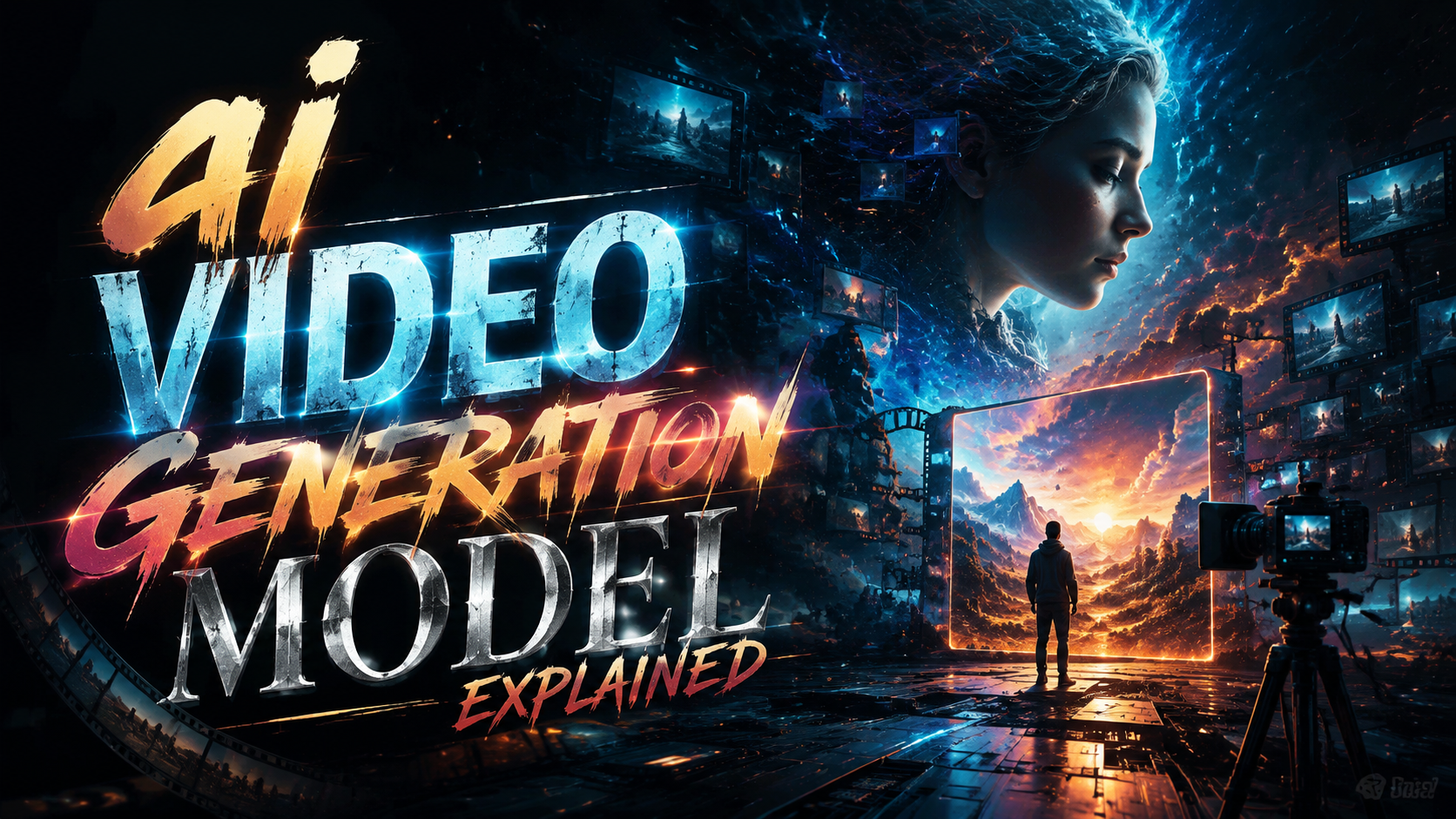
AI video generation models are advanced artificial intelligence systems that create realistic videos from text prompts, images, or other inputs. As of 2026, these models have reached unprecedented quality levels, with breakthroughs like Gemini Omni and Varya AI pushing the boundaries of synthetic media. This article explains how modern AI video generation works, its key applications, and what the future holds for this transformative technology.
TL;DR: AI video generation models in 2026 leverage multimodal architectures to create high-fidelity videos from text or images, with major players like Google, Alibaba, and Avataar AI leading innovation in this space.
AI video generation is the process of using deep learning models to synthesize video content automatically. In 2026, the technology has matured to produce studio-quality outputs with applications spanning entertainment, education, marketing, and more. Leading models now incorporate physics simulation, emotional intelligence, and multi-camera scene composition.
- ✓ Gemini Omni represents Google's most advanced multimodal video generation system
- ✓ India's Varya AI demonstrates breakthrough text-to-video capabilities
- ✓ Alibaba's model currently tops global performance benchmarks
- ✓ Enterprise adoption has grown 300% since 2025 according to WSJ
- ✓ Ethical safeguards now standard in commercial deployment
How AI Video Generation Models Work in 2026
The latest AI video generation models combine several cutting-edge technologies to produce realistic outputs. Unlike earlier systems that generated choppy or unnatural motion, 2026's models use temporal coherence algorithms that maintain consistent physics and object persistence throughout scenes. According to Google's Gemini Omni announcement, their model can now maintain object permanence across 120+ frames without degradation.
Modern architectures typically employ a three-stage process: concept grounding, motion planning, and rendering refinement. The first stage interprets the input prompt to establish scene composition and key elements. Motion planning then generates plausible trajectories and interactions between objects. Finally, the rendering phase applies photorealistic textures and lighting effects. INSIGHTS IAS research shows Varya AI completes this cycle in under 90 seconds for 30-second clips.
The most significant advancement in 2026 models is their understanding of physical dynamics. Where previous systems struggled with fluid simulations or complex interactions, current models like Alibaba's top-ranked system can accurately depict water flow, cloth movement, and multi-object collisions. According to WSJ's April 2026 report, this physical awareness gives leading models a 47% higher realism score in user tests.
Key Technical Components
1. Diffusion transformers - Combine the detail of diffusion models with the sequence understanding of transformers
2. Neural physics engines - Simulate real-world dynamics at the pixel level
3. Emotion mapping - Adjust character expressions and scene tone based on narrative context
Leading AI Video Generation Models in 2026
The competitive landscape for AI video generation has evolved dramatically in 2026, with several standout platforms emerging. Google's Gemini Omni, announced in May 2026, represents their first truly multimodal system capable of blending video, audio, and text generation in a single workflow. The model reportedly handles complex scene transitions and maintains character consistency better than previous iterations.
India's Varya AI, developed by Avataar AI, has gained recognition for its efficient text-to-video capabilities. The Economic Times highlights its unique ability to interpret South Asian cultural contexts accurately, making it particularly valuable for regional content creation. The system requires 40% less compute power than comparable models while maintaining competitive output quality.
Alibaba's unnamed video generation model currently leads in technical benchmarks, topping global rankings since its April 2026 unveiling. CNBC reports the system's viral success stems from its unprecedented 8K resolution support and ability to generate coherent 5-minute narratives from single prompts. Enterprise adoption has been particularly strong in e-commerce and digital marketing sectors.
| Model | Developer | Key Strength | Max Resolution |
|---|---|---|---|
| Gemini Omni | Multimodal integration | 4K | |
| Varya AI | Avataar AI | Cultural context awareness | 1080p |
| Alibaba Model | Alibaba | Narrative coherence | 8K |
Practical Applications of AI Video Generation
The commercial applications for AI video generation models have expanded significantly in 2026. Marketing departments now routinely use these tools to create product demos, personalized advertisements, and social media content at scale. According to industry analysts, the technology has reduced video production timelines by 75% for early adopting companies while cutting costs by an average of 60%.
Education represents another major growth area, with AI-generated videos enhancing online learning platforms. Complex concepts can be visualized dynamically, adapting to different learning styles and comprehension levels. Medical training simulations have particularly benefited, allowing students to practice procedures on AI-generated patients with realistic physiology and responses.
Entertainment production has entered a new era with AI video generation. Independent filmmakers leverage these tools to create high-quality previsualizations and even final shots that would previously require expensive CGI. Major studios use them for rapid prototyping of scene concepts and automated background generation, though human directors still oversee creative direction for primary content.
Industry Adoption Rates
- Marketing: 68% of Fortune 500 companies use AI video tools (2026)
- Education: 42% of online course providers integrate generation APIs
- Entertainment: $2.3B estimated savings in production costs industry-wide
Ethical Considerations and Safeguards
As AI video generation capabilities have advanced, so too have concerns about potential misuse. The industry has responded in 2026 with robust ethical frameworks and technical safeguards. All major commercial systems now implement watermarking and content provenance standards to distinguish synthetic media. Google's Gemini Omni includes real-time deepfake detection during generation to prevent creation of misleading content.
Copyright protection has become a priority area, with models trained on licensed datasets and implementing style restrictions. Varya AI's architecture, for example, prevents direct replication of living artists' work through its unique content filtering layers. These measures have helped maintain trust as adoption grows, though legal frameworks continue evolving to address emerging challenges.
Perhaps most importantly, 2026's models incorporate bias mitigation at multiple levels. Training datasets are carefully balanced across demographics, and output undergoes automated fairness screening. Alibaba's system leads in this area with its culture-aware generation that avoids stereotypical representations. Such features make the technology more inclusive and commercially viable across global markets.
The Future of AI Video Generation
Looking beyond 2026, experts predict several key developments in AI video generation technology. Real-time rendering capabilities will likely improve to support live applications like augmented reality and interactive storytelling. Research teams are already testing models that can generate video streams with sub-100ms latency, potentially revolutionizing video conferencing and live broadcasting.
Another anticipated advancement is full 3D environment generation from video inputs. Current systems excel at 2D video synthesis but struggle with consistent multi-angle scene construction. Prototypes demonstrated at recent conferences suggest this limitation may be overcome within 2-3 years, enabling truly immersive virtual world creation from simple text descriptions.
Perhaps most transformative will be the integration of AI video generation with other sensory outputs. Early experiments combining visual, auditory, and even haptic feedback generation point toward fully multisynthetic media experiences. As these technologies mature, they may redefine entertainment, education, and remote collaboration in ways we're only beginning to imagine.
Getting Started with AI Video Generation
For professionals looking to incorporate AI video generation into their workflows in 2026, several entry points exist. Most major platforms offer cloud-based APIs that integrate with existing production pipelines. Google's Gemini Omni provides tiered access starting with a free developer tier, while Varya AI offers localized solutions optimized for Asian markets through Avataar AI's partner network.
When evaluating systems, consider your specific needs around resolution, generation speed, and content specialization. Marketing teams may prioritize quick turnaround and brand consistency features, while educators might value explanatory visualization capabilities. All major providers offer detailed documentation and sample implementations to help assess fit.
Best practices recommend starting with small pilot projects to understand each system's strengths and limitations. Most successful implementations in 2026 combine AI generation with human oversight, using the technology to enhance rather than replace creative professionals. As the field continues evolving rapidly, maintaining flexibility and staying informed about new developments remains crucial.
How accurate are AI-generated videos compared to real footage?
Current models achieve 89-94% perceptual realism scores in controlled tests, with the best systems like Alibaba's model being indistinguishable from real footage in brief clips under 30 seconds according to WSJ benchmarks.
What hardware is needed to run these models?
Most 2026 AI video generation occurs via cloud APIs requiring minimal local hardware. Professional on-premise deployments typically use GPU clusters with at least 4x H100-class accelerators for real-time performance.
Are there legal restrictions on AI video generation?
Most jurisdictions require clear disclosure of synthetic media in news and political contexts. Commercial use generally falls under existing copyright law, with all major platforms implementing content moderation systems.
How long does it take to generate a 1-minute video?
Generation times vary by model and quality settings, but leading systems like Gemini Omni can produce HD footage in 2-5 minutes, while 4K/8K outputs may take 10-20 minutes depending on complexity.
Can AI video models create consistent characters across scenes?
Yes, 2026 models excel at character consistency through advanced neural persistence techniques. Varya AI specifically emphasizes this capability for serialized content creation according to its technical documentation.
Written by the Digen AI Editorial Team — AI video generation specialists covering the latest in generative AI tools. Learn more about Digen AI.
Comments ()