
AI Video Generation from Image: 2026's Game-Changing Tech
AI video generation from image refers to the process of using artificial intelligence to transform a single static photograph or digital image into a coherent, moving video sequence — often with synchronized motion, depth, and even audio. In 2026, this once‑novel capability has matured into a mainstream production tool, thanks to models like Google’s Gemini Omni, Pixverse, and Kling that deliver cinematic‑quality results in seconds.
AI video generation from image is a technology that leverages deep learning models to animate a still picture by predicting and rendering plausible future frames. It bridges the gap between photography and videography, allowing anyone to create short films, marketing clips, or social media content from a single source image without traditional filming equipment.
- ✓ Rapid adoption: 2026 models can generate a 10‑second video from an image in under 30 seconds.
- ✓ Major players: Google’s Gemini Omni (launched May 29, 2026), Pixverse, and Kling lead the market.
- ✓ Affordability: Tools like Pixverse offer fast, budget‑friendly generation, though ethical concerns persist.
- ✓ Director models: The industry is shifting from “draw‑card” outputs to narrative‑driven AI directors.
- ✓ Regulatory spotlight: NSFW generation and deepfake risks are prompting new platform policies.
What Is AI Video Generation from Image?
At its core, ai video generation from image is a specialized branch of generative AI that takes a single image as input and produces a video clip that maintains the visual identity of the original while introducing motion, camera movement, and object behavior. Unlike earlier text‑to‑video models that require detailed prompts, image‑to‑video generators preserve the exact appearance of the subject, making them ideal for product shots, portraits, and archival footage restoration.
The technology exploded in 2025–2026 as foundation models improved their understanding of motion physics and temporal coherence. According to Google’s official blog (May 29, 2026), Gemini Omni can “ingest an image and animate it with natural motion, depth perception, and even sound, all in a single inference pass.” This leap means creators no longer need complex rigs or multiple angles — a single well‑lit photo can become a dynamic scene.
How AI Video Generation from Image Works: A Step‑by‑Step Guide
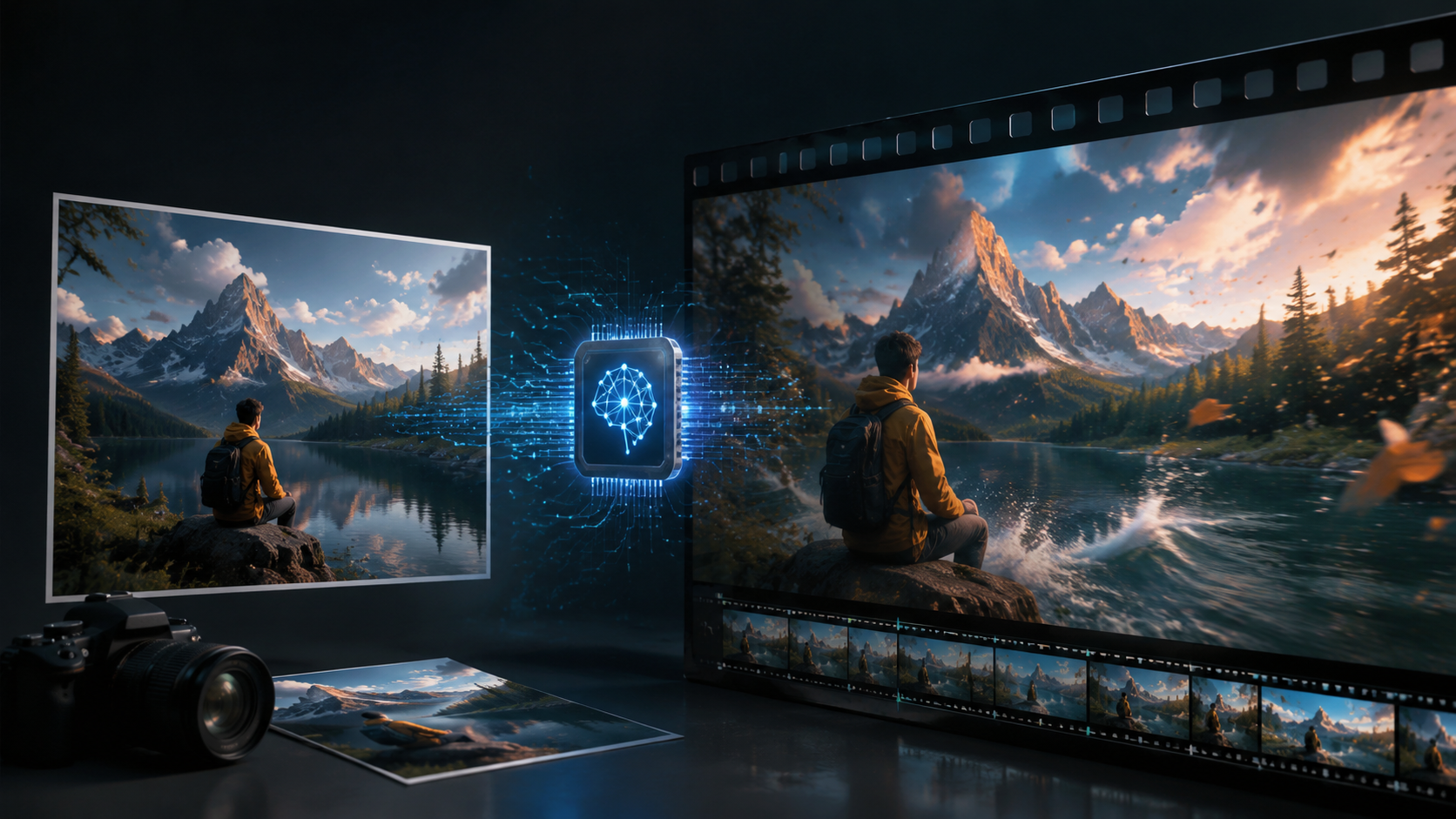
Most modern tools follow a similar pipeline. Here is the typical workflow for generating a video from an image using today’s AI:
- Upload or choose your source image. Use a high‑resolution JPEG or PNG. The AI will analyze composition, lighting, and subject boundaries.
- Select a motion preset or write a motion prompt. Options include “pan left,” “zoom in,” “object move,” or natural‑language descriptions like “waves crashing on the beach.”
- Set duration and framing. Most tools let you choose between 2‑second loops and 15‑second clips. Some models (like Gemini Omni) allow depth‑aware reframing.
- Generate the video. The model predicts intermediate frames using diffusion or transformer architecture. Depending on the tool, this takes 5–60 seconds.
- Preview and refine. If the motion feels unnatural, you can tweak the prompt or select a different motion strength.
- Export or further edit. Common outputs are MP4 or GIF. Many platforms let you add text overlays, music, or combine clips.
This step‑by‑step process is now available on web apps, mobile apps, and even within video‑editing suites like Adobe Premiere (via plugins).
Top AI Video Generation Tools in 2026
The landscape in mid‑2026 is competitive, with several platforms vying for creators’ attention. Below is a comparison of major tools based on recent reports from Memeburn (June 5, 2026), Digitimes (June 1, 2026), and Google’s own announcements.
| Tool | Key Feature | Strengths | Pricing / Access |
|---|---|---|---|
| Google Gemini Omni | Single‑inference image‑to‑video with depth and audio | Highest fidelity, integrated with Google Workspace; announced May 29, 2026 | Subscription via Google One AI Premium (approx. $19.99/mo) |
| Pixverse | Fast, affordable image‑to‑video generation | Extremely low cost, consumer‑friendly, no wait times | Freemium; paid plans start at $5/mo |
| Kling (by Kuaishou) | Director‑mode – controls camera and character movement | Narrative control, went viral as “draw‑card” alternative | Free tier with watermarks; Pro ~$15/mo |
| Other tested tools (Memeburn) | Varied – some specialize in anime, realism, or product shots | Niche strengths; many offer 7‑day trials | Typically $10–$30/mo |
According to 36Kr (June 7, 2026), the market is already moving beyond “draw‑card mode” — where AI simply adds motion to a flat image — toward “director models” that let users choreograph entire scenes. Kling and Gemini Omni exemplify this trend.
Ethical Considerations and Controversies
No discussion of ai video generation from image is complete without addressing its darker side. In May 2026, PCMag tested four NSFW AI video generators and noted that “with great power comes great risk of misuse.” Unconsented deepfakes, celebrity impersonation, and pornographic content generated from innocent photos remain top concerns.
Pixverse, despite its speed and affordability, has drawn scrutiny. A Digitimes report (June 1, 2026) stated: “Pixverse AI exhibits fast, affordable AI video generation; ethical concerns persist.” The company has since updated its content moderation policies, but critics argue that automated filters are easily bypassed. Meanwhile, Google’s Gemini Omni incorporates “safety classifiers at every stage of inference,” according to the company’s blog.
Regulators in the EU and US are drafting legislation that would require watermarks and provenance data on all AI‑generated videos. Creators should stay informed about platform terms — and always obtain permission before animating someone else’s photograph.
Best Practices for Responsible Use
- Always use your own original images or those with explicit consent.
- Disclose AI‑generated content when posting on social media.
- Check platform guidelines — some (like YouTube) now require labels.
- Report suspicious or harmful generated videos to the hosting service.
The Future: Director Models and Beyond
According to 36Kr (June 7, 2026), the next frontier is the “director model.” Instead of simply animating a still photo, these systems allow you to specify camera angles, character movements, and even dialogue. “From Kling to Gemini: AI‑Generated Videos Bid Farewell to ‘Draw‑Card Mode’,” the article declares. “Are Director Models Set to Go Viral?” The answer appears to be yes.
In practical terms, this means that a marketer could upload a product image and then type “slowly orbit around the product while the background transitions to a sunset beach” — and the AI will generate a polished, multi‑second video that follows those instructions. Gemini Omni already sketches the right trajectory during inference, learning from millions of real‑world videos.
By 2027, analysts predict that ai video generation from image will become a standard feature inside every smartphone camera app, allowing anyone to turn their photo gallery into a short movie. The technology is no longer a curiosity — it is a fundamental shift in how we capture and share motion.
What exactly is AI video generation from image?
It is a technology that uses machine learning models to take a single image and create a video that simulates motion, depth changes, and sometimes sound — all while preserving the original subject and style.
How long does it take to generate a video from an image in 2026?
Most tools produce a 5‑ to 10‑second clip in 10–60 seconds. Pixverse is among the fastest, often delivering results in under 20 seconds. Gemini Omni may take slightly longer due to its multi‑modal processing.
Can I use any image I find online?
Only if you have the rights or explicit permission to use the image. Using someone else’s photo without consent to generate a video may violate copyright and can lead to legal consequences, especially if the result is used commercially.
Is there a free tool for AI video generation from image?
Yes. Pixverse offers a free tier with watermarks and limited resolution. Kling also provides a free version. Google Gemini Omni, however, requires a paid subscription after a short trial.
What are the main ethical risks of this technology?
The primary risks include the creation of non‑consensual deepfake pornography (as highlighted by PCMag’s testing of NSFW generators), impersonation, and the spread of disinformation. Many platforms have introduced moderation filters, but users must also exercise responsibility.
How do I choose between Gemini Omni and Pixverse?
If you need highest‑quality output with audio and depth effects and are willing to pay a subscription, Gemini Omni is the leader. For quick, cheap generation with acceptable quality, Pixverse is excellent. For narrative control, consider Kling or other director‑model tools.
Will AI video generation from image replace traditional video production?
Not entirely, but it will become a complementary tool for rapid prototyping, social media content, and personal projects. Traditional filmmaking still offers superior control, lighting, and storytelling for professional productions.



Comments ()