
AI Video Generation for Real Estate: 2026 Marketing Guide
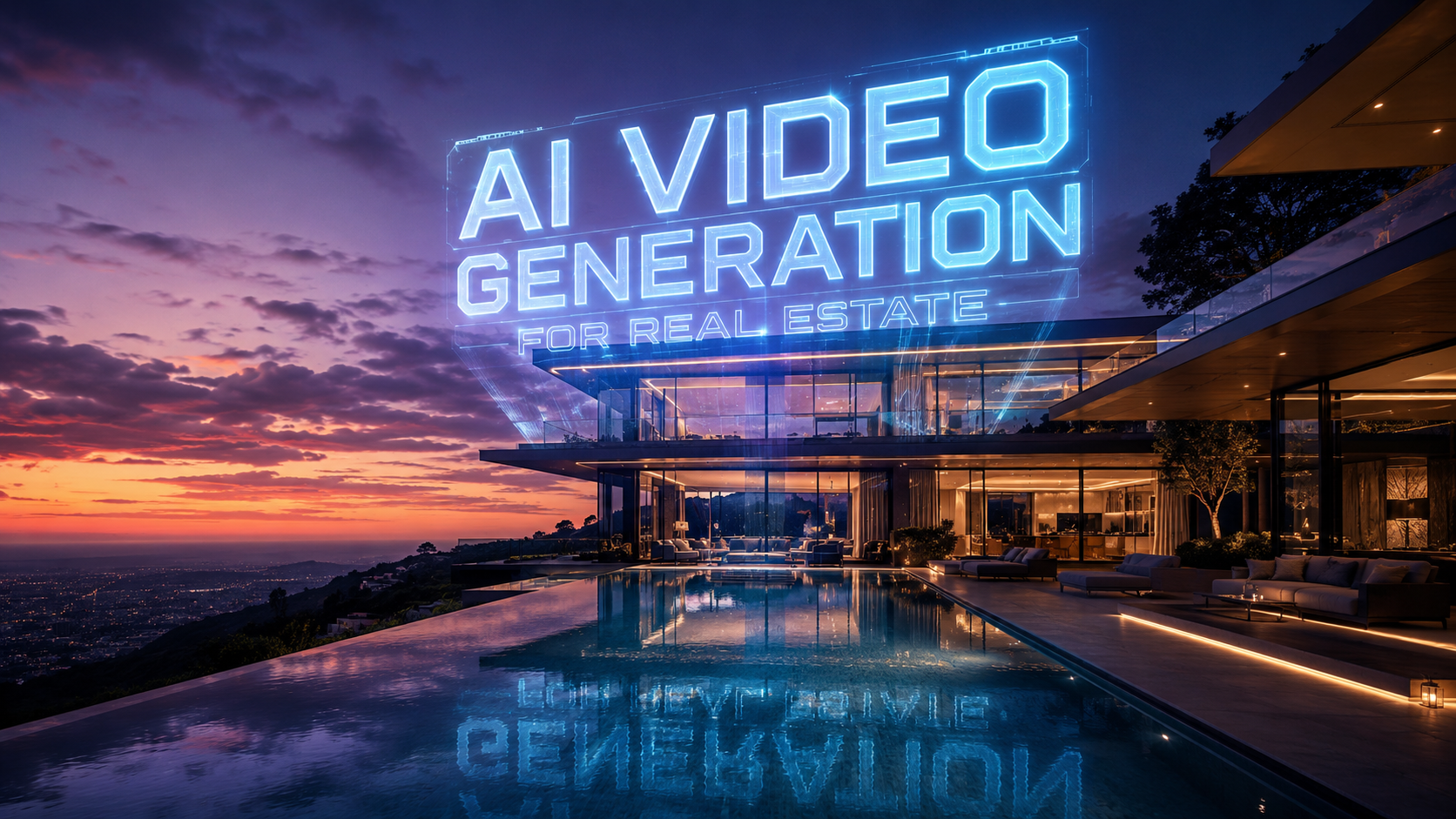
AI video generation for real estate is the process of using artificial intelligence software to automatically create, edit, or enhance property marketing videos from text prompts, photos, or data feeds. In 2026, this technology has moved beyond simple slideshows to include hyper-realistic virtual tours, AI-driven neighborhood summaries, and personalized agent avatars that can communicate with leads in real-time. By leveraging ai video generation for real estate, agents can now produce high-quality cinematic content in minutes rather than days, significantly reducing marketing overhead while increasing engagement on platforms like Instagram, TikTok, and YouTube.
AI video generation for real estate is a transformative marketing technology that converts property data and imagery into professional-grade video content. In 2026, agents use these tools to automate virtual staging, generate AI-narrated walkthroughs, and create personalized video emails, allowing for scalable lead generation and a sophisticated digital presence without the need for expensive production crews.
- ✓ Modern AI tools allow for the creation of full property walkthroughs from just a few static smartphone photos.
- ✓ Personalized AI avatars are now a standard for local market updates, providing a consistent brand voice across all social channels.
- ✓ Cost-efficiency has peaked in 2026, with many platforms offering month-long free trials for comprehensive marketing suites.
- ✓ The industry has shifted toward localized content, using AI to highlight specific community features and neighborhood statistics automatically.
How to Implement AI Video Generation for Real Estate in 5 Steps
As we navigate the marketing landscape of 2026, the barrier to entry for high-end video production has effectively disappeared. Real estate professionals are no longer required to master complex editing software or hire videographers for every listing. Instead, the focus has shifted toward strategic prompt engineering and data integration. By following a structured approach, agents can ensure their video content remains authentic while reaping the benefits of automation.
- Data Collection: Gather high-resolution images of the property and specific details such as square footage, unique architectural features, and neighborhood highlights.
- Platform Selection: Choose an AI video generator that supports real estate-specific templates. According to HousingWire, there are now 16 indispensable AI tools specifically tailored for agents in 2026.
- Script Generation: Input your property data into the AI’s script engine. Ensure you include keywords relevant to your local market to optimize for search engines.
- Avatar and Voice Customization: Select a digital avatar or use a "voice clone" of yourself to narrate the walkthrough, providing a personal touch that builds trust with potential buyers.
- Distribution and Tracking: Export the video in multiple formats (vertical for Reels/TikTok, horizontal for YouTube) and track engagement metrics to refine your future prompts.
The Evolution of AI Video Tools in 2026
The landscape of ai video generation for real estate has seen dramatic shifts recently. Most notably, the market has consolidated as some early pioneers exited the space. For instance, according to The New York Times, OpenAI officially shut down its Sora video generator in March 2026. This move opened the door for specialized, industry-specific AI platforms that focus exclusively on the needs of the built environment and commercial real estate sectors.
Today’s tools are more integrated than ever. According to Breaking AC News, there are now top-tier free AI tools for real estate marketing that allow agents to fully utilize professional features for an entire month. This "freemium" model has allowed independent brokers to compete with large national franchises by providing access to high-end rendering and synthetic media tools that were previously cost-prohibitive.
Comparing Top AI Video Features for Agents
When selecting a platform for your 2026 marketing strategy, it is essential to understand the different capabilities offered by various generative engines. The following table highlights the core features currently dominating the real estate tech sector.
| Feature Category | Standard AI Capability | Real Estate Benefit |
|---|---|---|
| Virtual Staging Video | Dynamic object insertion | Shows empty homes with realistic furniture in motion. |
| AI Voice Cloning | Neural text-to-speech | Allows agents to "narrate" 50 videos in the time it takes to record one. |
| Neighborhood Synthesis | Generative B-roll creation | Automatically adds footage of local parks, cafes, and schools. |
| Auto-Captioning | Multi-language NLP | Instantly translates property tours for international investors. |
Strategies to Maximize Lead Generation with AI Video
In 2026, simply posting a video is not enough; the content must be strategically aligned with lead capture mechanisms. According to Chicago Agent Magazine, there are five key strategies to maximize real estate lead generation this year, and AI-driven video content sits at the center of this ecosystem. By using AI to create "hyper-local" content, agents can target specific demographics with precision that was impossible two years ago.
One of the most effective strategies involves the use of AI to create "market update" videos. Instead of a static newsletter, agents now use generative video to present monthly statistics, localized price trends, and new inventory. This format sees significantly higher click-through rates because it satisfies the consumer's preference for visual storytelling over text-heavy reports.
The Impact on Local Marketing and Community Building
Local marketing has been revolutionized by AI’s ability to synthesize community-specific data. As reported by Breaking AC News, AI video is fundamentally changing how businesses in areas like Atlantic City engage with their local audience. For real estate, this means videos that don't just show a house, but also tell the story of the neighborhood using real-time data about local events, school ratings, and economic growth.
Furthermore, the rise of "Project Destined" and similar initiatives highlights the growing importance of the "AI edge" in commercial real estate. As noted by CNBC, the next generation of investors is using AI to analyze and visualize property potential before a single brick is laid. This same technology is now available to residential agents to show the "future potential" of a fixer-upper through generative video overlays.
Best Practices for Authentic AI Video Content
While the efficiency of ai video generation for real estate is undeniable, maintaining authenticity is paramount. In 2026, consumers are becoming more adept at spotting "uncanny valley" AI content. To combat this, successful agents use a hybrid approach. They use AI for the heavy lifting—such as color grading, background noise removal, and initial rough cuts—but maintain a human presence in the final edit.
Transparency is also a key trend this year. Many top-performing agents include a small "AI-Enhanced" disclosure on their videos. This builds trust with a tech-savvy public that appreciates the use of innovative tools to provide a better viewing experience. Use AI to enhance the reality of a property, not to distort it; for example, use AI to clear cloudy skies or add a fire to a fireplace, but avoid removing permanent fixtures or neighboring buildings.
Optimizing AI Videos for 2026 Search Algorithms
Search engines and generative discovery engines (GEO) now prioritize videos that provide direct answers to user queries. When creating your AI videos, ensure the metadata and the spoken script include long-tail keywords like "best family homes in [City Name]" or "modern condos near [Local Landmark]." AI video tools can now automatically generate these SEO-friendly captions and descriptions, ensuring your content ranks both in traditional search and in AI-driven chat interfaces.
The Future of Real Estate Marketing: Beyond 2026
As we look toward the end of the decade, the integration of AI video with Augmented Reality (AR) is the next frontier. We are already seeing the first iterations of AI videos that allow viewers to "step into" the frame using their mobile devices. This level of immersion will become the standard for luxury listings and new construction projects.
The democratization of these tools means that the "AI edge" mentioned by industry leaders on CNBC is no longer reserved for institutional investors. For the individual agent, the focus must remain on storytelling. AI is a powerful tool for production, but the emotional connection—the "why" behind a home purchase—still requires a human touch to guide the AI’s output effectively.
Is AI video generation for real estate expensive in 2026?
No, many platforms now offer competitive pricing and even month-long free trials. While enterprise-grade tools exist, most agents can access high-quality generative video features for a modest monthly subscription fee.
What happened to OpenAI’s Sora?
According to reports from The New York Times, OpenAI shut down the Sora video generator in March 2026. This led to a shift in the market toward specialized AI tools specifically designed for industries like real estate and local marketing.
Can AI videos replace real estate photographers?
AI is a supplement rather than a total replacement. While AI can generate videos from photos and handle editing, professional high-resolution photography still serves as the essential "source data" that ensures the AI-generated content is accurate and high-quality.
How does AI video improve lead generation?
AI video improves lead generation by allowing for hyper-personalization and consistent content output. Agents can create hundreds of personalized video messages and localized market updates that resonate more deeply with specific buyer personas than generic stock content.
Are there free AI tools available for agents today?
Yes, as of May 2026, there are several top-rated free AI tools that agents can use for up to a month to create marketing materials, as highlighted in recent reports from Breaking AC News.



Comments ()