
AI Video for Social Media: 2026 Strategy & Creation Guide
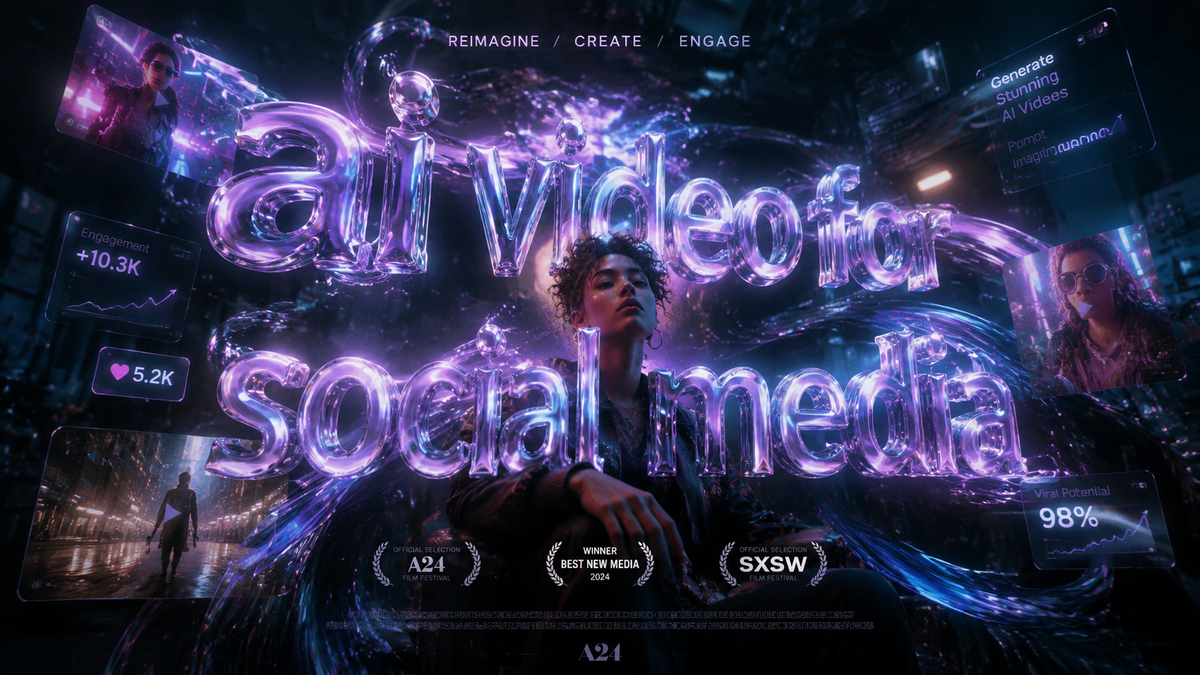
Using ai video for social media in 2026 involves leveraging generative models to automate scriptwriting, visual synthesis, and multi-platform formatting to maintain a competitive posting cadence. By integrating image-to-video workflows and AI expansion tools, creators can transform static assets into high-engagement cinematic content that resonates with modern algorithmic preferences. This guide outlines the strategic framework for scaling production while remaining compliant with the latest 2026 digital safety regulations.
AI video for social media is the process of using artificial intelligence technologies—such as text-to-video, image-to-video, and AI video expanders—to generate, edit, and optimize video content for platforms like TikTok, Instagram, and YouTube. In 2026, this approach focuses on hyper-personalization, rapid scaling through automation, and adherence to new legislative transparency standards regarding synthetic media.
- ✓ Leverage image-to-video generators to scale content without expensive film shoots.
- ✓ Utilize AI video expanders to repurpose horizontal footage into vertical 9:16 formats for Reels and Shorts.
- ✓ Ensure compliance with 2026 safety laws by labeling AI-generated content to avoid platform de-prioritization.
- ✓ Focus on "quality over slop" to differentiate your brand from the influx of low-effort synthetic media.
- ✓ Integrate AI marketing tools specifically designed for agencies to manage multi-client content streams efficiently.
How to Implement AI Video for Social Media: A Step-by-Step Guide
Success in the 2026 social landscape requires a shift from manual editing to strategic prompt engineering and asset management. The goal is no longer just to create a video, but to create a system that generates a library of high-quality assets from a single concept. According to Programming Insider, AI-powered video content is currently dominating social media because it allows for a level of visual experimentation that was previously cost-prohibitive for small teams.
- Define Your Core Narrative: Start with a prompt-engineered script that aligns with your brand voice. Use AI writing tools to generate 15-second "hook" scripts optimized for the 2026 attention span.
- Select Your Generation Method: Choose between text-to-video for entirely new concepts or image-to-video generators to breathe life into existing brand photography. Findarticles.com notes that image-to-video is the preferred method for scaling social media content in 2026.
- Apply AI Video Expansion: Use an AI video expander to adjust the aspect ratio of your footage. This ensures your content fits perfectly on TikTok, Instagram, and YouTube without losing resolution or key visual elements.
- Enhance with AI Audio: Layer your visuals with AI-generated voiceovers or trending synthetic music tracks. Ensure the audio is synced precisely using automated beat-matching tools.
- Review and Compliance Check: Before publishing, verify that your content meets the requirements of the 2026 AI and social media safety laws, such as those recently signed by Governor Lamont in Connecticut, which mandate transparency for synthetic media.
- Distribute and Iterate: Upload your content and use AI analytics to track performance, feeding the data back into your prompt library for the next production cycle.
The Evolution of AI Video for Social Media in 2026

The landscape of ai video for social media has shifted dramatically this year. We have moved past the era of "AI slop"—low-quality, repetitive content that The New York Times recently highlighted as a challenge for creators trying to build genuine wealth. In 2026, the focus has pivoted toward high-fidelity realism and emotional resonance. Marketing agencies are now utilizing specialized AI video generators that prioritize brand consistency over raw output volume, ensuring that every frame looks intentional rather than algorithmic.
Furthermore, the integration of AI into the social media ecosystem is no longer optional. Studies show that platforms are now optimized to reward creators who use AI to enhance accessibility, such as through instant translation and automated captioning. However, this technological leap comes with increased responsibility. As WFSB reports, new safety laws are being enacted to ensure that AI and social media remain safe environments, particularly for younger users, making "ethical AI" a cornerstone of any 2026 strategy.
The Rise of Image-to-Video Workflows
One of the most significant trends in 2026 is the dominance of image-to-video generators. This technology allows creators to take a high-quality static image and define motion paths, transforming a single product shot into a dozen different social media clips. This method is significantly more reliable than text-to-video, as it maintains the visual integrity of the original subject, which is crucial for brand recognition on crowded feeds.
AI Video Expanders and Multi-Platform Optimization
In 2026, the "Best AI Video Expander" has become a top-tier tool for social media managers. According to FinancialContent, these tools have been tested and ranked based on their ability to outpaint video frames without blurring or distorting the edges. This allows a single 16:9 cinematic shot to be expanded into a 9:16 vertical video for TikTok, effectively doubling the utility of every production hour spent.
Comparing AI Video Tools for Social Media Success
Choosing the right toolset is critical for maintaining a 2026-standard workflow. Different tools serve different niches, from high-end agency production to rapid-fire content creation for solo influencers. The following table compares the primary categories of AI video tools currently leading the market.
| Tool Category | Primary Use Case | Key Benefit in 2026 | Target Audience |
|---|---|---|---|
| AI Video Generators | Full scene creation from prompts | Rapid prototyping of concepts | Marketing Agencies |
| Image-to-Video Generators | Animating static brand assets | High consistency and brand safety | E-commerce Brands |
| AI Video Expanders | Aspect ratio transformation | Seamless multi-platform repurposing | Social Media Managers |
| AI Safety/Labeling Tools | Compliance and watermarking | Legal protection and trust | All Content Creators |
Strategic Content Creation: Beyond the "Slop"
The term "AI slop" has entered the cultural lexicon in 2026 to describe the deluge of unoriginal, AI-generated content that offers no value to the viewer. The New York Times recently questioned whether creators can truly get rich off such content, concluding that while short-term gains are possible, long-term brand equity requires a more nuanced approach. To succeed with ai video for social media, creators must use AI as a collaborator rather than a replacement for human creativity.
This means using AI to handle the "heavy lifting"—such as rotoscoping, color grading, and initial rough cuts—while keeping a human in the loop for final creative decisions. Agencies that have successfully integrated these tools, as noted by StreetInsider, are those that use AI to test hundreds of variations of a single ad to find the one that resonates most with a specific demographic, rather than simply flooding the market with generic videos.
The Importance of Authentic Storytelling
Despite the advanced capabilities of 2026 AI, the fundamental principles of storytelling remain unchanged. A video must have a beginning, middle, and end, and it must evoke an emotional response. AI should be used to enhance these elements—for example, by generating hyper-realistic backgrounds that place the subject in a unique environment or by using AI to analyze which narrative structures are currently trending on specific platforms.
Leveraging AI for Local and Global Reach
In 2026, AI video tools allow for instant localization. A video created in English can be automatically dubbed into 40 different languages with perfect lip-syncing, allowing a local brand to go global overnight. This capability is a core part of the 2026 strategy for any creator looking to maximize their "ai video for social media" impact across diverse international markets.
Navigating the 2026 Legal and Ethical Landscape
As AI video becomes ubiquitous, the legal framework surrounding its use has tightened. The signing of the AI and social media safety law in June 2026 by Governor Lamont marks a turning point for the industry. Creators must now be transparent about their use of synthetic media. This isn't just a legal requirement; it's a trust-building exercise with the audience. According to WFSB, these laws are designed to protect the integrity of information shared on social platforms.
For brands, this means implementing a "Clear Disclosure" policy. Whether it’s a small watermark or a disclaimer in the caption, letting your audience know that AI was used to generate or enhance the video is becoming best practice. This transparency helps mitigate the risks associated with "deepfakes" and ensures that your brand remains on the right side of platform algorithms, which are increasingly designed to detect and flag undisclosed AI content.
Copyright and Ownership in 2026
Ownership of AI-generated content remains a complex issue. In 2026, the most successful creators are those who use hybrid workflows—combining original filmed footage with AI enhancements. This hybrid approach provides a stronger legal claim to the final product, as it contains significant human authorship. Marketing agencies are particularly focused on this, as they must ensure their clients own the full rights to any promotional material produced.
The Impact of Platform-Specific AI Policies
Each social media platform has its own set of rules regarding AI video. In 2026, TikTok and Instagram have integrated their own AI detection tools. Content that is identified as AI-generated but not labeled as such may face reduced reach or "shadowbanning." Staying updated on these platform-specific policies is as important as mastering the AI tools themselves.
What is the best way to use ai video for social media in 2026?
The most effective strategy is a hybrid approach where AI handles repetitive tasks like resizing, captioning, and background generation, while humans focus on creative direction and narrative. Using image-to-video tools is currently the best way to maintain brand consistency while scaling production.
Are there new laws regarding AI video on social media?
Yes, as of June 2026, several regions have passed safety laws, such as the one signed by Governor Lamont, which require creators to disclose the use of AI in their content. These laws aim to increase transparency and protect users from misinformation.
How do AI video expanders work for social media?
AI video expanders use generative fill technology to "outpaint" the edges of a video. This allows you to take a horizontal 16:9 video and turn it into a vertical 9:16 video for Reels or TikTok without cropping out important visual information.
Can I get rich using AI-generated social media content?
While 2026 has seen an influx of "AI slop," The New York Times suggests that sustainable wealth in content creation comes from high-quality, original concepts that use AI to enhance value, rather than low-effort automated posting.
Which AI video generators are best for marketing agencies?
Agencies in 2026 prefer tools that offer robust API integration, team collaboration features, and high-fidelity output. Recent tests by StreetInsider and FinancialContent rank generators based on their ability to maintain consistent character and environment rendering across multiple clips.



Comments ()