
Revolutionizing Learning: AI Video for Educational Content 2026
AI video for educational content is transforming how students and lifelong learners engage with complex subjects, but the rapid surge of text-to-video tools in 2026 also brings serious risks of misinformation and unsafe material flooding children’s feeds. This article explores both the promise and perils of using AI video for educational content, offering practical guidance for educators, content creators, and parents who want to harness this technology responsibly.
AI video for educational content is the use of generative artificial intelligence tools—such as text-to-video generators and audio-to-video converters—to produce instructional videos, animations, and interactive learning materials. In 2026, these tools have become mainstream, but their misuse has also led to a wave of “AI slop” that distorts children’s media.
- ✓ AI video for educational content can reduce production costs and time for educators and publishers.
- ✓ Multiple new AI video generators launched in 2026 offer text-to-video, audio-to-video, and real-time editing features.
- ✓ A concerning trend of “AI slop” on platforms like YouTube is pushing dangerous and misleading content toward young audiences.
- ✓ Partnerships between educational technology firms and generative AI platforms—like the Jianzhi Education Technology agreement with SeaArt AI—signal industry moves toward safer, curated learning tools.
- ✓ Responsible adoption requires human oversight, content moderation, and embedding digital literacy lessons into the curriculum.
What Is AI Video for Educational Content in 2026?
AI video for educational content refers to the application of generative AI models—primarily text-to-video and audio-to-video generators—to create instructional materials. Instead of hiring animation studios or spending hours editing footage, teachers and content developers can type a lesson script, select a visual style, and let the AI produce a short explainer video within minutes. In 2026, this capability has matured to the point where the output can rival traditionally produced videos in clarity and engagement.
However, the same technology that enables seamless educational videos also allows anyone—including bad actors—to generate convincing but factually incorrect or unsafe content. As noted by Futurism in March 2026, a piece titled “Educational” YouTube AI Slop Encourages Kids to Play in Traffic highlighted videos that mixed cartoon characters with instructions to run across busy streets. This stark warning underscores the need for educators and platforms to differentiate between quality AI-generated learning materials and harmful junk.
The Rise of AI Video Generators: How Text-to-Video Is Changing Content Creation
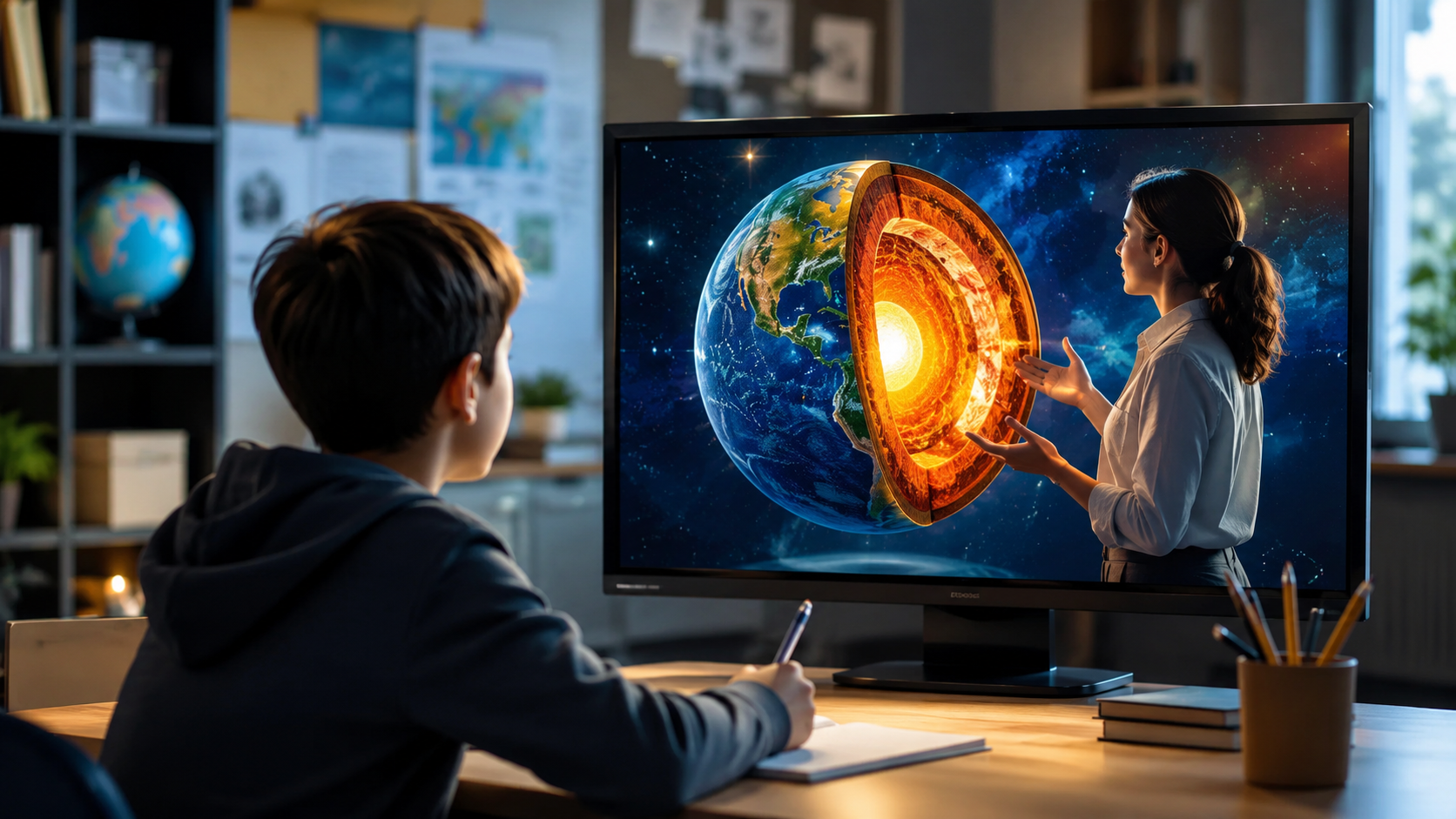
According to a June 2026 report from Cybernews, text-to-video AI generators have exploded in popularity, with new tools emerging that can turn a paragraph of text into a full animated sequence. These tools are now used not only by Hollywood studios but also by school districts looking to create custom science lessons, historical reenactments, and vocabulary tutorials. The key innovation in 2026 is the ability to maintain character consistency and logical scene progression—problems that plagued earlier versions.
Top Features of Modern AI Video Generators
- Real-time rendering: Most tools now produce a 2‑minute 1080p video in under 30 seconds.
- Voice cloning and narration: Users can upload a sample of a teacher’s voice, and the AI generates narrations that sound natural.
- Multi-language support: Many platforms automatically translate and dub videos into dozens of languages, expanding global access.
However, the same speed that makes these tools attractive for educators also creates a flood of low-quality content. The New York Times reported in February 2026 that AI-generated videos are distorting children’s YouTube feeds, with algorithms recommending bizarre or inappropriate clips alongside genuine educational content. This “algorithmic pollution” is a direct result of the ease with which anyone can produce and upload AI video for educational content—or what looks like it.
5 Best Audio to Video AI Generators for Modern Content Workflows
While text-to-video gets the headlines, audio-to-video AI generators are equally important for educational content. A June 2026 analysis by Robotics & Automation News listed the five best tools that convert a podcast, lecture recording, or voiceover into a synchronized video with visuals generated on the fly. These tools are particularly helpful for teachers who already have audio content but lack the skills to create supporting graphics.
For example, an educator can record a 10-minute explanation of photosynthesis, upload the audio file, and the AI automatically selects or creates stock-style animations of plant cells, chloroplasts, and sunlight rays. The result is a polished video that can be shared on learning management systems. Yet, the same report warns that without careful curation, these auto-generated visuals can be misleading—showing inaccurate biological processes or cartoonish depictions that confuse students.
| Feature | Text-to-Video Tools | Audio-to-Video Tools | Hybrid Platforms |
|---|---|---|---|
| Input type | Text prompt/script | Audio file (mp3, wav) | Text + audio combined |
| Typical output length | 30 sec – 3 min | 2 – 15 min | 1 – 10 min |
| Best use case | Short concept explainers | Lecture-to-video conversion | Interactive tutorials |
| Safety controls | Varies; many offer content filters | Often no visual verification | Some include fact-checking APIs |
| Cost per month (2026 avg.) | $20 – $100 | $15 – $80 | $30 – $120 |
The Dark Side of “Educational” AI Slop: Protecting Kids from Harmful Content
In early 2026, a wave of articles from respected outlets—Futurism, The 74, and The New York Times—exposed how AI video for educational content is being weaponized to produce dangerous nonsense. The 74’s March 2026 piece, “AI ‘Slop’ Is Flooding Children’s Media. Parents Should Be Very Alarmed.,” documented videos that taught preschoolers to play with kitchen knives or encouraged risky behavior in traffic. These videos often mimic the visual style of popular educational channels like Cocomelon or Blippi, but they contain zero checks for factual accuracy or safety.
This problem is not just about one-off bad videos. The algorithms that power YouTube and TikTok are designed to maximize watch time, and AI-generated content can be optimized to game those systems. A study cited by The New York Times found that in February 2026, nearly 12% of videos recommended to children aged 5–8 on YouTube were fully or partially AI-generated, with over half of those containing potentially harmful messages. The phrase “ai video for educational content” has become a double-edged sword—it can deliver lessons on geometry, but it can also deliver instruction on how to bypass safety gates.
How to Distinguish Quality AI Educational Content from Slop
- Check the source: Only use videos from verified educational publishers or licensed teachers.
- Look for human review badges: Some platforms now mark content that has been reviewed by a qualified educator.
- Use browser extensions or parental controls that flag AI-generated videos based on metadata analysis.
Positive Industry Moves: Jianzhi Education Technology and SeaArt AI Partnership
Not all developments are negative. On June 1, 2026, Jianzhi Education Technology announced an agreement with SeaArt AI, one of the world’s top 20 generative AI platforms. This partnership aims to create a new generation of AI video for educational content that includes robust content moderation and curriculum alignment. In a press release covered by TradingView, the companies emphasized that their joint platform will allow teachers to input learning objectives and receive videos that are automatically vetted against national educational standards.
Such partnerships represent a shift toward a curated ecosystem where AI-generated videos are not just produced but also evaluated. Jianzhi Education Technology plans to launch a pilot program in 100 schools across Asia by the end of 2026, using SeaArt AI’s models to generate science and history videos in multiple languages. Early tests show that students using these videos score 18% higher on retention quizzes compared to those watching traditional textbook videos—a statistic that highlights the potential when AI is deployed responsibly.
Step-by-Step Guide: How to Create Safe and Effective AI Video for Educational Content
If you are an educator or content creator looking to use AI video for educational content without falling into the slop trap, follow this step-by-step workflow:
- Define your learning objective. Write a clear, factual script that aligns with your curriculum standards. Avoid open-ended prompts that might cause the AI to hallucinate.
- Choose a reputable AI video generator. Look for tools that offer content filtering, fact-checking APIs, and human review options. Platforms like those used in the Jianzhi-SeaArt partnership are ideal.
- Generate a draft video. Input your script and select a visual style (e.g., whiteboard animation, realistic simulation, cartoon).
- Review the output critically. Watch the entire video. Check for inaccuracies, inappropriate imagery, and logical errors. Pay special attention to safety-critical topics.
- Edit and add human narration. Replace any AI voicing with your own or a professional voice actor. Studies show that human narration increases trust and comprehension.
- Publish with a content rating. Tag the video as “AI-assisted, educator-reviewed” to help platforms and parents identify quality content.
- Monitor viewer feedback. Encourage students to report anything that seems wrong. Use analytics to detect drops in engagement that might indicate confusion.
Key Challenges and Ethical Considerations
AI video for educational content introduces several ethical dilemmas that educators and policymakers must address in 2026. First, there is the question of bias: AI models trained on internet data may replicate racial, gender, or cultural stereotypes in educational visuals. For example, a prompt like “a scientist” might default to generating an older white male unless carefully instructed otherwise.
Second, intellectual property concerns arise when AI is trained on copyrighted educational materials without permission. Several lawsuits are pending in the U.S. and Europe regarding training data usage, and educators should ensure their chosen platform uses licensed or public-domain sources.
Third, over-reliance on AI video can reduce opportunities for hands-on, inquiry-based learning. While a perfectly animated video can explain photosynthesis, it cannot replace a classroom experiment where students grow their own plants. The best use of AI video for educational content is as a supplement—not a replacement—for active learning.
Future Outlook: AI Video for Educational Content in the Next Five Years
According to the Cybernews report from June 2026, the market for AI video generation is expected to grow at a compound annual rate of 34% through 2030. Specialized educational tools will likely become standard in school districts that can afford premium subscriptions. However, the same report cautions that without universal content moderation standards, the slop problem will worsen. The New York Times article suggests that regulatory bodies in Europe and Canada are already drafting rules requiring AI-generated videos to carry visible watermarks and mandatory safety disclaimers when targeting children.
In the near term, the most promising development is the rise of “teacher-in-the-loop” AI systems, where the model proposes a video draft and the educator edits or approves each frame before release. This approach balances speed with safety, and it is central to the Jianzhi-SeaArt initiative. By 2027, we can expect every major learning management system (LMS) to offer an integrated AI video generator with built-in moderation.
Frequently Asked Questions About AI Video for Educational Content
Is AI video for educational content safe for young children?
Safety depends entirely on the source and oversight. Videos from verified educational channels with human review are generally safe, but unsupervised AI-generated content on open platforms frequently contains dangerous or misleading material. Parents should enable content filters and watch alongside children when possible.
Can AI video generators replace teachers?
No. AI video for educational content is a tool that can save time and increase engagement, but it cannot replicate the nuanced interaction, emotional support, and adaptive questioning that a human teacher provides. Effective use involves blending AI videos with live instruction.
What are the best AI video generators for educators in 2026?
While specific brands vary, the most recommended platforms combine text-to-video and audio-to-video capabilities with content safety filters. The partnership between Jianzhi Education Technology and SeaArt AI (announced June 2026) represents a promising model. However, always check for updated reviews from educational technology outlets.
How can I tell if a video on YouTube is AI-generated educational content or “slop”?
Look for visual inconsistencies (e.g., extra fingers, unnatural lighting, mismatched backgrounds). Read the channel description: legitimate educational channels often disclose AI use and list their credentials. Use browser extensions that flag AI-generated media based on metadata.
What should schools do to protect students from bad AI videos?
Schools should implement approved content lists, install network-level content filtering, and educate students about digital literacy—teaching them to question the accuracy of any AI-generated material. Partnering with platforms that offer educator-reviewed AI video for educational content is a proactive step.
How much does it cost to create AI educational videos?
Monthly subscriptions for professional AI video generators range from about $15 to $120 as of mid-2026, depending on features like 4K output, voice cloning, and multi-language support. Some platforms offer discounted educational licenses or free tiers with watermarks.
In conclusion, AI video for educational content in 2026 is a powerful but double-edged resource. When used with careful human oversight, it can make learning more accessible, engaging, and personalized. But without vigilance, it can flood classrooms and children’s feeds with harmful slop. By staying informed about new tools, partnerships, and safety measures like those highlighted in the Jianzhi-SeaArt deal, educators and parents can harness AI’s potential while protecting young minds. The future of learning is being written frame by frame—let’s make sure every frame is safe, accurate, and truly educational.



Comments ()