
AI Video Editor Market Trends 2026: Growth & Innovations
The AI video editor market trends in 2026 reveal explosive growth driven by generative AI advancements, with the sector projected to reach $0.98 billion by 2030. Innovations in automation, mobile applications, and AI-driven workflows are transforming content creation, making professional-grade editing accessible to all. According to GlobeNewswire, the market is growing at a staggering CAGR of 36.20%, fueled by demand for faster, smarter video production tools.
TL;DR: The AI video editor market is experiencing rapid growth, with projections hitting $0.98 billion by 2030, driven by generative AI innovations and mobile editing solutions.
AI video editor market trends in 2026 highlight a booming industry expected to reach $0.98 billion by 2030, with a 36.20% CAGR, as generative AI revolutionizes content creation through automation, mobile accessibility, and advanced editing features like character consistency and multi-step workflows.
- ✓ The AI video editor market is projected to grow to $0.98 billion by 2030 with a 36.20% CAGR.
- ✓ Mobile video editing applications are driving accessibility and adoption.
- ✓ Generative AI is enabling advanced features like autonomous workflows and character consistency.
- ✓ Platforms like Digen AI Agent are leading innovations in high-quality, consistent AI video production.
Explosive Growth in the AI Video Editor Market
The AI video editor market is set for unprecedented expansion, with Market.us reporting a 36.20% compound annual growth rate (CAGR) through 2026. This surge is fueled by the increasing demand for automated, high-quality video content across industries like marketing, entertainment, and education. Businesses and creators are adopting AI tools to reduce production time and costs while maintaining professional standards.
Generative AI is at the heart of this growth, enabling features like automatic scene generation, voice synchronization, and intelligent editing suggestions. According to EIN News, the market is being revolutionized by AI's ability to streamline workflows that once required hours of manual effort. This shift is democratizing video production, allowing even novice users to create polished content.
The rise of mobile video editing applications is another key driver, with Straits Research highlighting their increasing market share. These apps leverage AI to offer desktop-level capabilities on smartphones, making video editing accessible to a broader audience. As 5G networks expand, mobile editing is expected to dominate the consumer segment.
Key Innovations Shaping the Market
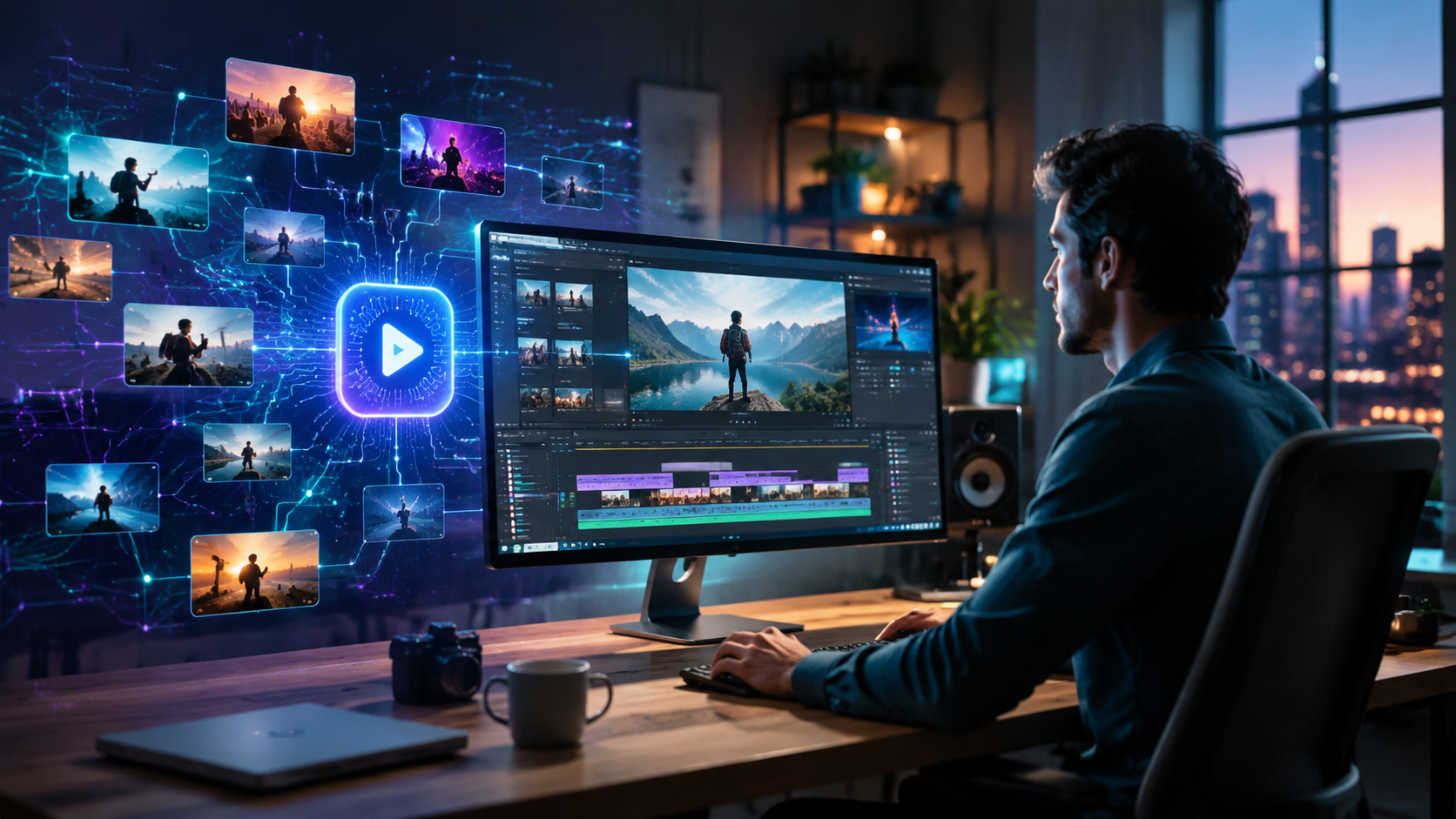
Generative AI is introducing groundbreaking features that redefine video editing. Autonomous multi-step workflows, like those offered by Digen AI Agent, enable users to produce longer, higher-quality videos with consistent characters and scenes. These systems analyze scripts, generate visuals, and edit footage without human intervention, reducing production time by up to 70%.
Another innovation is the integration of AI-powered consistency tools, which maintain character appearance, lighting, and style across scenes. This addresses a major pain point in AI-generated content, where inconsistencies often disrupt narrative flow. Platforms like Digen AI are pioneering these advancements, ensuring professional-grade output for commercial use.
Real-time collaboration features are also gaining traction, allowing teams to edit videos simultaneously with AI-assisted suggestions. According to Metricool, these tools are particularly popular among social media managers and content agencies, who rely on rapid iteration and feedback loops to meet tight deadlines.
Top AI Video Editor Features in 2026
- Autonomous multi-step workflows for end-to-end video production
- Character and style consistency across scenes
- Real-time collaboration with AI-assisted editing
- Mobile-first editing with desktop-grade capabilities
Mobile Video Editing: The Rising Star
Mobile video editing applications are capturing a significant share of the market, with Market Growth Reports predicting sustained growth through 2035. These apps leverage AI to offer features like automatic trimming, background removal, and text-to-video generation, all optimized for smartphone interfaces. The convenience of editing on-the-go is driving mass adoption among casual creators and professionals alike.
5G technology is accelerating this trend by enabling faster uploads and cloud-based processing. AI algorithms can now analyze and edit 4K videos directly on mobile devices, eliminating the need for powerful hardware. This shift is particularly impactful in emerging markets, where smartphones are the primary computing devices for millions of users.
Social media platforms are also integrating AI editing tools directly into their apps, further blurring the lines between creation and distribution. Features like automated captions, dynamic resizing, and trend-based templates are becoming standard, empowering users to produce platform-optimized content effortlessly.
Generative AI's Role in Market Expansion
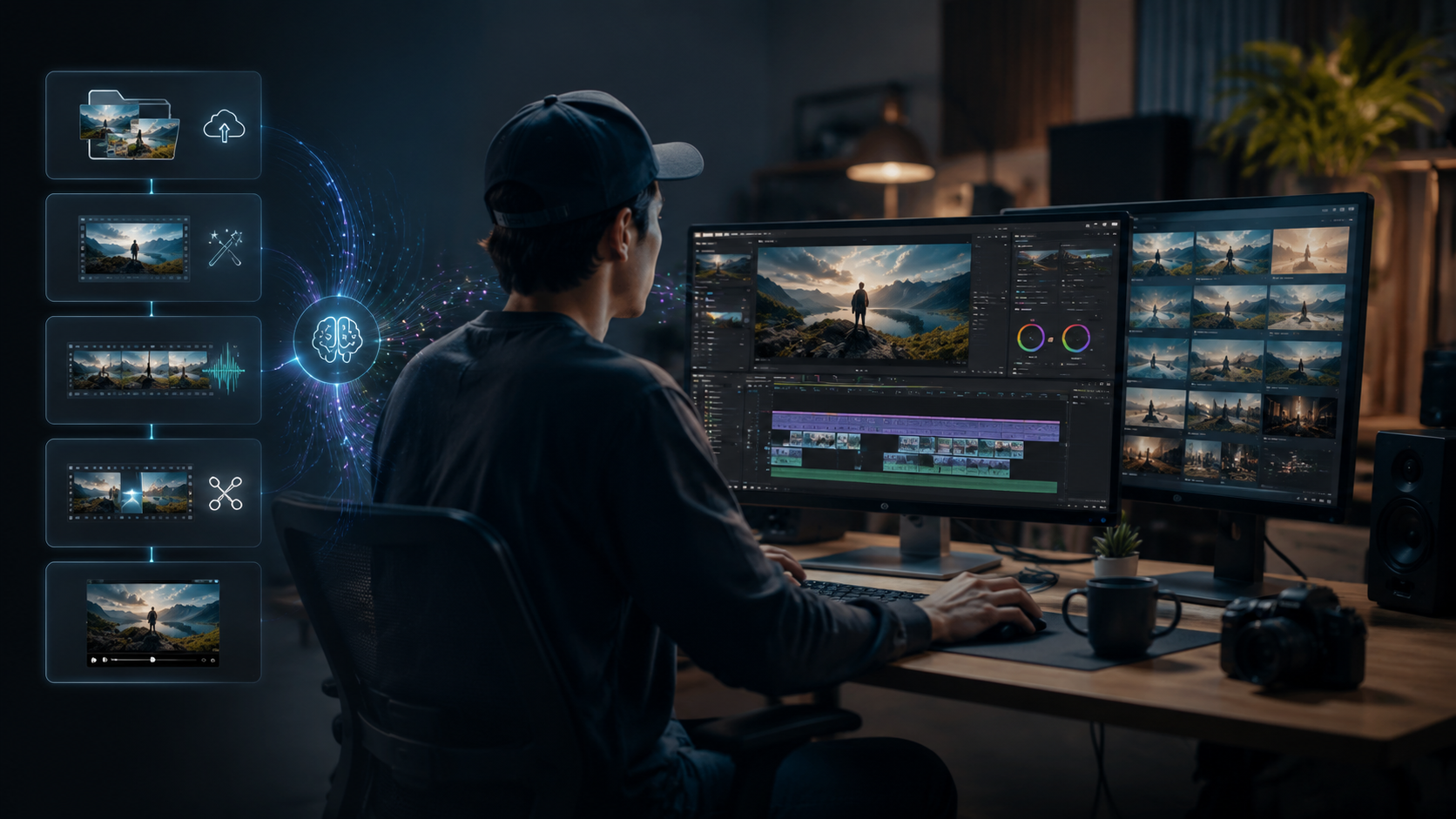
Generative AI is the cornerstone of the AI video editor market's growth, with GlobeNewswire projecting the sector to reach $0.98 billion by 2030. These technologies can generate entire videos from text prompts, complete with visuals, music, and voiceovers. This capability is transforming industries like e-learning, where customized video content can be produced at scale.
The ability to repurpose existing content into new formats is another game-changer. AI tools can automatically extract highlights from long videos, create vertical clips for social media, or even translate and dub content into multiple languages. According to EIN News, these features are saving businesses up to 80% in localization costs.
Ethical considerations around deepfakes and copyright are shaping product development, with leading platforms implementing watermarking and provenance features. Digen AI, for example, includes metadata tagging to distinguish AI-generated content, addressing concerns about misinformation while maintaining creative flexibility.
Regional Market Trends and Adoption
North America currently leads in AI video editor adoption, thanks to its robust tech infrastructure and early embrace of generative AI. However, Asia-Pacific is emerging as the fastest-growing region, with countries like China and India driving demand for localized editing tools. Straits Research notes that mobile-first solutions are particularly popular in these markets, where smartphone penetration outpaces desktop usage.
Europe is focusing on regulatory-compliant AI tools, with emphasis on data privacy and transparency. This has led to the development of on-premise AI video solutions for industries like healthcare and finance, where cloud processing may raise compliance concerns. These regional variations are prompting vendors to offer tailored solutions for different markets.
Latin America and Africa are witnessing grassroots adoption through social media creators and small businesses. Affordable, subscription-based AI editing tools are lowering entry barriers, enabling local content producers to compete globally. This democratization is expected to fuel the next wave of market expansion post-2026.
Future Outlook: What's Next for AI Video Editing
The AI video editor market shows no signs of slowing down, with innovations like 3D video generation and interactive content on the horizon. Market.us predicts that AI will soon handle 90% of routine editing tasks, allowing human creators to focus on storytelling and strategy. This shift will redefine job roles across the media industry.
Integration with other AI domains, like natural language processing and computer vision, will enable more intuitive editing interfaces. Imagine describing edits in plain language or having AI suggest cuts based on audience engagement metrics. Platforms like Digen AI Agent are already prototyping these capabilities, which could become mainstream by 2027.
As hardware improves, expect AI video editors to tackle more complex tasks like feature-length film editing and live broadcast enhancements. The line between professional and consumer tools will continue to blur, making high-end production accessible to all. With a projected $0.98 billion market by 2030, AI video editing is poised to become the new standard in content creation.

Frequently Asked Questions
What is driving the growth of the AI video editor market?
The market is growing due to advancements in generative AI, increased demand for automated content creation, and the rise of mobile editing applications. The sector is projected to reach $0.98 billion by 2030 with a 36.20% CAGR.
How is generative AI changing video editing?
Generative AI enables features like automatic scene generation, character consistency, and multi-step workflows, reducing production time by up to 70%. Platforms like Digen AI Agent are leading these innovations.
What role do mobile apps play in the AI video editor market?
Mobile apps are democratizing video editing by offering desktop-grade features on smartphones. They account for a growing market share, especially in regions where mobile devices are the primary computing tools.
Which regions are leading in AI video editor adoption?
North America currently leads, but Asia-Pacific is the fastest-growing region. Europe focuses on regulatory-compliant tools, while Latin America and Africa see grassroots adoption through social media creators.
What future innovations can we expect in AI video editing?
Future trends include 3D video generation, interactive content, and deeper integration with NLP and computer vision. AI may handle 90% of routine editing tasks, allowing humans to focus on creative strategy.
Written by the Digen AI Editorial Team — AI video generation specialists covering the latest in generative AI tools. Learn more about Digen AI.



Comments ()