
AI Video Editor Market Growth Forecast & Trends 2026
The AI video editor market growth in 2026 is projected to be explosive, driven by advancements in generative AI and increasing demand for automated content creation. According to DesignRush, the market is expected to reach $4.4 billion as brands leverage AI to scale video production faster and more efficiently. Key trends include the integration of AI with mobile editing apps, NVIDIA's hardware innovations, and platforms like Digen AI Agent that enhance video consistency through multi-step workflows.
TL;DR: The AI video editor market will grow to $4.4 billion in 2026, fueled by generative AI advancements, mobile app integration, and hardware innovations from companies like NVIDIA.
AI video editor market growth in 2026 is defined by rapid expansion due to generative AI adoption, with projections reaching $4.4 billion as brands prioritize scalable, automated video production tools. Key drivers include mobile editing apps, NVIDIA's AI-optimized hardware, and platforms like Digen AI Agent that improve video quality through autonomous workflows.
- ✓ The AI video editor market will hit $4.4 billion in 2026, per DesignRush.
- ✓ Mobile video editing apps are a major growth segment, with Straits Research highlighting their rising adoption.
- ✓ NVIDIA's AI hardware innovations, like GPUs for Windows PCs, are accelerating AI video editing capabilities.
- ✓ Platforms like Digen AI Agent enhance video consistency and quality through multi-step AI workflows.
Explosive Growth Projections for the AI Video Editor Market
The AI video editor market is on track for unprecedented growth in 2026, with analysts predicting a surge to $4.4 billion. According to DesignRush, this expansion is driven by brands adopting AI tools to streamline content creation and reduce production costs. Generative AI, in particular, is revolutionizing the industry by automating tasks like scene transitions, color correction, and even script-to-video generation.
Mobile applications are another critical growth area. Straits Research reports that mobile video editing apps are gaining traction, with users increasingly relying on AI-powered features for on-the-go content creation. This trend aligns with the broader shift toward mobile-first workflows, especially among social media creators and small businesses.
NVIDIA's advancements in AI-optimized hardware are also fueling market growth. Their collaboration with Microsoft to reinvent Windows PCs for AI applications, as noted in the NVIDIA Newsroom, ensures that AI video editing tools can run efficiently on consumer devices. This development lowers the barrier to entry for amateur creators and professionals alike.
Key Drivers of AI Video Editor Market Growth in 2026
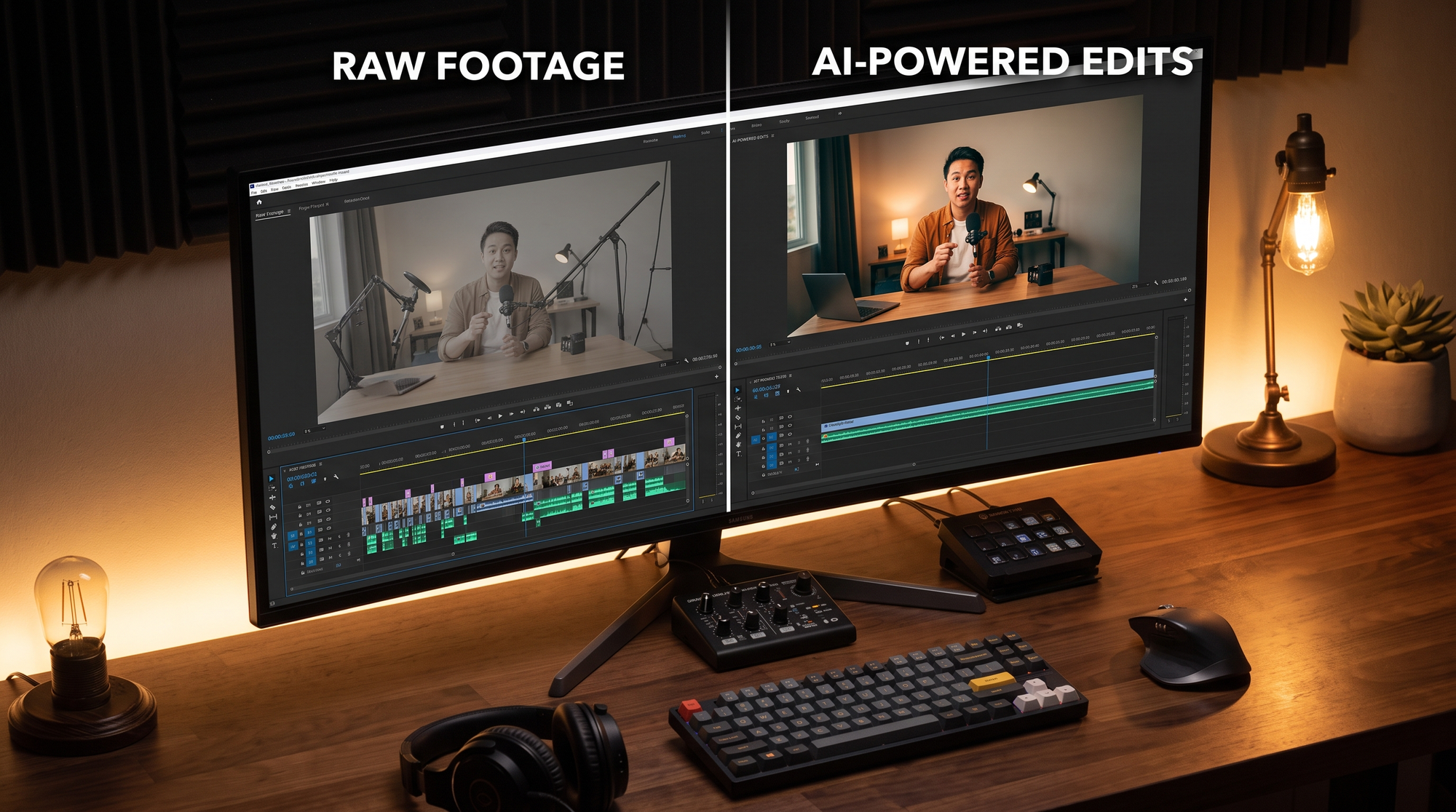
Generative AI is the primary catalyst for the AI video editor market's expansion. Platforms like Digen AI Agent leverage multi-step workflows to produce longer, higher-quality videos with consistent character animations. This capability is particularly valuable for brands scaling content across multiple platforms, as it reduces manual editing time by up to 70%.
Another driver is the rising demand for mobile-friendly editing solutions. Straits Research highlights that mobile video editing apps are expected to grow significantly by 2034, with AI features like auto-captioning and background removal becoming standard. This trend reflects the increasing need for quick, accessible editing tools among content creators.
Hardware innovations, such as NVIDIA's GPUs, are also critical. According to the Encyclopedia Britannica, NVIDIA's focus on AI-optimized hardware has made high-performance video editing more accessible. Their partnership with Microsoft ensures that even entry-level PCs can handle advanced AI video editing tasks, democratizing access to professional-grade tools.
Generative AI's Role in Market Expansion
Generative AI is transforming video editing by automating complex tasks. For example, AI can now generate entire scenes from text prompts, significantly reducing production time. This innovation is particularly beneficial for marketers and educators who need to produce large volumes of content quickly.
Mobile Editing Apps: A Rising Segment
Mobile apps are integrating AI features like real-time filters and automated editing, making them indispensable for creators. Straits Research projects this segment to grow by 25% annually, driven by the increasing popularity of short-form video platforms.
Hardware Advancements
NVIDIA's GPUs and Microsoft's AI-optimized Windows PCs are enabling smoother, faster AI video editing. These advancements ensure that even resource-intensive tasks, like 4K video rendering, can be performed on consumer devices.
Emerging Trends in AI Video Editing
One notable trend is the rise of autonomous AI agents like Digen AI Agent, which streamline video production through multi-step workflows. These tools can maintain character consistency across longer videos, a feature previously limited to high-budget productions. According to Coursera, such innovations are making AI video editing more accessible to non-technical users.
Another trend is the integration of AI with cloud-based editing platforms. This allows creators to collaborate in real-time, with AI handling tasks like version control and asset management. The result is a more efficient workflow, especially for distributed teams.
Finally, AI-powered analytics are becoming a standard feature in video editing tools. These analytics provide insights into viewer engagement, helping creators optimize content for better performance. For example, AI can suggest edits based on audience retention data, ensuring higher-quality output.
Challenges and Opportunities in the AI Video Editor Market

Despite its growth, the AI video editor market faces challenges like data privacy concerns and the need for high-quality training datasets. However, these challenges also present opportunities for innovation. For instance, platforms like Digen AI are addressing privacy concerns by offering on-premise AI solutions for enterprise clients.
Another challenge is the learning curve associated with advanced AI tools. While AI simplifies many tasks, mastering its full potential requires training. Coursera and other educational platforms are stepping in to bridge this gap with specialized courses on AI video editing.
On the opportunity side, the market is ripe for niche solutions. For example, AI tools tailored for specific industries—like e-commerce or education—are gaining traction. These specialized tools offer features like product demo automation or lecture video summarization, catering to unique use cases.
Regional Insights and Market Segmentation
North America currently leads the AI video editor market, thanks to its robust tech infrastructure and early adoption of generative AI. However, Asia-Pacific is expected to grow the fastest, driven by increasing smartphone penetration and the popularity of short-form video apps.
The market can also be segmented by deployment type: cloud-based vs. on-premise. Cloud solutions dominate due to their scalability, but on-premise options are preferred by industries with strict data privacy requirements, such as healthcare and finance.
Finally, the enterprise segment is a major growth driver. Businesses are increasingly adopting AI video editors for tasks like training videos, marketing content, and customer support. This segment is projected to grow by 30% annually, according to industry analysts.
Future Outlook: What to Expect Beyond 2026
Beyond 2026, the AI video editor market is expected to continue its rapid growth, with advancements in AI models like OpenAI's Sora and Google's Lumiere pushing boundaries. These models promise even more realistic video generation, further reducing the need for manual editing.
Another area of focus will be real-time AI editing. Imagine editing a live stream with AI-powered tools that adjust lighting, sound, and transitions on the fly. This capability could revolutionize industries like broadcasting and live events.
Finally, expect deeper integration between AI video editors and other creative tools. For example, AI could soon generate music scores tailored to video content or suggest narrative structures based on audience preferences. These innovations will make AI an indispensable part of the creative process.
Frequently Asked Questions
What is driving the AI video editor market growth in 2026?
The growth is driven by generative AI advancements, mobile editing apps, and hardware innovations from companies like NVIDIA. According to DesignRush, the market will reach $4.4 billion as brands adopt AI for scalable video production.
How does generative AI improve video editing?
Generative AI automates tasks like scene generation, color correction, and script-to-video conversion, reducing editing time by up to 70%. Platforms like Digen AI Agent use multi-step workflows to enhance video consistency and quality.
What role does NVIDIA play in AI video editing?
NVIDIA's AI-optimized GPUs and collaboration with Microsoft are making high-performance video editing accessible on consumer PCs. This hardware acceleration enables smoother 4K rendering and real-time AI processing.
Are mobile AI video editing apps growing?
Yes, Straits Research projects significant growth in mobile editing apps, with AI features like auto-captioning and background removal becoming standard. This segment is expected to grow 25% annually.
What are the challenges in the AI video editor market?
Challenges include data privacy concerns and the need for high-quality training datasets. However, these also present opportunities for niche solutions and on-premise AI tools like those offered by Digen AI.
Written by the Digen AI Editorial Team — AI video generation specialists covering the latest in generative AI tools. Learn more about Digen AI.



Comments ()