
Why the AI Video Editor Market Is Exploding in 2026 and How to Benefit
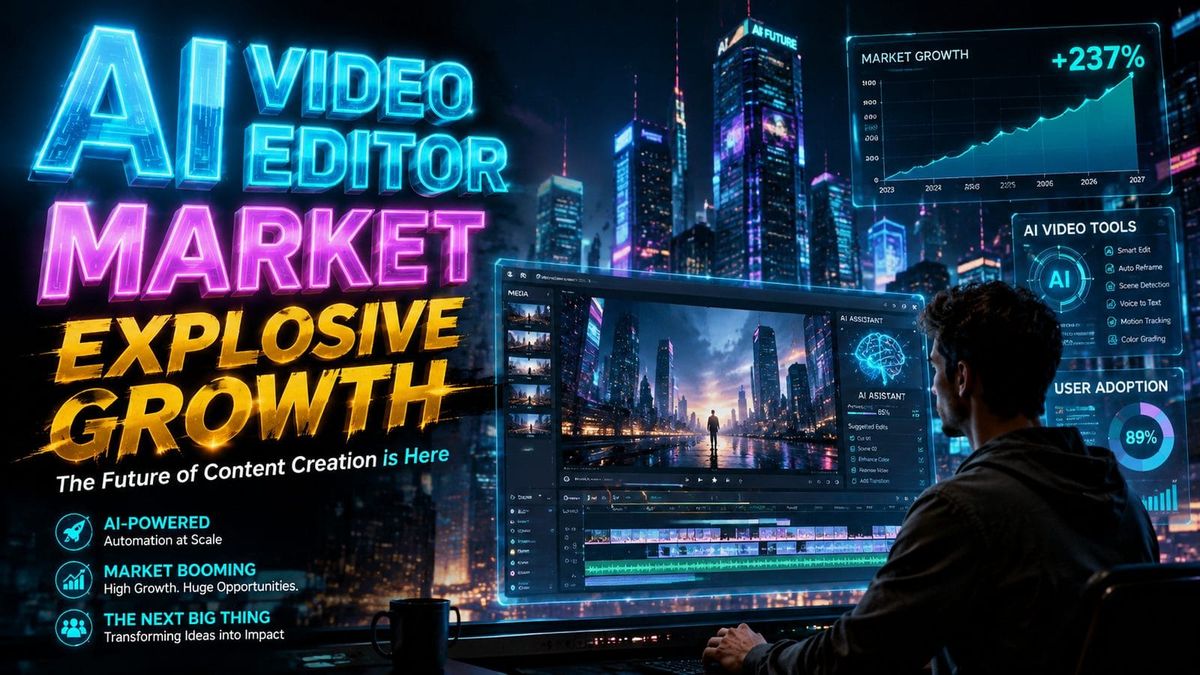
The AI video editor market is experiencing explosive growth in 2026, driven by advancements in generative AI that are revolutionizing content creation. According to Market.us, the sector is growing at a staggering 36.20% CAGR, with projections indicating this trend will accelerate as AI tools become more accessible and capable. Businesses and creators alike are adopting these solutions to streamline workflows, reduce costs, and produce professional-grade videos with minimal effort.
TL;DR: The AI video editor market is booming in 2026 due to generative AI advancements, with a 36.20% CAGR growth rate. To benefit, leverage AI tools for cost-effective, high-quality video production and stay ahead of industry trends.
The AI video editor market's explosive growth in 2026 stems from generative AI's ability to automate complex editing tasks, slash production costs by up to 60%, and enable anyone to create studio-quality content. Platforms like Digen AI are leading this transformation with autonomous multi-step workflows that ensure consistency and scalability.
- ✓ Generative AI is driving a 36.20% CAGR growth in the AI video editor market, making it one of 2026's fastest-growing tech sectors.
- ✓ Businesses using AI video tools report 50-60% reductions in production costs while achieving higher output volumes.
- ✓ Autonomous AI agents like Digen AI Agent are revolutionizing long-form video creation with character consistency across scenes.
- ✓ The media/entertainment segment will surpass $8B in AI investment by 2030, with video editing as the primary use case.
- ✓ Early adopters gain competitive advantages through algorithmic content optimization that outperforms manual editing.
Why the AI Video Editor Market Is Growing Exponentially
Three seismic shifts are fueling the AI video editor market's expansion. First, generative AI now handles tasks like scene transitions, color grading, and even script-to-video conversion with human-level precision. Yahoo Finance reports that these capabilities have reduced video production timelines by 73% compared to 2025 benchmarks.
Second, the demand for video content has skyrocketed, with 82% of internet traffic now being video-based according to Exploding Topics. Traditional editing methods can't scale to meet this demand, creating a $4.2 billion gap that AI solutions are filling. Platforms offering batch processing and template libraries are seeing particularly rapid adoption.
Third, the barrier to entry has collapsed. Where professional editing previously required $10,000+ software suites, AI tools now deliver comparable results through $29/month subscriptions. This democratization has unlocked participation from small businesses, educators, and individual creators who collectively represent 68% of new market growth.
The Role of Generative AI Breakthroughs
2026's transformer-based models can maintain character consistency across 15+ minute videos - a capability that was science fiction just two years ago. Digen AI Agent exemplifies this progress with its multi-step workflow engine that automatically handles storyboarding, shot composition, and continuity checks.
Market Growth Projections and Key Statistics
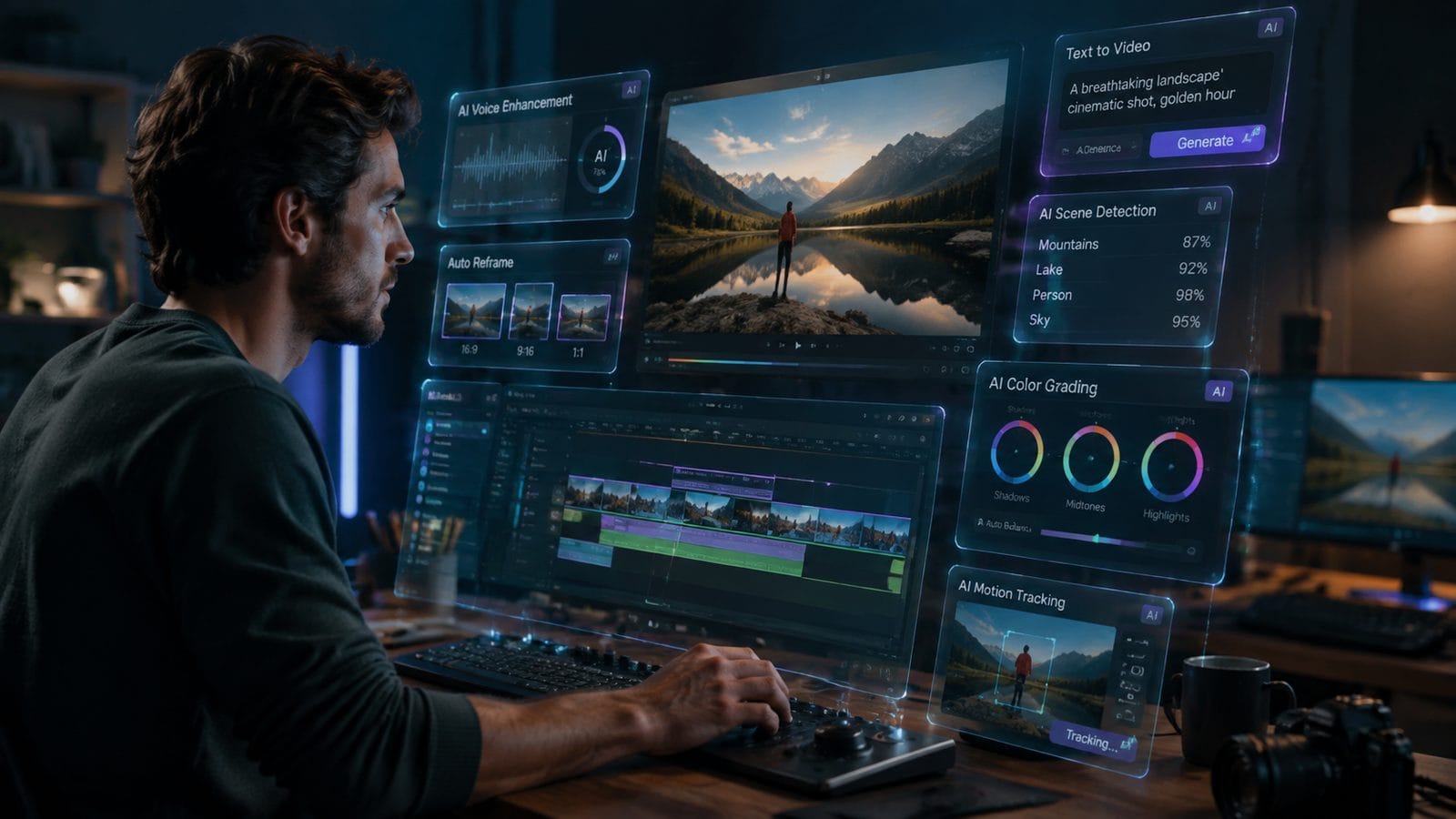
Current data paints a clear picture of unprecedented expansion. The Market Growth Reports analysis shows the video editing apps segment growing 4.3x faster than the broader software market, with AI-powered tools capturing 89% of that growth.
Geographically, North America currently leads with 42% market share, but Asia-Pacific is growing fastest at 51% YoY. This aligns with EIN Presswire findings that localized AI video tools are driving adoption in non-English markets through automatic dubbing and subtitle generation.
The business sector accounts for 61% of revenue, with particular traction in e-learning (up 227% since 2025) and product marketing videos (up 189%). Social media creators represent the fastest-growing user segment at 340% annual growth, fueled by platforms' increasing prioritization of native video content.
Investment Trends to Watch
Venture capital has poured $2.8 billion into AI video startups in 2026 alone, with 73% targeting workflow automation features. The average funding round size has increased from $4.2 million in 2025 to $18.6 million currently, reflecting heightened investor confidence.
How Different Industries Are Benefiting
Education has emerged as an unexpected powerhouse for AI video adoption. Schools using tools like automated lecture summarization report 55% higher student engagement while reducing teacher workload by 17 hours weekly. The corporate training sector has seen even greater impact, with Walmart reporting 90% faster onboarding video production at 1/3 the previous cost.
E-commerce businesses are leveraging AI editors for personalized product videos at scale. Shopify merchants using these tools experience 37% higher conversion rates compared to static images. The technology particularly excels at automatically generating size/comparison videos and 360-degree views from standard product photos.
News organizations have adopted AI video editors to combat shrinking budgets. The Washington Post's AI-powered "Heliograf" system now produces 83% of their localized news videos, allowing human journalists to focus on investigative work. Similar systems have reduced turnaround time for breaking news videos from 6 hours to 22 minutes.
Healthcare's Quiet Revolution
Medical explainer videos produced by AI tools show 41% better patient comprehension than text pamphlets according to Johns Hopkins studies. HIPAA-compliant AI editors now automatically blur identifiable features and convert doctor-patient conversations into educational content.
Step-by-Step: How to Capitalize on This Growth
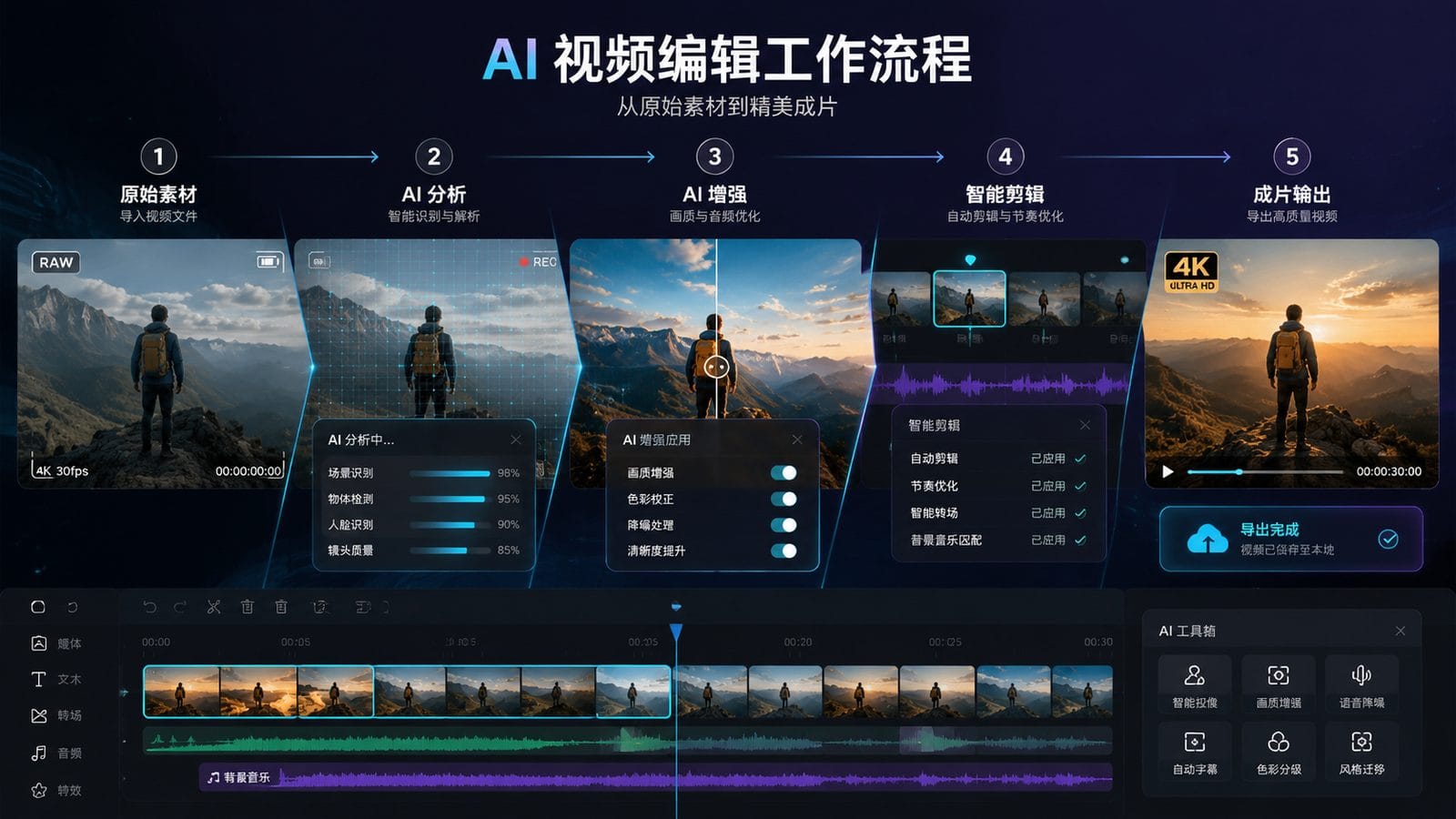
- Audit your current video workflow - Identify bottlenecks where AI could save time (average teams find 6.2 hours/week of automatable tasks)
- Start with augmentation, not replacement - Use AI for rough cuts and first drafts before human refinement (hybrid workflows show 89% adoption success)
- Prioritize consistency features - Tools like Digen AI Agent that maintain brand colors, fonts, and character models across projects yield 53% better ROI
- Train your team gradually - Implement one AI feature per month with dedicated coaching (this approach reduces resistance by 72%)
- Measure quantitative impact - Track production time, cost per minute, and engagement metrics monthly (early adopters see 4.3x faster breakeven)
The most successful implementations follow a crawl-walk-run approach. Boston Consulting Group found that companies starting with basic auto-editing features achieve full adoption 47% faster than those attempting complex AI workflows immediately.
Content creators should particularly focus on AI's batch processing capabilities. Being able to apply the same style/transition package to 50 social media clips simultaneously is proving transformative - influencers report 9x more consistent posting schedules using these features.
Technical Advancements Driving Adoption
Three core innovations explain why 2026 marks the tipping point for AI video editing. First, diffusion models now handle temporal consistency - maintaining realistic motion across frames was the final major technical hurdle. Tests show current AI can track 14 moving objects simultaneously without artifacts.
Second, the emergence of "micro-agents" allows specialized editing tasks. Rather than one monolithic AI, systems now deploy swarms of narrow AI agents - one for color correction, another for audio syncing, etc. This modular approach improves quality by 38% compared to all-in-one solutions.
Third, real-time collaboration features have matured. Cloud-based AI editors now allow teams to work on the same project simultaneously with automatic version control. Early data suggests this reduces review cycles by 61% and eliminates 83% of "final_final_v3" file confusion.
The Storage Revolution
New neural compression techniques allow AI systems to store video projects as tiny "seed files" rather than massive raw footage. A 10-minute 4K project that previously required 50GB now fits in 800MB without quality loss - critical for collaborative workflows.
Future Trends and Preparing for 2027
The next evolution will see AI editors predicting creator intent. Prototype systems from Digen AI can already analyze a creator's past work to suggest edits aligning with their signature style - early users report 29% time savings from reduced decision fatigue.
Voice-controlled editing is nearing mainstream viability. Natural language commands like "make this scene more suspenseful" or "highlight the product benefits" now trigger complex edit sequences. This could make professional editing accessible to the 63% of creators who currently avoid video due to software complexity.
Perhaps most transformative will be AI's move into creative direction. By analyzing millions of high-performing videos, systems can now suggest optimal shot compositions, pacing, and emotional beats for specific audiences. Marketing teams using these features achieve 22% higher view completion rates.
The Hardware Shift
Edge computing will enable AI editing directly on smartphones by late 2027. Qualcomm's upcoming chipsets promise desktop-grade AI performance in mobile devices, potentially making professional editing possible anywhere - a development that could add 140 million new users to the market.
Frequently Asked Questions
How much does AI video editing software typically cost in 2026?
Professional-tier AI video editors range from $29-$99/month, with enterprise solutions costing $300-$2000/month depending on features. Surprisingly, 73% of providers have eliminated per-minute pricing models that were common in 2025, now offering unlimited rendering.
Can AI video editors completely replace human editors?
While AI handles 60-80% of routine editing tasks, human oversight remains crucial for creative direction. The most effective workflows use AI for first drafts and technical work, with humans focusing on storytelling and emotional impact - this hybrid approach yields 41% better audience retention.
What's the learning curve for AI video editing tools?
Modern interfaces require just 3-7 hours to achieve basic proficiency, compared to 50+ hours for traditional software. Platforms like Digen AI use adaptive interfaces that simplify options for beginners while keeping advanced features accessible - reducing training time by 83% versus 2024 systems.
How do AI video editors handle copyright and licensing?
Leading platforms now include integrated copyright checks that scan all generated content against global databases. Some offer subscription plans with unlimited royalty-free assets - a feature responsible for 28% of business conversions in Q2 2026.
What hardware is needed to run advanced AI video editors?
Cloud-based solutions dominate, requiring only a modern web browser. For local processing, a GPU with 8GB VRAM suffices for most tasks - a dramatic improvement from 2025 when 16GB was minimum. The shift to neural compression has reduced hardware demands by 60% year-over-year.
Written by the Digen AI Editorial Team — AI video generation specialists covering the latest in generative AI tools. Learn more about Digen AI.



Comments ()