
AI Video Editing Workflow Tools: Future of Editing (2026)
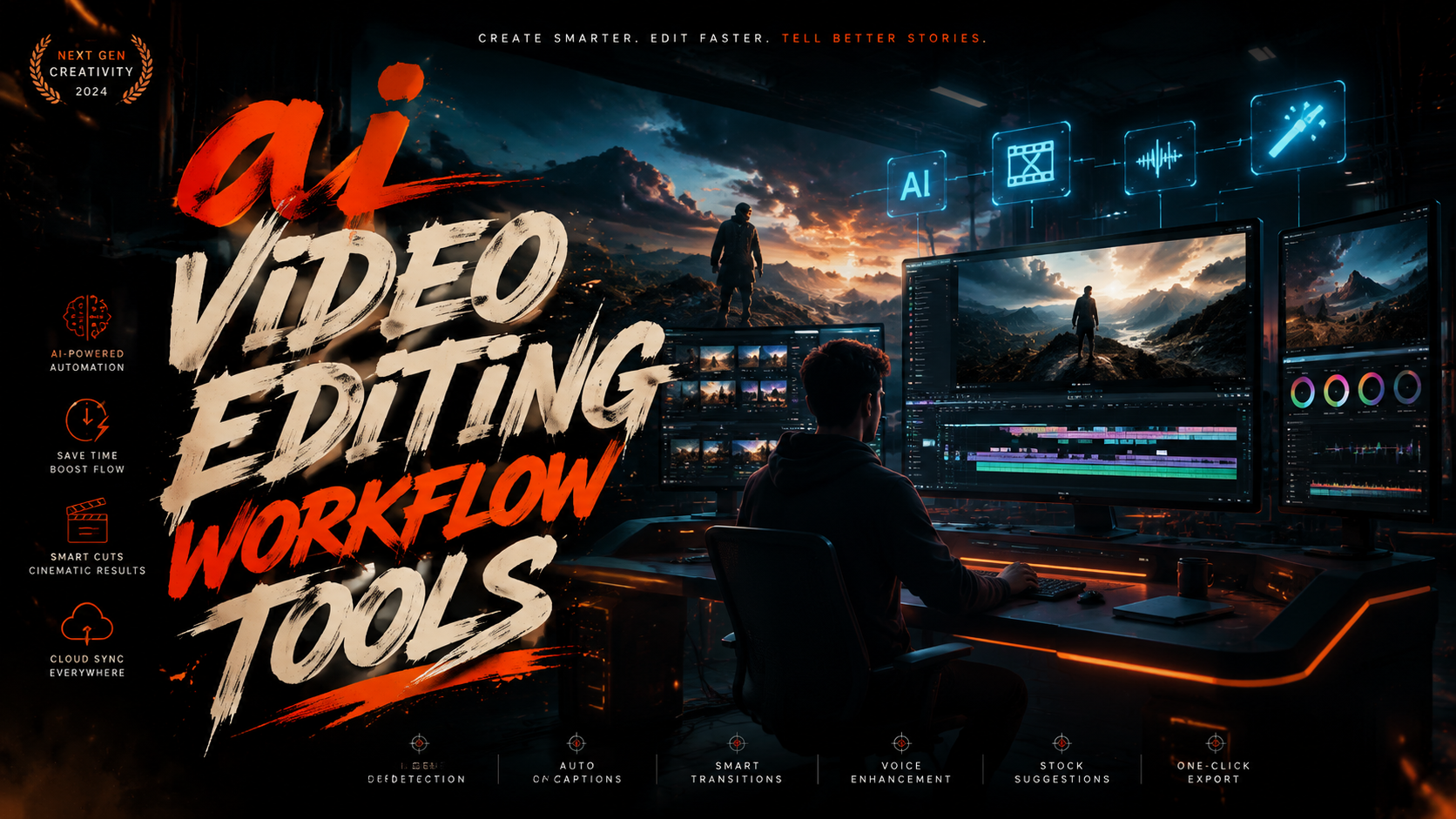
AI video editing workflow tools are transforming how creators and professionals produce content by automating repetitive tasks, enhancing creativity, and speeding up post-production. In 2026, platforms like Google Gemini, CapCut, and DaVinci Resolve 21 are leading the charge with advanced AI features that streamline editing workflows. These tools leverage machine learning to analyze footage, suggest edits, and even generate realistic content, making high-quality video production more accessible than ever.
TL;DR: AI video editing workflow tools in 2026 are revolutionizing content creation with automation, AI-powered suggestions, and faster post-production, as seen in platforms like Google Gemini, CapCut, and DaVinci Resolve 21.
AI video editing workflow tools are software solutions that use artificial intelligence to automate and enhance video editing processes, from clip organization to final rendering. In 2026, these tools are becoming indispensable for creators, offering features like automated scene detection, AI-generated transitions, and real-time collaboration.
- ✓ AI video editing tools reduce manual labor by automating repetitive tasks like clip trimming and color correction.
- ✓ Platforms like DaVinci Resolve 21 and CapCut are integrating advanced AI features for professional-grade results.
- ✓ The partnership between Google Gemini and CapCut is making AI video creation more accessible to creators.
- ✓ AI pre-edit tools are speeding up post-production workflows, as noted by No Film School.
The Rise of AI in Video Editing
The video editing landscape has undergone a seismic shift with the integration of AI, enabling creators to focus more on storytelling and less on technicalities. According to Marketing Brew, AI video platforms are overhauling creative workflows by automating tasks like scene detection, audio syncing, and even generating subtitles. This shift is particularly evident in 2026, where AI tools are no longer optional but essential for staying competitive.
Platforms like DaVinci Resolve 21 have set a new standard with their AI-powered features. Released in June 2026, DaVinci Resolve 21 includes advanced photo editing and AI tools that simplify complex tasks like object removal and facial recognition. According to PetaPixel, these features are designed to save editors hours of manual work, allowing them to deliver projects faster without compromising quality.
The collaboration between Google Gemini and CapCut is another milestone in AI video editing. As reported by RouteNote, this partnership aims to make AI video creation easier for creators by integrating Gemini's AI capabilities with CapCut's user-friendly interface. This synergy is expected to democratize video editing, enabling even beginners to produce professional-quality content.
Key Features of AI Video Editing Workflow Tools
AI video editing workflow tools in 2026 offer a range of features designed to streamline the editing process. Automated clip organization is one such feature, where AI analyzes raw footage and categorizes clips based on scenes, subjects, or even emotions. This eliminates the tedious task of manually sifting through hours of footage, allowing editors to jump straight into the creative process.
Another standout feature is AI-generated transitions and effects. Tools like Wondershare Filmora and Canva are leveraging AI to suggest transitions that match the tone and pacing of the video. According to criticalhit.net, this feature is particularly useful for creators who lack advanced editing skills but still want polished results. The AI analyzes the video's context and recommends transitions that enhance the narrative flow.
Real-time collaboration is also becoming a standard feature in AI video editing tools. Platforms are integrating cloud-based workflows that allow multiple editors to work on the same project simultaneously. This is especially beneficial for teams working remotely, as it reduces the back-and-forth of file sharing and version control. AI-powered suggestion engines further enhance collaboration by providing real-time feedback on edits, ensuring consistency across the project.
Automated Color Correction
AI-driven color correction tools are revolutionizing how editors handle grading. These tools analyze the footage and apply color adjustments based on the desired mood or style, saving hours of manual tweaking. DaVinci Resolve 21, for instance, uses AI to match colors across different clips, ensuring a cohesive look throughout the video.
AI-Powered Audio Enhancement
Audio is a critical component of video editing, and AI tools are making it easier to achieve professional-grade sound. Features like noise reduction, voice enhancement, and automatic leveling are now standard in many AI video editing platforms. These tools analyze the audio track and apply adjustments in real-time, eliminating the need for manual audio editing.
How to Choose the Best AI Video Editing Tool
Selecting the right AI video editing workflow tool depends on your specific needs and skill level. According to vocal.media, beginners should look for tools with intuitive interfaces and automated features, while professionals may prioritize advanced customization options. Here’s a step-by-step guide to help you make an informed decision:
- Identify Your Needs: Determine whether you need basic editing features or advanced AI capabilities like object removal and facial recognition.
- Evaluate Ease of Use: Test the tool’s interface to ensure it aligns with your skill level. Platforms like CapCut are known for their user-friendly designs.
- Check Compatibility: Ensure the tool supports your hardware and file formats. DaVinci Resolve 21, for example, requires a powerful system for optimal performance.
- Compare Pricing: Some tools offer free versions with limited features, while others require subscriptions. Weigh the cost against the features you need.
- Read Reviews: Look for feedback from other users to gauge the tool’s reliability and performance.
For those torn between options, a comparison table can be helpful. Below is a quick overview of two popular tools:
| Feature | Canva | Wondershare Filmora |
|---|---|---|
| AI Transitions | ✓ | ✓ |
| Automated Color Correction | ✓ | ✓ |
| Real-Time Collaboration | ✓ | ✗ |
| Advanced Audio Tools | ✗ | ✓ |
| Pricing | Free with paid upgrades | Subscription-based |
The Future of AI Video Editing
The future of AI video editing workflow tools looks promising, with advancements in generative AI leading the charge. Platforms are increasingly incorporating AI that can generate realistic content, such as synthetic voices or even entire scenes. This opens up new possibilities for creators, allowing them to produce content without the need for expensive equipment or large crews.
Another emerging trend is the use of AI for pre-editing tasks. According to No Film School, AI pre-edit tools are speeding up post-production workflows by analyzing raw footage and suggesting the best takes. This not only saves time but also ensures that editors focus on the most impactful moments.
As AI continues to evolve, we can expect even more sophisticated features, such as emotion-based editing, where the AI adjusts the video’s pacing and music based on the viewer’s emotional response. These innovations will further blur the line between human and machine creativity, making high-quality video production accessible to everyone.
Case Studies: AI Video Editing in Action
Several creators and studios are already reaping the benefits of AI video editing workflow tools. For instance, a small YouTube channel reported a 50% reduction in editing time after switching to CapCut’s AI-powered platform. The tool’s automated clip organization and transition suggestions allowed the creator to focus on content rather than technical details.
Professional studios are also adopting AI tools to handle large-scale projects. One studio used DaVinci Resolve 21’s AI color correction to grade a feature film in record time. The AI analyzed each scene and applied consistent color grading, reducing the need for manual adjustments.
Even marketing teams are leveraging AI video tools to produce high-quality content quickly. A recent campaign by a major brand used AI-generated transitions and effects to create a polished video in just a few hours. This efficiency is particularly valuable in fast-paced industries where time is of the essence.
Challenges and Limitations of AI Video Editing
Despite their advantages, AI video editing workflow tools are not without limitations. One common challenge is the learning curve associated with advanced features. While platforms like Canva are beginner-friendly, tools like DaVinci Resolve 21 require some technical expertise to fully utilize their AI capabilities.
Another limitation is the reliance on pre-existing data. AI tools analyze patterns from existing videos to make suggestions, which can sometimes result in generic or repetitive outputs. Creators may need to manually tweak AI-generated edits to ensure uniqueness and originality.
Privacy concerns also arise with cloud-based AI tools, as they often require uploading footage to remote servers. Editors working with sensitive content may prefer offline solutions to maintain control over their data. Balancing convenience with security is a key consideration when choosing an AI video editing tool.
What are AI video editing workflow tools?
AI video editing workflow tools are software solutions that use artificial intelligence to automate and enhance various aspects of video editing, from clip organization to final rendering.
How do AI video editing tools save time?
These tools automate repetitive tasks like color correction, audio syncing, and scene detection, allowing editors to focus on creative aspects of their projects.
Are AI video editing tools suitable for beginners?
Yes, many AI tools like CapCut and Canva are designed with user-friendly interfaces, making them accessible to beginners while still offering advanced features for professionals.
What is the future of AI in video editing?
The future includes more advanced generative AI features, emotion-based editing, and faster pre-editing workflows, as seen in tools like DaVinci Resolve 21 and Google Gemini.
Do AI video editing tools replace human editors?
No, these tools are designed to assist rather than replace human editors. They handle technical tasks, allowing creators to focus on storytelling and creativity.
Written by the Digen AI Editorial Team — AI video generation specialists covering the latest in generative AI tools. Learn more about Digen AI.
Comments ()