
AI Video Editing vs Manual Editing: 2026 Comparison Guide
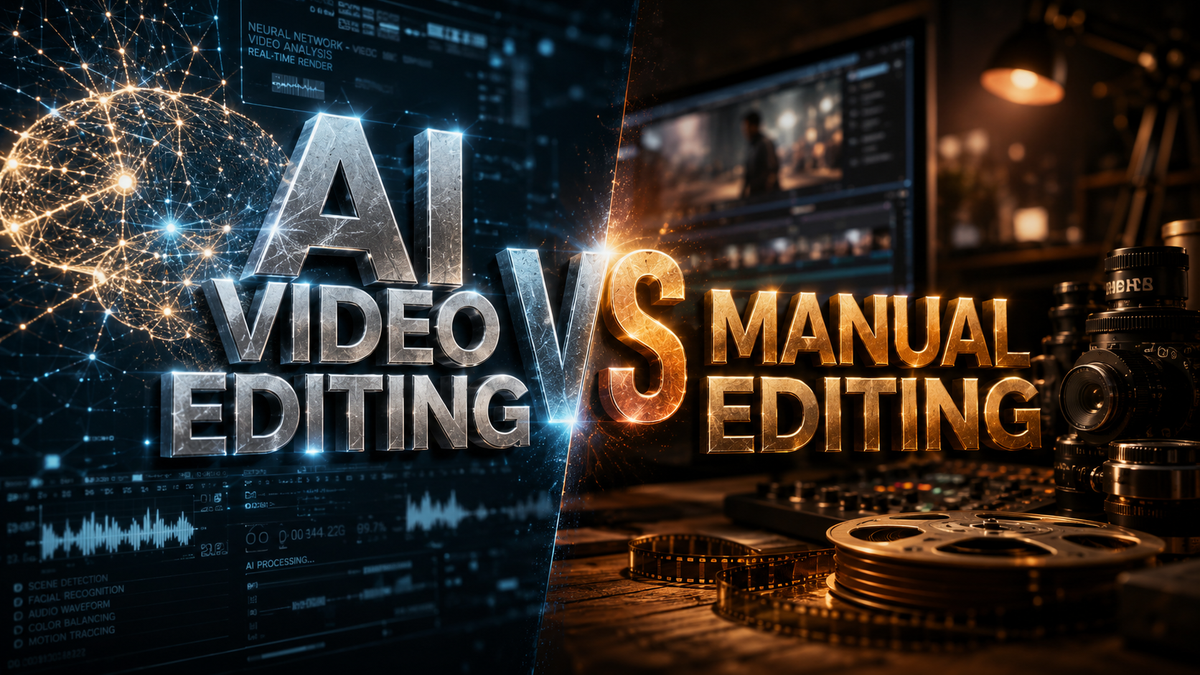
The debate between ai video editing vs manual editing in 2026 centers on the balance between automated efficiency and granular creative control. While AI video editing leverages prompt-based workflows and voice commands to handle repetitive tasks like color grading and rough cuts, manual editing remains the gold standard for high-end cinematic storytelling and intricate narrative pacing. Choosing the right approach depends on whether your priority is rapid-scale content production or bespoke artistic precision.
AI video editing is an automated process using generative models and voice-controlled agents to assemble footage via text prompts, whereas manual editing is a hands-on technique using Non-Linear Editors (NLEs) where a human editor makes every creative decision. In 2026, the primary difference lies in the shift from timeline manipulation to conversational AI interaction.
- ✓ AI editing tools like Google Gemini Omni Flash now allow for full voice-controlled timeline adjustments.
- ✓ Manual editing provides 100% control over frame-accurate transitions and complex sound design.
- ✓ Prompt-based editors like Pollo AI can reduce initial assembly time by up to 80% compared to traditional NLEs.
- ✓ Hybrid workflows, integrating tools like Descript’s new AI-native media library, are becoming the 2026 industry standard.
The Evolution of AI Video Editing vs Manual Editing in 2026
As we navigate through 2026, the landscape of digital media has shifted dramatically. No longer is AI merely a "plugin" for professional software; it has become a foundational architecture. The core of the ai video editing vs manual editing discussion has evolved from "which is better" to "which is more appropriate for the specific project." Manual editing, often referred to as "Traditional NLE" (Non-Linear Editing), involves a human editor using software like VEGAS Pro or Adobe Premiere to meticulously place clips, sync audio, and apply effects. This process is deliberate, artistic, and often time-consuming.
Conversely, AI video editing has matured into a sophisticated "Video Agent" model. According to a recent 2026 review by Scott Coop, tools like the Pollo AI Video Agent represent a practical shift toward automated video creation where the software understands the context of the footage. This means the AI isn't just cutting on a beat; it is identifying the emotional peak of a scene and suggesting transitions that align with a specific mood or brand voice. For creators, this represents a move away from the "mouse and keyboard" era toward a "prompt and refine" era.
According to research from Metricool regarding 2026 trends, the future of video creation is increasingly "headless," meaning the interface is secondary to the generative engine. However, the human element remains irreplaceable for high-stakes projects where nuance, subtext, and cultural sensitivity are paramount. Manual editing ensures that the final product has a "soul" that purely algorithmic processes still struggle to replicate perfectly without significant human oversight.
Step-by-Step: Transitioning from Manual to AI-Assisted Workflows
- Ingest and Index: Upload your raw footage into an AI-native library (like the updated Descript 2026 platform) to automatically generate transcripts and metadata tags.
- Prompt-Based Rough Cut: Use a text prompt such as "Create a 60-second highlight reel focusing on the speaker's main three points with upbeat background music."
- Voice-Controlled Refinement: Utilize tools like Google Gemini Omni Flash to give verbal commands like "Remove the pauses in the second scene" or "Make the colors warmer in the intro."
- Manual Polish: Open the AI-generated project in a traditional NLE if frame-accurate adjustments or specialized third-party plugins are required for the final export.
Comparing Key Features: 2026 Performance Metrics
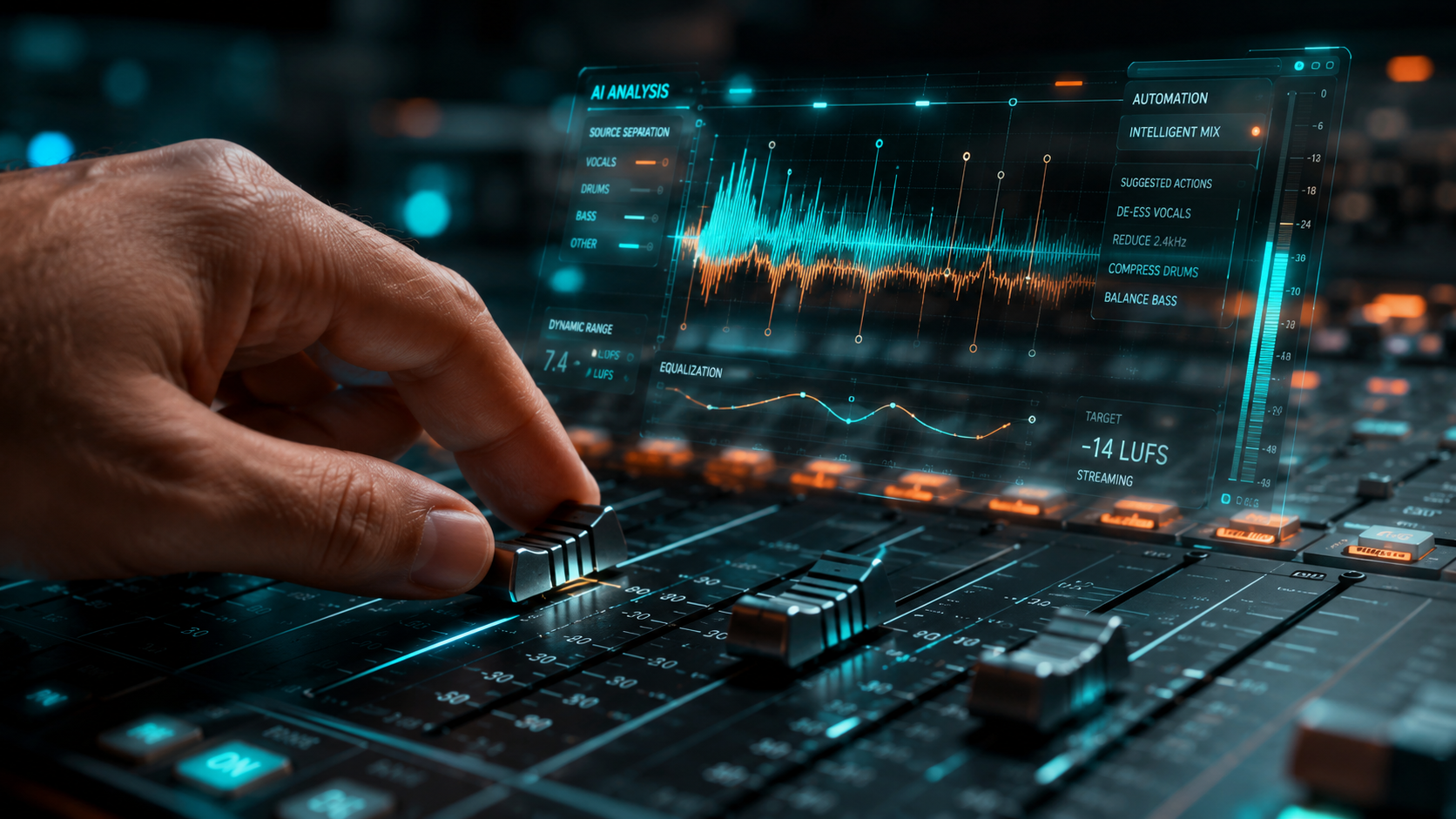
To understand the current state of the market, one must look at how specific software handles the workload. For instance, the ongoing comparison between Wondershare Filmora and VEGAS Pro in 2026 highlights the divide. Filmora has leaned heavily into consumer-grade AI features that prioritize speed, while VEGAS Pro continues to cater to the manual editor who requires deep technical control, even while integrating AI-assisted masking and tracking.
| Feature | AI Video Editing (2026) | Manual Editing (Traditional NLE) |
|---|---|---|
| Primary Interface | Voice & Text Prompts | Timeline & Keyframes |
| Turnaround Time | Minutes to Hours | Hours to Days |
| Creative Control | High-level / Directional | Granular / Frame-accurate |
| Learning Curve | Low (Conversational) | High (Technical Proficiency) |
| Best For | Social Media, News, Explainer Videos | Feature Films, Documentaries, High-end Ads |
Where Prompt-Based Editing Wins
The rise of Pollo AI and similar prompt-based editors has changed the game for creators who need to produce content at scale. In the ai video editing vs manual editing battle, the "Prompt-Based" side wins specifically in efficiency and accessibility. As noted by Investorideas.com, prompt-based editing allows users with zero technical background to generate professional-looking sequences. This democratization of video production means that small business owners and social media managers can now compete with larger agencies in terms of output volume.
Furthermore, the integration of AI-native media libraries, as seen in the April 2026 updates to Descript, allows for a seamless "search and edit" experience. Instead of scrubbing through hours of footage, an editor can simply search for a keyword in the transcript, and the AI will pull the corresponding video clip instantly. This specific feature bridges the gap between the two methods, offering a "hybrid" approach that saves time without sacrificing the editor's ability to make the final call on which take is used.
According to Tech Times, the release of Google Gemini Omni Flash in May 2026 has introduced "Voice-Controlled AI Video Editing" to the mainstream. This allows editors to speak to their workstation as if they were talking to a junior editor. For example, saying "Find all the shots where the subject is smiling and create a montage" is now a reality. This level of automation is where manual editing simply cannot compete on a speed-per-dollar basis.
The Role of "Video Agents" in 2026
A "Video Agent" is more than just a filter; it is an autonomous or semi-autonomous system that can make creative suggestions. In 2026, these agents are capable of analyzing the pacing of a music track and automatically aligning clip cuts to the transients. While a manual editor would spend 20 minutes meticulously lining up these cuts, an AI agent does it in three seconds. This allows the human editor to focus on "Director-level" decisions rather than "Technician-level" tasks.
The Case for Manual Editing: Why Human Touch Still Matters
Despite the advancements in AI, manual editing remains the preferred choice for projects requiring deep emotional resonance. The ai video editing vs manual editing debate often overlooks the "uncanny valley" of AI-generated pacing. AI tends to follow mathematical patterns, whereas human editors often use "intentional imperfection" to create tension or emphasize a specific moment. A human editor knows when to hold a shot a second longer than the "rules" suggest to let an emotion land with the audience.
In 2026, professional NLEs like VEGAS Pro have maintained their market share by focusing on the "Pro" in Professional. These tools offer advanced color science, support for obscure RAW formats, and complex multi-cam syncing that requires a level of hardware-software synergy that many cloud-based AI editors haven't yet mastered. For a feature film or a high-budget commercial, the risk of an AI "hallucinating" a frame or misinterpreting a subtle facial expression is too high.
Moreover, the ethical and copyright landscape of 2026 has made manual editing a "safer" bet for some corporate entities. While AI tools are becoming more transparent, the "Manual" label often serves as a badge of authenticity. According to industry reports from early 2026, audiences are beginning to value "Human-Made" content in the same way they value organic food. Knowing that a person carefully selected every frame provides a level of intentionality that AI cannot yet claim.
Hybrid Workflows: The Best of Both Worlds
Most high-level professionals in 2026 are not choosing one over the other; they are using a hybrid workflow. This involves using AI for the "grunt work"—transcription, silence removal, basic color matching, and initial assembly—and then switching to manual editing for the final creative pass. This approach maximizes efficiency while ensuring the final product meets the highest standards of quality.
Technical Requirements and Accessibility in 2026
The hardware requirements for ai video editing vs manual editing have diverged significantly. Manual editing still requires powerful local hardware—high-end GPUs, massive amounts of RAM, and fast local storage to handle 8K or 12K raw footage. In contrast, most AI video editing in 2026 is processed in the cloud. This has lowered the barrier to entry for high-quality video production, as a creator only needs a stable internet connection and a basic laptop to access powerful generative engines.
However, the cost structure is also different. Manual editing software often involves a one-time purchase or a standard monthly subscription. AI editing platforms frequently use a "per-minute" or "token-based" pricing model, especially for generative features. For long-form content creators, the costs of AI processing can add up quickly, making traditional manual software more cost-effective in the long run for those who have the time to do the work themselves.
Finally, the "Learning Curve" has been inverted. In the past, you had to learn the software to be an editor. In 2026, you have to learn "Prompt Engineering" and "AI Orchestration." The skill of the modern editor is less about knowing which button to click and more about knowing how to describe the desired outcome to the machine. This shift is fundamental to the 2026 creative economy.
Is AI video editing better than manual editing in 2026?
Neither is objectively "better" as they serve different purposes. AI editing is superior for speed, high-volume social media content, and accessibility, while manual editing is superior for cinematic storytelling, emotional nuance, and total creative control.
What is Google Gemini Omni Flash?
Released in May 2026, it is a conversational AI model that allows users to edit video using voice commands. It can perform tasks like trimming clips, adjusting audio levels, and searching for specific visual elements through natural language.
Can AI editors like Pollo AI replace professional human editors?
AI can replace the technical tasks of an editor, such as cutting and basic transitions, but it cannot replace the strategic and emotional decision-making of a professional human editor. Most pros now use AI as an assistant rather than a replacement.
Does manual editing take longer than AI editing?
Yes, manual editing is significantly more time-consuming because every cut and effect must be placed by hand. However, this time investment often results in a more unique and polished final product compared to standard AI outputs.
What are the latest trends in AI video editing for 2026?
Key trends include voice-controlled timelines, generative "in-painting" to remove objects from video, and AI video agents that can autonomously assemble rough cuts based on a written script or storyboard.



Comments ()