
AI Video Editing Trends 2026: Future of Content Creation
The defining question for content creators in 2026 is no longer if AI will change video editing, but how fast these changes are reshaping the industry. AI video editing trends in 2026 center on three transformative forces: generative text-to-video creation, real-time AI-assisted post-production, and the explosive growth of mobile-first editing tools powered by machine learning. These trends are democratizing professional-grade video production, enabling anyone with a smartphone or laptop to produce broadcast-quality content in minutes rather than days.
AI video editing trends 2026 encompass the latest innovations in artificial intelligence applied to video post-production, including automated editing, text-to-video generation, real-time effects, and AI-powered color grading. These trends are characterized by increased accessibility, speed, and creative possibilities for content creators at all levels, from hobbyists to enterprise marketing teams.
- ✓ Text-to-video AI generators are revolutionizing content creation by allowing users to produce full video sequences from simple text prompts, as highlighted by Cybernews in June 2026.
- ✓ Mobile video editing applications are experiencing significant market growth, with Straits Research projecting continued expansion through 2034, driven by AI-powered features.
- ✓ Beauty camera apps and AI editing tools are converging, with Precedence Research forecasting the beauty camera app market to reach USD 27.99 billion by 2035.
- ✓ AI marketing trends show that personalized, AI-generated video content is becoming essential for brand strategy, according to the United News of India in June 2026.
- ✓ Real-time AI editing capabilities are reducing production time from hours to minutes, making video content creation more efficient than ever before.
Understanding the Core AI Video Editing Trends of 2026
The landscape of video editing has undergone a fundamental transformation in 2026, driven by advances in generative AI, machine learning models, and the increasing computational power of mobile devices. According to research published by Metricool in November 2025, the trajectory of AI video editor trends in 2026 points toward fully automated workflows where creators focus on creative direction while AI handles the technical heavy lifting.
One of the most significant shifts is the move from traditional timeline-based editing to natural language-driven interfaces. Instead of manually cutting clips and adjusting parameters, creators describe their desired outcome in plain English, and the AI interprets and executes the edit. This paradigm shift is lowering the barrier to entry for video creation while simultaneously accelerating the workflow for experienced editors.
The adoption curve for AI video editing tools has steepened considerably in 2026. What was once considered experimental technology has become mainstream, with major social media platforms, marketing agencies, and independent creators integrating AI editing into their daily production pipelines.
Key Drivers Behind the 2026 Trends
Several factors are accelerating the adoption of AI video editing trends in 2026. First, the cost of AI computation has dropped dramatically, making advanced editing features accessible on consumer-grade hardware. Second, the quality of AI-generated video has reached a threshold where it is often indistinguishable from traditionally produced content. Third, the demand for video content continues to grow exponentially, with platforms like TikTok, Instagram Reels, and YouTube Shorts creating an insatiable appetite for short-form video.
Text-to-Video: Generative AI's Breakout Year in Content Creation
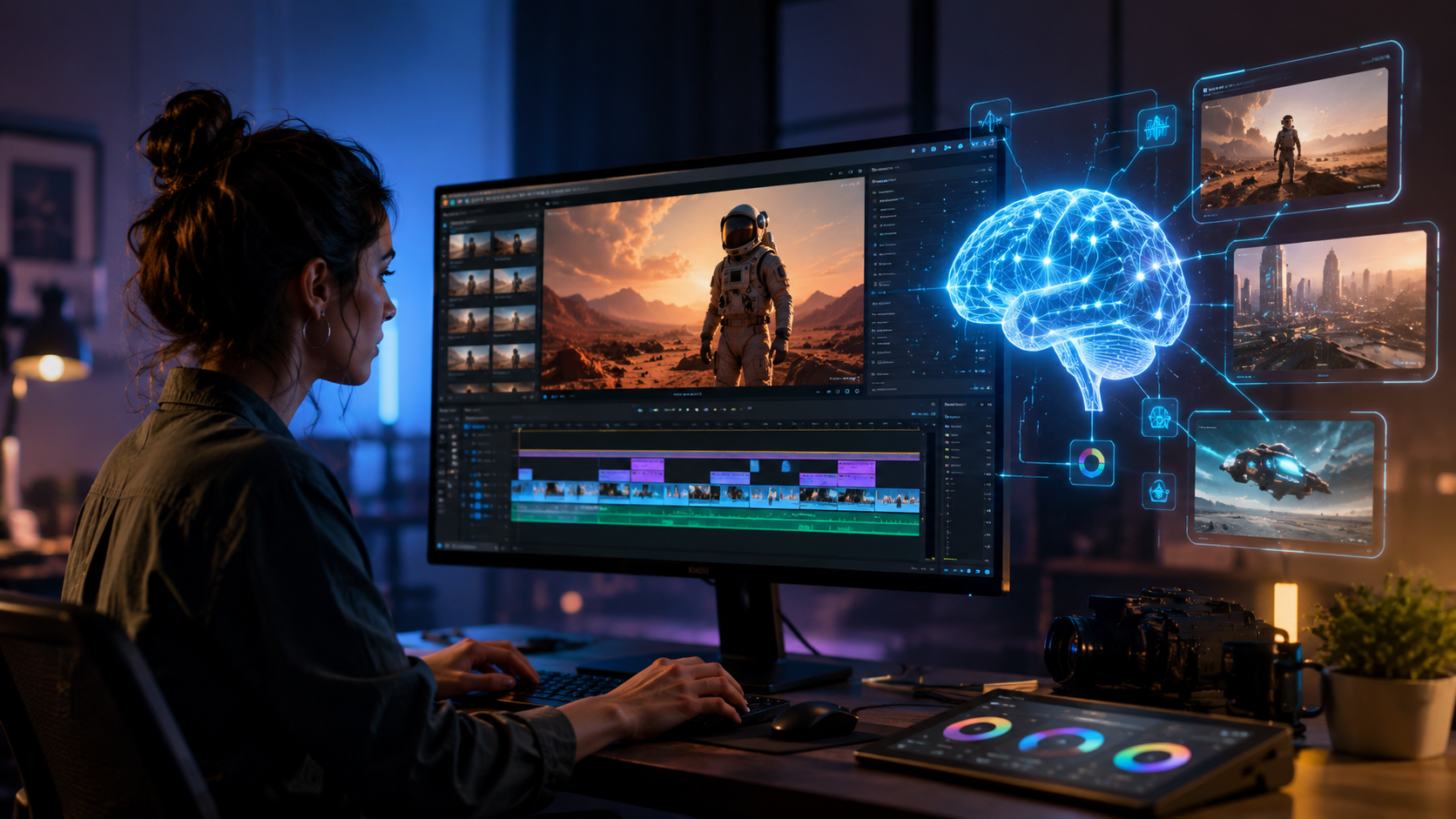
Perhaps the most headline-grabbing AI video editing trend in 2026 is the rise of text-to-video generators. As reported by Cybernews on June 3, 2026, this technology is fundamentally changing how content is created. Text-to-video AI allows users to input a written description and receive a fully rendered video clip complete with visuals, motion, and sometimes even synchronized audio.
The implications for content creators are profound. Marketing teams can now generate product demonstrations, explainer videos, and social media content without the need for a camera crew, studio time, or expensive equipment. A single copywriter with access to a text-to-video tool can produce more video content in a day than a traditional production team could in a week.
How Text-to-Video Is Being Used in 2026
Creative applications for text-to-video technology in 2026 include rapid prototyping of video concepts, generating background footage for vlogs and presentations, creating animated explainer content for educational purposes, and producing personalized video messages at scale. The technology is also being integrated into larger content management systems, allowing for automated video generation from blog posts and social media captions.
According to the Cybernews report, the quality of text-to-video output in 2026 has improved significantly in terms of resolution, temporal consistency, and adherence to the original prompt. While not yet ready to replace all forms of traditional video production, text-to-video is now a legitimate option for many content categories, particularly in the social media and marketing space.
Mobile Video Editing Applications and AI Integration
The mobile video editing applications market is experiencing a period of explosive growth, driven largely by AI-powered features. Straits Research projected in April 2026 that this market segment would continue to expand through 2034, with AI capabilities serving as the primary differentiator between competing applications.
Modern mobile editing apps in 2026 include features like automatic scene detection, AI-based color correction, smart cropping that follows the subject, and one-click audio clean-up. These features were once exclusive to professional desktop software but are now available on devices that fit in a pocket.
This trend is particularly significant because it enables creators to edit video entirely on their mobile devices, from capture to final export. The workflow is streamlined: shoot video on a smartphone, open the editing app, apply AI-powered enhancements, and publish directly to social media. The entire process can take less than ten minutes for a high-quality output.
Beauty Camera Apps and Video Editing Convergence
Precedence Research reported on June 1, 2026, that the beauty camera apps market is projected to reach USD 27.99 billion by 2035. This growth is closely tied to the integration of AI video editing features within these applications. What started as photo enhancement tools have evolved into full-featured video editing platforms that include real-time skin smoothing, lighting correction, and even AI-powered background replacement during video recording.
The convergence of beauty camera technology and video editing is creating a new category of content creation tools that cater specifically to social media influencers, beauty professionals, and lifestyle creators. These tools reduce the need for post-production editing by applying enhancements in real time during recording.
AI Marketing Trends Driving Video Content Strategy
The United News of India reported on June 4, 2026, that AI marketing trends are reshaping video content strategy across industries. Personalized video content, generated and edited by AI, has become a cornerstone of modern marketing campaigns. Brands are using AI video editing tools to create thousands of video variations from a single source asset, tailoring the messaging, visuals, and calls-to-action for different audience segments.
This level of personalization was logistically impossible before the advent of AI video editing. Today, a brand can create a base video and use AI to automatically generate versions with different voiceovers, text overlays, imagery, and even product placements, all optimized for specific demographic groups or geographic regions.
Data-Driven Video Creation
AI video editing tools in 2026 are increasingly integrating with analytics platforms to inform creative decisions. An editor can input performance data about past content, and the AI will suggest edits, pacing changes, or visual styles that are statistically more likely to engage the target audience. This data-driven approach to video creation is blurring the line between creative intuition and algorithmic optimization.
According to the United News of India report, brands that adopt AI-driven video personalization are seeing significant improvements in engagement rates, conversion metrics, and return on ad spend. The ability to rapidly produce and test multiple video variations is giving these brands a competitive advantage in crowded digital marketplaces.
Real-Time AI Editing and the Acceleration of Production Workflows
One of the most practical AI video editing trends in 2026 is the move toward real-time editing. Rather than applying AI effects during a separate rendering phase, modern tools can apply adjustments instantly as the user interacts with the timeline. This real-time capability includes color grading, special effects, transitions, and audio adjustments.
For content creators, this means immediate visual feedback and a more intuitive editing experience. The creative process becomes more fluid and experimental, as editors can try different looks and effects without waiting for the system to render each change.
Market Implications and Future Outlook
As Metricool noted in their November 2025 analysis, the AI video editor market is evolving rapidly, with new entrants and features emerging constantly. The trend toward real-time, AI-assisted editing is expected to accelerate, eventually leading to tools that can suggest edits, transitions, and effects proactively based on the content of the video.
The market for mobile video editing applications, as tracked by Straits Research, will continue to grow as AI capabilities become more sophisticated and more accessible. The beauty camera apps market, forecast by Precedence Research to reach nearly USD 28 billion by 2035, will increasingly incorporate video editing features, further blurring the lines between different categories of creative software.
Comparison: Key AI Video Editing Approaches in 2026
To help creators choose the right tools and workflows, the following table compares the primary AI video editing approaches available in 2026 based on key criteria.
| Approach | Best For | Time to Output | Skill Level Required | Key Limitation |
|---|---|---|---|---|
| Text-to-Video Generators | Social media clips, explainers, ads | Minutes | Beginner (prompt writing) | Less control over fine details |
| AI-Assisted Timeline Editing | Professional post-production | Hours (vs. days traditionally) | Intermediate to advanced | Still requires human oversight |
| Mobile AI Editing Apps | Quick edits, on-the-go content | Minutes | Beginner | Limited advanced features |
| Real-Time AI Enhancement | Live streaming, real-time recording | Instant (during capture) | Beginner to intermediate | Processing power requirements |
| Beauty Camera + Video AI | Influencer and lifestyle content | During recording (minimal post) | Beginner | Niche use cases |
Each approach has its strengths and optimal use cases. Many creators in 2026 are combining multiple approaches, such as using text-to-video for rapid prototyping and then refining the output with AI-assisted timeline editing on a mobile app.
Frequently Asked Questions About AI Video Editing Trends 2026
What exactly are AI video editing trends in 2026?
AI video editing trends in 2026 refer to the major technological shifts in how artificial intelligence is applied to video post-production. These include text-to-video generation, real-time AI effects, mobile-first editing powered by machine learning, and AI-driven personalization for marketing content.
How does text-to-video technology work in 2026?
Text-to-video technology in 2026 uses generative AI models that accept a written prompt and produce a video sequence matching the description. According to Cybernews, these systems analyze the text for context, subject matter, and desired style, then generate corresponding visuals with motion and lighting.
Will AI video editing replace human editors in 2026?
AI video editing is augmenting rather than replacing human editors in 2026. While AI handles repetitive and technical tasks like color correction, scene detection, and basic cuts, creative direction, storytelling, and nuanced decision-making still require human input. The role of the editor is shifting from manual operator to creative director.
What is the market growth for mobile video editing apps in 2026?
According to Straits Research, the mobile video editing applications market is on a strong growth trajectory through 2034. The integration of AI features is the primary driver of this growth, making professional-quality editing accessible on smartphones.
How are beauty camera apps related to AI video editing trends?
Beauty camera apps are increasingly incorporating AI video editing features, creating a convergence between photo enhancement and video production. Precedence Research projects the beauty camera app market to reach USD 27.99 billion by 2035, driven in part by the addition of real-time video editing capabilities.
What should marketers know about AI video editing in 2026?
Marketers should know that AI video editing enables personalized video content at scale, data-driven creative decisions, and significantly faster production timelines. As reported by the United News of India, brands leveraging AI video editing for personalized campaigns are seeing measurable improvements in engagement and conversion metrics.
How can beginners start with AI video editing in 2026?
Beginners can start with mobile AI editing apps that offer one-click enhancements, automatic scene detection, and guided workflows. Text-to-video generators also provide an entry point by allowing users to create video content from written prompts without any traditional editing skills.



Comments ()