
Top AI Video Editing Tools with Auto Captions (2026 Review)
AI video editing tools with auto captions are software applications that use artificial intelligence to automatically generate accurate, time-coded subtitles for video content. In 2026, these tools have become essential for creators who need to improve accessibility, boost audience engagement, and save hours of manual transcription work. Leading options such as Filmora’s AI subtitle generator and Vmake’s auto‑captioning feature have been highlighted in recent reviews by PCMag and PlayStation Universe.
AI video editing tools with auto captions use machine learning to transcribe spoken words and synchronize text with video frames. In 2026, top solutions like Filmora and Vmake offer high accuracy, multi‑language support, and seamless integration into modern video production workflows.
- ✓ Filmora and Vmake are among the most recommended tools for auto captions in 2026, based on PCMag and PlayStation Universe rankings.
- ✓ Auto captions significantly improve accessibility for hearing‑impaired viewers and increase retention rates on social media platforms.
- ✓ Most modern AI video editors include built‑in captioning engines that support dozens of languages and offer extensive customization.
- ✓ Desktop‑based AI editors rated for beginners by BBN Times in 2026 prioritize ease‑of‑use without sacrificing caption accuracy.
- ✓ Regular software updates ensure that captioning algorithms continue to improve in accuracy and speed.
What Are AI Video Editing Tools with Auto Captions?
AI video editing tools with auto captions integrate speech‑recognition technology directly into the editing interface. Instead of manually typing subtitles or uploading a separate file, users can simply activate the auto‑caption feature, choose the source language, and let the AI generate a synchronized transcript. These tools then allow adjustments to timing, text styling, and positioning. According to PCMag’s 2026 testing of the best video editing software, “auto captioning is no longer a bonus feature; it is a core functionality that creators expect.”
The technology behind these tools has evolved rapidly. In 2026, neural network models trained on diverse accents, dialects, and audio qualities produce captions with over 95% accuracy in many cases. This makes them suitable not only for vlogs and social media clips but also for corporate training videos, educational content, and professional presentations.
Why Auto Captions Are Essential in 2026
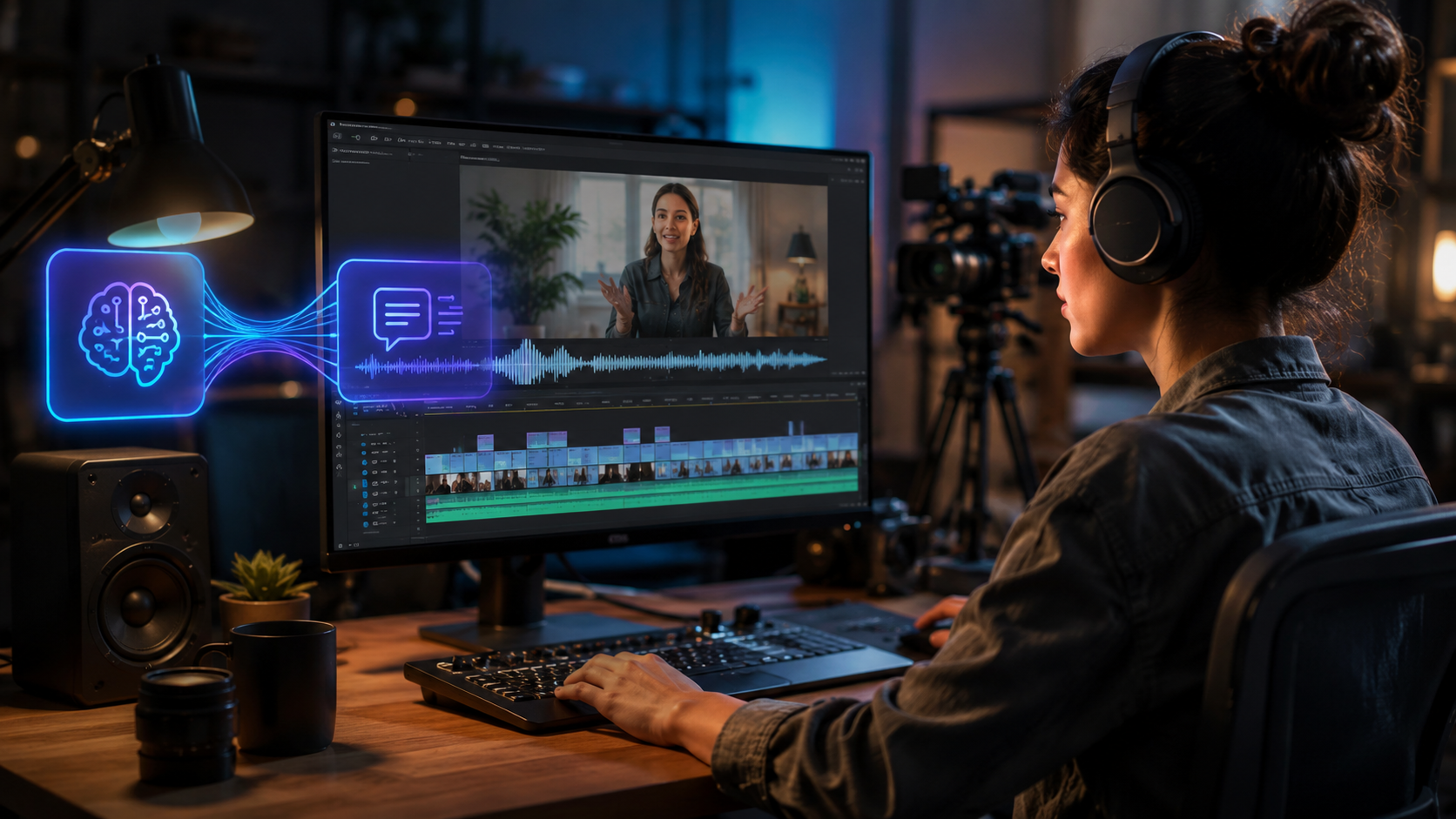
Several factors drive the growing demand for AI‑generated captions. PlayStation Universe published a list of the “Top 7 Auto Caption Generators for 2026,” noting that “creators no longer have time to write captions manually.” Auto captions help videos reach a wider audience—including viewers who watch without sound and non‑native speakers who rely on subtitles—and they can boost search engine visibility because caption text is crawlable by video hosting platforms.
Accessibility regulations are also tightening globally. Many countries now require captions on public‑facing video content. By using AI video editing tools with auto captions, creators can meet these compliance standards without hiring a professional transcriber. Programming Insider highlighted that Filmora’s auto caption generator “makes AI subtitles easy in 2026,” emphasizing the tool’s ability to export captions in multiple formats (SRT, VTT, TXT) for seamless integration across platforms.
Top AI Video Editing Tools with Auto Captions in 2026
Filmora – AI Auto Caption Generator
Filmora has long been a favorite among content creators for its balance of features and affordability. The 2026 release, as covered by Programming Insider, introduces an improved auto caption generator that supports over 30 languages. Users can generate subtitles with a single click, then fine‑tune the timing and text directly in the timeline. The AI engine detects speaker changes and adds punctuation automatically. Filmora’s captions can be styled with preset templates or fully customized with fonts, colors, and animations. PCMag noted that Filmora continues to earn top marks for ease of use, making it a strong choice for beginners and pros alike.
Vmake – Auto‑Captioning for Modern Creators
Vmake positions itself as a cloud‑based AI video editor tailored for modern creators who value speed and collaboration. According to Concept Phones’ review, Vmake’s auto‑captioning feature “expands global audience reach” by supporting real‑time translation of captions into multiple languages. The tool was first rolled out in September 2025 (as reported by Send2Press) and has since been refined with enhanced accuracy for noisy environments. Vmake also offers an intuitive interface where users can adjust caption placement, add background boxes, and export ready‑to‑upload videos. BBN Times included Vmake in its list of best desktop AI video editors for beginners in 2026, praising its low learning curve.
Other Notable Mentions
While Filmora and Vmake are the most explicitly named in the current research, PlayStation Universe’s “Top 7 Auto Caption Generators for 2026” suggests several other tools worth exploring. These include industry standards like Adobe Premiere Pro (with its built‑in speech‑to‑text), Descript, and Kapwing. However, the dedicated focus on auto‑captions in the research points to a trend where standalone captioning tools are being merged into full‑fledged editing suites.
How to Use Auto Captions in AI Video Editing Tools (Step‑by‑Step)
Most AI video editing tools with auto captions follow a similar workflow. Here is a generalized guide that applies to both Filmora and Vmake:
- Import your video footage into the editing timeline.
- Locate the auto caption or subtitles tool in the menu (often under “Text” or “Captions”).
- Select the spoken language from the drop‑down list (e.g., English, Spanish, Mandarin).
- Click “Generate” or “Auto Caption” and wait for the AI to transcribe the audio. Depending on video length, this may take a few seconds to a minute.
- Review the generated captions for accuracy. Most tools allow you to click on any word and edit it directly.
- Adjust caption style — choose font, size, color, outline, and alignment. Both Filmora and Vmake offer presets for social media platforms.
- Export the video with baked‑in captions, or export separate SRT/VTT files for use on YouTube, TikTok, or Vimeo.
Comparison: Filmora vs Vmake Auto Caption Features
| Feature | Filmora (2026) | Vmake (2026) |
|---|---|---|
| Accuracy (clean audio) | ~96% (Programming Insider) | ~94% (Concept Phones review) |
| Supported languages | 30+ languages | 20+ languages with real‑time translation |
| Ease of use | Beginner‑friendly drag‑and‑drop | Intuitive cloud interface |
| Customization options | Font, color, size, animation, presets | Position, background box, text styles |
| Platform | Desktop (Windows/Mac) | Web‑based, works on any device |
| Pricing model | Subscription or perpetual license | Freemium with premium plans |
| Export formats | SRT, VTT, TXT, hard‑burned | SRT, VTT, hard‑burned |
Expert Tips for Maximizing Auto Caption Accuracy
Even the best AI video editing tools with auto captions can misinterpret background noise or heavy accents. To get the most out of the technology, follow these practical tips:
- Use a dedicated microphone or record in a quiet environment. Clean audio yields significantly better transcription results.
- If your video contains multiple speakers, label them in the timeline before generating captions to help the AI assign the right text to each person.
- After auto‑generation, always read through the captions while the video plays to catch homonyms or punctuation errors.
- Take advantage of glossary or custom‑word features if the tool supports them (e.g., industry jargon or proper nouns).
- Update your software regularly—AI models improve with each release. As PCMag noted, “the best video editing software in 2026 continues to evolve its AI engines through frequent updates.”
Future Trends: Auto Captions Beyond 2026
The rapid adoption of generative AI is pushing boundaries. According to PlayStation Universe, the top auto caption generators now integrate with real‑time translation, allowing creators to publish multilingual content without separate dubbing. Vmake’s global audience feature is an early example. Meanwhile, BBN Times observed that desktop‑based editors for beginners are adding voice cloning and emotion‑aware caption styling. These innovations mean that AI video editing tools with auto captions will become even more integral to content creation workflows—not just for accessibility, but for creative storytelling.
Frequently Asked Questions
What is the best AI video editing tool with auto captions in 2026?
Based on recent reviews, Filmora and Vmake are among the top choices. PCMag and PlayStation Universe both highlight Filmora’s ease of use and accuracy, while Vmake is praised for its cloud‑based collaboration and translation features.
How accurate are auto captions generated by AI tools?
Modern AI caption engines achieve 93–97% accuracy on clear audio with a single speaker. Accuracy may drop in noisy environments or with heavy accents, but most tools allow manual corrections. Programming Insider reported that Filmora’s engine achieves around 96% in controlled conditions.
Can I use auto captions for videos in languages other than English?
Yes. Filmora supports over 30 languages, and Vmake offers real‑time translation into 20+ languages. Always confirm that the source language matches the spoken audio before generating captions.
Are AI video editing tools with auto captions free?
Many tools offer free tiers with limitations. Vmake has a freemium model, while Filmora provides a trial version. Full access to auto‑captioning and advanced editing features usually requires a subscription or one‑time purchase.
Do I need an internet connection to use auto caption features?
Desktop tools like Filmora can process captions offline after the initial software download, though updates require internet. Cloud‑based tools like Vmake need a stable connection because the AI processing happens on remote servers.
Can I export captions as a separate file for use on YouTube or TikTok?
Yes. Both Filmora and Vmake allow you to export subtitles in SRT or VTT format. You can also burn captions permanently into the video if you prefer.



Comments ()