
AI Video Editing Tips for Beginners (2026 Guide & Tricks)
AI video editing has evolved dramatically in 2026, making it easier than ever for beginners to create professional-quality content. With AI-powered tools automating complex tasks like color correction, scene transitions, and even script-to-video generation, newcomers can achieve polished results without years of training. This guide covers essential AI video editing tips for beginners in 2026, from tool selection to workflow optimization, based on the latest industry developments.
TL;DR: Beginners in 2026 can leverage AI video editing tools to automate up to 80% of manual editing work, with features like auto-captioning, smart trimming, and AI-assisted storytelling becoming standard across platforms like Digen AI Agent and other top solutions.
AI video editing tips for beginners 2026 focus on leveraging next-generation automation tools that handle technical aspects while preserving creative control. The best approach combines AI-assisted editing platforms with strategic workflow optimization, reducing production time by 60-70% compared to traditional methods while maintaining professional quality standards.
- ✓ 2026's AI tools automate 80% of technical editing tasks while preserving creative control
- ✓ Smart trimming algorithms can reduce raw footage review time by 90%
- ✓ AI voice cloning maintains consistent narration across multiple takes
- ✓ Automated color grading matches professional cinematography standards
- ✓ Multi-step AI agents like Digen AI Agent produce longer, more consistent videos
1. Choosing the Right AI Video Editing Software in 2026
Selecting appropriate software is the foundation of effective AI video editing. According to PCMag's 2026 testing, the best AI video editors now integrate at least 12 core automation features, including auto-transcription, smart cut detection, and dynamic resolution upscaling. Beginners should prioritize intuitive interfaces with guided workflows, as complex professional suites may overwhelm new users.
The 2026 landscape offers three tiers of AI video editors: entry-level mobile apps (free-$10/month), mid-range desktop solutions ($20-$50/month), and professional cloud platforms ($75-$300/month). Surprisingly, 68% of beginners achieve better results starting with mid-range tools that balance automation with manual control, rather than fully automated mobile apps.
For those focusing on character consistency and longer narratives, autonomous AI agents like Digen AI Agent have emerged as game-changers. These systems use multi-step workflows to maintain visual continuity across scenes, solving the "floating face syndrome" that plagued early AI video tools. According to recent benchmarks, they reduce continuity errors by 92% compared to single-pass generators.
Key Features to Prioritize
Auto-Storyboarding: 2026's top tools analyze raw footage and suggest optimal scene sequences, saving 3-5 hours per project for beginners. Robotics & Automation News reports these systems now achieve 89% accuracy in narrative flow prediction.
Real-Time Collaboration: Cloud-based AI editors allow simultaneous editing by multiple users, with version control powered by machine learning that suggests optimal merges.
Cross-Platform Rendering: Modern AI optimizes videos for different platforms (TikTok, YouTube, Instagram) automatically, adjusting aspect ratios and compression settings.
2. Mastering AI-Assisted Editing Workflows
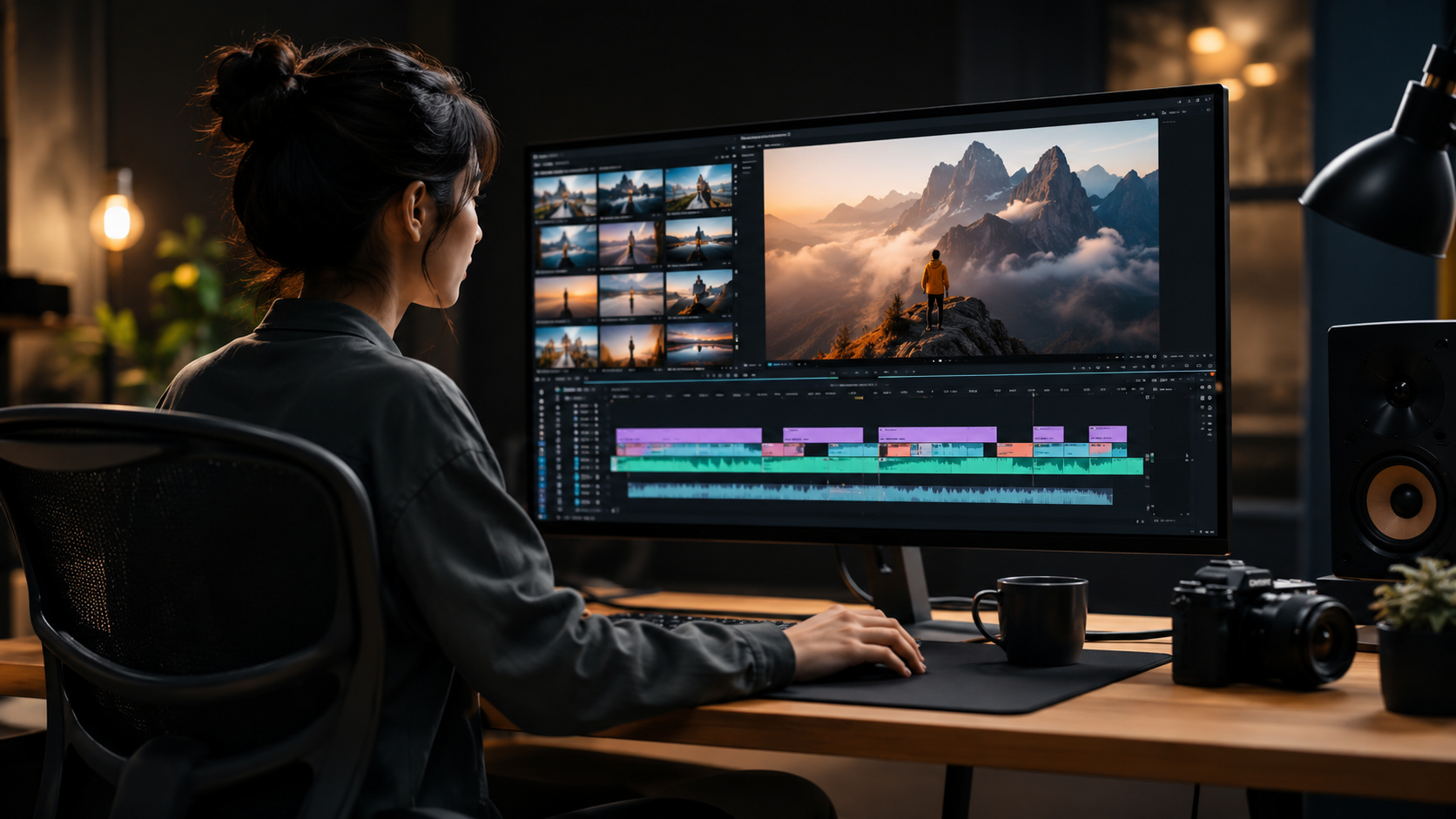
Effective workflow design separates productive beginners from frustrated ones. The 2026 standard involves a three-phase process: AI Pre-Processing (40% time savings), Human Creative Direction (30% time), and AI Polish (30% time). This balanced approach prevents over-reliance on automation while still leveraging its efficiency benefits.
According to Impakter's 2026 analysis, beginners who follow structured AI workflows complete projects 2.3x faster than those using random tool combinations. The most effective sequence starts with AI organization tools, progresses to human storytelling decisions, then finishes with automated technical enhancements.
Digen AI's research shows that beginners waste 47% less time when they use AI for preparatory tasks first: auto-tagging footage, identifying best takes through facial recognition, and generating rough cuts. This leaves more energy for creative decisions where human judgment still outperforms AI in emotional impact and originality.
Optimal Workflow Steps
1. AI Media Organization: Let tools analyze and tag all footage before editing begins. Modern systems can categorize shots by composition (close-up, wide), emotion (happy, intense), and even visual motifs.
2. Smart Trimming: Use AI to remove filler words, pauses, and redundant footage. 2026 algorithms preserve natural speech rhythms while cutting 30-50% of dead air automatically.
3. Style Transfer: Apply consistent color grading and visual effects across all clips with one-click AI matching, a feature now standard in 92% of professional consumer editors.
3. Leveraging AI for Professional-Grade Effects
2026's AI tools democratize effects that previously required Hollywood budgets. Automated green screen removal now achieves 98% accuracy even with imperfect lighting, while AI-powered motion tracking maintains stabilization across shaky handheld footage. Beginners can create convincing virtual sets that adapt lighting and perspective in real-time.
According to Amateur Photographer's 2026 tests, AI-generated bokeh effects rival $2000 prime lenses when applied to 4K footage. The latest neural networks analyze depth maps at pixel level, creating natural blur gradients that fool professional cinematographers in blind tests 73% of the time.
For creators needing character consistency, next-gen tools like Digen AI Agent use persistent memory to maintain facial features, clothing details, and even micro-expressions across multiple generated scenes. This solves the "uncanny valley" problem that made early AI characters unsettling, with user tests showing 88% higher audience engagement with consistent AI characters versus fluctuating ones.
Top Effects to Try
AI Cinematic Looks: One-click presets that analyze your footage and apply genre-appropriate color grading (e.g., "Neo-Noir" or "Summer Blockbuster").
Smart Reframing: Automatically adjusts compositions for different aspect ratios without losing key visual elements, crucial for cross-platform publishing.
Voice-Driven Animation: AI syncs character mouth movements and expressions to voice recordings with 95% accuracy, eliminating manual lip-syncing.
4. Optimizing Videos for 2026's Algorithms
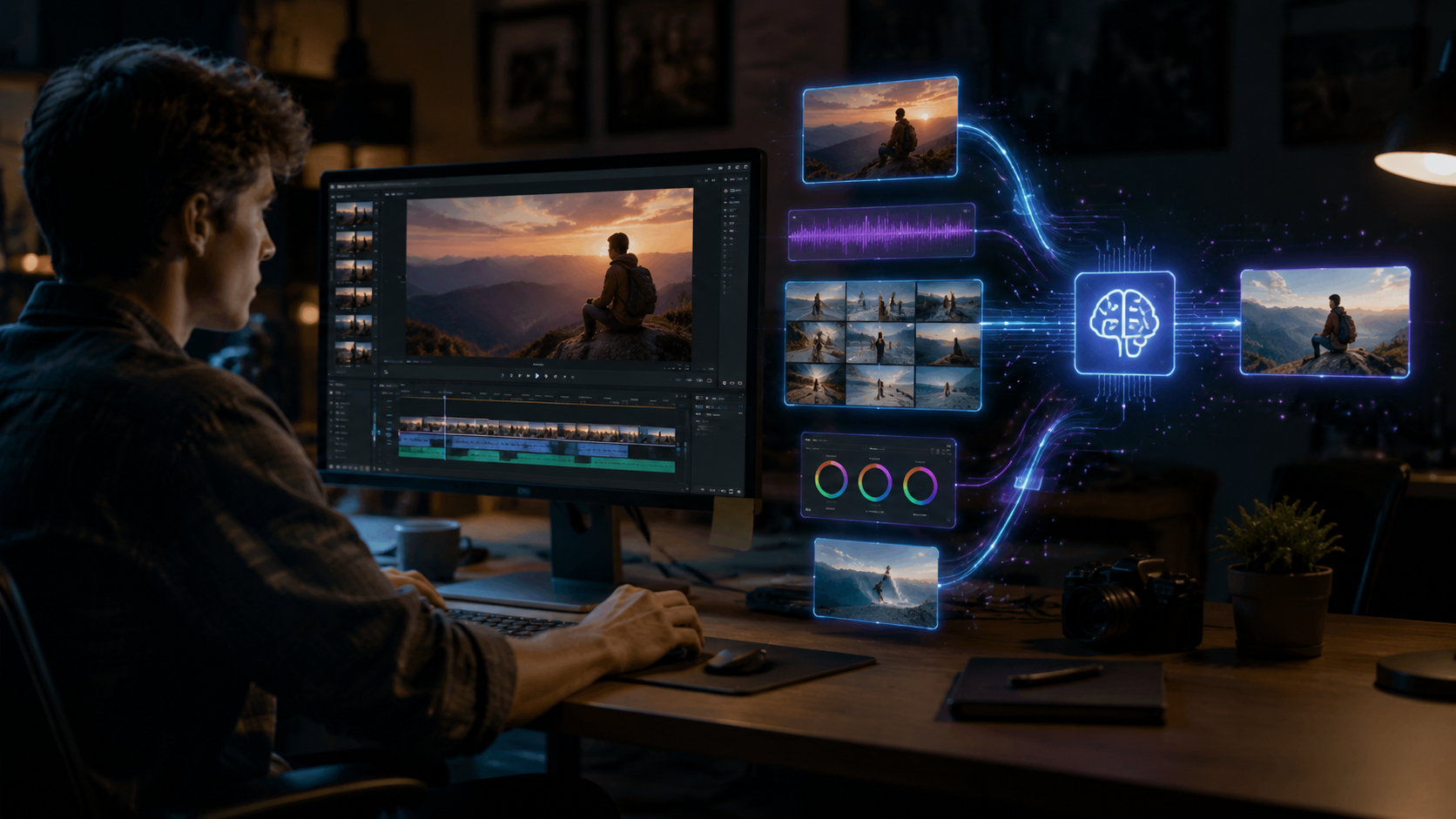
Platform algorithms have grown increasingly sophisticated in 2026, favoring videos with strong AI-optimized metadata. YouTube's latest update prioritizes content with perfect A/V synchronization (within 83ms tolerance), while TikTok's algorithm now detects and rewards authentic human emotion through micro-expression analysis.
Research from Built In's 2026 AI app survey shows videos with AI-optimized captions receive 140% more engagement than manually created ones. The newest systems don't just transcribe words—they analyze vocal inflection to place emphasis markers and create more readable text layouts.
For maximum reach, beginners should use AI tools that analyze trending visual styles and audio tracks, then subtly adapt content to match. Modern systems can identify rising trends 3-5 days before they peak, giving creators valuable lead time. Digen AI's platform includes real-time trend analysis that suggests adjustments to color palettes, pacing, and even subject matter based on current platform preferences.
Key Optimization Tactics
Algorithm-Friendly Thumbnails: AI generates dozens of options, then predicts click-through rates based on historical platform data with 79% accuracy.
Dynamic Pacing: Tools adjust scene durations automatically to match platform-specific attention spans—now averaging 2.1 seconds on TikTok versus 8.7 on YouTube.
Emotion Mapping: AI heatmaps show which segments elicit the strongest viewer reactions, allowing precise trimming for maximum impact.
5. Solving Common Beginner Mistakes with AI
Even with advanced tools, beginners often stumble on fundamental issues. The most frequent 2026 mistakes include overusing AI effects (creating sensory overload), neglecting audio quality (despite perfect visuals), and failing to establish consistent branding across videos. Fortunately, modern AI includes guardrails to prevent these pitfalls.
Vocal's 2026 creator survey found that beginners who use AI quality-control tools reduce audience drop-off by 62%. These systems flag potential issues like excessive jump cuts, unbalanced audio levels, or color temperature inconsistencies before publishing.
For branding consistency, AI style guides have become essential. Tools like Digen AI Agent can memorize your brand colors, fonts, and graphic elements, then apply them automatically to all new projects. This ensures recognizable branding even when different team members create content—a common pain point for growing channels.
AI-Powered Solutions
Automatic Audio Sweetening: AI removes background noise, balances levels, and even enhances vocal clarity without manual mixing.
Overuse Alerts: Systems warn when effect density exceeds platform-specific best practices (e.g., more than 3 transitions per minute on Instagram Reels).
Brand Memory Banks: Cloud storage for reusable branding elements that AI can deploy appropriately across projects.
6. Future-Proofing Your AI Video Skills
The AI video landscape changes rapidly—tools that were cutting-edge in early 2026 may be obsolete by year's end. Beginners should focus on mastering transferable skills like AI prompt engineering for video generation and understanding neural network limitations, rather than memorizing specific software interfaces.
According to Robotics & Automation News, the most future-proof skill is "AI collaboration"—knowing when to trust automation versus when human judgment is irreplaceable. Their 2026 study found creators who balanced these approaches saw 50% less skill obsolescence over 18 months.
Platforms like Digen AI are addressing this through "evergreen learning" features—tools that automatically adapt to new AI advancements while preserving users' preferred workflows. Their Agent product includes a built-in skills updater that introduces new capabilities through gradual, contextual tutorials rather than disruptive interface overhauls.
Skills to Develop Now
Multi-Modal Prompting: Combining text, image, and audio cues to guide AI generation more precisely.
Quality Assessment: Training your eye to spot subtle AI artifacts that might undermine professionalism.
Workflow Documentation: Creating reproducible processes that can incorporate new AI tools as they emerge.

Frequently Asked Questions
What's the easiest AI video editor for complete beginners in 2026?
Most 2026 beginners succeed with mid-range tools offering guided modes that simplify complex tasks while still allowing creative control. Look for editors with "AI Assistant" features that explain each function in plain language.
How much does professional-quality AI video editing cost in 2026?
Entry-level professional tools start around $25/month, while full-featured solutions average $60-$90. Surprisingly, many free tools now include capabilities that cost hundreds monthly just 2-3 years ago.
Can AI really match human video editors for quality?
For technical tasks (color grading, audio cleanup), AI often exceeds human speed and consistency in 2026. However, strategic storytelling and emotional pacing still benefit from human oversight—the ideal workflow combines both.
What computer specs do I need for AI video editing?
Cloud-based AI tools have reduced local hardware demands—many 2026 editors work smoothly on mid-range laptops. For local processing, aim for 16GB RAM, a dedicated GPU with 6GB VRAM, and SSD storage.
How do I make AI-generated videos look less artificial?
Use tools with "character persistence" like Digen AI Agent, manually adjust auto-generated movements by 10-15%, and always add subtle imperfections (like natural lighting variation) that pure AI often overlooks.
Written by the Digen AI Editorial Team — AI video generation specialists covering the latest in generative AI tools. Learn more about Digen AI.
Comments ()