
2026 AI Video Editing Tips for Beginners: Ultimate Guide
If you're new to video creation, mastering AI video editing tips beginners can transform your workflow and help you produce professional-looking content without years of experience. In 2026, artificial intelligence has made editing accessible to everyone: all you need is the right software and a few smart strategies to get started.
AI video editing is the use of machine learning algorithms to automate tasks like cutting, color grading, transcription, and even scriptwriting. For beginners, the key is choosing a tool that offers one-click enhancements, smart trimming, and guided workflows — letting you focus on storytelling rather than technical complexity.
- ✓ Start with a beginner-friendly AI editor that automates the most tedious steps (e.g., scene detection, audio cleanup, auto-captions).
- ✓ Learn to prompt AI tools effectively for text-to-video, voiceovers, and thumbnails — these skills are in high demand.
- ✓ Use AI for “faceless” content creation: turning scripts into viral shorts with zero on-camera appearance.
- ✓ 2026’s best desktop AI editors are built for beginners, often featuring drag-and-drop interfaces and real-time collaboration.
- ✓ Even a small side hustle in AI video editing can generate income — many creators are earning with short-form content.
1. What Is AI Video Editing? (And Why Beginners Love It in 2026)
AI video editing refers to software that leverages machine learning and neural networks to perform editing tasks that traditionally required manual effort. Instead of scrubbing through hours of footage, beginners can rely on tools that automatically identify the best takes, remove silences, generate subtitles, and even suggest music that matches the mood of the clip.
According to a 2026 review by Amateur Photographer, “the best video editing software in 2026 are programs literally anyone can use.” This democratization is thanks to AI. Beginners no longer need to understand keyframes, multicam syncing, or color wheels — the software handles the heavy lifting. For example, many desktop editors now include a “smart montage” feature that stitches together highlights based on facial expressions or voice energy.
The result? A complete AI video editing tips beginners guide is less about “how to click buttons” and more about “how to guide the AI” — a skill that can be learned in a weekend.
2. Essential AI Video Editing Tips for Beginners (Step-by-Step)
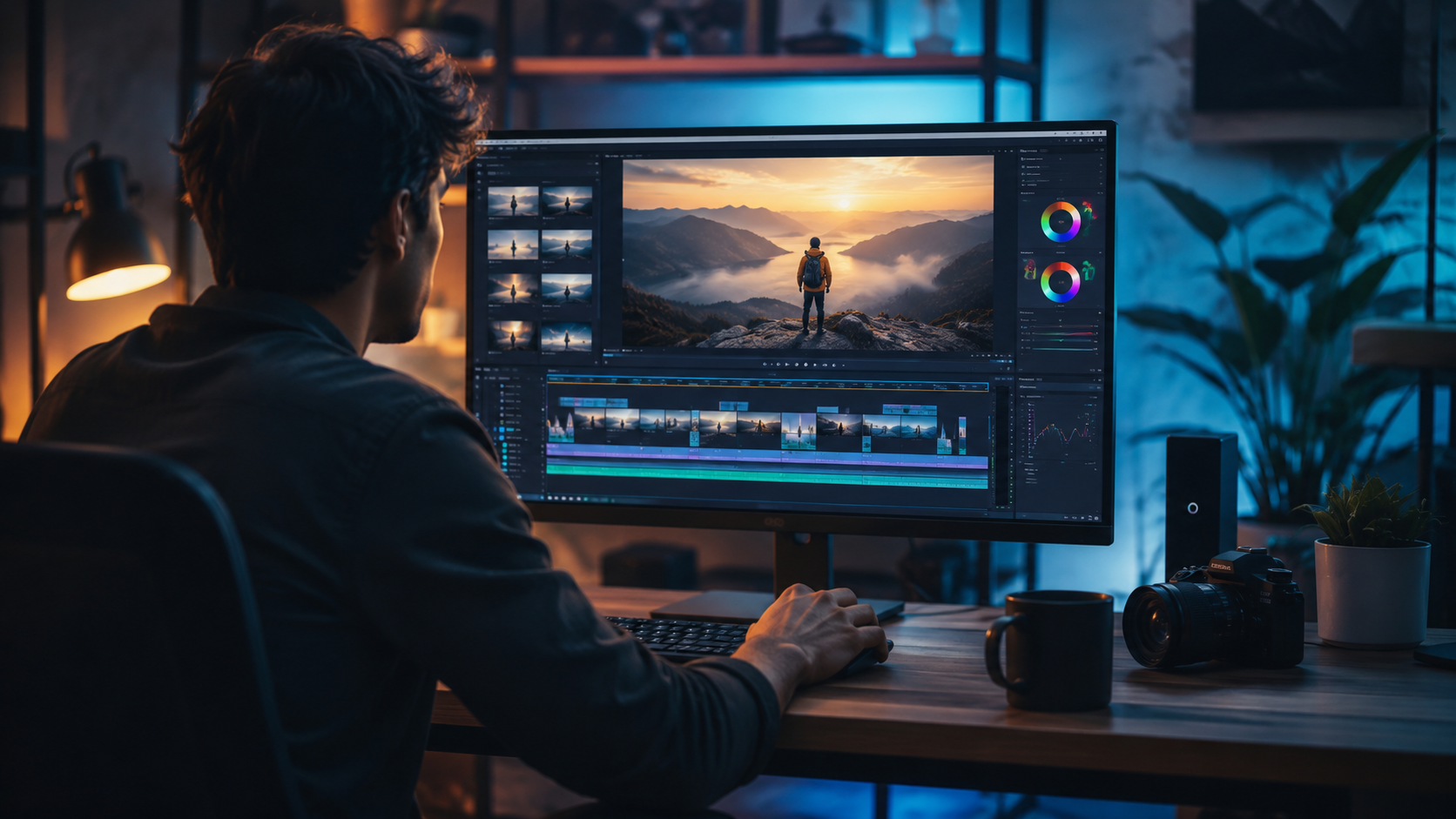
Getting started requires a clear method. Follow this numbered list to build a repeatable AI-powered editing workflow in 2026.
- Choose the right AI editor for your platform. As highlighted by BBN Times in their roundup of “Best Desktop AI Video Editors for Beginners in 2026,” tools like RunwayML, Adobe Premiere Pro (with AI plugins), and CapCut desktop offer distinct strengths. Pick one that supports your output format — YouTube, TikTok, or Instagram Reels.
- Feed the AI a clear script or brief. Many modern editors accept text prompts to generate rough cuts or even full videos. Write a one‑paragraph summary of your video’s goal and let the AI propose a timeline.
- Use auto‑transcription for captions. AI‑generated captions boost accessibility and retention. Most 2026 editors can add synchronized subtitles in over 50 languages with a single click. Review for accuracy — AI still struggles with proper names and strong accents.
- Apply “smart color” presets. Instead of manual grading, use AI that analyzes the scene and adjusts contrast, saturation, and white balance automatically. This is especially helpful for vlog footage shot on different devices.
- Let AI handle audio cleanup. Beginners often ignore background noise. Current AI tools can isolate voice, reduce hiss, and even remove wind noise — all without an audio engineering degree.
- Export with AI‑optimized settings. The software can recommend the best resolution, bitrate, and format for your target platform, saving you from trial and error.
Pro tip from the TyN Magazine guide on faceless shorts: always preview the AI’s output before finalizing. A quick human check prevents uncanny‑valley transitions or mismatched voiceovers.
3. Best AI Video Editors for Beginners in 2026 — Comparison Table
Choosing the right tool is the most important AI video editing tips beginners can follow. Below is a comparison of four popular categories (based on the 2026 landscape reported by BBN Times and Amateur Photographer):
| Tool / Category | Key AI Features | Best For | Approx. Price (2026) |
|---|---|---|---|
| Desktop AI Suite (e.g., RunwayML, Adobe Premiere Pro with AI) | Auto‑scene detection, text‑to‑video, motion tracking, voice cloning | Long‑form content, cinematic projects, multi‑layer edits | $15–$55/mo (freemium options) |
| Cloud‑Based AI Editor (e.g., CapCut Online, Canva Video) | Auto‑captions, smart trim, AI‑generated music, one‑click templates | Short‑form social media, beginners who avoid downloads | Free to $13/mo |
| Mobile AI Editor (e.g., LumaFusion AI, InShot) | AI background removal, lip‑sync, auto‑speed, thumbnail generation | On‑the‑go editing, casual creators | $3–$20 one‑time or subscription |
| All‑in‑One AI Platform (as described by No Film School) | Script to video, AI actor, voiceover, music, and publishing automation | Marketing videos, faceless channels, rapid content production | $30–$100/mo (includes credits) |
Note: Prices and feature sets are based on publicly available information as of mid‑2026. Always check the latest version before subscribing.
4. How to Create Viral Faceless Shorts with AI — A Beginner’s Workflow
One of the most popular ways to apply AI video editing tips beginners is creating “faceless” shorts — videos that use text, stock footage, and AI voiceovers instead of an on‑screen presenter. According to TyN Magazine (January 2026), this approach is booming because it removes the barrier of camera shyness and allows creators to publish consistently.
Here is a simple three‑step workflow:
- Step 1: Write a script or use a text‑to‑video AI prompt. Describe the topic (e.g., “explain why AI editing is great for beginners in under 60 seconds”). Most all‑in‑one AI platforms will generate a storyboard and even suggest royalty‑free footage.
- Step 2: Generate a natural‑sounding AI voiceover. Tools like ElevenLabs or the built‑in narrator of your editor can produce realistic speech with emotion. Match the tone to your niche — calm for tutorials, energetic for entertainment.
- Step 3: Add dynamic captions and transitions. Let the AI auto‑sync text to the voiceover, then apply a smart transition pack. Many beginners over‑complicate this — keeping it clean with two or three transition styles is more effective.
The No Film School report on an “All‑in‑One AI Platform” (January 2026) suggests that creators using such tools can produce a 60‑second short in under 15 minutes, from script to export.
5. Easy AI Video Editing Side Hustles You Can Start in 2026
Leveraging AI video editing tips beginners isn’t just for hobbyists — it can become a source of income. A vocal.media article from October 2025 (updated for 2026) lists side hustles that require “no experience needed,” and AI video editing is at the top.
Popular beginner‑friendly side hustles include:
- Faceless YouTube or TikTok channel management. Use AI to produce daily shorts for small businesses or content creators who lack time.
- AI‑edited product demos. Local brands often need simple promotional videos for social media. You can offer a package: write a script with AI, generate captions, and export optimized clips.
- Reselling AI‑generated templates. Many beginner editors create video templates (e.g., intro sequences, lyric videos) and sell them on marketplaces. With AI, you can batch‑create 20 templates in an hour.
According to the vocal.media source, even with basic AI tools, beginners have reported earning $200–$800 per month by offering “AI‑optimized short videos for $20 each.” The key is to build a simple portfolio first — a few sample shorts using free AI editors.
6. Common Mistakes Beginners Make with AI Video Editors (and How to Avoid Them)
Even with powerful AI, mistakes happen. Here are three pitfalls highlighted by the PerfectCorp “Ultimate Video Editing Tips: Mastery Guide in 2025” (relevant for 2026 too):
- Over‑relying on auto‑editing. AI can create a montage, but it often misses narrative flow. Always review the AI’s timeline and adjust the sequence to tell a clear story.
- Ignoring audio quality. AI cleanup is good, but it can introduce artifacts if the original audio is very poor. Record in a quiet environment and keep the microphone close.
- Using too many AI effects. Beginners sometimes apply every auto‑filter available. Stick to two or three consistent effects — like a gentle color grade and a kinetic typography caption style — to keep the video professional.
Remember: AI is a co‑editor, not a magic wand. The best AI video editing tips beginners follow is “start simple, then gradually experiment with more advanced AI features.”
7. Frequently Asked Questions About AI Video Editing for Beginners
What is the easiest AI video editor for a complete beginner in 2026?
Most desktop AI editors, such as CapCut Desktop and Adobe Premiere Pro (with AI features), offer beginner‑friendly interfaces. According to BBN Times, the best option depends on your platform — CapCut is excellent for social media shorts, while Premiere Pro suits longer projects. Look for one with a free tier to test the workflow.
Do I need a powerful computer to run AI video editing software?
Not necessarily. Cloud‑based AI editors (like Canva Video or RunwayML’s web version) handle heavy AI processing on remote servers, so you can edit on a basic laptop. Desktop AI editors may require a modern graphics card, but many have a “performance mode” that reduces demands for beginners.
Can AI replace a human video editor completely?
No. AI excels at repetitive tasks and idea generation, but it lacks creative judgment. Beginners should use AI to speed up editing while still deciding the pacing, tone, and story. As PerfectCorp’s guide notes, “AI makes you faster, but you still drive the narrative.”
How long does it take to learn AI video editing as a beginner?
With the right tools, you can produce your first video in under an hour. Mastering advanced techniques like AI‑powered color grading or custom voice cloning may take a few weeks. Many creators report feeling comfortable after 5–10 practice sessions.
What is the best way to monetize AI‑edited videos as a beginner?
Start by offering “faceless” shorts for local businesses or selling pre‑made AI templates. The vocal.media side hustles guide suggests focusing on niches where speed matters — like daily news recaps or quote videos — and charging a flat fee per video. Even a modest output of 10 videos per week can generate significant side income.
By following these AI video editing tips beginners in 2026, you can skip years of trial and error and start creating polished, engaging videos right away. Embrace AI as your assistant, keep your storytelling human, and remember: the best editor is the one you actually use. Happy editing!
Comments ()