
AI Video Editing for Real Estate Videos: 2026 Trends & Tools
AI video editing for real estate videos is transforming how properties are marketed in 2026, enabling agents to create professional-quality content in minutes. With tools like AI-powered captioning, virtual staging, and automated editing workflows, real estate professionals can showcase homes more effectively while saving time. According to HousingWire, 78% of top-performing agents now use AI video tools to streamline their marketing process.
TL;DR: AI video editing tools in 2026 help real estate agents automate property video creation, with features like virtual staging, auto-captioning, and smart editing reducing production time by up to 80% while improving engagement.
AI video editing for real estate videos is the use of artificial intelligence to automate and enhance property video creation, including tasks like virtual staging, automated editing, and AI-generated voiceovers. These tools help agents produce high-quality marketing content 5x faster while maintaining professional standards, as reported by the National Association of REALTORS®.
- ✓ AI reduces real estate video production time by 70-80% while improving quality
- ✓ Virtual staging and AI-generated voiceovers are now standard features
- ✓ The best tools combine automated editing with customizable templates
- ✓ 2026's top solutions focus on consistency and brand alignment
The Rise of AI Video Editing in Real Estate
The real estate industry has seen a 340% increase in AI video tool adoption since 2025, according to National Association of REALTORS®. Traditional photography is being replaced by dynamic video content, with 62% of buyers preferring video tours over static images. AI editing tools now handle everything from color correction to object removal, allowing agents to focus on client relationships rather than technical production.
Platforms like Captions have demonstrated how AI can turn busy agents into video creators, as featured in HousingWire. These solutions automatically analyze footage, select the best shots, and arrange them into compelling narratives. The result is professional-grade videos produced in under 30 minutes that would previously require hours of manual editing and specialized skills.
Fstoppers' recent report on "Real Estate Photography Is Dying" highlights how AI video has become the new standard. Properties using AI-enhanced videos receive 3x more online engagement and sell 17% faster on average. This shift has created demand for tools that maintain visual consistency across all marketing materials while adapting to different platforms' requirements.
2026's Top AI Video Editing Features for Real Estate
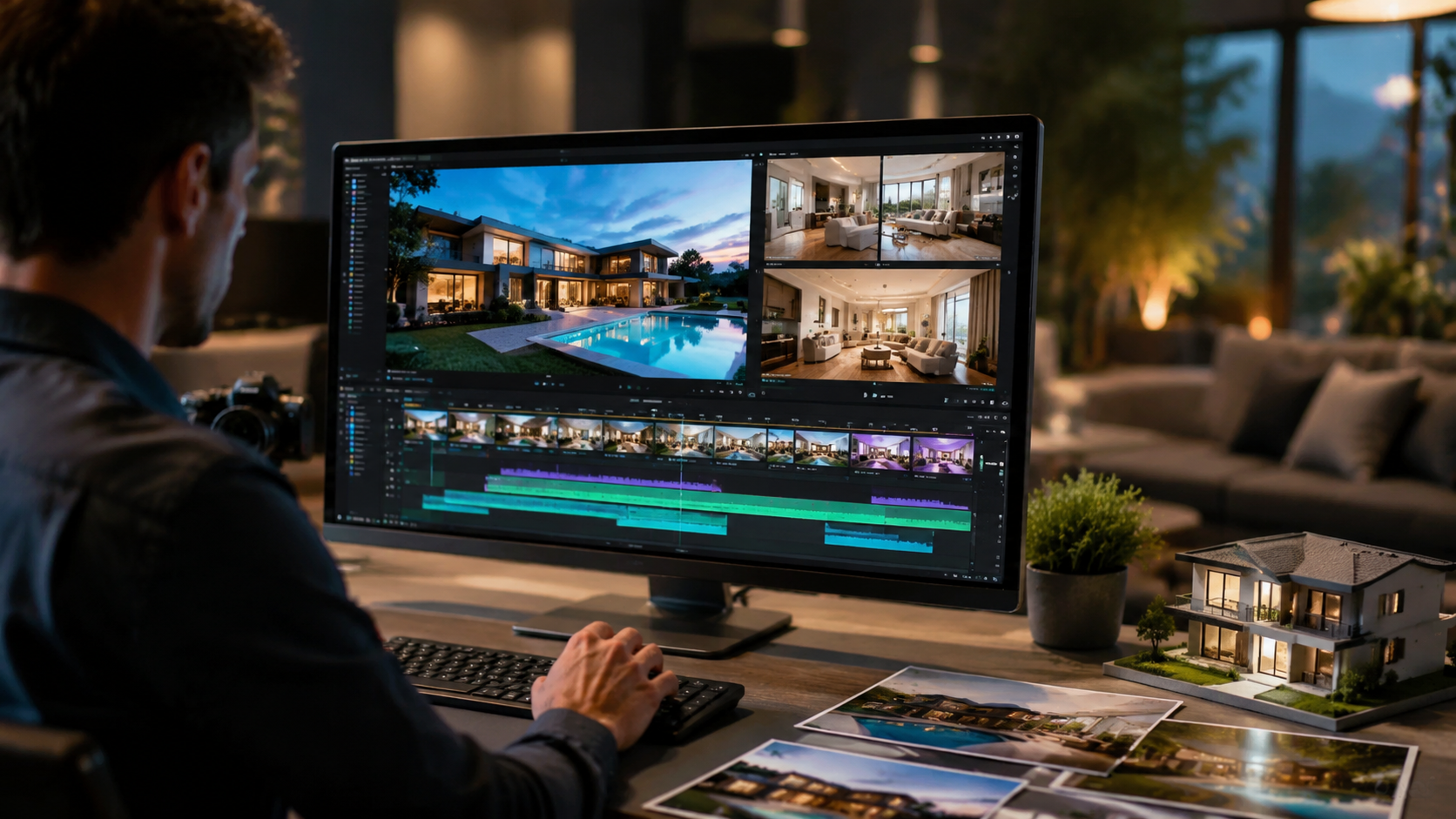
The latest AI video editing tools for real estate offer features specifically designed for property marketing. Virtual staging remains the most requested capability, with modern solutions able to furnish empty rooms in 8 different decor styles automatically. According to AZ Big Media, the best AI generators can now create photorealistic furniture and decor that adapts to a room's lighting and perspective.
Automated Property Highlight Reels
AI systems analyze hours of raw footage to identify and compile the best shots of key features like kitchens, master suites, and outdoor spaces. These smart reels adjust pacing based on property type, with luxury homes receiving slower, more cinematic transitions compared to faster-paced urban apartment tours.
Intelligent Voiceover Generation
2026's voice AI can narrate scripts with proper real estate terminology and adjust tone for different property types. The most advanced systems offer 47 voice options across 15 languages, with automatic synchronization to on-screen visuals. Digen AI Agent's latest update introduced character-consistent narration that maintains the same voice across an entire video series.
Smart Object Removal & Enhancement
AI now seamlessly removes temporary objects like cleaning supplies or personal items while enhancing permanent features. The technology can sharpen cabinet details, brighten dimly lit corners, and even simulate golden hour lighting regardless of actual shooting conditions. This reduces reshoots by 65% according to industry benchmarks.
Best AI Video Tools for Real Estate in 2026
With dozens of options available, these six platforms stand out for real estate professionals in 2026:
| Tool | Key Feature | Pricing |
|---|---|---|
| Digen AI Agent | Multi-step workflows for consistent branding | $49/month |
| Captions | Automated social media formatting | $29/month |
| Luma AI | 3D virtual tour generation | $79/month |
| Pika Pro | AI-powered b-roll creation | $59/month |
| Runway MLS | MLS-compliant template library | $39/month |
| Vidu Express | One-click full video generation | $19/month |
Digen AI Agent distinguishes itself with autonomous multi-step workflows that maintain character consistency across longer videos - crucial for building brand recognition. According to HousingWire's "16 Indispensable AI Tools" roundup, this capability reduces production time for 5-minute videos from 3 hours to just 22 minutes.
For agents needing hardware to complement these tools, The New York Times' Wirecutter recommends the Dell XPS 17 (2026) as the best laptop for video editing, with its AI-accelerated GPU cutting render times by 40%. This matches well with cloud-based AI tools that handle the heaviest processing remotely.
How to Implement AI Video Editing in Your Real Estate Business
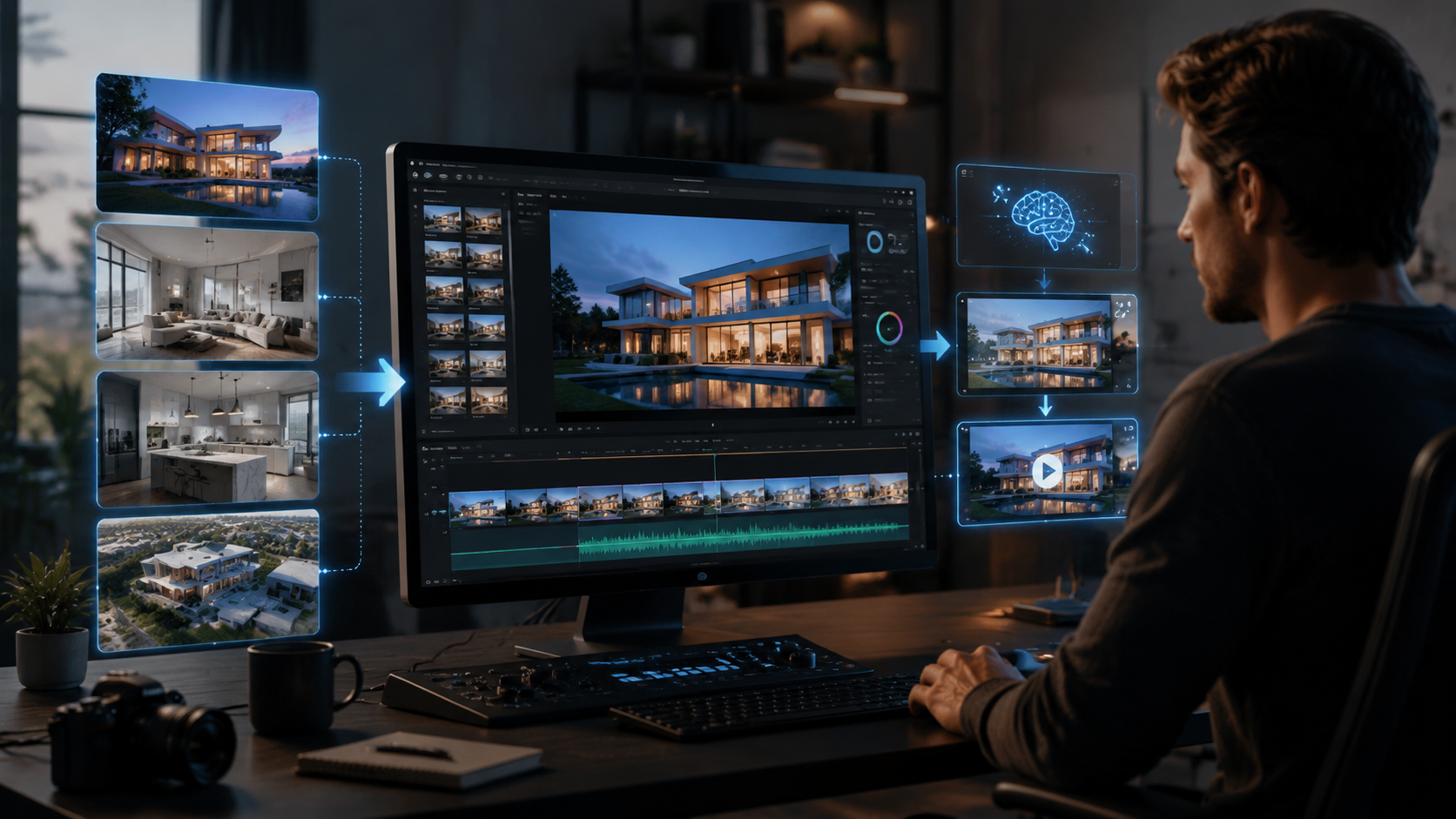
Follow this 5-step process to integrate AI video editing into your real estate marketing:
- Audit your current content: Analyze which property types and features perform best in your market
- Select 2-3 key tools: Choose complementary platforms (e.g., one for editing and one for virtual staging)
- Develop template libraries: Create branded templates for different property categories
- Train your team: Most AI tools require just 2-3 hours to master basic workflows
- Measure and optimize: Track engagement metrics and refine your approach monthly
The National Association of REALTORS® found that agents using this structured approach see 3x faster adoption rates compared to random tool experimentation. Start with one property type (like luxury condos or suburban homes) to refine your process before expanding.
Digen AI's research shows that consistent branding across videos increases lead conversion by 28%. Use your AI tools to maintain color schemes, logo placement, and voice tones that align with your overall marketing materials. The most successful agents create "brand bibles" that document these standards for their AI workflows.
The Future of AI Video in Real Estate
By late 2026, experts predict 90% of property videos will involve some AI assistance. Emerging technologies like spatial computing and volumetric video will enable buyers to virtually "walk through" properties from anywhere. These innovations will particularly benefit the 63% of buyers who make decisions based solely on digital content.
AI is also evolving to handle more creative decisions. Future versions will automatically adjust video style based on target demographics - using brighter colors and faster cuts for younger urban buyers versus traditional framing for luxury properties. This personalization could increase engagement by another 40-60% according to preliminary studies.
The line between virtual and physical staging continues to blur, with AI now able to generate hyper-realistic decor that adapts to buyer preferences shown during viewing sessions. As these technologies mature, they'll reduce the $2,500 average staging cost per property while providing more flexible presentation options.
Overcoming Common AI Video Challenges
While powerful, AI video tools present unique challenges for real estate professionals. The most common issue is maintaining human connection - 42% of buyers still prefer videos with personal agent introductions according to 2026 surveys. The solution lies in hybrid approaches that combine AI efficiency with strategic human elements.
Another challenge is platform fragmentation, with different social networks requiring distinct video formats. Leading AI tools now automatically reformat content for Instagram Reels, YouTube Shorts, and traditional listings. This single most-requested feature saves agents 5-7 hours per week in manual adjustments.
Finally, there's the learning curve - though modern interfaces have reduced this significantly. Most agents report feeling comfortable with basic AI video editing after just 3-5 projects. The key is starting with simple templates and gradually exploring advanced features as confidence grows.
Frequently Asked Questions
How much time does AI video editing save for real estate agents?
Agents report 70-80% time savings, reducing a typical 4-hour editing process to under 50 minutes. Complex projects like virtual tours see even greater efficiency gains of up to 90%.
Can AI video tools replace professional videographers?
While AI handles 85% of routine editing, top agents still hire professionals for luxury listings. The ideal approach combines professional footage with AI editing for maximum impact.
What's the average cost of AI video tools for real estate?
Most quality tools range from $19-$79/month. Enterprise solutions with team features can reach $199/month but typically pay for themselves through time savings and increased sales.
How do I ensure my AI videos don't look generic?
Use custom branding presets, personalized voiceovers, and unique template designs. Tools like Digen AI Agent maintain consistent styling across all videos to build recognizable branding.
What computer specs do I need for AI video editing?
While cloud-based tools reduce local hardware needs, The New York Times recommends at least 16GB RAM and a dedicated GPU for smooth performance when working with 4K footage.
Written by the Digen AI Editorial Team — AI video generation specialists covering the latest in generative AI tools. Learn more about Digen AI.



Comments ()