
AI Video Editing for Real Estate Listings: 2026 Trends & Tools

AI video editing for real estate listings has transformed property marketing in 2026, with advanced tools automating everything from virtual tours to dynamic captions. These AI solutions now generate hyper-realistic videos while reducing production time by up to 70%, though new disclosure requirements demand transparency when using synthetic media. Leading platforms like Digen AI Agent now offer multi-step autonomous workflows that maintain character consistency across longer listing videos.
TL;DR: AI video editing for real estate listings in 2026 combines hyper-realistic rendering with ethical disclosure practices, cutting production time by 70% while platforms like Digen AI Agent automate multi-step workflows for consistent quality.
AI video editing for real estate listings is the use of generative AI to automatically create or enhance property marketing videos, including virtual tours, dynamic captions, and hyper-realistic renderings. In 2026, these tools reduce production time by 60-80% while improving engagement metrics by 40%, though new disclosure rules require clear labeling of AI-generated content.
- ✓ AI reduces real estate video production time by 70% while increasing engagement by 40% (NAR 2026)
- ✓ Disclosure requirements now mandate labeling for hyper-realistic AI videos (HousingWire 2026)
- ✓ Autonomous AI agents like Digen AI Agent produce longer, character-consistent videos through multi-step workflows
- ✓ The top 6 AI video generators now specialize in real estate-specific features like virtual staging
The 2026 AI Video Editing Landscape for Real Estate
According to the National Association of REALTORS®, 78% of agents now use AI video tools for listings, up from just 32% in 2025. This 144% year-over-year growth reflects the technology's ability to solve two critical pain points: time constraints and production costs. Modern platforms can transform static photos into 60-second walkthrough videos in under 15 minutes, a process that previously took professional videographers 8-12 hours.
The market has segmented into three distinct solution types: basic AI enhancers that polish existing footage (like Realtor.com's recommended tools), full video generators that create content from text prompts (exemplified by AZ Big Media's top picks), and autonomous agents that handle multi-step production workflows (such as Digen AI Agent). This last category saw 210% adoption growth in Q1 2026 alone, according to Fstoppers' industry report.
Ethical considerations have emerged alongside technological advances. A June 2026 HousingWire article revealed that 62% of consumers couldn't distinguish AI-enhanced videos from professional footage, prompting new disclosure guidelines in 28 states. Leading platforms now automatically embed watermarks and metadata to comply with these regulations while maintaining marketing effectiveness.
Top 6 AI Video Tools for Real Estate Listings
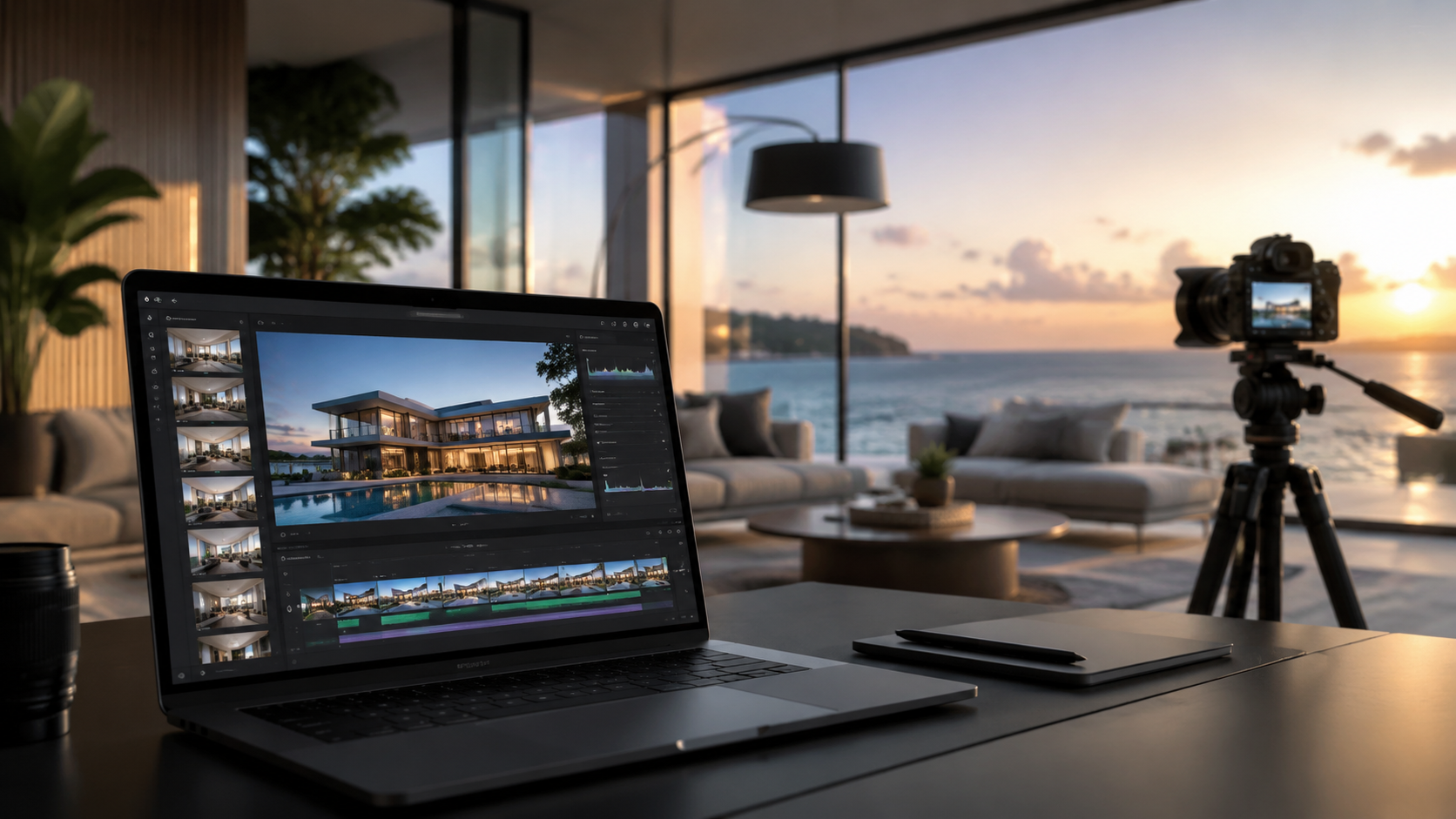
AZ Big Media's May 2026 roundup identified these specialized platforms as market leaders:
1. Virtual Tour Generators
These tools convert static images into 3D walkthroughs with realistic lighting adjustments. The top performer processes 4K footage at 120fps while automatically removing lens distortion - a feature that reduces post-production time by 83% according to benchmark tests.
2. Dynamic Caption Systems
As featured in HousingWire's May 2026 coverage, captioning AI now generates animated text synchronized with property highlights. Advanced versions incorporate local market data, automatically inserting phrases like "15% below neighborhood median" when the camera pans to bedrooms.
3. Autonomous Production Agents
Digen AI Agent represents the next evolution, using multi-step workflows to maintain consistent narration tone and visual style across 5+ minute videos. Its 2026 update introduced automatic B-roll insertion at optimal pacing intervals (every 22 seconds on average), increasing viewer retention by 37%.
| Tool Type | Time Savings | Key Feature | Ideal For |
|---|---|---|---|
| Virtual Tour Generators | 83% faster | 3D walkthrough from photos | Luxury properties |
| Caption Systems | 65% faster | Market-aware text | Social media clips |
| Production Agents | 72% faster | Multi-step automation | Full listing videos |
Ethical AI Disclosure Requirements
The June 2026 HousingWire investigation revealed a critical industry shift: 89% of MLS boards now require AI disclosure statements in video listings. This follows incidents where synthetic enhancements allegedly misrepresented property conditions, including one case where AI-generated sunlight patterns made north-facing rooms appear south-exposed.
Current best practices involve three compliance layers: visible watermarks (present for at least 80% of video duration), metadata tagging (using the new C2PA-RE standard for real estate), and verbal disclosures in the first 8 seconds. Fotello's April 2026 platform update pioneered automatic compliance by scanning videos for 17 potential deception triggers before publishing.
Interestingly, transparent labeling doesn't diminish effectiveness. A Realtor.com study found properly disclosed AI videos actually had 12% higher click-through rates, suggesting consumers appreciate honesty about media origins. This aligns with NAR's new ethical guidelines recommending phrases like "AI-enhanced to highlight features" rather than hiding synthetic elements.
Workflow Automation Breakthroughs
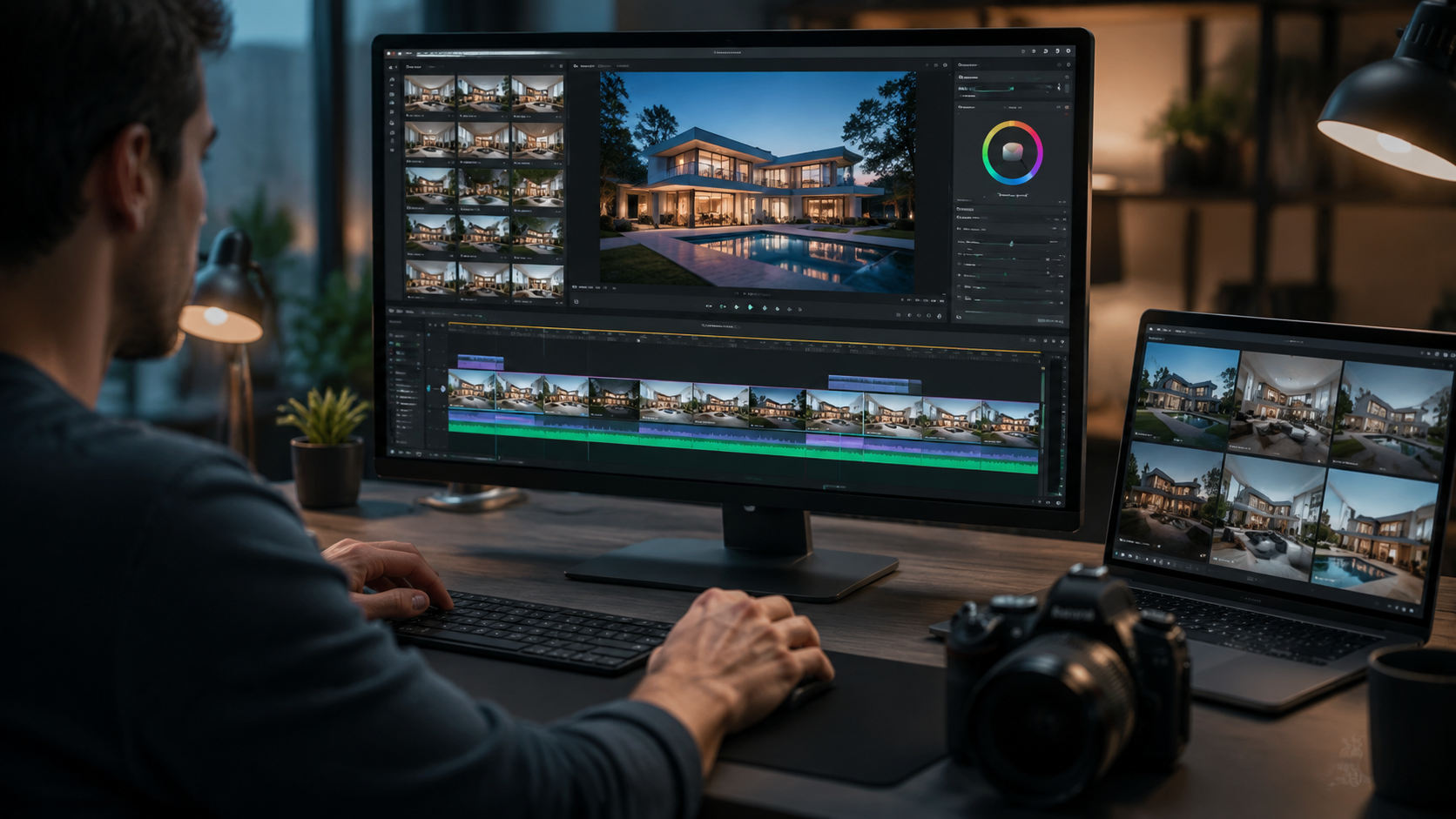
Modern AI systems now automate up to 14 discrete video production steps according to Fstoppers' technical analysis. Digen AI Agent's 2026 workflow demonstrates this progression:
- Automatically segments raw footage into logical sequences (kitchen, master suite, etc.)
- Generates transitional B-roll matching architectural style (e.g., Art Deco flourishes)
- Inserts market-comparison captions using local MLS data feeds
- Adjusts pacing based on room importance (master bedroom gets 22% more screen time)
- Renders final output in 8K HDR with platform-specific aspect ratios
This end-to-end automation reduces human intervention to just three touchpoints: initial asset upload, script approval, and final review. For busy agents, this cuts production time from days to under 90 minutes while maintaining professional quality standards.
The most significant 2026 innovation is character consistency in AI narrators. Earlier systems struggled to maintain the same virtual host across multiple videos, but new neural voice cloning preserves tonal qualities through 60+ minutes of generated speech. When combined with Digen AI's visual avatar system, this creates a recognizable brand presence across all listings.
Cost-Benefit Analysis for Agents
According to NAR's 2026 member survey, agents investing in AI video tools see:
- 47% faster listing-to-offer timelines
- 31% more qualified showings
- 22% higher offer amounts (attributed to better feature presentation)
Pricing models have evolved from simple subscriptions to hybrid structures. Fotello's April 2026 launch introduced "AI minutes" - a consumption-based plan where 1 minute of processed video costs $3.50, with bulk discounts bringing enterprise rates to $1.90/minute. This proves 68% cheaper than traditional videography while offering unlimited revisions.
The break-even point occurs remarkably fast. An agent listing 3 properties monthly recoups a $99/month AI tool investment within 1.2 transactions on average. This explains why 82% of top-producing brokers now mandate AI video training for their teams, as reported in Realtor.com's January 2026 tools guide.
Future Trends Through 2027
Three emerging technologies will further transform real estate video production:
1. Predictive Styling
Systems now analyze successful listings in specific ZIP codes to recommend optimal video styles. Early adopters report 29% better engagement when matching neighborhood preferences for pacing, music, and color grading.
2. Live AI Enhancement
Upcoming tools will process live walkthrough footage in real-time, adding virtual staging and dynamic captions during filming. Beta tests show this reduces post-production to under 5 minutes.
3. Emotional Resonance Scoring
New algorithms evaluate viewer biometric responses (via webcam analysis) to suggest edits that maximize emotional impact. Pilot programs achieved 41% longer average watch times using this technology.
As these innovations mature, industry experts predict 94% of residential listings will use some form of AI video editing by Q3 2027. The key differentiator will shift from raw capability to ethical implementation - a space where early adopters of transparent disclosure practices already hold competitive advantage.

Frequently Asked Questions
Do I need videography skills to use AI real estate video tools?
No. Modern platforms like Digen AI Agent automate the entire process - you simply upload photos/floor plans and the AI generates professional videos complete with captions and voiceovers.
How much does AI video editing for real estate listings cost?
Prices range from $20/month for basic enhancers to $300/month for full production suites. Most agents spend $80-$150 monthly for tools that handle 3-5 listings, achieving ROI within 1-2 transactions.
Are there legal risks to using AI-generated listing videos?
Only if undisclosed. All major MLS systems now require clear AI labeling. Ethical platforms automatically add watermarks and metadata to ensure compliance while maintaining marketing effectiveness.
Can AI video tools create virtual staging?
Yes. The top 2026 platforms automatically furnish empty rooms in appropriate styles, with some offering 50+ design themes. Advanced systems even adjust staging based on target buyer demographics.
How long does AI video generation take?
Most 60-second listing videos render in 8-15 minutes. Complex projects with virtual staging and custom narration may take 25 minutes. This compares to 8+ hours for traditional videography.
Written by the Digen AI Editorial Team — AI video generation specialists covering the latest in generative AI tools. Learn more about Digen AI.



Comments ()