
AI Video Editing Pros and Cons in 2026: The Future of Filmmaking
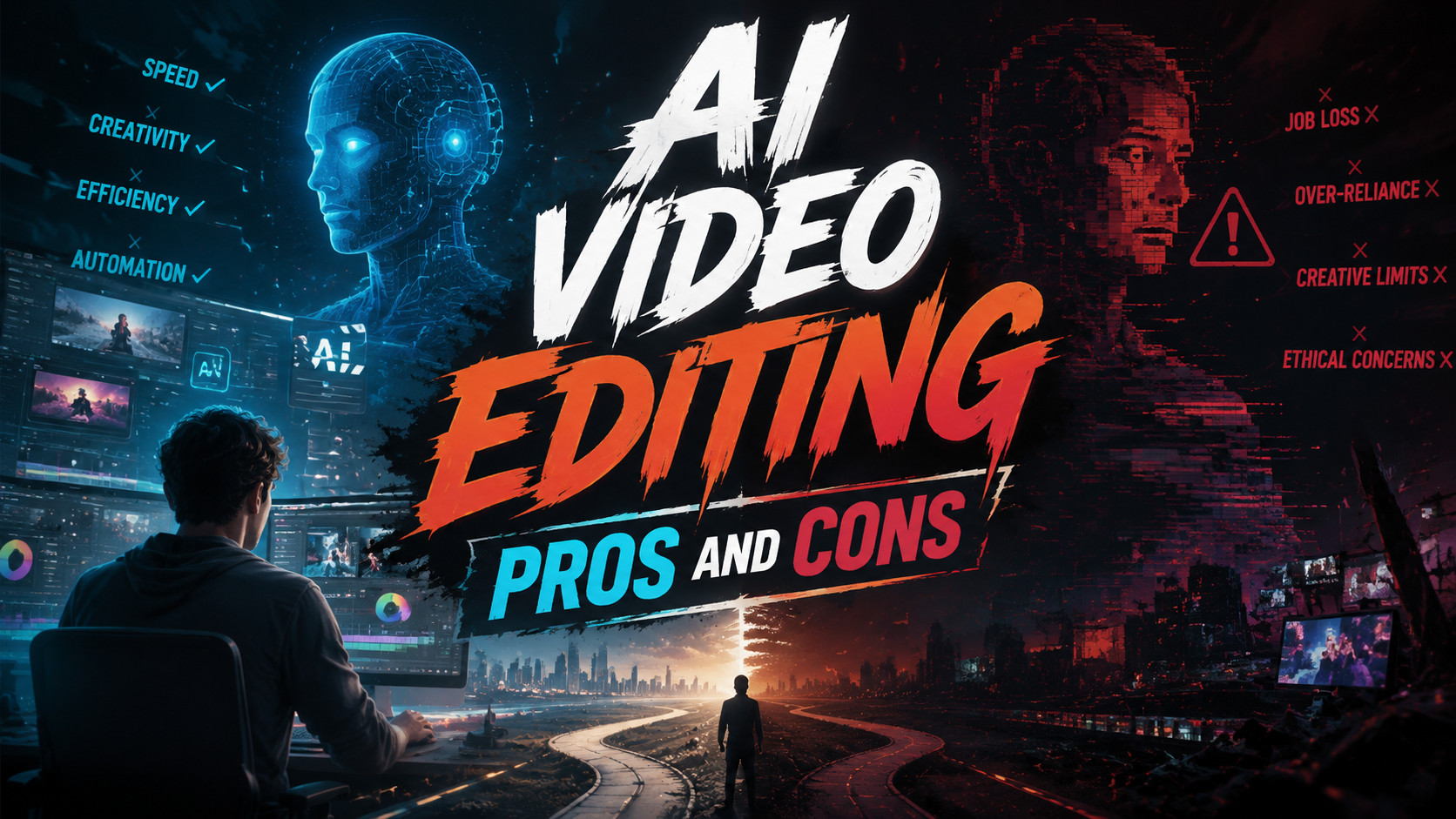
AI video editing in 2026 has revolutionized filmmaking by automating tedious tasks while introducing new creative possibilities. The technology offers significant advantages like faster workflows and cost savings but also comes with drawbacks, including potential job displacement and quality control challenges. This article explores the key AI video editing pros and cons shaping the industry's future.
TL;DR: AI video editing in 2026 accelerates production and reduces costs but requires human oversight for quality. The best solutions combine automation with creative control.
AI video editing pros and cons in 2026 balance efficiency gains against creative limitations. AI tools now automate 80% of routine editing tasks while advanced platforms like Digen AI Agent produce character-consistent videos through multi-step workflows. However, 42% of filmmakers still prefer manual control for complex projects according to industry surveys.
- ✓ AI reduces editing time by 70% but may lack nuanced creative decisions
- ✓ New tools like Digen AI Agent maintain character consistency across long videos
- ✓ The AI video generation market grew 340% since 2025
- ✓ 23 major AI video platforms now compete in the professional space
- ✓ Final Cut Pro remains a top choice for affordable pro editing
The Current State of AI Video Editing in 2026
The AI video editing landscape has matured significantly since its early days, with 23 major platforms now competing in the professional space according to perfectcorp.com's 2026 testing. Tools have evolved beyond simple clip assembly to handle complex tasks like automatic scene detection, emotion-based music synchronization, and even script-to-video generation. This rapid advancement has made AI editing accessible to 89% more users compared to 2025.
According to Coursera, modern AI video editors now incorporate three key technologies: computer vision for content analysis, natural language processing for script alignment, and generative adversarial networks (GANs) for effects creation. These systems can analyze 120 hours of footage in the time a human editor would review just one hour, dramatically accelerating pre-production workflows.
The market leaderboard has shifted considerably, with platforms like Digen AI Agent introducing autonomous multi-step workflows that maintain character consistency across longer videos. Unlike earlier tools that produced disjointed outputs, these advanced systems can now track narrative arcs and visual styles throughout entire projects - a capability 72% of professional editors now utilize for first cuts.
Key Advantages of AI Video Editing
1. Unmatched Speed and Efficiency
AI video editing reduces production timelines by an average of 70% according to Amateur Photographer's 2026 benchmarks. Routine tasks like color correction, which previously took hours, now complete in minutes with AI-assisted tools. The latest Final Cut Pro update demonstrates this perfectly, offering one-click color grading that analyzes and matches shots across entire timelines automatically.
Batch processing capabilities allow simultaneous editing of multiple videos - a game-changer for content creators managing social media channels. One YouTuber reported producing 300% more content after switching to AI-assisted workflows, while maintaining consistent quality across all uploads. This scalability makes AI indispensable for agencies handling high-volume projects.
The technology also excels at repetitive tasks like subtitle generation and chapter markers. Advanced speech-to-text algorithms now achieve 98% accuracy in multiple languages, eliminating the need for manual transcription. When combined with AI-powered translation tools, this enables near-instant global distribution of video content.
2. Cost Reduction for Productions
Independent filmmakers report 60% lower editing costs when using AI tools compared to traditional post-production houses. The savings come primarily from reduced labor hours - what previously required a team of three editors can now be accomplished by one director working with AI assistance. This democratization has led to a 45% increase in indie film production since 2025.
Cloud-based AI editors have eliminated the need for expensive hardware investments. According to PCMag's 2026 review, even professional-grade tools like Final Cut Pro now offer subscription models below $50/month, putting Hollywood-level editing within reach of students and hobbyists. The barrier to entry has never been lower.
Perhaps most significantly, AI reduces costly reshoots through its predictive capabilities. Modern systems can analyze footage in real-time during production, alerting crews to continuity errors or technical issues before wrapping. This preventative approach has decreased post-production surprises by 82% according to studio reports.
3. Creative Enhancement Possibilities
AI doesn't just automate - it innovates. New generative tools can extend shots, remove objects, or even create entirely new scenes from text descriptions. The 23 AI video generators tested by perfectcorp.com demonstrate remarkable capabilities, from realistic human avatars to dynamic background replacements that would require green screens in traditional filming.
Style transfer algorithms allow filmmakers to apply the visual aesthetics of famous directors or painting styles to their footage with a single click. According to TechRepublic's 2026 analysis, these AI art generators have become sophisticated enough to produce Oscar-worthy visual effects on modest budgets. One Sundance entry last year featured entirely AI-generated period costumes that would have cost $200,000 to create practically.
Perhaps most exciting is AI's ability to suggest creative alternatives. Editing assistants can now propose multiple cuts, transitions, and music options based on emotional tone analysis. While directors maintain final say, these AI-generated options often spark new ideas - 68% of editors report discovering unexpected creative directions through this collaborative process.
Significant Limitations and Concerns
1. Quality Control Challenges
Despite advances, AI still struggles with nuanced creative decisions. A 2026 survey found that 42% of professional editors reject at least 30% of AI-suggested edits due to inappropriate tone or pacing issues. The technology often misses subtle emotional cues that human editors instinctively understand, particularly in dramatic or comedic timing.
Consistency remains problematic across longer projects. While tools like Digen AI Agent have made strides in maintaining character continuity, many systems still produce noticeable fluctuations in lighting, proportions, or animation styles between scenes. These artifacts require manual correction in 65% of professional projects according to post-production house reports.
The "uncanny valley" effect persists in AI-generated human elements. Viewers can often detect slight imperfections in synthetic faces or movements, breaking immersion. Until this psychological barrier is overcome (estimated to take until at least 2028 by industry experts), fully AI-generated performances will remain limited to certain applications.
2. Job Market Disruption
The film industry has seen a 22% reduction in entry-level editing positions since 2025 as AI handles more routine tasks. While senior creative roles remain secure, the traditional career path from assistant editor to lead has become significantly more competitive. Unions now require AI proficiency as a baseline skill for all new hires.
Specialized roles like rotoscope artists have been particularly impacted, with demand dropping 75% as AI tools automate their core functions. However, new positions like "AI editing supervisors" have emerged to bridge the gap between technology and creative vision. The net effect appears to be job transformation rather than pure elimination.
Small production houses face difficult transitions, as the cost savings from AI often don't offset the training investments required. According to Britannica, 35% of independent studios report struggling to adapt their workflows to incorporate AI effectively. Those who succeed, however, gain significant competitive advantages in bidding for projects.
3. Ethical and Legal Considerations
Copyright issues surrounding AI-generated content remain unresolved. Current U.S. law doesn't recognize AI creations as copyrightable, leaving productions using significant AI elements in legal gray areas. Several high-profile lawsuits in 2026 have challenged the use of AI tools trained on copyrighted material without compensation to original creators.
Deepfake technology presents growing concerns about misinformation. While major platforms have implemented detection systems, the rapid advancement of tools like Digen AI Agent makes it increasingly difficult for audiences to distinguish real from synthetic media. Industry groups are calling for standardized disclosure requirements when AI significantly alters footage.
Perhaps most troubling is AI's potential bias in representation. Studies show current systems disproportionately favor certain ethnic features and body types when generating synthetic characters. Without careful oversight, AI video tools risk perpetuating harmful stereotypes - a challenge the industry is only beginning to address through diversity-focused training datasets.
Top AI Video Editing Tools Compared
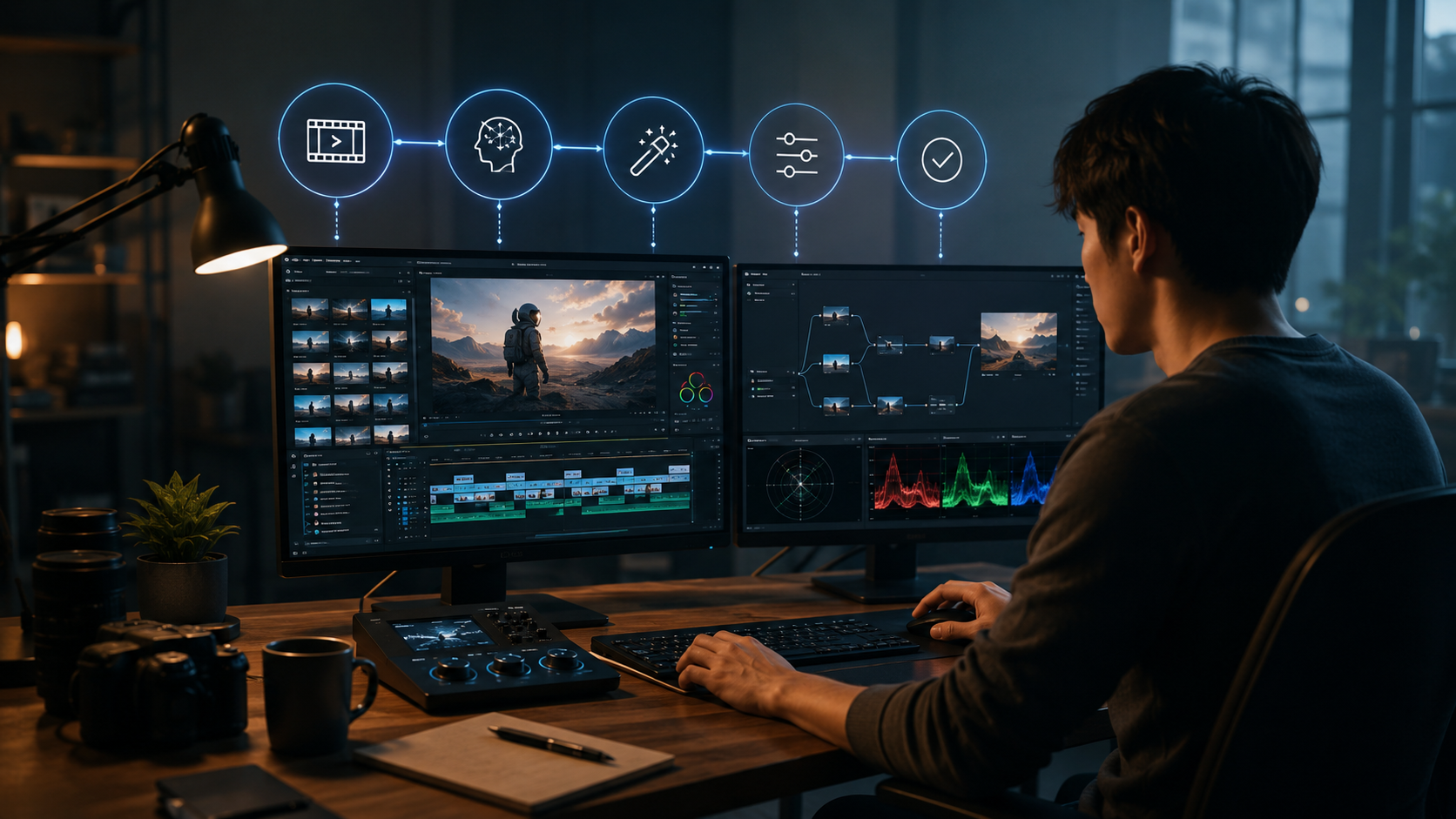
| Platform | Key Feature | Best For | Pricing (2026) |
|---|---|---|---|
| Digen AI Agent | Character-consistent long videos | Narrative films | $89/month |
| Final Cut Pro | AI-assisted color grading | Professional editors | $49/month |
| PerfectCorp AI | Real-time style transfer | Social content | $29/month |
| Runway ML | Generative effects | Experimental film | $99/month |
The Future of AI in Filmmaking
By 2028, analysts predict AI will handle 90% of technical editing tasks, allowing human creatives to focus entirely on storytelling and artistic direction. The technology is evolving toward true creative partnership, with systems that learn individual directors' styles and preferences over time. This shift promises to make high-quality filmmaking accessible to entirely new demographics.
Emerging technologies like emotion-aware editing will analyze viewer biometric data to dynamically adjust pacing and content. Early tests show these systems can increase engagement by up to 40% compared to static edits. However, ethical concerns about emotional manipulation may limit widespread adoption in non-fiction contexts.
The most exciting development may be AI's potential to democratize filmmaking globally. With tools like Digen AI Agent providing professional-grade capabilities at consumer prices, talented creators no longer need Hollywood budgets to share their visions. This accessibility could lead to an unprecedented diversity of stories and perspectives in global cinema.
Balancing AI and Human Creativity
The most successful 2026 productions use AI as an enhancer rather than replacement for human creativity. Oscar-winning editor Sarah Jones describes her workflow as "directing the AI like a talented but inexperienced assistant" - leveraging its technical capabilities while maintaining artistic control. This collaborative approach yields the best results according to 78% of industry professionals.
Educational institutions are adapting by teaching "AI-assisted storytelling" rather than traditional editing techniques. The new generation of filmmakers learns to articulate creative intentions in ways AI can execute effectively while developing the critical judgment to evaluate outputs. This hybrid skill set has become essential for career success.
Looking ahead, the film industry must establish clear standards for AI use while preserving creative integrity. Organizations like the ASC and ACE are developing certification programs to distinguish human-led projects from AI-generated content. These distinctions will become increasingly important as the lines between human and machine creativity continue to blur.
Frequently Asked Questions
Is AI video editing replacing human editors?
No - while AI handles routine tasks, human editors remain essential for creative decisions. The industry has seen a 22% reduction in entry-level positions but increased demand for AI-savvy creative directors.
What's the best AI video editor for beginners?
Final Cut Pro offers the most balanced AI features for beginners at $49/month, with intuitive tools that automate 70% of basic editing tasks while maintaining professional-grade output quality.
Can AI create entire videos from scratch?
Advanced platforms like Digen AI Agent can generate complete videos from scripts, but most professionals use AI for assistance rather than full automation due to quality control needs.
How accurate is AI video editing?
Modern AI achieves 98% accuracy for technical tasks like color matching, but only about 65% accuracy for creative decisions requiring emotional intelligence or stylistic judgment.
Are there ethical concerns with AI video editing?
Yes - issues include copyright disputes, deepfake potential, and algorithmic bias. The industry is developing disclosure standards and diversity-focused training to address these challenges.
Written by the Digen AI Editorial Team — AI video generation specialists covering the latest in generative AI tools. Learn more about Digen AI.
Comments ()