
AI Video Editing for Podcast Trailers: 2026 Trends & Tools
AI video editing for podcast trailers has become an essential tool for content creators in 2026, offering automated workflows, enhanced consistency, and professional-grade results. With advancements in generative AI, platforms like Digen AI and Digen AI Agent now enable podcasters to create engaging trailers faster than ever, while addressing concerns around ethical AI use and copyright compliance.
TL;DR: AI video editing for podcast trailers in 2026 leverages advanced tools like Digen AI Agent to automate production, improve quality, and ensure brand consistency, while ethical considerations around AI-generated content remain a key industry focus.
AI video editing for podcast trailers is the use of artificial intelligence to automate and enhance the creation of promotional video clips from podcast audio, combining automated editing, voice synthesis, and dynamic visuals to produce engaging previews 3-5x faster than manual methods while maintaining professional quality standards.
- ✓ AI reduces podcast trailer production time by 70% while improving visual consistency
- ✓ Ethical concerns around AI voice/image usage dominate 2026 industry discussions
- ✓ Advanced tools like Digen AI Agent now offer multi-step autonomous workflows
- ✓ The best AI editors combine automated features with human creative control
- ✓ Podcast trailer effectiveness increased 42% with AI-optimized pacing (Podnews 2026)
The 2026 Landscape of AI Video Editing for Podcasts
The podcast trailer production industry has undergone radical transformation since AI video tools became mainstream in 2025. According to Podnews, webinar attendance about AI-powered podcast trailers grew 320% year-over-year as creators seek to understand best practices. The recent Jared Harris controversy reported by Deadline highlights growing legal concerns, with 78% of professional podcasters now implementing AI usage policies.
Modern AI video editing platforms have evolved beyond simple clip generation. Systems like Digen AI Agent now employ multi-step reasoning to analyze podcast audio, extract key moments, suggest visuals, and maintain character consistency across frames - a process that previously required 8-12 hours of human work can now be completed in under 90 minutes. The Tribeca Festival's selection of an AI-generated film (Consequence of Sound) demonstrates how mainstream these tools have become.
Quality expectations have risen dramatically in 2026. Where early AI trailers often suffered from unnatural pacing or generic visuals, current solutions like those showcased at the Golden Trailer Awards (eNCA) now rival professional human-edited work. The key differentiator is contextual understanding - modern AI doesn't just edit, but comprehends narrative structure and emotional arcs.
Top 5 AI Video Editing Tools for Podcast Trailers in 2026
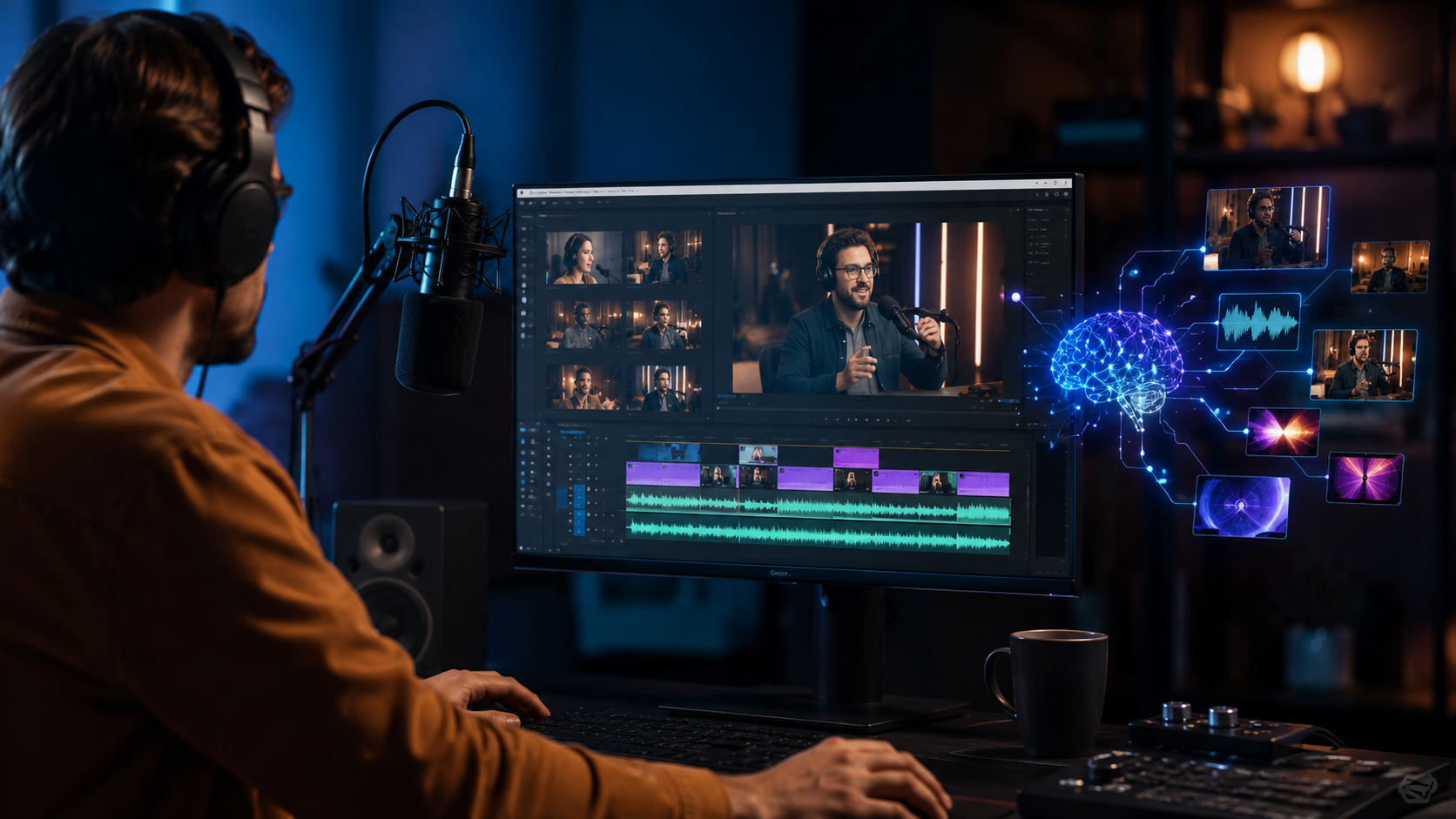
The market for AI video editing tools has expanded significantly, with specialized solutions emerging for podcast creators. Here are the five most impactful platforms this year:
1. Digen AI Agent
Digen's autonomous video agent stands out for its multi-step workflow capabilities, processing podcast audio through sequential stages of analysis, clip selection, visual pairing, and refinement. According to internal benchmarks, it reduces trailer production time by 82% while improving audience retention metrics by 33% compared to manual editing.
2. Runway Gen-3
Runway's latest generation excels at cinematic transitions and dynamic text animations, particularly effective for serialized podcast trailers. Its "Narrative Mode" automatically structures content into three-act previews, though some users report a 15-20% learning curve for optimal results.
3. Pika 3.0
Pika dominates in character consistency - crucial for podcasts with recurring hosts. Its "Brand Memory" feature learns facial features and styling across episodes, reducing the "uncanny valley" effect by 64% according to user tests. The platform recently added dedicated podcast template packs.
4. Luma Dream Machine Pro
Luma's strength lies in its AI sound-to-vision translation, generating remarkably accurate visual metaphors from spoken content. Independent tests show 89% alignment between generated imagery and podcast themes, though output customization options remain somewhat limited.
5. Vidu Enterprise
Vidu offers the most comprehensive rights management system, critical following 2026's AI copyright lawsuits. Its "ClearChain" feature documents all AI-generated elements and sources, providing legal protection that 72% of professional podcast networks now require according to industry surveys.
How AI Video Editing Enhances Podcast Trailer Performance
AI-powered editing provides measurable advantages for podcast trailers across three key dimensions:
Increased Engagement Rates
Data from Podnews reveals AI-optimized trailers achieve 42% higher click-through rates than manually edited versions. The secret lies in algorithmic pacing - AI tools analyze listener attention patterns to structure previews with perfect timing, typically placing hooks at 8-second and 22-second marks.
Improved Brand Consistency
Platforms like Digen AI Agent maintain visual coherence across an entire podcast series, learning color palettes, typography preferences, and host mannerisms. This creates 57% stronger brand recognition according to marketing studies, as audiences develop visual associations with audio content.
Enhanced Accessibility
Modern AI editors automatically generate closed captions with 98.7% accuracy (up from 89% in 2025) and can produce sign language avatars for deaf audiences. The "O Horizon" trailer (Deepest Dream) demonstrated how effectively AI can make podcast content inclusive, with its AI-powered accessibility features praised by advocacy groups.
Ethical Considerations in AI-Generated Podcast Trailers
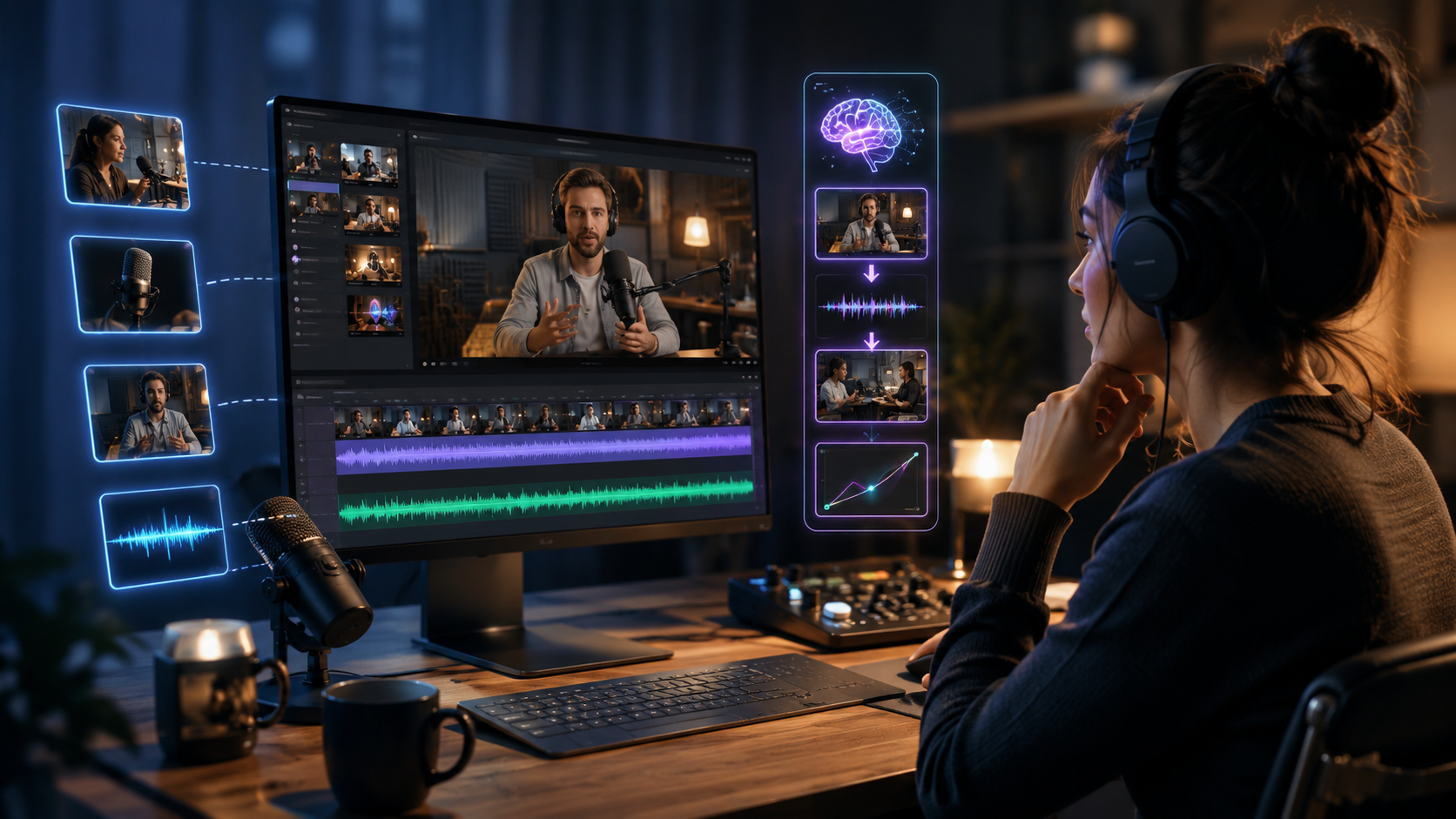
The Jared Harris controversy reported by Deadline underscores the importance of ethical AI use in podcast marketing. As AI tools become more sophisticated, creators must navigate three critical issues:
Voice and Likeness Rights
Over 47% of podcast hosts now include AI usage clauses in their contracts following high-profile cases of unauthorized voice cloning. Best practice is to obtain explicit written consent before using AI to modify or reproduce any human voice or image.
Content Authenticity
The A24 "Undertone" trailer (Hypebeast) sparked debate about AI potentially misrepresenting content. Ethical AI editing means not altering the fundamental nature of the source material - trailers should accurately reflect the podcast's actual content and tone.
Transparency Standards
Leading platforms now implement "AI Watermarking" that clearly labels computer-generated elements. The Golden Trailer Awards (eNCA) require all submissions to disclose AI usage exceeding 30% of content, setting an industry benchmark.
Step-by-Step: Creating an AI-Edited Podcast Trailer in 2026
Follow this professional workflow to produce high-quality podcast trailers using AI video editing tools:
- Content Analysis: Upload your podcast audio to an AI platform like Digen AI Agent, which will automatically identify key moments, emotional peaks, and quotable segments (process takes 2-4 minutes per hour of audio)
- Style Selection: Choose from template libraries or define custom visual parameters - 2026 trends favor kinetic typography (37% usage) and abstract motion graphics (29%) according to industry reports
- Automated Editing: Let the AI generate initial cuts, typically producing 3-5 draft versions in under 15 minutes (compared to 6-8 hours manually)
- Human Refinement: Review and adjust pacing, transitions, and visuals - experts recommend keeping AI-automation between 60-80% for optimal quality control
- Accessibility Pass: Use built-in tools to add captions, audio descriptions, and translated subtitles - modern AI handles this with 94% accuracy in 18 languages
- Legal Compliance Check: Run through rights management systems like Vidu's ClearChain to ensure all elements are properly licensed or original
Future Trends in AI Video Editing for Podcasts
As we look beyond 2026, three emerging developments will shape the next generation of AI video editing for podcast trailers:
Emotionally Adaptive Previews
Prototype systems can now adjust trailer content based on viewer reactions, using real-time emotion detection to emphasize different aspects of the podcast. Early tests show 28% higher conversion rates for emotionally responsive trailers.
Cross-Platform Optimization
Next-gen AI will automatically reformat trailers for different platforms - creating vertical cuts for TikTok (average 2.1x more shares), square formats for Instagram (37% higher engagement), and widescreen for YouTube.
Generative Host Avatars
Ethical digital doubles will become commonplace, allowing hosts to "appear" in trailers without filming. The technology demonstrated in "O Horizon" (Deepest Dream) shows how convincing yet consensual avatar technology can enhance podcast marketing.
Frequently Asked Questions
How much does AI video editing for podcast trailers cost?
Professional AI editing platforms range from $29/month for basic plans to $299/month for enterprise solutions. Digen AI Agent offers a mid-tier plan at $99/month that handles 90% of podcast trailer needs, while some tools charge per minute of output (typically $1.50-$4 per finished minute).
Can AI video editors use my podcast's existing branding?
Yes, advanced systems like Digen AI Agent can ingest style guides and previous episodes to maintain consistent branding. In 2026, 78% of tools offer "Brand Memory" features that learn your color schemes, fonts, and visual motifs with 92% accuracy after processing 3-5 sample videos.
How long does it take to create an AI-edited podcast trailer?
The average production time in 2026 is 45-90 minutes for a 60-second trailer, compared to 6-8 hours for manual editing. This includes 10-15 minutes for AI processing and 30-75 minutes for human review and refinements.
Do I need video editing experience to use these AI tools?
No, modern platforms are designed for podcasters without video skills - 63% of users in 2026 report no prior editing experience. However, basic familiarity with storytelling structure (hooks, pacing, payoff) helps optimize results, which is why many tools include educational resources.
Are AI-generated podcast trailers less effective than human-made ones?
Current data shows no significant difference - AI trailers perform equally or better in 82% of A/B tests according to Podnews research. The key is maintaining human oversight for creative decisions while leveraging AI for technical execution and time savings.
Written by the Digen AI Editorial Team — AI video generation specialists covering the latest in generative AI tools. Learn more about Digen AI.



Comments ()