
AI Video Editing Market Forecast: 2026 Growth Trends
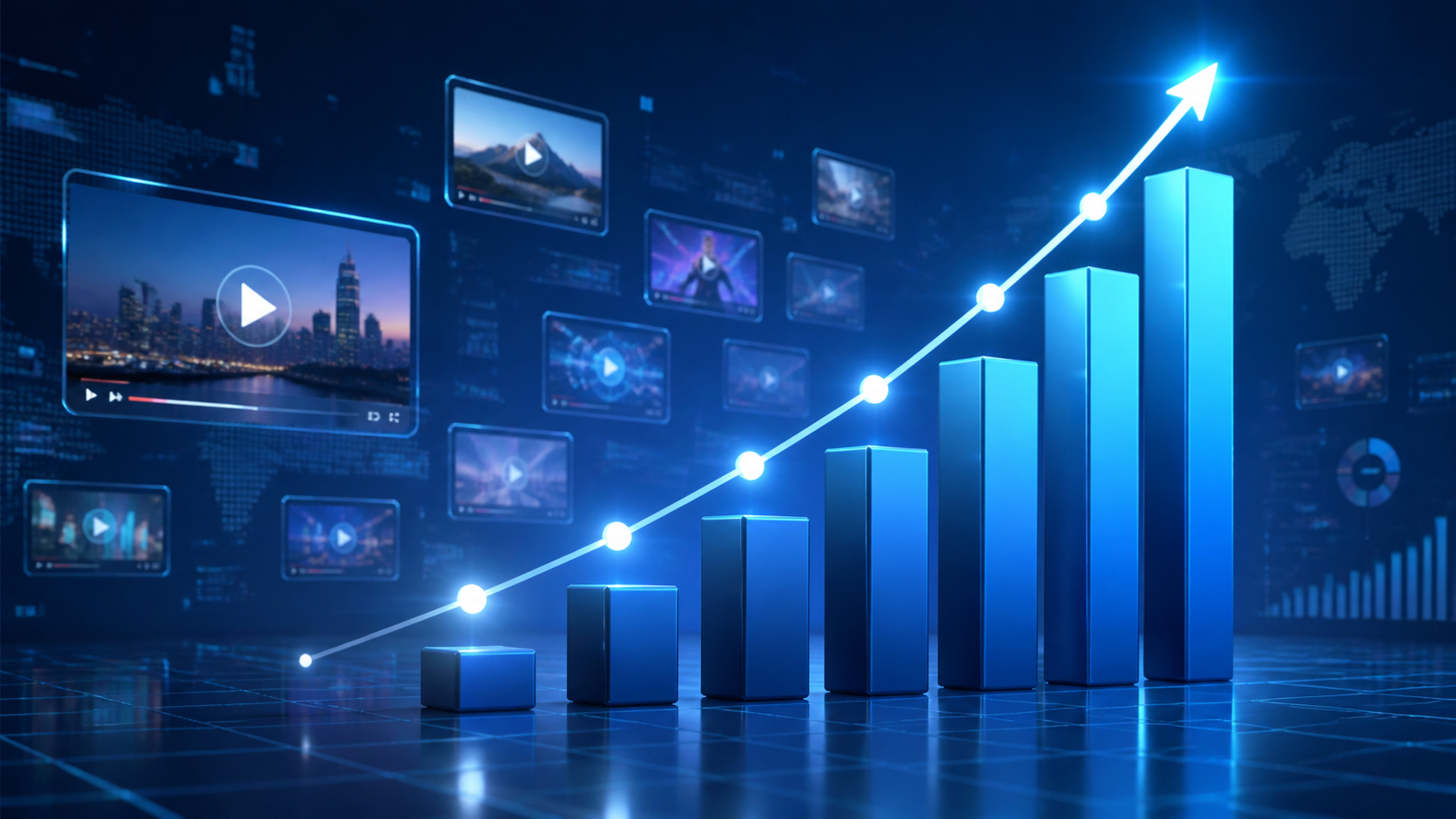
The ai video editing market forecast for 2026 indicates a period of unprecedented expansion, driven by a 36.2% compound annual growth rate in the enterprise sector and a shift toward fully automated generative workflows. As we move through 2026, the integration of AI into film, television, and social media production is no longer a luxury but a fundamental requirement for competitive content creation. Industry analysts project that this momentum will carry the market toward multi-billion dollar valuations by the early 2030s, fundamentally altering the economics of video production.
The AI video editing market is a rapidly evolving sector characterized by the integration of machine learning and generative models to automate post-production tasks. It is currently defined by a 36.2% growth rate in enterprise adoption, with the generative AI segment in movies alone expected to reach over $3.8 billion by 2033, driven by demand for efficiency and personalized content.
- ✓ Enterprise adoption is the primary growth engine, expanding at a rate of 36.2% annually as of 2026.
- ✓ Generative AI in the film and movie industry is on track to hit a valuation of $3,857.3 million by 2033.
- ✓ The United States remains a dominant hub for video production innovation and market share.
- ✓ Real-time collaboration and cloud-based AI editing apps are the leading technological trends for the 2026-2035 forecast period.
Current State of the AI Video Editing Market Forecast
As of early 2026, the landscape of digital media has been transformed by the maturation of generative video technologies. According to recent insights from Market.us Scoop, the AI video market represents a high-growth enterprise opportunity, expanding by 36.2%. This growth is fueled by the need for corporations to produce high-volume, high-quality video content for internal training, marketing, and customer engagement without the traditional overhead of massive production crews.
The ai video editing market forecast suggests that the transition from manual "timeline-based" editing to "prompt-based" generative editing is nearly complete for short-form content. High-end professional suites have integrated these features to assist editors rather than replace them, focusing on removing tedious tasks like rotoscoping, color grading, and audio syncing. This shift allows creative professionals to focus on storytelling and emotional impact rather than technical minutiae.
Market Valuation and Long-term Projections
Recent data published by vocal.media highlights that the Generative AI in Movies Market is set to hit USD 3,857.3 million by 2033. While that date is in the future, the 2026 trajectory shows that the groundwork is being laid today through massive investments in compute power and proprietary model training. The industry is seeing a convergence of traditional editing software and new-age generative platforms, creating a hybrid ecosystem that serves both Hollywood studios and independent creators.
The Evolution of Production Workflows in 2026
The way video is produced in 2026 has changed significantly compared to just a few years ago. McKinsey & Company reports that AI’s influence on film and TV production is deepening, particularly in the pre-production and post-production phases. By utilizing AI to analyze scripts and automatically generate rough cuts, studios are reducing turnaround times by up to 40%. This efficiency is a core component of the current ai video editing market forecast, as it directly impacts the bottom line of major media conglomerates.
For those looking to integrate these technologies, the process has become increasingly standardized. Below is the standard workflow for implementing AI-driven video editing in a professional environment:
- Asset Ingestion and Tagging: AI models automatically scan raw footage to identify objects, faces, and sentiments, creating searchable metadata.
- Automated Rough Cut Generation: Using natural language processing, editors can "ask" the software to create a 30-second highlight reel based on specific themes or dialogue.
- Generative B-Roll Insertion: Where gaps exist in the footage, generative AI creates photorealistic b-roll that matches the lighting and style of the original source.
- AI-Powered Audio Enhancement: Background noise is removed, and voice synthesis is used to fix minor dialogue errors without the need for ADR (Automated Dialogue Replacement).
- Multi-Platform Optimization: The final edit is automatically resized, captioned, and reformatted for various social media platforms using aspect-ratio-aware AI.
Regional Dominance: The United States Market
The United States Video Production Market Analysis Report from GlobeNewswire confirms that North America remains the leading region for AI video innovation. This is due to the high concentration of tech giants and major film studios in the region. The synergy between Silicon Valley's technical capabilities and Hollywood's creative demands has created a "perfect storm" for AI adoption, ensuring that the U.S. remains at the forefront of the global ai video editing market forecast through the end of the decade.
Comparing AI Video Editing Capabilities in 2026
To understand the current market, it is essential to compare how different segments of the industry are utilizing AI. The following table illustrates the capabilities and focus areas of various AI video tools available in 2026.
| Feature/Category | Enterprise Solutions | Professional Film/TV | Consumer Mobile Apps |
|---|---|---|---|
| Primary Goal | Scalability & Branding | Creative Precision | Ease of Use & Virality |
| Growth Rate (2026) | 36.2% | 28.5% | 22.1% |
| Key AI Feature | Auto-repurposing content | Generative VFX & De-aging | One-tap viral templates |
| Forecast Horizon | 2033 (High Demand) | 2033 ($3.8B Market) | 2035 (Global Saturation) |
Technological Drivers Behind the 2026 Market Surge
The primary driver behind the ai video editing market forecast for 2026 is the advancement in "Multimodal AI." These models can understand video, audio, and text simultaneously, allowing for much more intuitive editing interfaces. According to openPR.com, the AI Video Generator & Editing Market is seeing increased demand for tools that can generate high-fidelity video from simple text prompts, which is now being integrated directly into the editing timeline.
Another significant factor is the rise of cloud-based collaborative editing. Market Growth Reports suggests that the Video Editing Apps Market will continue to expand through 2035, with a heavy emphasis on mobile-first, AI-native applications. These apps allow users to perform complex edits—such as background removal or object tracking—directly on a smartphone, leveraging cloud servers to handle the heavy computational load.
The Impact of Generative AI on Movie Production
In 2026, the film industry is witnessing the practical application of the statistics provided by vocal.media regarding the $3.8 billion valuation. Generative AI is now used for "digital scouting," where directors can visualize scenes in a 3D AI-generated environment before a single frame is shot. Furthermore, AI-driven color grading has become the standard, where the software learns the "look" of a specific cinematographer and applies it consistently across thousands of shots, ensuring visual continuity with minimal human intervention.
Challenges and Ethical Considerations in 2026
Despite the optimistic ai video editing market forecast, the industry faces significant hurdles. McKinsey & Company points out that the future of film and TV production depends heavily on how the industry handles intellectual property and the "human element" of creativity. There are ongoing discussions regarding the copyright of AI-generated content and the displacement of entry-level editing roles.
Moreover, the "deepfake" concern remains a top priority for developers. In 2026, market leaders are implementing digital watermarking and blockchain-based verification to ensure the authenticity of video content. These security features are becoming a standard part of AI video editing suites, providing a layer of trust that is essential for news organizations and corporate entities.
Future Outlook: Toward 2030 and Beyond
Looking past 2026, the ai video editing market forecast suggests a move toward "Autonomous Video Production." This refers to systems that can monitor real-time data—such as social media trends or stock market fluctuations—and automatically produce and publish video content tailored to those events. While we are in the early stages of this in 2026, the 36.2% growth in the enterprise sector indicates that the appetite for such automation is massive.
Frequently Asked Questions
What is the projected growth rate for the AI video market in 2026?
The AI video market, particularly in the enterprise sector, is experiencing a high-growth rate of approximately 36.2%. This expansion is driven by the increasing demand for automated content creation and efficient video marketing tools.
How much will the generative AI movie market be worth?
According to recent market reports, the generative AI in the movies market is projected to reach a valuation of USD 3,857.3 million by 2033. The year 2026 serves as a critical midpoint where these technologies are being integrated into mainstream studio workflows.
What are the key trends in the ai video editing market forecast?
Key trends include the rise of multimodal AI models, the shift toward mobile-first AI editing apps, and the integration of generative AI for visual effects and b-roll creation. Enterprise-level automation is currently the fastest-growing segment.
Which region leads the AI video production market?
The United States currently leads the market due to its robust technological infrastructure and the presence of major media and tech companies. Analysis shows that the U.S. video production market continues to be a primary driver of global innovation.
Is AI replacing human video editors in 2026?
No, AI is primarily acting as a co-pilot or assistant. While it automates repetitive tasks like tagging and rough cutting, the creative direction and emotional storytelling aspects of video editing remain firmly in the hands of human professionals.
In conclusion, the ai video editing market forecast for 2026 highlights a sector that is both maturing and accelerating. With enterprise adoption soaring and generative technologies reaching billion-dollar milestones, the next decade of video production will be defined by the seamless collaboration between human creativity and artificial intelligence. Stakeholders who embrace these tools today are positioning themselves at the forefront of a multi-billion dollar digital revolution.

Comments ()