
AI Video Editing for Wedding Videos: 2026 Ultimate Guide
AI video editing for wedding videos refers to the use of artificial intelligence algorithms and machine learning models to automate the tedious aspects of post-production, such as footage culling, color grading, and narrative assembly. In 2026, this technology has evolved beyond simple filters to include sophisticated tools like topic steering and generative B-roll, allowing wedding filmmakers to deliver cinematic results in a fraction of the time previously required.
AI video editing for wedding videos is the process of using generative AI and automated software to streamline wedding film production. By 2026, these tools leverage "topic steering" for narrative flow, AI-driven culling to select the best emotional moments, and generative animation to transform still photos into cinematic B-roll, ensuring high-end delivery with minimal manual effort.
- ✓ AI reduces wedding video editing time by up to 80% through automated culling and "topic steering" features.
- ✓ New 2026 tools like Eddie AI Logging v2 allow editors to guide AI narrative flow using specific thematic prompts.
- ✓ Generative AI can now turn static wedding portraits into "living" animations for more dynamic B-roll sequences.
- ✓ Advanced deepfake technology is being utilized ethically to include deceased or absent family members in celebratory montages.
How to Use AI Video Editing for Wedding Videos: A Step-by-Step Guide
Implementing AI into your wedding workflow is no longer about letting a machine take full control; it is about "co-piloting" the creative process. With the latest software releases in 2026, the workflow has become more intuitive, focusing on the emotional resonance of the day rather than just technical cuts. According to PCMag’s 2026 testing, the best video editing software now integrates these AI features directly into the timeline, removing the need for third-party plugins.
- Automated Footage Logging: Import your raw files into a tool like Eddie AI Logging v2. Use the "topic steering" feature to categorize footage by "Vows," "First Dance," or "Speeches."
- AI-Powered Culling: Run an automated pass to identify and remove blurry shots, out-of-focus clips, or instances where guests blocked the lens.
- Generative B-roll Creation: For moments where you lack coverage, use tools like Mango AI to convert high-quality still photos into short, passionate animations to fill gaps in the narrative.
- Audio Enhancement and Syncing: Use AI to isolate the couple’s vows from background wind or crowd noise, ensuring crystal-clear audio that syncs perfectly with multi-cam angles.
- Color Grading Transfer: Select a "hero shot" with perfect lighting and use AI to match the color profile across all cameras used throughout the wedding day.
The Evolution of AI Video Editing for Wedding Videos in 2026
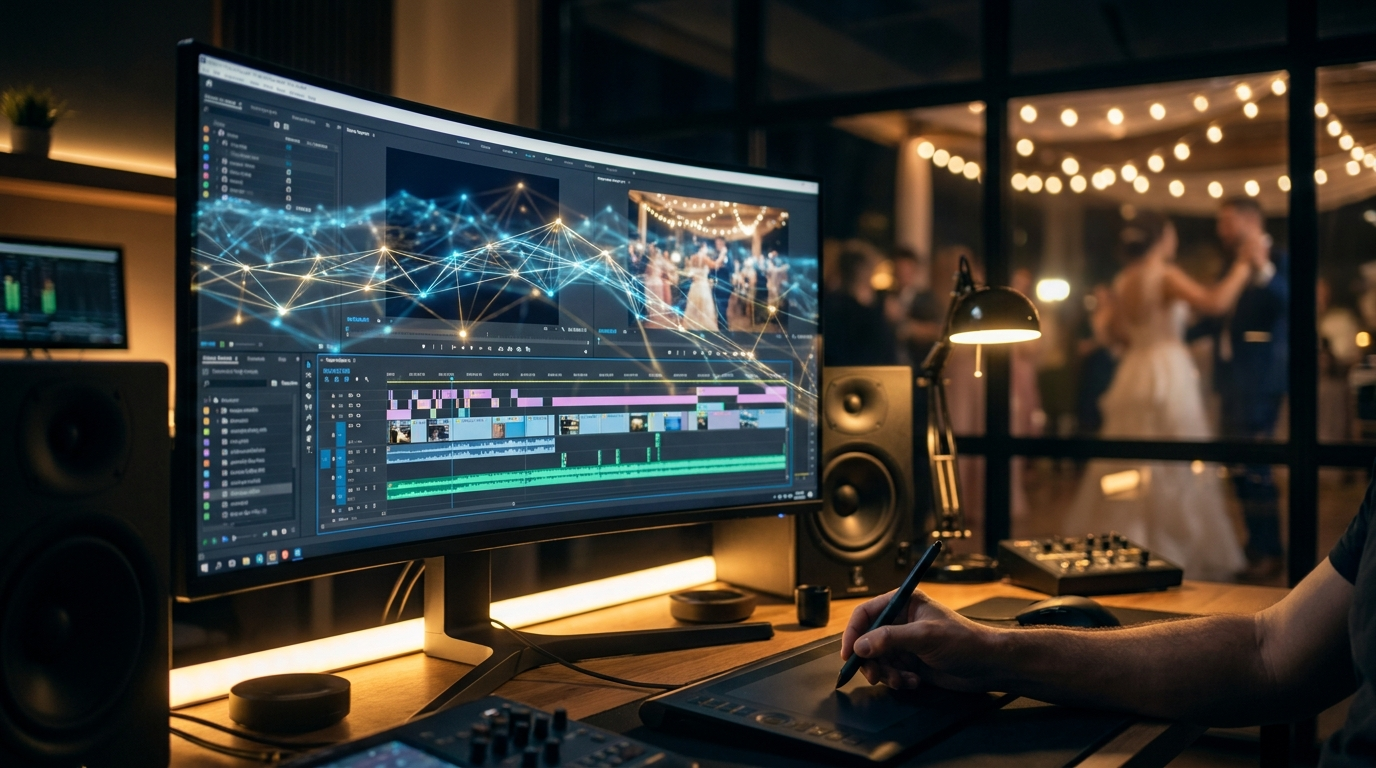
The landscape of wedding cinematography has shifted dramatically this year. We have moved past the era of generic "AI templates" into an era of hyper-personalization. One of the most significant breakthroughs in 2026 is the release of Eddie AI Logging v2, which, as reported by Red Shark News, introduces "topic steering." This allows editors to tell the AI, "Focus more on the mother of the bride’s reactions during the ceremony," and the software will prioritize those specific emotional beats during the initial rough cut.
Furthermore, the integration of generative AI has solved a long-standing problem for wedding videographers: missing footage. With the rise of tools like Mango AI’s "French Kiss" tool, editors can now take a static photo of the couple and turn it into a realistic animation. While originally marketed for social media, wedding editors are using this to create "living" portraits that serve as stunning transitions between scenes. This level of creativity was previously impossible without expensive reshoots or complex 3D modeling.
The Rise of Topic Steering and Emotional Intelligence
In 2026, AI is no longer just looking for "faces"; it is looking for "feelings." Topic steering allows the editor to act as a director, providing high-level instructions that the AI executes across thousands of clips. This ensures that the ai video editing for wedding videos remains unique to each couple, avoiding the "cookie-cutter" look that early automation was criticized for. By analyzing the sentiment of the speeches, the AI can even suggest music tracks that match the tempo and emotional arc of the spoken words.
Ethical Deepfakes and Family Legacy
A poignant trend reported by Rest of World in early 2026 involves the use of family deepfakes. In many cultures, particularly in India, families are using AI to include deceased relatives in wedding films. This "digital resurrection" allows for a brief, respectful moment where a late grandparent can be seen "attending" the ceremony. While this requires high ethical standards and consent, it demonstrates the profound emotional impact that AI video editing can have on a family's legacy and the grieving process.
Comparing Top AI Video Editing Tools for 2026
Choosing the right platform for ai video editing for wedding videos depends on your specific needs—whether you prioritize speed, creative control, or specialized features like generative B-roll. According to eWeek, the effectiveness of these tools often relies on the quality of the "AI prompts" used by the editor. Below is a comparison of the leading software options currently dominating the market in 2026.
| Feature | Eddie AI Logging v2 | Mango AI Suite | Pro-Level NLEs (Adobe/DaVinci 2026) |
|---|---|---|---|
| Primary Strength | Topic Steering & Logging | Generative Photo Animation | Comprehensive Post-Production |
| Best For | Fast Culling & Storyboarding | Creative B-roll & Transitions | Final Color & Sound Mastering |
| AI Innovation | Context-Aware Tagging | Still-to-Motion "French Kiss" Tool | Neural Engine 4.0 Integration |
| Ease of Use | High (Automated) | Medium (Prompt-based) | Low (Professional Skill Required) |
Mastering Prompts for AI Wedding Highlights
To get the most out of ai video editing for wedding videos, you must master the art of the prompt. eWeek’s 2026 guide on the "10 Best AI Video Editing Prompts" highlights that the more specific the input, the better the output. For example, instead of prompting "Make a romantic highlight," a 2026 professional would use: "Identify all clips of the couple's first look, prioritize slow-motion close-ups, and sync cuts to the crescendo of the attached audio track."
This shift toward prompt-based editing means that the wedding videographer's role is evolving into that of a "Creative Prompt Engineer." You are no longer spending hours scrolling through a timeline; you are spending minutes defining the vision and letting the AI handle the heavy lifting of assembly. This allows for more time to be spent on high-value tasks like custom color grading or client consultations.
Using Still-Image B-Roll Support
As noted by Red Shark News, the latest updates in AI logging now include still-image B-roll support. This is a game-changer for wedding videos where the photographer may have captured a moment the videographer missed. The AI can seamlessly integrate these high-resolution stills, apply "Ken Burns" effects automatically, or use generative fill to expand the borders of the photo to fit a 16:9 or 9:16 frame, making the transition between photo and video virtually indistinguishable.
Hardware Considerations for AI Editing in 2026
While the AI does much of the work in the cloud, having the right local hardware is still essential for smooth playback and final exports. Space’s 2026 hardware review notes that the best cameras for photography and video now include dedicated AI chips that pre-tag footage as it is recorded. This "on-device" metadata makes the ai video editing for wedding videos process even faster once the files are moved to a computer.
Editors should look for workstations equipped with at least 64GB of RAM and GPUs specifically optimized for neural processing. Even though AI can upscale and sharpen footage, starting with high-quality source material from 2026-era sensors ensures that the AI has enough data to work its magic without creating "uncanny valley" artifacts in the final wedding film.
Frequently Asked Questions
Is AI video editing for wedding videos better than manual editing?
It is not necessarily "better" in terms of soul, but it is significantly faster and more efficient. AI handles the repetitive tasks like culling and syncing, allowing the human editor to focus on the final emotional polish and creative storytelling.
What is "topic steering" in Eddie AI Logging v2?
Topic steering is a 2026 feature that allows editors to guide the AI's selection process by providing specific themes or subjects to prioritize. This ensures the AI-generated rough cut aligns with the editor's intended narrative arc.
Can AI turn my wedding photos into video clips?
Yes, tools like Mango AI’s French Kiss tool can now animate still photos into realistic video clips. This is particularly useful for creating emotional B-roll from high-quality portraits when actual video footage is unavailable.
Are deepfakes in wedding videos ethical?
In 2026, the use of "family deepfakes" is growing, but it must be handled with extreme care. It is generally used to include deceased loved ones in a respectful way, provided there is full consent from the family and the couple.
How do AI prompts improve wedding video quality?
AI prompts act as specific instructions for the editing software. By using detailed prompts as suggested by eWeek, editors can control pacing, shot selection, and emotional tone more accurately than with one-click automated tools.
The Future of Wedding Cinematography
As we look through the remainder of 2026, the role of the wedding videographer is being redefined. The focus is shifting from "technical proficiency" to "curatorial vision." With ai video editing for wedding videos, the barrier to entry for high-end cinematic production has been lowered, but the value of a unique creative eye has never been higher. By embracing these tools, filmmakers can provide their clients with more than just a video; they provide a perfectly preserved, AI-enhanced memory that captures the essence of their most important day.
Whether it is through the use of topic steering in Eddie AI or the generative animations of Mango AI, the toolkit available today is more powerful than ever. The key to success in 2026 is to view AI not as a replacement for the editor, but as an indispensable assistant that handles the "work" so the artist can focus on the "art."



Comments ()