
AI Video Editing for Wedding Videos: 2026 Trends & Tools
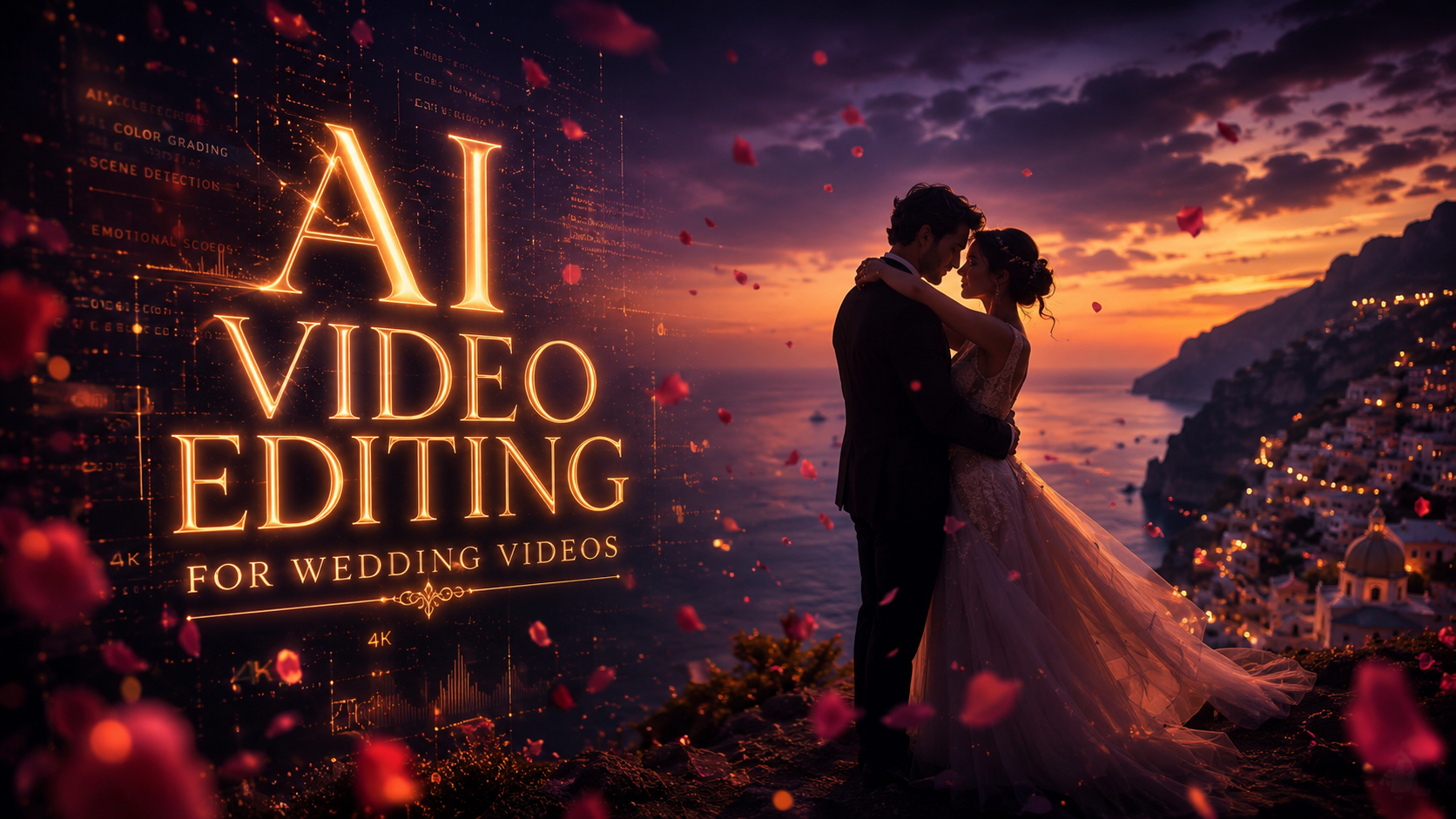
AI video editing for wedding videos refers to the use of artificial intelligence and machine learning algorithms to automate the labor-intensive aspects of post-production, such as culling footage, color grading, and synchronizing audio to music. In 2026, these tools have evolved beyond simple automation to include "topic steering" and generative B-roll creation, allowing wedding filmmakers to produce cinematic, emotionally resonant films in a fraction of the time previously required.
AI video editing for wedding videos is the integration of generative AI and automated logging tools into the filmmaking workflow. In 2026, this technology allows editors to use natural language to direct AI agents, automatically generate B-roll from still images, and utilize deepfake technology to include missing family members, fundamentally changing how wedding memories are preserved.
- ✓ Advanced AI logging tools like Eddie AI Logging v2 now feature topic steering for precise narrative control.
- ✓ Generative tools such as Mango AI can now animate still photos into realistic cinematic sequences.
- ✓ Deepfake technology is being used ethically to honor deceased relatives in wedding montages.
- ✓ Modern AI suites integrate directly with 2026’s top-tier mirrorless cameras for instant metadata tagging.
The Evolution of AI Video Editing for Wedding Videos in 2026
The landscape of wedding cinematography has undergone a seismic shift as we move through 2026. Long gone are the days when an editor would spend forty hours sifting through raw footage from three different camera angles. Today, ai video editing for wedding videos has matured into a collaborative process where the human editor acts more as a creative director than a manual laborer. The integration of sophisticated neural networks allows software to recognize emotional cues—such as a tear falling during vows or a joyous laugh during the reception—and prioritize those clips for the final cut.
According to recent industry reviews from PCMag (May 2026), the best video editing software tested this year now prioritizes "semantic understanding" of footage. This means the software doesn't just see pixels; it understands the context of a "first dance" versus a "cake cutting." For wedding professionals, this transition is vital. It allows for a faster turnaround time, often delivering a "same-day edit" that looks as polished as a multi-week production from a decade ago. The focus has shifted from the struggle of technical execution to the art of storytelling.
Furthermore, the rise of "Family Deepfakes" has become a notable, albeit sensitive, trend in the industry. As reported by Rest of World in February 2026, families are increasingly using AI to celebrate and grieve, incorporating deepfake technology to allow deceased loved ones to "attend" the wedding in digital form. While controversial, this highlights the profound impact AI is having on the emotional weight of wedding media, pushing the boundaries of what a wedding video can represent for a family's legacy.
Step-by-Step: Implementing AI in Your Wedding Workflow
- Automated Logging: Import your raw files into a tool like Eddie AI Logging v2 to automatically tag clips by speaker, emotion, and event type.
- Topic Steering: Use natural language commands to tell the AI to "focus on the mother of the bride's reactions" or "create a high-energy montage of the dance floor."
- Generative B-Roll: Use tools like Mango AI to turn high-resolution still photos into 3D-animated B-roll sequences to fill gaps in your footage.
- AI Color Grading: Apply a consistent cinematic look across different camera brands by using AI-driven color matching.
- Final Human Polish: Review the AI-generated timeline to ensure the emotional pacing matches the couple's unique personalities.
Key Trends: Topic Steering and Generative B-Roll
One of the most significant breakthroughs in 2026 is the release of Eddie AI Logging v2. As reported by Red Shark News in May 2026, this version introduces "topic steering," a feature that allows editors to guide the AI's selection process using specific thematic prompts. In the context of wedding films, this means an editor can instruct the AI to build a narrative around a specific theme, such as "the bond between sisters" or "the legacy of the family home," and the AI will scan hundreds of gigabytes of footage to find the most relevant visual and auditory cues to support that story.
Another revolutionary trend is the support for still-image B-roll. Wedding photographers often capture moments that videographers might miss. With the latest updates in Eddie AI Logging v2, editors can now seamlessly integrate still images into the video timeline. The AI doesn't just place the photo; it uses generative fill and motion estimation to create a "living" clip from the still, ensuring it doesn't break the flow of the cinematic experience. This synergy between photography and video is redefining the standard for wedding packages in 2026.
Comparison of Top AI Video Editing Tools (2026)
| Tool Name | Key 2026 Feature | Best For | AI Capability |
|---|---|---|---|
| Eddie AI Logging v2 | Topic Steering | Narrative Wedding Films | High (Contextual Awareness) |
| Mango AI | French Kiss AI Tool | Romantic Highlights | Generative Animation |
| Adobe Premiere (2026 Ed.) | Neural Scene Re-lighting | Professional Colorists | Predictive Grading |
| DaVinci Resolve 19+ | Voice-to-Edit Workflow | Fast Turnaround | Natural Language Processing |
Overcoming Challenges: Authenticity in the Age of AI
While ai video editing for wedding videos offers incredible efficiency, it also brings challenges regarding authenticity. In early 2026, a high-profile case involving Park Se-ri highlighted the dangers of AI-generated misinformation. As reported by the Chosun Ilbo, rumors of a marriage were fueled by AI-generated fake news. This serves as a cautionary tale for wedding videographers: while AI can enhance a story, it must never fabricate a reality that didn't exist. Maintaining the "truth" of the wedding day remains the editor's primary responsibility.
The ethical use of AI also extends to tools like Mango AI’s "French Kiss" feature. Released in April 2026, this tool can turn a static photo of a couple into a passionate kiss animation. While technically impressive, wedding filmmakers must decide where the line is between "enhancing a memory" and "creating a false one." Most industry leaders suggest using these tools to supplement missing footage—such as when a camera battery dies during a key moment—rather than replacing the genuine interactions captured on the day.
Hardware Synergy: Cameras and AI Integration
The success of AI editing is heavily dependent on the quality of the input data. Space.com’s 2026 guide to the best cameras highlights that modern sensors are now designed with "AI-ready" metadata. When a videographer captures a shot on a 2026 flagship camera, the device automatically embeds data about the subject's heart rate (via remote sensing), the lighting conditions, and even the "emotional intensity" of the scene. This metadata is then ingested by AI video editing software to streamline the culling process.
This hardware-software loop is what makes ai video editing for wedding videos so powerful in 2026. Because the software knows exactly which lens was used and the precise focal point of every frame, it can apply AI-driven de-noising and sharpening with surgical precision. This is particularly useful for low-light wedding receptions where traditional sensors might have struggled in the past. The AI can reconstruct lost detail in a way that looks natural and professional, saving shots that would have previously been discarded.
The Future of Personalized Wedding Cinema
Looking toward the end of 2026 and into 2027, we expect to see even deeper personalization. AI will soon be able to analyze a couple's social media history (with permission) to understand their aesthetic preferences, favorite music genres, and key friend groups. This will allow the ai video editing for wedding videos process to be even more tailored. Imagine an AI that knows the "inside jokes" of a friend group and automatically highlights those moments in a "Friends and Family" cut of the wedding film.
The role of the wedding videographer is evolving into that of a "Memory Architect." By leveraging tools that can animate still images, steer narrative topics, and ethically incorporate deepfake technology for missing loved ones, filmmakers are providing a service that is more than just a video—it is a comprehensive digital legacy. As PCMag's 2026 testing suggests, the software is finally fast enough and smart enough to let the human creator focus entirely on the emotion of the day.
Frequently Asked Questions
What is topic steering in AI wedding video editing?
Topic steering is a feature found in tools like Eddie AI Logging v2 that allows an editor to give the AI specific narrative directions. Instead of just "editing a video," you can tell the AI to "prioritize the father's speech and the couple's reactions to it," and the AI will automatically find and sequence those specific moments.
Can AI turn my wedding photos into video clips?
Yes, in 2026, tools like Mango AI and Eddie AI Logging v2 have the capability to turn still images into B-roll. They use generative AI to add realistic motion, depth, and even simulated camera movements to high-resolution photos, making them blend seamlessly with actual video footage.
Is it ethical to use deepfakes in wedding videos?
Ethical use of deepfakes in 2026 focuses on "digital resurrection" for grieving families. According to reports from Rest of World, many use this technology to include deceased family members in celebrations. However, it should always be done with the explicit consent of the family and clearly labeled if it creates a scene that didn't actually happen.
Does AI video editing replace the need for a professional editor?
No, AI is a tool that augments the professional editor. While AI can handle the "heavy lifting" like culling and basic sequencing, a human editor is still required to ensure the emotional nuances, pacing, and creative vision align with the couple's expectations.
Which is the best software for AI wedding editing in 2026?
Based on 2026 reviews from PCMag and Red Shark News, Eddie AI Logging v2 is currently the leader for narrative organization, while DaVinci Resolve and Adobe Premiere Pro remains the industry standards for high-end color grading and professional finishing with integrated AI features.



Comments ()