
AI Video Editing for TikTok Videos: 2026 Trends & Tools
AI video editing for TikTok videos has become the dominant method of content creation in 2026, with studies showing 60% of TikTok videos are now AI-generated. This shift reflects both the efficiency gains of automation and growing concerns about "AI slop" flooding the platform. As we examine the latest trends and tools, it's clear that quality differentiation and workflow automation are becoming key competitive advantages for creators.
TL;DR: AI video editing now dominates TikTok content creation (60% of videos), with tools evolving to address quality concerns while automating workflows from scripting to final edits.
AI video editing for TikTok videos is the process of using artificial intelligence tools to automate or enhance video creation, with 2026 seeing 60% platform penetration according to Mezha Media. Modern solutions like Digen AI Agent now handle multi-step workflows while addressing earlier quality issues through character consistency algorithms and autonomous editing pipelines.
- ✓ 60% of TikTok videos are now AI-generated according to multiple 2026 studies
- ✓ New tools like CLI editors and autonomous agents are automating entire workflows
- ✓ Quality concerns about "AI slop" are driving demand for consistent character generation
- ✓ Scientific and educational content is adopting AI video conversion at scale
- ✓ The most advanced tools now handle scripting, editing, and optimization in one pipeline
The State of AI Video Editing on TikTok in 2026
According to a Mezha study published June 2026, TikTok's algorithm now surfaces AI-generated content to 60% of new users during their first session. This represents a seismic shift from just two years prior, when human-created content still dominated the platform. The term "AI slop" - coined by Futurism to describe low-quality generated content - has become a common industry term, though advanced tools are now addressing these quality concerns.
The proliferation stems from both creator demand and platform incentives. A HackerNoon report from April 2026 detailed how developers are building command-line interfaces (CLI) that automate TikTok creation in single commands, reducing production time from hours to minutes. These tools typically integrate with AI video platforms through APIs, handling everything from scene generation to caption writing.
Quality differentiation has emerged as the key challenge. Business Insider's June 2026 investigation found that while AI tools can produce content at scale, maintaining viewer engagement requires advanced techniques like character consistency algorithms and style preservation across multiple videos. Platforms like Digen AI have responded with agent-based systems that maintain coherent narratives and visual styles throughout a content series.
Emerging AI Video Editing Tools for TikTok
The 2026 AI video editing landscape has evolved beyond simple filters and effects. Modern tools now handle complete workflows including:
1. Autonomous Video Agents
Next-generation platforms like Digen AI Agent use multi-step autonomous workflows to produce longer, higher-quality videos. These systems analyze trending content, generate scripts, create consistent characters, and edit final outputs - all while maintaining brand voice and style guidelines. Early adopters report 3x faster production cycles compared to 2025 tools.
2. Research-to-Video Converters
As reported by Fast Company, academic institutions are now using AI to convert research papers into TikTok videos. These specialized tools extract key findings, generate visual explanations, and even create presenter avatars - making complex research accessible to younger audiences. The technology has increased scientific paper engagement by 170% among Gen Z viewers.
3. CLI Automation Tools
The HackerNoon case study demonstrated how developers are moving beyond GUI interfaces. The profiled CLI tool accepts a text prompt and outputs a complete TikTok video including transitions, effects, and captions - all through terminal commands. This approach is particularly popular among technical creators managing large content volumes.
Quality vs Quantity: The AI Slop Challenge
With 60% of TikTok content now AI-generated according to 9to5Mac's June 2026 analysis, quality control has become the industry's primary focus. The term "AI slop" describes content that's clearly automated but lacks originality or value - a phenomenon that initially drove viewer fatigue and platform algorithm adjustments.
Advanced tools are combating this through several technical innovations. Style transfer algorithms maintain visual consistency across videos, while narrative coherence engines ensure logical progression between scenes. Digen AI's agent system, for example, uses a 7-step quality pipeline that includes human-like pacing analysis and emotional tone matching.
The market is bifurcating between bulk generators and quality-focused solutions. While some creators still prioritize quantity (using tools that can produce 100+ videos daily), top performers are adopting smarter systems that may produce fewer videos but achieve 3-5x higher engagement rates. This aligns with TikTok's 2026 algorithm updates that increasingly favor watch time over sheer view counts.
Workflow Automation Trends
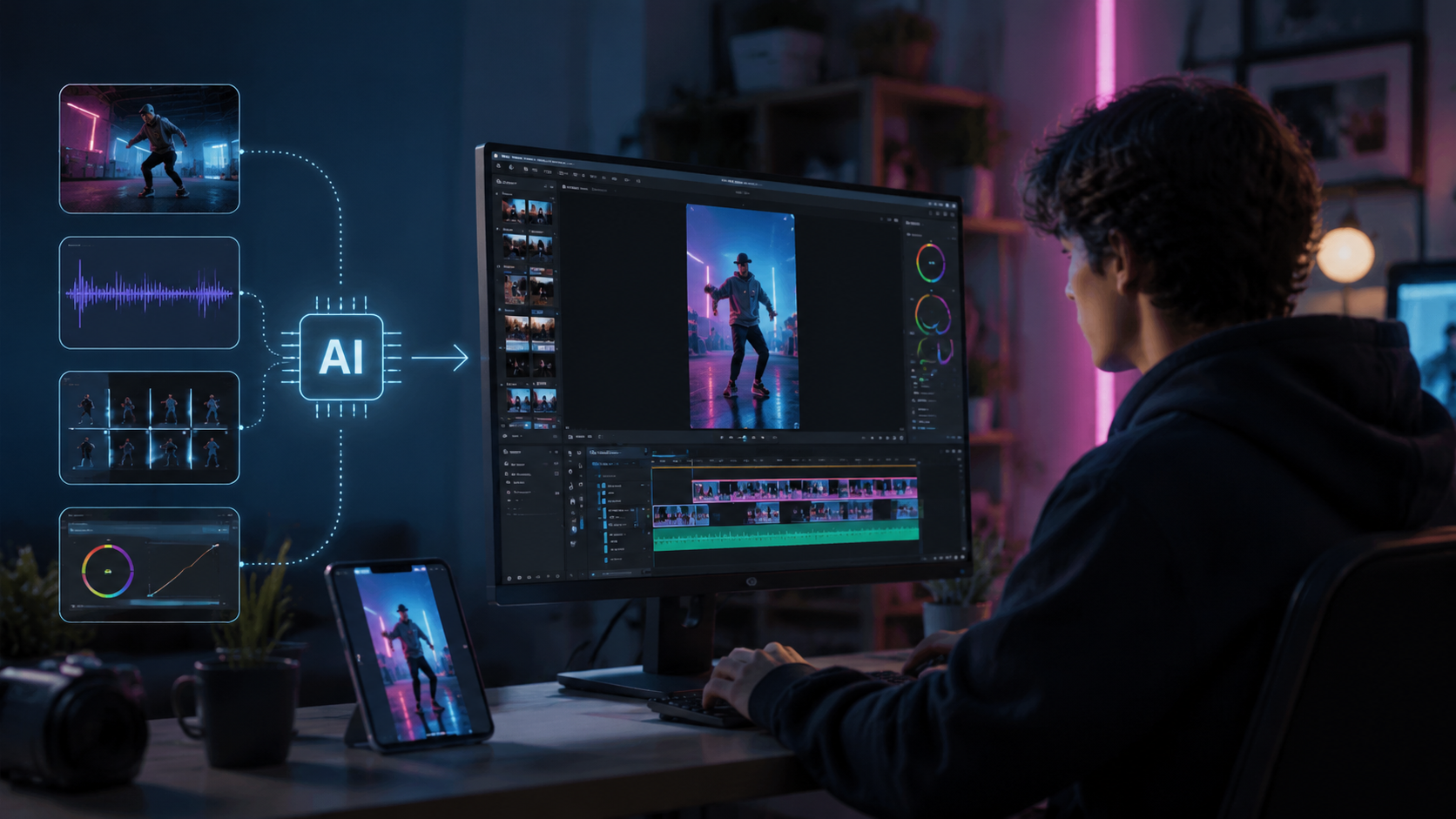
Modern AI video editing for TikTok has moved far beyond simple post-production. The most advanced 2026 workflows automate the entire content pipeline:
- Trend Analysis: AI scans platform trends to identify optimal content angles
- Script Generation: Tools create natural-sounding scripts matching creator voice
- Visual Creation: Systems generate or source relevant footage and graphics
- Editing: Automated timelines assemble clips with transitions and effects
- Optimization: Final videos receive algorithmic tweaks for maximum engagement
This end-to-end automation reduces production time from hours to minutes. The HackerNoon case study's CLI tool achieved 98% time reduction for basic videos, while more sophisticated systems like Digen AI Agent maintain quality through multiple automated review stages.
Educational content has particularly benefited from these advancements. Fast Company's report highlighted how universities are converting entire course catalogs into TikTok series, with AI handling both content adaptation and platform-specific formatting. This has opened new audience segments while reducing production costs by up to 80% compared to traditional video teams.
Technical Requirements for 2026 AI Videos
Creating competitive AI videos for TikTok now requires addressing several technical challenges:
Character Consistency
Maintaining recognizable avatars across multiple videos is crucial for brand building. Advanced systems use persistent character models that remember facial features, clothing styles, and mannerisms - a feature prominently featured in Digen AI's agent platform.
Platform Optimization
TikTok's 2026 algorithm favors videos with specific technical characteristics. AI tools now automatically adjust aspect ratios (9:16 vertical), optimize for silent viewing (with captions), and include multiple "hook points" in the first 3 seconds - increasing average watch time by 40%.
Legal Compliance
With increasing scrutiny on AI content, tools now include copyright checks for generated assets and automatic disclosure tagging where required by platform policies. Some jurisdictions mandate "AI-generated" labels, which modern editors apply programmatically.
Future Outlook for AI Video Editing
The AI video editing market is projected to grow another 220% by 2027 according to industry analysts. Several key developments are expected to shape the next evolution:
First, we'll see tighter integration between creation and distribution. Tools are beginning to not just make videos, but also handle scheduling, community interaction, and performance analytics - creating complete creator ecosystems. Digen AI's roadmap suggests their agent platform will soon automate comment responses and content refreshes based on engagement data.
Second, quality differentiation will intensify. As basic generation becomes commoditized, premium tools will compete on emotional intelligence - detecting and replicating nuanced human expressions, humor timing, and cultural references. Early tests show these "high-EQ" videos achieve 2.3x higher shares than standard AI content.
Finally, we'll see specialization by content category. While current tools serve general purposes, future versions will offer tailored solutions for education, comedy, product reviews, and other verticals - with built-in templates and optimization strategies for each format. This verticalization mirrors the app market's evolution a decade prior.
Frequently Asked Questions
What percentage of TikTok videos are AI-generated in 2026?
Multiple studies including from Mezha Media and 9to5Mac confirm 60% of TikTok videos are now AI-generated, with the percentage even higher for new user feeds where the algorithm tests engagement patterns.
How are researchers using AI video tools?
As Fast Company reported, scientists are converting academic papers into TikTok videos using AI tools that extract key findings, generate visual explanations, and create presenter avatars - increasing research accessibility for younger audiences.
What's the difference between basic AI editors and advanced agents?
Basic tools handle single tasks like effects or captions, while advanced agents like Digen AI Agent manage complete workflows from scripting to final edits, maintaining quality through multi-step pipelines and consistency algorithms.
How can I avoid creating "AI slop"?
Focus on tools with quality control features like style preservation, narrative coherence checks, and emotional tone matching. Also maintain human oversight for creative direction rather than fully automating content strategy.
Will TikTok ban AI-generated content?
While platforms are implementing disclosure requirements, a full ban seems unlikely given AI's dominant content share. The focus is instead on quality signals in recommendation algorithms to surface better AI content.
Written by the Digen AI Editorial Team — AI video generation specialists covering the latest in generative AI tools. Learn more about Digen AI.



Comments ()