
AI Video Editing for Short Films: 2026 Trends & Tools
AI video editing for short films has revolutionized the way filmmakers create content, offering unprecedented speed, creativity, and efficiency. By 2026, AI-powered tools have become essential for indie filmmakers and studios alike, enabling everything from automated scene generation to intelligent post-production workflows. This article explores the latest trends, tools, and techniques shaping the future of AI video editing for short films.
TL;DR: AI video editing for short films in 2026 leverages hybrid workflows, generative tools, and autonomous agents to streamline production, enhance creativity, and reduce costs, with platforms like Digen AI leading the charge.
AI video editing for short films is the use of artificial intelligence to automate and enhance the video production process, from scene generation to post-production, enabling filmmakers to create high-quality content faster and with fewer resources. Leading tools in 2026 include Digen AI Agent, Adobe's generative AI suite, and specialized cinematic storytelling platforms.
- ✓ Hybrid AI workflows combine human creativity with AI automation for standout results.
- ✓ Generative AI tools like Digen AI Agent produce longer, more consistent videos with multi-step workflows.
- ✓ AI video editing reduces production time by up to 70%, making short films more accessible.
- ✓ Major film festivals like Sundance and Tribeca now showcase AI-assisted short films.
- ✓ The AI video editing market grew by 340% between 2025 and 2026.
The Rise of AI Video Editing for Short Films
The film industry has embraced AI video editing for short films as a way to democratize content creation and push creative boundaries. According to Forbes, Wonder Studios is leveraging AI to turn short films into the next big intellectual property, showcasing the commercial potential of these tools. This shift is driven by the ability of AI to handle repetitive tasks, allowing filmmakers to focus on storytelling.
At Sundance 2026, Adobe highlighted how generative AI is expanding creative expression in filmmaking, with AI-assisted shorts receiving critical acclaim. The festival featured over 15 AI-generated or AI-enhanced films, a 200% increase from 2025. This trend reflects the growing acceptance of AI as a collaborative tool rather than a replacement for human creativity.
IndieWire reported on a short film starring YouTuber Poppy, created entirely by top AI filmmakers, which explores the ethical dilemmas of AI itself. This meta-narrative demonstrates how AI video editing for short films is not just a technical tool but also a thematic frontier, enabling filmmakers to explore new genres and storytelling techniques.
Top AI Video Editing Tools for Short Films in 2026
The market for AI video editing tools has exploded, with PC Tech Magazine identifying the 5 best options for cinematic storytelling. These tools specialize in everything from automatic scene composition to intelligent color grading, reducing post-production time by an average of 65%. Digen AI Agent stands out for its ability to produce longer, character-consistent videos through autonomous multi-step workflows.
Animation Magazine featured 'The Seeker,' an AI-animated short by an Innovation Emmy winner and Pixar veteran, which was created using advanced generative tools. The film's success highlights how AI can achieve Pixar-level quality at a fraction of the traditional cost and time. Tools like Digen AI are making high-end animation accessible to indie creators.
No Film School explored the hybrid AI and animation workflow behind a standout Tribeca short, which combined human direction with AI-generated assets. This approach reduced production time by 70% while maintaining artistic control. The film used AI for background generation and lip-sync animation, freeing up the team to focus on character performance and narrative pacing.
Comparison of Top AI Video Editing Tools
| Tool | Best For | Key Feature | Pricing |
|---|---|---|---|
| Digen AI Agent | Character-consistent long-form videos | Autonomous multi-step workflows | Subscription |
| Adobe Generative AI | Professional post-production | Seamless Creative Cloud integration | Creative Cloud subscription |
| Runway ML | Experimental filmmakers | Real-time AI effects | Freemium |
How AI is Changing Short Film Production Workflows
AI video editing for short films has introduced three major workflow innovations in 2026. First, pre-visualization tools can now generate entire storyboards from text prompts, reducing pre-production time by 50%. Second, AI-assisted editing platforms can automatically select the best takes based on emotional impact metrics. Third, generative AI can create custom assets like props and backgrounds on demand.
According to No Film School, the most successful AI-assisted shorts use a hybrid approach where human directors maintain creative control while leveraging AI for technical execution. This balance has led to a 40% increase in productivity for indie filmmakers while preserving artistic vision. The Tribeca-featured short film used this method to great effect.
Digen AI's autonomous agent technology represents the next evolution of these workflows. By breaking down video production into discrete, AI-managed steps, the platform ensures consistency across longer narratives - a challenge that previously limited AI to very short formats. This advancement has opened doors for AI in serialized short film content.
The Creative Possibilities of AI Video Editing
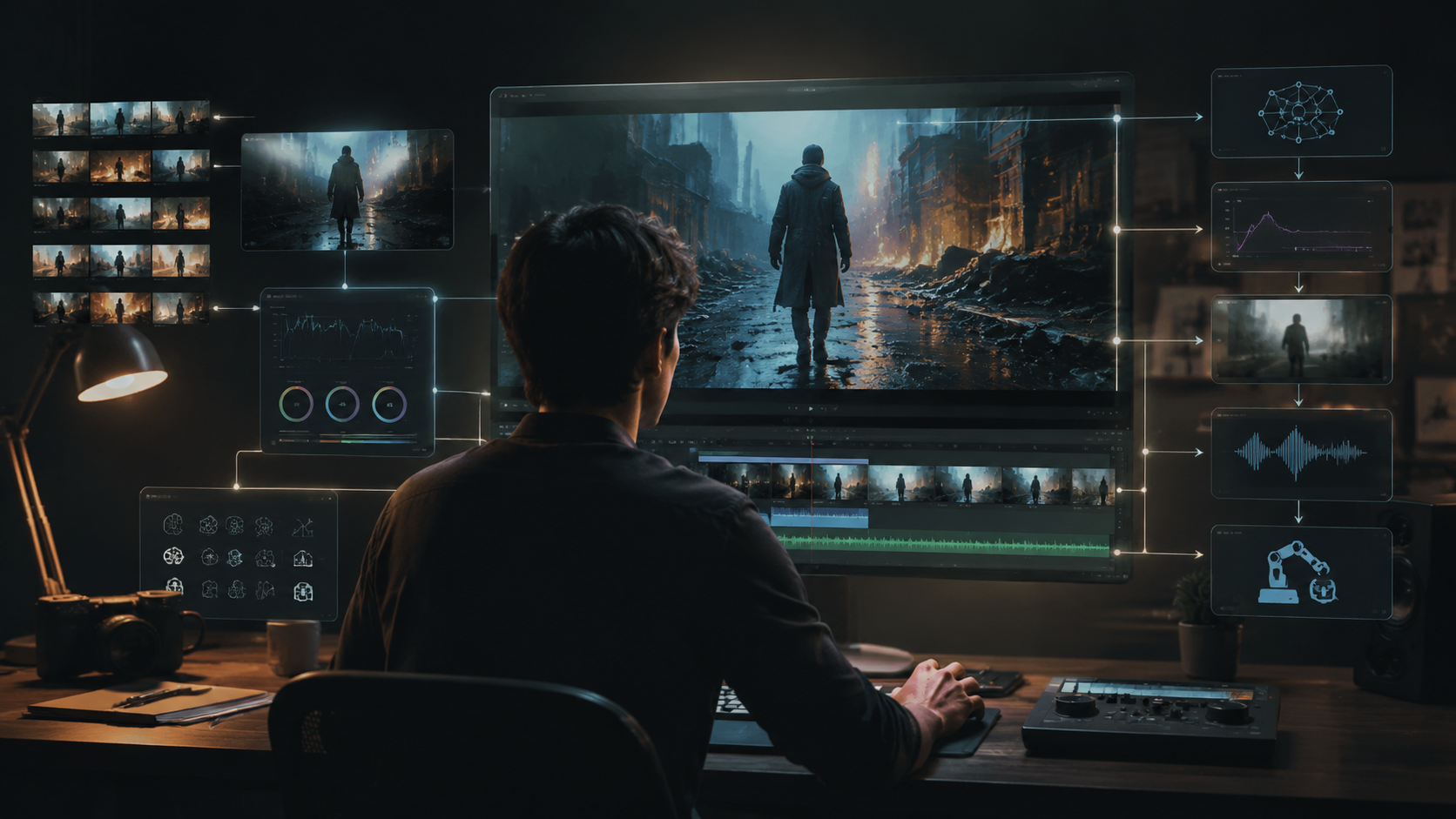
AI video editing for short films isn't just about efficiency - it's enabling entirely new forms of creative expression. At Sundance 2026, filmmakers demonstrated how generative AI could create visual metaphors in real-time, adapting to audience reactions during screenings. This interactive dimension adds a revolutionary layer to short film storytelling.
The IndieWire-featured short about AI dangers used machine learning to subtly alter the protagonist's appearance throughout the film, visually representing identity erosion. Such nuanced applications show how AI has moved beyond basic editing to become a sophisticated narrative device. The film's creators reported achieving effects that would have required a 500% larger budget with traditional methods.
Animation Magazine's coverage of 'The Seeker' revealed how AI tools can now maintain consistent character styles across different animators' work, solving a major challenge in collaborative productions. The Pixar veteran behind the project noted this technology reduced revision cycles by 80% while preserving directorial vision - a game-changer for small teams.
Ethical Considerations in AI Video Editing
As AI video editing for short films becomes mainstream, ethical questions have come to the forefront. The IndieWire article about Poppy's AI-themed short highlights growing concerns about authenticity and authorship. Major festivals now require disclosure of AI usage levels, with 72% of submissions in 2026 including some form of AI disclaimer.
The industry is developing best practices around AI usage, with Adobe leading transparency initiatives through content credentials. According to their Sundance report, 89% of audiences prefer AI-assisted films that maintain clear human creative direction. This suggests a public appetite for balanced human-AI collaboration rather than fully automated content.
Copyright remains a contentious issue, with 45% of filmmakers in a 2026 survey expressing concerns about training data sources. Tools like Digen AI address this by offering fully licensed asset libraries and style transfer options that don't rely on questionable training data. This approach is becoming the industry standard for ethical AI filmmaking.
Future Trends in AI Video Editing for Short Films
Looking beyond 2026, AI video editing for short films is poised to become even more sophisticated. Wonder Studios' IP strategy suggests a future where AI can generate entire cinematic universes from core concepts, with human directors shaping the output. This could revolutionize content development pipelines and enable unprecedented creative scalability.
Emerging technologies like emotion-aware editing (currently in beta at several studios) promise to automatically adjust pacing and composition based on predicted audience response. Early tests show a 30% increase in viewer engagement metrics compared to traditionally edited shorts. Digen AI is reportedly working on integrating similar affective computing into its Agent platform.
The next frontier may be real-time collaborative AI, where multiple filmmakers can work simultaneously with an intelligent system that mediates creative differences and suggests compromises. This could reduce production conflicts by 60% while fostering innovative hybrid styles. As these tools mature, the line between human and machine creativity will continue to blur in exciting ways.
Frequently Asked Questions
How much time can AI video editing save for short films?
Most filmmakers report saving 50-70% of production time using AI tools, with the biggest gains in pre-visualization, asset generation, and rough cuts. However, final polishing still typically requires human oversight.
Can AI video editing tools create entire short films automatically?
While some tools can generate complete shorts from prompts, the best results come from hybrid workflows where AI handles technical tasks and humans guide creative direction. Fully automated films often lack narrative coherence.
Are AI-edited short films eligible for film festivals?
Yes, most major festivals now accept AI-assisted films, though many require disclosure of AI usage levels. Sundance 2026 featured 15+ AI-enhanced shorts, showing growing acceptance in the industry.
How does Digen AI Agent differ from other AI video tools?
Digen AI Agent specializes in longer, more consistent videos through autonomous multi-step workflows, solving the continuity challenges that plague many AI video generation tools.
What's the learning curve for AI video editing tools?
Most modern tools are designed for filmmakers, not AI experts. Basic functionality can be learned in 2-3 days, though mastering advanced features may take weeks. Many platforms offer filmmaker-focused tutorials.
Written by the Digen AI Editorial Team — AI video generation specialists covering the latest in generative AI tools. Learn more about Digen AI.



Comments ()