
AI Video Editing for Realtors: 2026 Strategy & Tools
AI video editing for realtors is the practice of using artificial intelligence software to automate the assembly, enhancement, and distribution of real estate video content. By 2026, this technology has evolved to include generative "sky replacement," automated property walkthrough stitching, and AI-driven voiceovers that allow agents to produce high-quality listings in minutes rather than days. Incorporating ai video editing for realtors into your marketing strategy is no longer optional; it is the primary driver of lead generation and brand authority in a digital-first housing market.
AI video editing for realtors is a transformative technology that uses machine learning to automate video production tasks such as color grading, object removal, and short-form content repurposing. In 2026, these tools allow real estate professionals to scale their marketing by instantly converting raw property footage into polished, multi-platform cinematic tours and social media reels.
- ✓ AI tools now automate up to 90% of the manual editing process for property walkthroughs.
- ✓ Short-form video marketing via AI scaling is the top lead-generation strategy for 2026.
- ✓ Legal compliance regarding AI-enhanced photography and video is a critical risk factor to manage.
- ✓ Integration of AI voiceovers and automated subtitles increases accessibility and viewer retention.
The Evolution of AI Video Editing for Realtors in 2026
As we navigate through 2026, the real estate landscape has been fundamentally reshaped by generative AI. According to a report by MSN, AI video tools are currently reshaping real estate marketing strategies by allowing boutique agencies to compete with national franchises in terms of content volume. The primary shift has been from "editing as a chore" to "editing as a strategy," where the AI handles the technical execution while the realtor focuses on the narrative and client relationship.
The sophistication of these tools has reached a point where "one-click" editing is a reality. Modern platforms can now recognize different rooms in a house, automatically apply the best lighting filters for a "golden hour" effect, and sync the transitions to the beat of trending audio. This level of automation ensures that every listing, regardless of the agent's technical skill, meets a high professional standard that was previously only achievable through expensive production crews.
Step-by-Step: Implementing AI Video in Your Workflow
- Capture Raw Footage: Use your smartphone or drone to capture high-resolution clips of the property, focusing on natural light and flow.
- Upload to an AI Platform: Select an indispensable AI tool like those featured in HousingWire to analyze your raw files.
- Select Your Template: Choose a "Real Estate Professional" template that matches the vibe of the neighborhood (e.g., Luxury, Suburban, or Urban Industrial).
- Automate Enhancements: Enable AI features for sky replacement, virtual staging, and noise cancellation to polish the video.
- Generate Social Snippets: Use the AI to automatically crop and export the video into vertical formats for TikTok, Instagram Reels, and YouTube Shorts.
- Review and Disclose: Check the final edit for accuracy and ensure any AI-generated enhancements are disclosed to meet legal standards.
Top AI Video Editing Tools for Real Estate Professionals
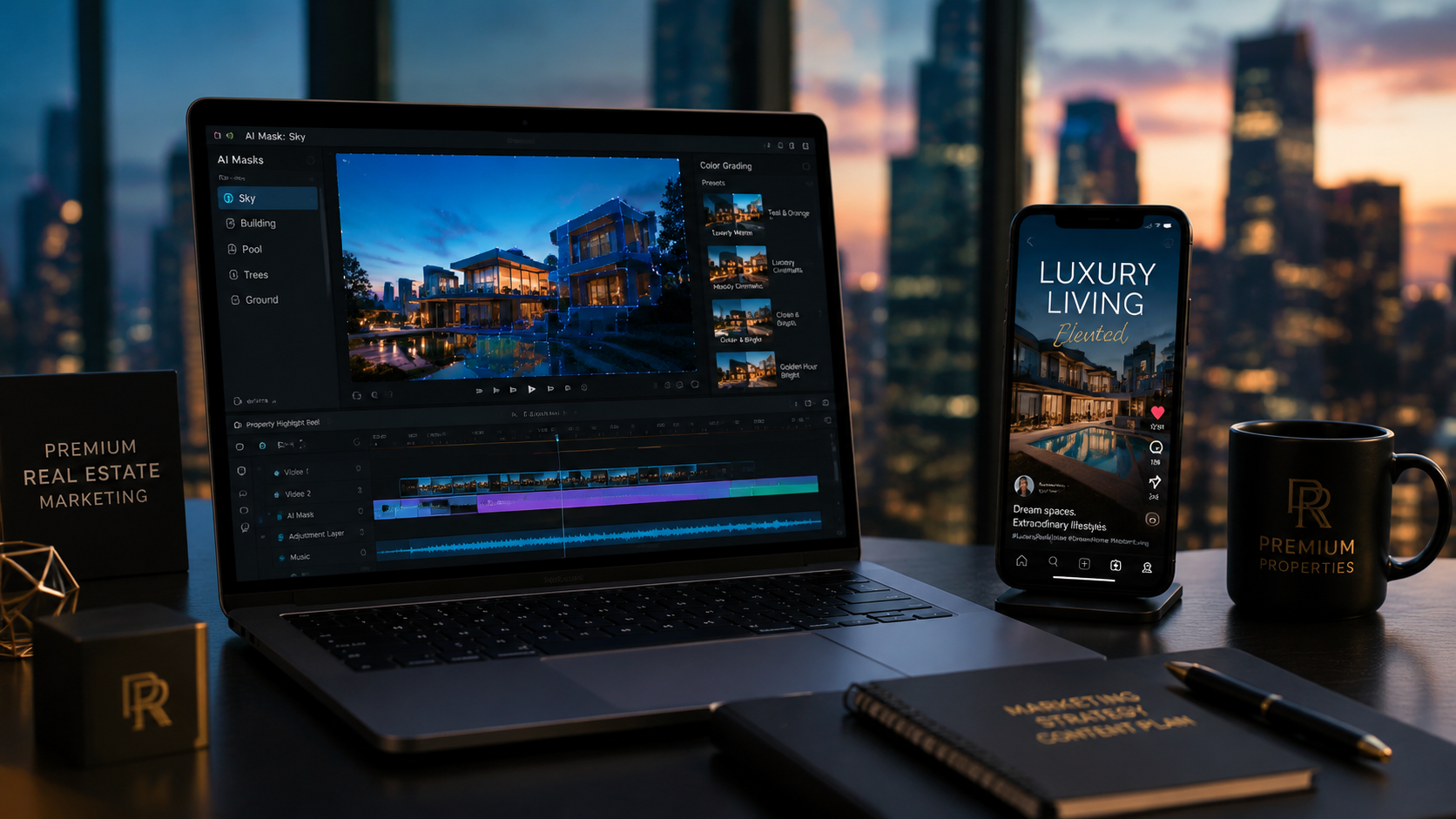
The market in 2026 offers a diverse array of software tailored specifically for the housing industry. According to Realtor.com, there are at least five simple AI marketing tools that every agent should have in their pocket. These tools range from mobile-first apps for quick updates to robust desktop platforms for cinematic property films. Choosing the right tool depends on your specific goals, whether that is high-volume social media presence or high-end luxury storytelling.
One of the breakout stars of 2026 is RiseAngle, which specializes in scaling short-form video marketing. As noted by Movies Games and Tech, agencies are using this platform to turn a single five-minute property tour into dozens of unique "micro-content" pieces. This allows realtors to maintain a constant presence on social feeds without spending hours in front of a computer screen. The focus is on efficiency and the ability to "set and forget" the distribution process.
| Tool Category | Key AI Feature | Best For | 2026 Trend |
|---|---|---|---|
| Short-Form Scalers | Auto-reframing & Captions | TikTok, Reels, Shorts | Viral "hook" generation |
| Cinematic Editors | Generative Sky & Lighting | Luxury Listings | Hyper-realistic enhancements |
| Virtual Staging AI | 3D Furniture Placement | Empty Properties | Instant room transformation |
| AI Voiceover Tools | Cloned Agent Voice | Personal Branding | Multilingual narration |
Managing Legal Risks and AI Ethics in 2026
With great power comes significant responsibility. As Fstoppers recently highlighted, "AI Real Estate Photography: Legal Risks You're Missing" has become a major talking point in the industry. While ai video editing for realtors can make a basement look like a sun-drenched spa, there is a fine line between "enhancement" and "misrepresentation." Realtors must be vigilant about ensuring that the AI does not remove permanent fixtures or hide structural defects, which could lead to lawsuits or loss of licensure.
Transparency is the gold standard for 2026. Most professional associations now recommend adding a small watermark or a disclaimer in the video description stating that "AI-enhanced visuals have been used for staging purposes." This builds trust with potential buyers who are increasingly skeptical of digital perfection. By being honest about the use of AI, you protect your reputation and your brokerage from claims of deceptive advertising.
What to Look for in a Real Estate AI Video Tool
When selecting your tech stack, findarticles.com suggests looking for specific features that cater to the unique needs of the housing market. First, look for "Object Recognition" that can distinguish between a kitchen island and a bathroom vanity. Second, prioritize tools that offer "Automated Compliance Checks," which can flag potential Fair Housing violations in your script or captions before you hit publish. Finally, ensure the tool integrates with your existing CRM to track the performance of your video assets.
Advanced Strategies for AI Video Editing for Realtors
The most successful agents in 2026 are using AI to create "Hyper-Local" content. This involves using AI to overlay real-time market data, neighborhood statistics, and school ratings directly onto property videos. Instead of a generic tour, the viewer sees a data-rich experience that answers their most pressing questions. This level of personalization is what separates top-tier performers from those who simply post raw footage.
Another emerging strategy is the use of AI-cloned avatars or voices. If an agent is too busy to record a voiceover for every new listing, they can use an AI tool to generate a narration in their own voice based on a written script. According to HousingWire, this is one of the 16 indispensable AI tools for agents this year, as it maintains the personal brand of the realtor while drastically reducing the time spent in a recording studio.
Maximizing Engagement with AI-Driven Analytics
Editing is only half the battle; knowing what to edit is the other. Modern AI video platforms provide heatmaps that show exactly when viewers stop watching. If the data shows people drop off during the backyard tour, the AI can suggest re-ordering the clips to show the backyard first in the next iteration. This iterative process, driven by machine learning, ensures that your ai video editing for realtors strategy is constantly evolving based on actual consumer behavior.
The Future of Video: Moving Toward 2027
Looking ahead, the integration of AI and Augmented Reality (AR) will be the next frontier. We are already seeing early versions of videos where a viewer can "swipe" the video to see what the room would look like with different paint colors or flooring. This interactive video editing is becoming the standard for new construction and pre-listing marketing. Realtors who master these tools now will be the market leaders of tomorrow.
In conclusion, the goal of using AI in your video workflow is not to replace the human element, but to amplify it. By removing the technical barriers of video production, realtors are free to tell better stories, connect more deeply with their communities, and provide a level of service that was previously impossible. The 2026 strategy is clear: embrace the automation, manage the risks, and always prioritize the truth in your visual storytelling.
Frequently Asked Questions
Is AI video editing for realtors expensive in 2026?
No, most AI video tools operate on a subscription model ranging from $20 to $100 per month. Many platforms offer "pay-as-you-go" options for individual listings, making it accessible for both solo agents and large brokerages.
Do I need a high-end camera to use AI video tools?
Not necessarily. Most AI tools in 2026 are optimized to enhance footage from modern smartphones, using "upscaling" algorithms to make standard video look like 4K cinematic quality.
Can AI video editing help with SEO?
Yes, AI tools can automatically generate keyword-rich transcripts, titles, and descriptions for your videos. This helps your listings rank higher on both Google and YouTube search results.
Is it legal to use AI to change the sky in property videos?
Generally, yes, as long as it does not hide material facts about the property. However, it is best practice to disclose that the video has been digitally enhanced to maintain transparency with buyers.
How long does it take to edit a video with AI?
While traditional editing could take 4-8 hours, AI-powered platforms can often produce a finished, branded property tour in under 15 minutes once the footage is uploaded.



Comments ()