
AI Video Editing for Marketers: 2026 Strategy Guide
AI video editing for marketers is the application of artificial intelligence and machine learning algorithms to automate the post-production process, enabling the rapid creation of high-quality promotional content from text, URLs, or raw footage. In 2026, this technology has matured into a strategic necessity, allowing brands to scale their video output without proportional increases in budget or headcount. By leveraging generative AI, marketers can now transform product links directly into cinematic advertisements and utilize 3D spatial tools to create immersive brand experiences.
AI video editing for marketers is a transformative workflow that utilizes generative models to automate cutting, color grading, captioning, and asset generation. It streamlines the production of social media ads, product demos, and internal communications by converting simple inputs—such as URLs or scripts—into polished video assets, effectively bridging the gap between creative vision and technical execution.
- ✓ 91% of businesses now utilize video as a core marketing tool, with AI being the primary driver of content volume in 2026.
- ✓ New "URL-to-Video" platforms allow for the instantaneous conversion of product links into high-converting marketing assets.
- ✓ Advanced 3D video editing tools, such as those from Krikey AI, are revolutionizing how businesses present products in virtual spaces.
- ✓ AI video generators have evolved to support 11+ distinct styles, ranging from photorealistic avatars to complex 3D animations.
The State of AI Video Editing for Marketers in 2026
As we navigate through 2026, the landscape of digital communication has shifted entirely toward a video-first approach. According to recent data from DesignRush, a staggering 91% of businesses now use video as a fundamental part of their marketing strategy. This saturation means that simply "having" video is no longer a competitive advantage; the advantage lies in the speed of iteration and the personalization of content. AI video editing for marketers has emerged as the solution to this demand, moving beyond simple filters to sophisticated generative engines that can build entire scenes from scratch.
The current year marks a significant milestone where AI editing is finally "catching up" to the creative needs of high-end brands. Earlier iterations of AI tools often felt robotic or lacked the nuance required for emotional storytelling. However, the 2026 suite of AI video generators offers 11 powerful platforms that cater specifically to creators, marketers, and startups. These tools don't just edit; they understand brand guidelines, tone of voice, and platform-specific requirements, ensuring that a video intended for LinkedIn feels fundamentally different from one designed for immersive social platforms.
Furthermore, the barrier to entry for high-quality production has vanished. In April 2026, the launch of specialized URL-to-Video platforms signaled a shift in e-commerce marketing. These platforms allow a marketer to input a product link, and the AI automatically scrapes images, descriptions, and reviews to compile a professional-grade video. This automation allows for real-time ad creative updates based on inventory changes or seasonal promotions, a feat that was previously impossible for most marketing teams to manage manually.
How to Implement AI Video Editing in Your 2026 Workflow
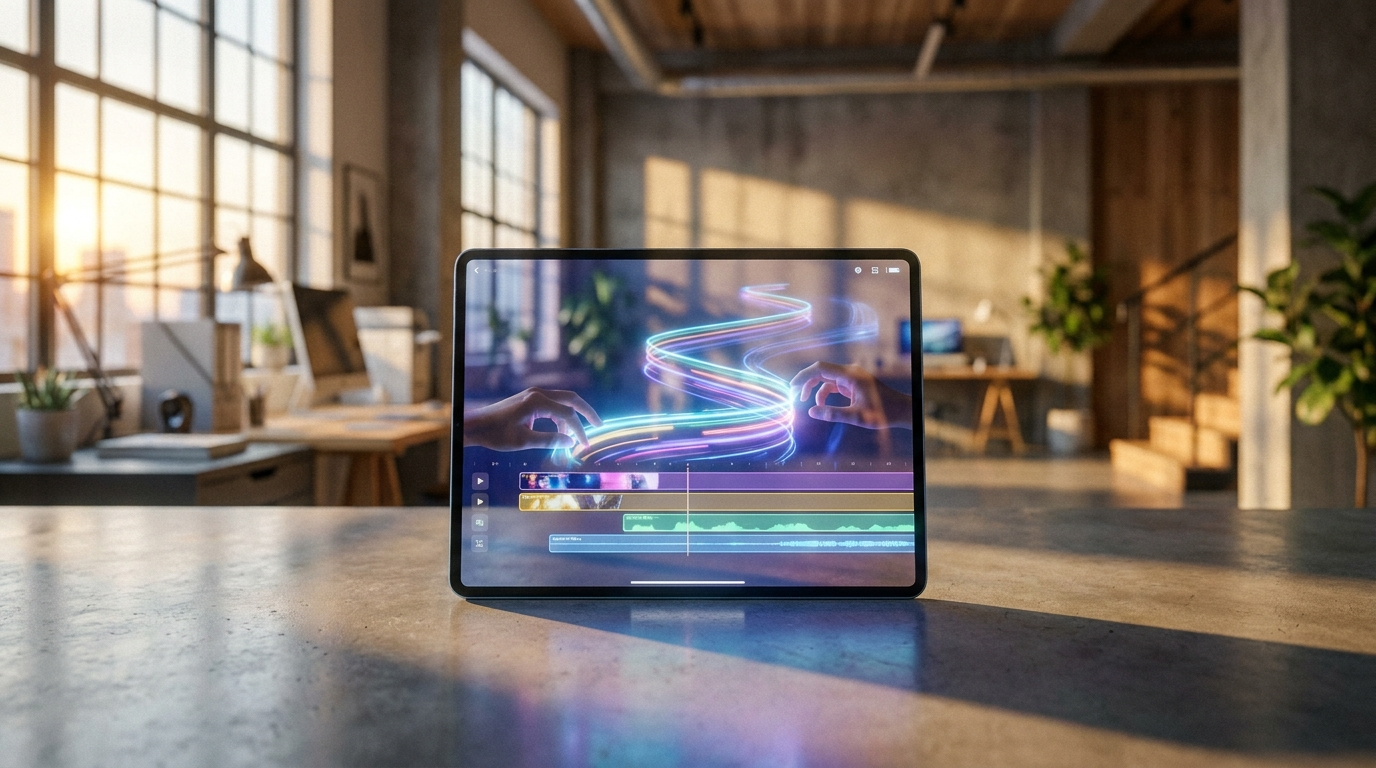
Transitioning to an AI-driven video workflow requires a structured approach to ensure brand consistency and technical quality. Follow these steps to integrate AI video editing for marketers into your current strategy:
- Define Your Core Input: Determine if your video will start from a text script, a product URL, or raw footage. Tools like URL To Video are ideal for e-commerce, while generative text-to-video tools work best for conceptual brand awareness.
- Select Your AI Engine: Choose from the top 11 AI video generators identified in 2026 based on your specific needs—whether that is 3D animation, photorealistic avatars, or rapid social media resizing.
- Apply Brand Presets: Upload your brand's color palette, logos, and font styles into the AI editor. This ensures the generative output aligns with your visual identity from the first draft.
- Refine with Human Oversight: Use the AI to generate the "first 80%" of the work. Have a creative lead review the emotional beats, timing, and messaging to ensure the content resonates with your human audience.
- Optimize for Multi-Channel Distribution: Utilize AI's "one-click resize" features to transform a single 16:9 master video into various formats (9:16 for vertical stories, 1:1 for feeds, and 4:5 for mobile-first platforms).
Comparing Top AI Video Editing Features for 2026
Choosing the right platform is critical for maximizing your ROI. The following table compares the dominant features found in the leading AI video editing tools available to marketers this year.
| Feature Category | Standard AI Editor | Advanced 2026 AI Platforms | Marketing Impact |
|---|---|---|---|
| Source Integration | Manual Uploads | Direct URL-to-Video Scraping | 90% reduction in asset prep time |
| Dimensionality | 2D Flat Video | Advanced 3D & Spatial Editing | Higher engagement in VR/AR spaces |
| Content Generation | Template-based | Generative Scene Creation | Unique content that avoids "stock" look |
| Localization | Simple Subtitles | AI Dubbing & Lip-Syncing | Seamless entry into global markets |
The Rise of 3D and Immersive Marketing Videos
One of the most significant breakthroughs in 2026 is the democratization of 3D video content. According to a report from PR Newswire, Krikey AI launched advanced 3D video editor tools earlier this February, specifically designed to revolutionize marketing videos for businesses. This allows even small marketing teams to create 3D animated characters and environments that interact with products. This level of production was once reserved for major film studios or high-budget gaming companies.
The move toward 3D is driven by the increasing consumer use of mixed reality (MR) and augmented reality (AR) devices. Marketers are finding that standard 2D videos often fail to capture attention in these immersive environments. By using AI-driven 3D editors, brands can create assets that feel "alive." For instance, a furniture brand can generate a 3D model of a sofa and use AI to place it in a variety of photorealistic room settings, allowing the viewer to see the product from every angle in a video format.
Additionally, these 3D tools are integrated with generative AI, meaning you can describe a scene—"a futuristic kitchen with soft morning light"—and the AI will build the 3D environment for your product to live in. This eliminates the need for expensive physical sets or complex CGI software that requires years of training. For marketers, this means the "concept-to-delivery" time for high-end 3D commercials has dropped from months to mere hours.
Automating the E-commerce Video Pipeline
The integration of URL-to-Video technology has been a game-changer for digital retailers in 2026. As reported by 24-7 Press Release Newswire, these platforms allow for the instant creation of marketing videos directly from product links. This is particularly useful for businesses with large inventories that change frequently. Instead of manually creating an ad for every new SKU, the AI monitors the website and generates a new video as soon as a product is listed.
This automation extends to social media advertising. AI video editing for marketers now includes "auto-testing" features. The AI can generate five different versions of a video from a single URL—testing different music, hooks, and calls to action—and then automatically deploy them to platforms like TikTok or Instagram to see which performs best. This data-driven approach to video creation ensures that marketing budgets are spent on content that is mathematically proven to convert.
Strategic Benefits of AI Video Editing for Marketers
The strategic implementation of AI in video production offers benefits that go far beyond simple cost-cutting. In 2026, the primary advantage is "hyper-localization." Using AI, a single marketing campaign can be localized for dozens of different regions in a single afternoon. This includes not just translating text, but using AI dubbing and lip-syncing technology to make the speakers in the video appear to be speaking the local language fluently. According to TyN Magazine, this has become a standard feature in top AI video tools for marketers and creators this year.
Another strategic pillar is "Personalized Video at Scale." Marketers can now use AI to generate thousands of unique video messages for individual customers. Imagine a scenario where a customer abandons their cart; instead of a standard email, they receive a personalized video where an AI avatar addresses them by name and shows them the specific items they left behind, perhaps offering a tailored discount. This level of personalization was unthinkable in the pre-AI era but is now a cornerstone of 2026 marketing strategies.
Lastly, the role of the "Video Marketer" has shifted from technical execution to creative direction. Since the AI handles the tedious tasks of cutting, syncing, and color grading, human marketers can focus on high-level strategy, storytelling, and brand positioning. The "Trend Hunter" reports from January 2026 emphasize that the most successful marketing teams are those that view AI as a "creative co-pilot" rather than a replacement for human ingenuity.
Overcoming the Challenges of AI Video Content
Despite the advancements, using AI video editing for marketers comes with its own set of challenges. The most prominent is maintaining "Human Connection." As AI-generated content becomes more prevalent, there is a risk of "AI fatigue" among consumers. To combat this, marketers must ensure that their AI-generated videos still feel authentic and carry a distinct brand voice. The goal is to use AI to enhance the message, not to let the technology overshadow the human element of the brand.
Ethical considerations and copyright also remain at the forefront of the 2026 marketing discussion. It is essential to use AI tools that are trained on licensed datasets to avoid legal complications. Most professional-grade AI video generators now provide "copyright-cleared" guarantees for all assets generated within their platforms. Marketers must be diligent in verifying these protections to safeguard their brands from potential intellectual property disputes.
What is the best AI video editing tool for marketers in 2026?
While there are 11 powerful options available, the "best" tool depends on your needs. For 3D content, Krikey AI is the leader; for e-commerce, URL-to-Video platforms are preferred; and for general content creation, the top-rated AI video generators listed by My Everyday Tech offer the most versatility.
How does URL-to-Video technology work?
URL-to-Video technology uses AI to crawl a specific product page, extracting key images, pricing, and descriptions. It then uses a generative engine to arrange these elements into a scripted video with voiceovers and background music, ready for social media distribution.
Can AI video editing replace human video editors?
In 2026, AI is viewed as a "co-pilot" rather than a replacement. While it handles 80-90% of the technical workload, human editors are still essential for creative direction, emotional storytelling, and ensuring that the final output aligns with the brand's unique identity.
Is AI-generated video content legal for commercial use?
Yes, provided you use reputable platforms that use licensed training data. Most top-tier AI video tools in 2026 provide commercial usage rights and copyright indemnification for the content produced on their platforms.
Why is 3D video editing important for 2026 marketing?
3D video editing is crucial because of the rise in immersive technology like AR and VR. 3D assets allow for more interactive and engaging experiences that outperform traditional 2D videos in modern digital environments.



Comments ()