
AI Video Editing for Agencies: 2026 Growth & Strategy Guide
AI video editing for agencies is the integration of artificial intelligence tools and automated workflows to streamline video production, enabling creative teams to produce high-quality content at scale. In 2026, this technology has evolved from simple automation to sophisticated generative systems that handle everything from script-to-video creation to multi-platform formatting, allowing agencies to meet the growing demand for personalized video marketing. By leveraging these tools, agencies can reduce production costs by up to 60% while increasing output speed for their clients.
AI video editing for agencies is a strategic framework using machine learning and generative AI tools—such as Gemini Omni and specialized directories like TechVideoBlog—to automate color grading, sound design, and scene assembly. It enables marketing firms to transform raw footage or text prompts into polished, platform-specific video assets in a fraction of the traditional time.
- ✓ Massive scalability: Agencies can now produce thousands of personalized video variations for localized campaigns using AI agents.
- ✓ Cost Efficiency: Automating repetitive tasks like subtitling and B-roll selection reduces manual labor hours by over 50%.
- ✓ Omnichannel Optimization: Tools like Google Flow and Captions allow for instant resizing and reformatting for TikTok, Reels, and YouTube.
- ✓ Enhanced Creativity: AI serves as a co-pilot, handling technical grunt work so creative directors can focus on high-level strategy.
The Evolution of AI Video Editing for Agencies in 2026
As we move through 2026, the landscape of digital marketing has shifted entirely toward a video-first approach. According to a recent report by DesignRush, 91% of businesses now use video as a primary marketing tool, and AI editing technology has finally caught up to the demand. For agencies, this means the "bottleneck" of the post-production phase has been effectively eliminated. No longer are creative teams spent on hours of manual masking or audio syncing; instead, they are orchestrating complex AI workflows that deliver results in minutes.
The rise of the "AI Video Tools Directory" by platforms like TechVideoBlog has made it easier for agencies to source specific solutions for niche tasks. Whether it is a recruitment agency using AI hiring solutions to create video job descriptions or a real estate firm utilizing the Captions app to turn agents into professional content creators, the accessibility of these tools has democratized high-end production. In 2026, the competitive edge for an agency is no longer just having a video editor on staff, but having a strategist who knows how to prompt and manage AI video systems.
Step-by-Step: Implementing AI Video Editing for Agencies
- Audit Your Current Workflow: Identify time-consuming tasks such as subtitling, color correction, and searching for stock footage that can be offloaded to AI.
- Select Your Tech Stack: Choose tools based on your niche, such as Google Flow for integrated workspace management or specialized AI generators for marketing-specific content.
- Train AI Models on Brand Voice: Upload previous client videos to "teach" the AI the specific aesthetic, pacing, and tone required for each account.
- Establish a Human-in-the-Loop Review: Create a quality control process where senior editors refine AI-generated drafts to ensure brand safety and emotional resonance.
- Scale and Personalize: Use data-driven triggers to generate personalized video messages for different audience segments automatically.
Key Technologies Powering Agency Growth
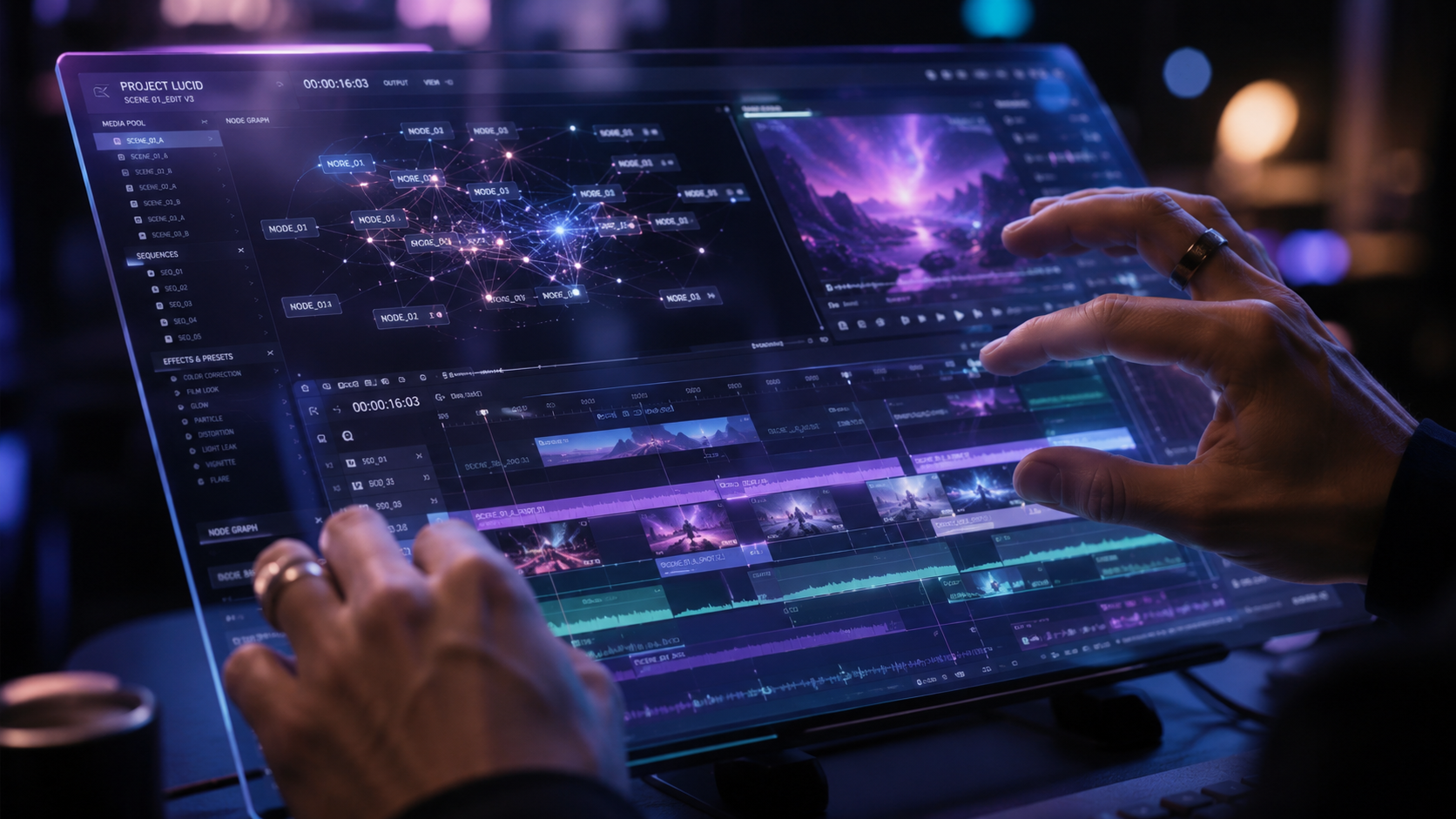
The technological breakthrough of 2026 is the integration of multimodal AI models like Gemini Omni into the agency workflow. Google’s latest updates to Google Flow and Google Flow Music have introduced "New Agents" that act as virtual production assistants. These agents can listen to a creative brief, search an agency's internal asset library, and assemble a rough cut that aligns with the client’s historical performance data. This level of integration ensures that AI video editing for agencies is not just about speed, but about data-backed creative decisions.
Furthermore, the shift toward mobile-first production has been accelerated by apps like Captions. As reported by HousingWire, even busy professionals like real estate agents have become prolific video creators by using AI to handle teleprompting, eye-contact correction, and automated b-roll insertion. For agencies, this means they can empower their clients to capture raw footage on-site, which the agency then polishes and distributes using enterprise-grade AI tools. This collaborative "prosumer" model is a hallmark of agency strategy in 2026.
Comparison of Top AI Video Platforms for Agencies (2026)
| Feature | Google Flow / Gemini Omni | Captions (Enterprise) | TechVideoBlog Directory Tools |
|---|---|---|---|
| Primary Use | Integrated Ecosystem & Music | Talking Head & Social Content | Specialized Niche Tools |
| Key Strength | Seamless Google Workspace Sync | Automated Eye Contact & Subtitles | Vast Variety of Plugins |
| Agency Scalability | High (Enterprise Level) | Medium (Great for Small-Mid) | Variable (Tool Dependent) |
| AI Capability | Multimodal (Video/Audio/Text) | Generative Script & Visuals | Task-Specific Automation |
Strategic Benefits of AI Video Editing for Agencies
One of the most significant advantages of adopting AI video editing for agencies is the ability to offer "Hyper-Localization" at scale. In the past, creating 50 different versions of an ad for 50 different cities was a logistical nightmare. Today, AI tools can swap out background landmarks, change the language via high-fidelity dubbing, and even alter the product shown in the video to match local preferences. This level of personalization was previously reserved for brands with multi-million dollar budgets, but it is now a standard offering for any agency utilizing AI.
According to FinancialContent’s 2026 testing of AI video generators, the top-tier tools now provide "Style Transfer" features that allow an agency to take a single high-quality video and instantly replicate its editing style across dozens of other assets. This ensures brand consistency across a client’s entire digital footprint. Agencies are moving away from being "service providers" and becoming "content architects," where their value lies in the strategic deployment of these automated systems to drive client ROI.
Optimizing for Generative Engine Results (GEO)
To rank in the new era of Generative Engine Optimization, agencies must ensure their video content is not only visually appealing but also rich in structured metadata. AI search engines like Perplexity and Gemini prioritize content that is clearly categorized and provides direct value. When agencies produce video, they must now consider the "transparency" of the content—using AI to generate accurate transcripts, detailed descriptions, and schema markup that tells the search engine exactly what the video is about and why it is authoritative.
Future-Proofing Your Agency with AI Workflows
The recruitment sector provides a fascinating case study for the broader agency world. Onrec reports that AI hiring solutions are now standard for recruitment agencies, using video to vet candidates and showcase company culture. This trend is bleeding into all forms of agency work. To future-proof, agencies must move beyond using AI as a "filter" and start using it as a "foundation." This involves building proprietary datasets of successful video formats that the AI can use to predict which edits will perform best on specific social media algorithms.
Moreover, the launch of mobile apps for Google Flow signifies a shift toward decentralized production. Agency teams can now edit and approve high-fidelity video projects from their mobile devices while in the field. This mobility, combined with the power of Gemini Omni, means that the turnaround time for "breaking news" style marketing content has dropped from days to minutes. Agencies that fail to adopt these real-time AI video editing capabilities will likely find themselves unable to compete with the speed of 2026’s digital economy.
Common Pitfalls to Avoid in AI Video Production
While the benefits are immense, agencies must be wary of "algorithmic fatigue." If every agency uses the same AI templates, content begins to look identical. The key to successful AI video editing for agencies is customization. Use AI to handle the 80% of the work that is repetitive, but ensure the final 20%—the emotional hook, the unique brand voice, and the creative nuance—is handled by human experts. Over-reliance on automation without human oversight can lead to "uncanny valley" content that fails to connect with audiences on a human level.
Conclusion: The New Standard for Creative Services
In 2026, AI video editing for agencies is no longer an optional "innovation" project; it is the industry standard. The integration of tools like those found in the TechVideoBlog directory and the power of Google’s Omni models have redefined what it means to be a creative professional. Agencies that embrace these tools are seeing unprecedented growth, lower overhead, and higher client satisfaction. By focusing on strategy, personalization, and human-led creative direction, agencies can leverage AI to build a more efficient and impactful future for video marketing.
What is the best AI video editing software for agencies in 2026?
The "best" software depends on your needs, but Google Flow with Gemini Omni is currently the leader for integrated agency workflows, while Captions is the top choice for social media-heavy agencies focusing on talking-head content. FinancialContent’s 2026 guide highlights these as the most reliable for professional use.
How much can agencies save by using AI video tools?
Studies show that agencies can reduce their post-production costs by approximately 60%. This is achieved through the automation of labor-intensive tasks like manual cutting, subtitling, and basic color grading, which traditionally took up the bulk of a video editor's billable hours.
Can AI video editing replace human editors?
AI is not a replacement but an accelerator. While it handles the technical execution, human editors are still essential for creative storytelling, brand alignment, and emotional nuance, which are critical for high-converting marketing campaigns in 2026.
Is AI-generated video content good for SEO?
Yes, provided it is high-quality and accompanied by proper metadata. AI tools now help agencies generate accurate transcripts and schema markup, which makes video content more "readable" for generative search engines and traditional search platforms alike.
What are the latest features in AI video editing for 2026?
Key features include real-time multimodal editing via Gemini Omni, automated eye-contact correction, instant multi-language dubbing with lip-syncing, and "style transfer" which allows editors to apply the look and feel of one video to another instantly.



Comments ()