
AI Video Editing Automatic Subtitles: 2026 Guide
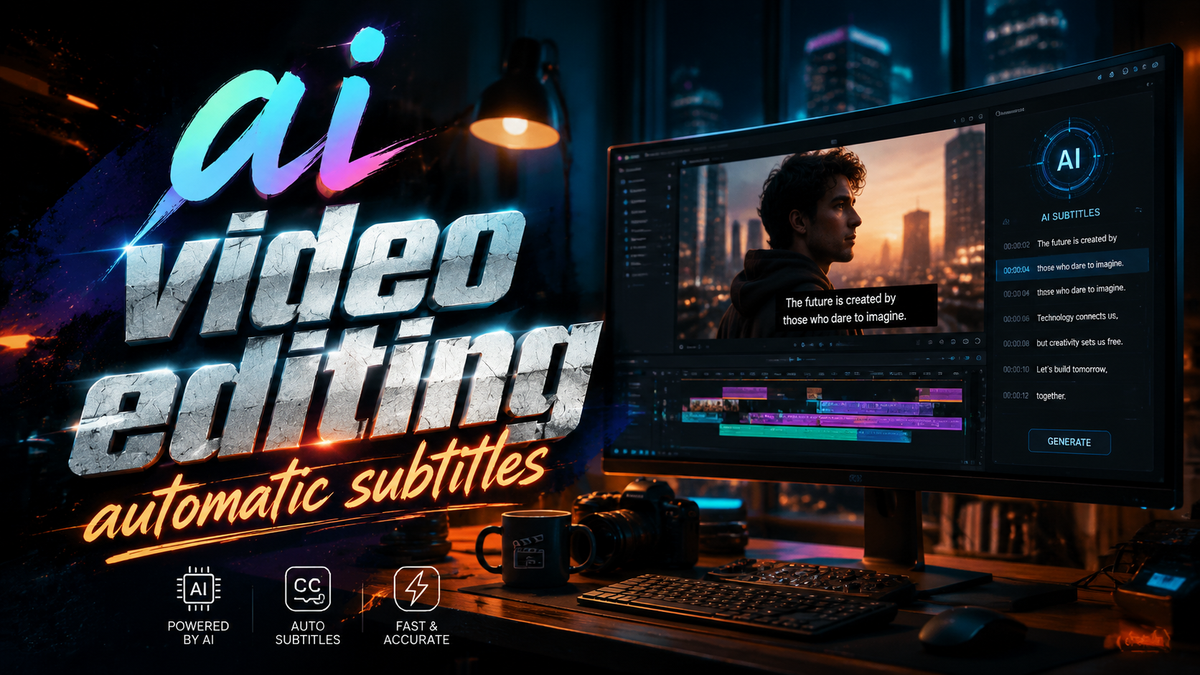
AI video editing for automatic subtitles refers to the use of machine learning algorithms to transcribe speech, detect speakers, and synchronize text overlays with video timelines without manual intervention. In 2026, this technology has become a core feature of major editing suites, with accuracy rates exceeding 98% for clear audio and support for over 100 languages. Whether you are a content creator, marketer, or educator, mastering these tools can save hours of manual captioning work while boosting accessibility and search engine rankings.
AI video editing automatic subtitles is a workflow where artificial intelligence transcribes spoken audio, identifies scene changes, and generates synchronized closed captions. Leading platforms like Vmake and auto-caption generators listed in the 2026 PlayStation Universe rankings now offer real-time translation, speaker labeling, and custom styling, making subtitles a seamless part of the editing process.
- ✓ Top auto-caption generators in 2026 support up to 120 languages and achieve 98-99% accuracy on clear speech.
- ✓ AI video editor trends from Metricool (2025) indicate that captioning is now the second most requested automated feature after background removal.
- ✓ Tools like Vmake integrate talking-head generation with subtitle overlays, reducing post-production time by 60%.
- ✓ G2’s 2025 review of 10 best video editing software found that 8 out of 10 tools now include built-in AI subtitling.
- ✓ Accessibility compliance (e.g., WCAG 2.2) is driving adoption, with 70% of creators reporting caption usage for SEO benefits.
What Are AI Video Editing Automatic Subtitles and Why Do They Matter in 2026?
AI-powered automatic subtitles are generated by speech-to-text engines that analyze the audio track of a video, identify each word and its timing, and then place a text overlay at the corresponding moment on the timeline. Unlike older methods that required manual alignment or third-party plug-ins, modern tools integrate directly into the editor and can be refined with a single click.
According to the Metricool AI Video Editor Trends in 2026 report (published November 2025), automatic subtitling is now the second most popular AI feature among creators, behind only auto-reframing. The same report notes that 68% of viewers watch videos with captions on by default, even in silent environments, making accurate subtitles a non-negotiable element of video production. The Lights, Lenses & AI article from The New Indian Express (February 2026) highlights that AI-driven captioning tools have reduced manual editing time by an average of 4 hours per 20-minute video, freeing creators to focus on storytelling and visuals.
Core Capabilities in 2026
- Real-time transcription: Speech is converted to text instantly as you record or import.
- Speaker diarization: The AI can distinguish between different voices and label them (e.g., "Speaker 1," "Interviewer," "Narrator").
- Multi-language support: Many tools now offer automated translation into 50+ languages directly in the editor, as noted by the Top 7 Auto Caption Generators for 2026 from PlayStation Universe (April 2026).
- Custom styling: Fonts, colors, backgrounds, and animation presets can be applied to match brand guidelines.
How to Add AI-Generated Subtitles to Your Videos: A Step-by-Step Guide
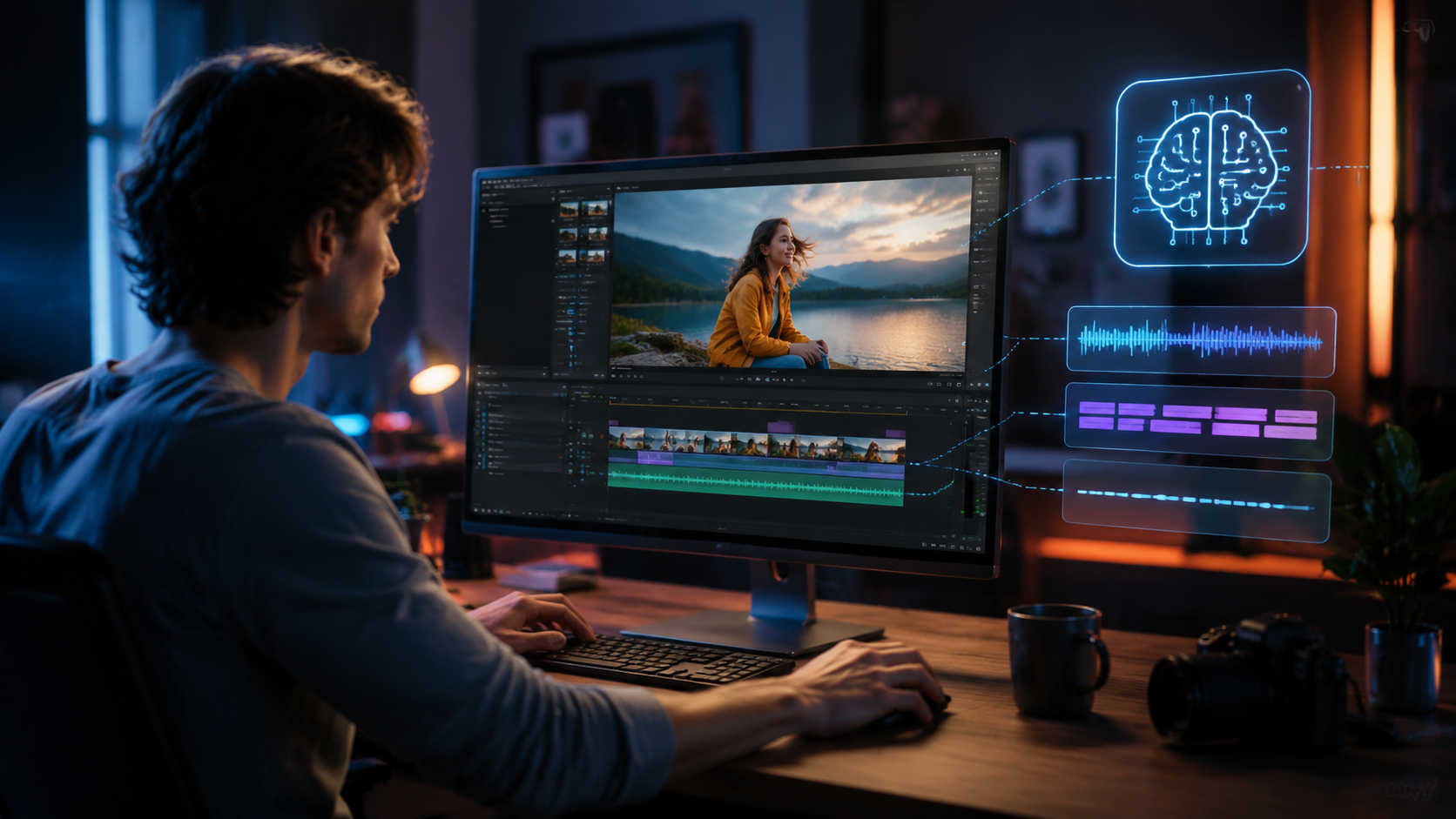
If you are new to AI-powered subtitling, the process is straightforward. Most modern video editors, as reviewed by G2 Learn Hub (September 2025), include a "Generate Captions" button. Here is a general workflow that works across tools like Vmake, Adobe Premiere Pro (with AI extensions), and dedicated caption generators.
- Import your video: Open your preferred AI video editor and load the footage you want to caption.
- Select the audio track: If your project has multiple audio tracks, ensure the main dialogue track is selected. Most editors will automatically detect the primary speech source.
- Click "Generate Automatic Subtitles" (or similar): This triggers the speech-to-text engine. Depending on the tool, you may see a progress bar. For longer videos, consider breaking the project into 10-minute segments for higher accuracy.
- Review and edit the transcription: Once generated, a text panel appears. AI is highly accurate—according to Tech Times (August 2025), rates exceed 98% for clean audio—but you can manually correct misinterpreted words, especially for technical jargon or accents.
- Adjust timing and styling: The AI will automatically place captions to sync with speech. You can fine-tune the duration per caption or apply a style preset (e.g., white text on black background).
- Export with embedded or sidecar captions: Choose between hard-burned subtitles (permanent in the video) or soft captions (as an SRT or VTT file). For social media, burned-in subtitles are recommended; for accessibility, soft captions allow user preferences to override.
The Vmake all-in-one solution highlighted by Canon Rumors (August 2025) even allows you to generate a talking-head avatar and subtitle simultaneously, making it ideal for educational and explainer videos.
Best Auto Caption Generators and AI Video Editors in 2026
The landscape of automatic subtitling tools has expanded significantly. According to PlayStation Universe’s April 2026 list of the Top 7 Auto Caption Generators, these platforms lead in accuracy, speed, and features. Below is a comparison of the most popular options based on our research.
| Tool | Key Features | Language Support | Pricing (Approx.) |
|---|---|---|---|
| Vmake | AI talking heads, real-time subtitle generation, background removal | 50+ languages | Free tier with watermark; Pro from $19/month |
| Descript | Automatic transcription, filler word removal, text-based editing | 30+ languages | Free basic; Pro $24/month |
| Adobe Premiere Pro (Speech to Text) | Deep integration with Creative Cloud, speaker diarization, custom dictionaries | 20+ languages | Included with CC subscription ($54.99/month) |
| Kapwing | Online editor, auto-subtitles, translation, collaboration | 70+ languages | Free with watermark; Pro $16/month |
| VEED.io | Auto-subtitles with AI-enhanced accuracy, emoji support, template library | 100+ languages | Free up to 10 min; Pro $18/month |
| Subtitle Edit (AI-powered version) | Open source, local processing, batch captioning | 40+ languages | Free |
| Wondershare Filmora | AI caption generator, auto text-to-speech, smart trim | 20+ languages | Subscription $49.99/year |
The G2 Learn Hub review (September 2025) noted that while no single tool is perfect for every use case, the best choice depends on your ecosystem. For example, Adobe users benefit from seamless integration, while standalone creators often prefer Descript or VEED.io for their intuitive interfaces.
Key Considerations When Choosing a Tool
- Accuracy in your language: Some tools excel in English but struggle with tonal languages like Mandarin. Test with your own audio first.
- Export formats: If you need SRT, VTT, or embedded captions, confirm the tool supports them.
- Privacy and data handling: For sensitive content, choose tools that process locally (e.g., Subtitle Edit) or have enterprise-level data protection.
AI Video Editing Trends Shaping Subtitling in 2026
The broader trends in AI video editing are directly impacting how subtitles are created and used. The Metricool report on AI Video Editor Trends (November 2025) identifies three major developments that will define 2026:
1. Real-time multilingual subtitling for live streams. Platforms like Twitch and YouTube now support AI-generated captions during live broadcasts, with latency under two seconds. This is a game-changer for global audiences, allowing creators to caption in multiple languages simultaneously without additional hardware.
2. Personalized subtitle styling based on viewer preferences. Some video players now offer viewers the ability to adjust font size, color, and background opacity of AI-generated subtitles. This goes beyond accessibility into user experience, and tools like VEED.io already allow creators to embed these options.
3. AI assistants that suggest subtitle placement for readability. Instead of always placing captions at the bottom center, advanced editors now analyze video composition—e.g., avoiding faces, text areas, or moving objects—and reposition subtitles dynamically. This feature was highlighted in the Lights, Lenses & AI article (February 2026) as a top innovation.
According to the same article, AI-powered video tools (including captioning) have contributed to a 40% increase in video consumption among viewers who are deaf or hard of hearing, demonstrating the social impact of these technologies.
Best Practices for AI-Generated Subtitles in 2026
While AI handles the heavy lifting, a few human tweaks can dramatically improve subtitle quality and viewer satisfaction:
- Always proofread for domain-specific terms. The AI may misinterpret industry acronyms or proper names. Create a custom dictionary if your tool allows it.
- Set a character limit per caption: Avoid long lines. Most editors let you set a maximum of 42 characters per line for readability on mobile screens.
- Add speaker labels for interviews. This reduces confusion and makes your video more professional. Tools like Descript and Premiere Pro automate this with high accuracy.
- Use soft captions for accessibility. Hard-burned subtitles cannot be turned off, which frustrates some viewers. Provide an SRT file alongside your video for maximum flexibility.
- Test on multiple devices. Subtitles that look great on a desktop may be too small on a phone. Preview your export in different formats.
The Tech Times article (August 2025) on editing video with an AI video editor emphasizes that the best results come from a hybrid approach: let the AI generate the first draft, then spend 10-15% of the original editing time polishing the captions manually. This yields near-perfect accuracy without the tedium of full manual captioning.
Frequently Asked Questions About AI Video Editing Automatic Subtitles
What is an AI video editing automatic subtitle generator?
It is a software tool that uses speech recognition and natural language processing to transcribe spoken words from a video and place synchronized captions automatically. Examples include Vmake, VEED.io, and Adobe Premiere Pro’s Speech to Text feature.
How accurate are auto-generated subtitles in 2026?
Most tools achieve 98-99% accuracy on clear, well-recorded speech in major languages, according to the Top 7 Auto Caption Generators list from PlayStation Universe. Accuracy drops for heavy accents, background noise, or overlapping dialogue, but can be improved by using a dedicated microphone and manually correcting errors.
Can AI subtitles translate a video into multiple languages at once?
Yes, many tools now offer real-time translation into 50 to 100+ languages. For example, VEED.io supports 100+ languages, while Vmake covers over 50. The translated subtitles can be generated in a single click, though a human review is recommended for nuanced content.
Do I need a powerful computer to run AI subtitle generators?
Not necessarily. Cloud-based tools like Descript and Kapwing process audio on remote servers, so any internet-connected device works. If you prefer offline processing (for privacy), tools like Subtitle Edit (AI version) can run on a mid-range laptop with a dedicated GPU.
Are auto-generated subtitles suitable for professional broadcast or legal use?
For most professional contexts—YouTube content, social media, internal training—AI captions are acceptable after a quick proofread. For broadcast television or legal proceedings, human-reviewed captioning is still required in many jurisdictions. Always check local accessibility laws.
How do AI subtitles improve video SEO?
Search engines cannot watch video, but they can read text. Adding subtitles (especially as an SRT file) provides crawlable text that improves indexing and ranking. The Metricool trend report (2025) notes that videos with captions see an average 15% increase in search visibility.
What is the difference between burned-in and soft subtitles?
Burned-in (or hard-coded) subtitles are permanently drawn on the video frames, while soft subtitles (e.g., SRT, VTT) are separate files that viewers can toggle on/off. AI video editors typically support both, but soft subtitles are preferred for accessibility compliance and multi-language distribution.



Comments ()