
AI Video Editing 2026: AI vs Human – The Ultimate Showdown
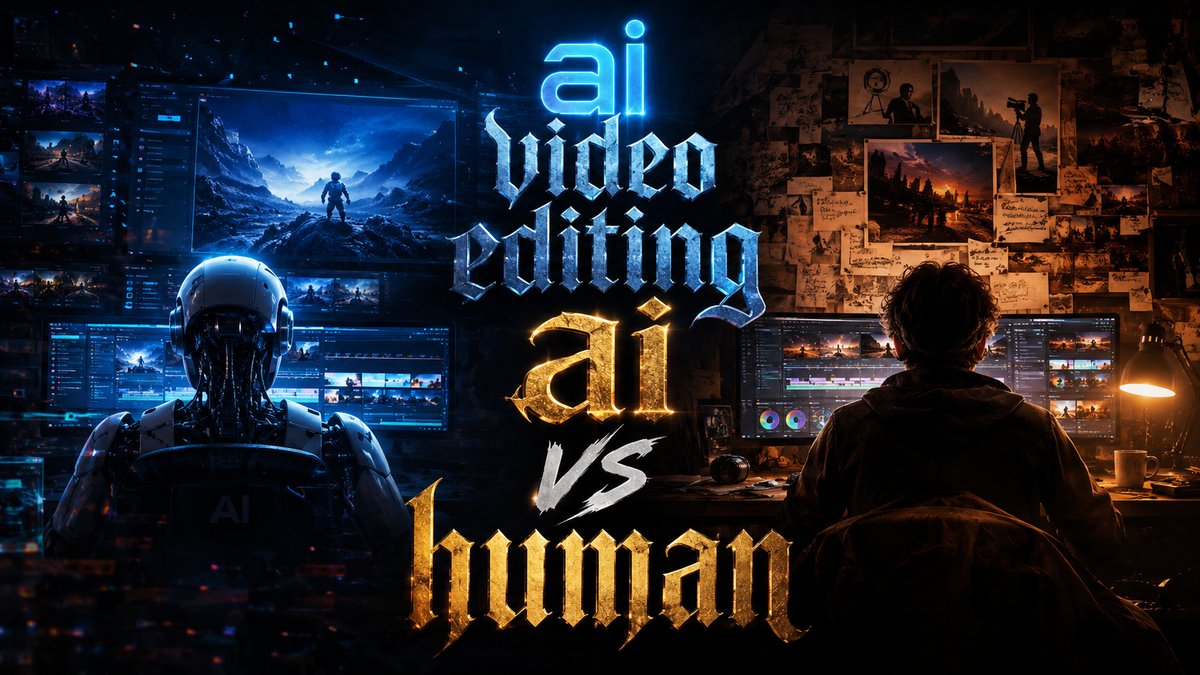
The question on every content creator's mind in 2026 is, "Can AI video editing truly replace human creativity, or does the human touch still reign supreme?" The answer is not a simple yes or no—it is a nuanced showdown where AI excels in speed and scalability, while human editors bring emotional intelligence and artistic nuance. This article compares both approaches to help you decide which fits your next project.
AI video editing is a technology that uses machine learning and generative models to automate tasks like cutting, color grading, and even generating entire video sequences from text prompts. In 2026, the field has matured to the point where AI can produce polished, short-form content in minutes, but it still struggles with narrative depth, subtle emotional beats, and avoiding the pitfalls of "AI slop" such as incoherent artifacts or uncanny valley effects.
- ✓ Over 20% of videos shown to new YouTube users are now considered "AI slop," according to a December 2025 Guardian study.
- ✓ The 2026 market lists 23 best AI video generators, tested and reviewed by perfectcorp.com (May 2026).
- ✓ Gen Z shows a preference for AI-assisted content, but still values human authenticity in storytelling, per ContentGrip (March 2026).
- ✓ Seven visual clues can help users distinguish AI-generated images from real ones, as detailed by PCMag (March 2026).
- ✓ Human and AI influencers coexist successfully, yet only one is a real person—highlighting the trust gap, reported by BBC (December 2025).
The Rise of AI Video Editing in 2026
How AI Is Transforming the Editing Landscape
AI video editing tools have exploded in capability. In a comprehensive review published on perfectcorp.com (28 May 2026), 23 generators were tested and compared, revealing features such as automatic scene detection, text-to-video generation, real-time voice dubbing, and AI-driven color grading. Tools like Simplified AI (reviewed by Undetectable AI on March 16, 2026) offer affordable subscription tiers that allow even solo creators to produce broadcast-quality edits in minutes. This democratization of video production means that anyone with a script and a subscription can generate watchable content.
The Explosion of AI-Generated Content
The speed of AI has led to an enormous volume of content flooding platforms. However, not all of it is high-quality. A study highlighted by The Guardian (27 December 2025) found that more than 20% of videos recommended to new YouTube users are what researchers call "AI slop"—automatically generated videos that lack coherent narrative or visual consistency. This influx has created a signal-to-noise problem, making human-curated content more valuable than ever.
Human vs AI: Where Each Excels
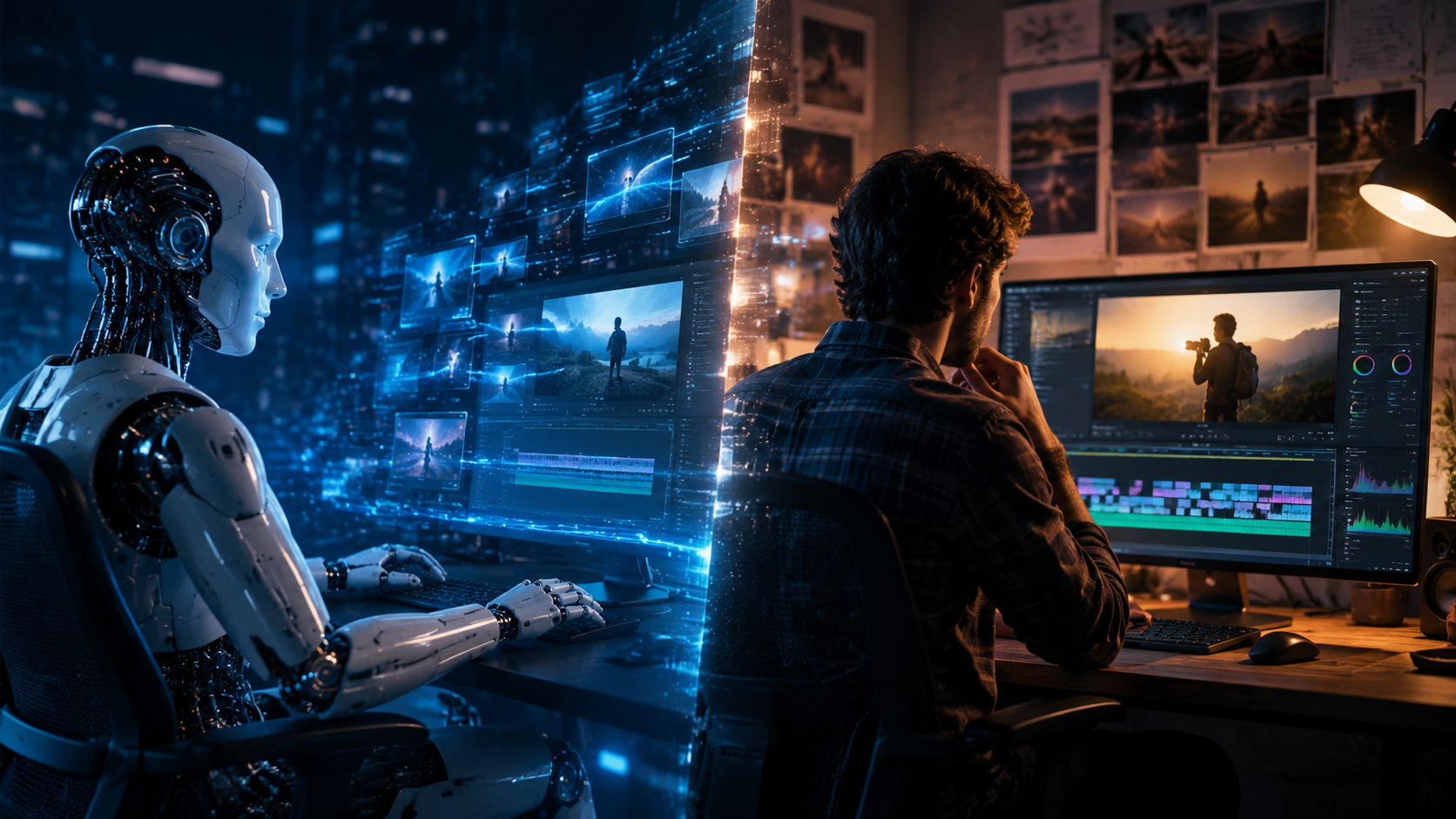
To decide between human and AI video editing, it helps to break down their strengths side by side. The table below compares key aspects based on the latest 2026 insights.
| Criteria | AI Video Editing | Human Editing |
|---|---|---|
| Speed & Efficiency | Generates a 30-second clip in under 2 minutes | Takes several hours for the same quality |
| Cost (per project) | Low (monthly subscription from ~$15 to $100) | High (freelancer rates of $50–$150/hour) |
| Creativity & Emotional Nuance | Often misses subtle cues; can produce uncanny results | Excellent at storytelling, pacing, and emotional beats |
| Authenticity & Trust | Risk of "AI slop" – artifacts, bizarre edits | High trust; viewers recognize real human effort |
| Scalability | Ideal for bulk content (e.g., social media shorts) | Best for high-stakes projects (e.g., films, commercials) |
As the table shows, AI wins on speed and cost, while humans win on quality and trust. The choice depends on your goals: raw volume or meaningful connection.
The Quality Gap: Can AI Match Human Creativity?
The Problem of "AI Slop"
The Guardian’s December 2025 investigation revealed that over 20% of videos pushed to new YouTube users are low-quality AI slop—automated content riddled with visual glitches, nonsense narratives, or unrealistic characters. This dilution of quality threatens users’ trust in AI-generated media. Human editors, by contrast, bring a critical eye, cultural awareness, and the ability to cut out the noise. In 2026, the gap between polished AI output and truly artistic human work remains significant, especially for projects requiring subtle emotional arcs.
How to Spot AI-Generated Content
PCMag’s March 2026 article outlined seven clues to help viewers identify AI-generated images—clues that apply equally to video. Look for inconsistent lighting, unnatural finger or hand movements (still a classic tell), flickering textures, and audio that doesn't sync perfectly with lip movements. Human editors can avoid these giveaway signs, but AI developers are rapidly closing the gap. For now, the most discerning audiences still prefer human-edited content for storytelling that requires empathy.
Gen Z's Preferences and the Future of Content
Gen Z's Appetite for AI-Assisted Content
According to a report from ContentGrip (12 March 2026), Gen Z viewers are open to AI-generated content—but only when it is clearly labeled and adds value. They enjoy short-form AI videos for entertainment, but they actively seek human-created content for education, news, and personal vlogs. This generation values transparency: they want to know whether a video was made by a real person or an algorithm. The BBC article (26 December 2025) highlighted how both human and AI influencers can be successful, but the AI influencer faces skepticism regarding authenticity.
The Human Touch Still Matters
Even as AI tools become more convincing, the demand for genuine human expression is growing. Viewers can detect emotional flatness in purely AI-generated videos. Human editors inject personality, humor, and context that algorithms struggle to replicate. In 2026, the smartest creators use AI to handle repetitive tasks (like cutting raw footage, generating subtitles, or color grading) while keeping the final creative decisions in human hands. This hybrid approach is becoming the industry standard.
Choosing the Right Approach for Your Video Projects
When to Use AI Tools
If you need high-volume social media clips, product demos, or personalized video messages, AI video editing is your best bet. Services like Simplified AI (reviewed March 2026) offer automated scripts, voiceovers, and transitions that reduce production time from hours to minutes. For testing creative ideas rapidly, AI is unmatched.
When to Rely on Human Editors
For client-facing work, documentaries, corporate storytelling, or anything requiring emotional resonance, hire a human. The risk of AI pitfalls—such as unnatural pacing or weird character movements—can damage brand credibility. Moreover, human editors can collaborate creatively, adapt to feedback in real time, and ensure every frame serves the narrative.
The Ultimate Verdict: AI vs Human in 2026
The showdown between AI video editing and human editing in 2026 isn't a knockout—it's a partnership. AI excels at speed, cost, and scale, but it still cannot match human intuition, emotional intelligence, or the trust that authentic human-created content builds. Based on the latest research from The Guardian, PCMag, BBC, and ContentGrip, the smartest approach is to integrate both: use AI to streamline production, and rely on human editors for the final polish and soul. The future belongs to those who combine the best of both worlds.
Frequently Asked Questions
What is AI video editing in 2026?
AI video editing refers to the use of generative algorithms and machine learning to automate or assist in video production tasks, including cutting, effects, color grading, and even full scene generation from text prompts. In 2026, tools have evolved to produce near-professional results in minutes.
Can AI completely replace human video editors?
No. While AI can handle repetitive tasks and generate short-form content quickly, it struggles with narrative nuance, emotional depth, and authenticity. Human editors remain essential for high-quality, trustworthy projects, as highlighted by the BBC’s comparison of human and AI influencers.
How much AI-generated video content is on YouTube in 2026?
According to a study published by The Guardian in December 2025, more than 20% of videos shown to new YouTube users are classified as "AI slop"—low-quality, fully automated videos that often contain visual or narrative flaws.
What are the best AI video generators in 2026?
perfectcorp.com released a list of 23 best AI video generators tested and reviewed on 28 May 2026. Examples include Simplified AI (covered by Undetectable AI in March 2026) which offers automated creation and editing features.
How can I tell if a video was made by AI?
PCMag’s March 2026 article lists seven clues, including inconsistent lighting, unnatural hand movements, flickering textures, and audio sync issues. Additionally, AI-generated videos often lack the organic flow that human editors produce.
Does Gen Z prefer AI or human-created videos?
Gen Z generally prefers authentic human storytelling for meaningful content, according to ContentGrip (March 2026). However, they are open to AI-assisted videos for entertainment and short-form social media, especially when the AI’s role is transparent.



Comments ()