
AI Video Creator for Social Media Posts (2026 Guide)
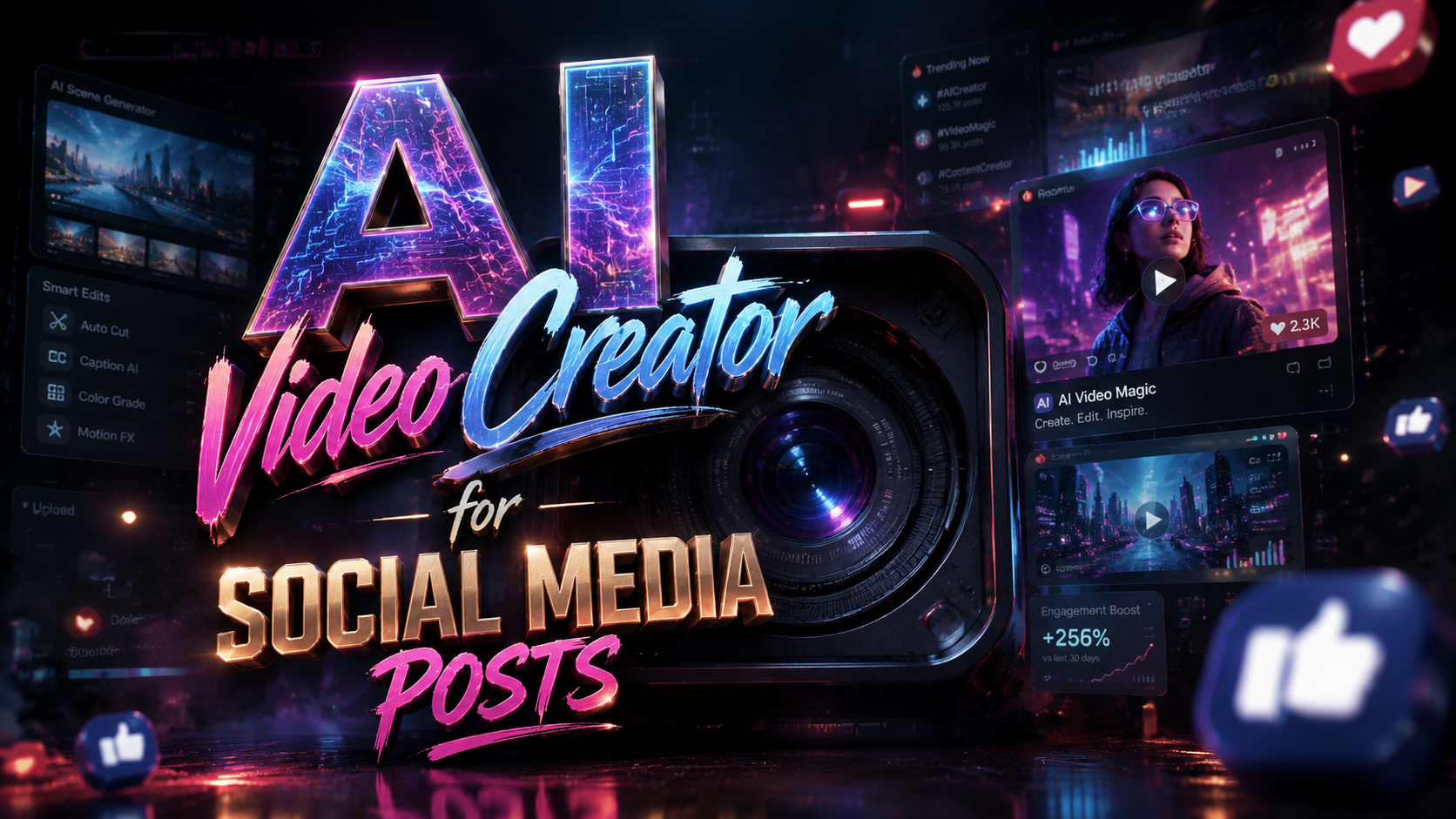
An AI video creator for social media posts is a software tool that uses generative artificial intelligence to produce short-form video content – including animations, talking‑head clips, product demos, and branded stories – directly from text prompts, scripts, or uploaded assets, without requiring manual editing or video production skills.
TL;DR: AI video creators for social media posts in 2026 have become essential for brands, creators, and marketers, offering features like text‑to‑video, AI avatars, and automated music sync. The landscape is evolving rapidly, with platforms like TikTok expanding AI tools and new ethical considerations around authenticity and disclosure.
An AI video creator for social media posts is a generative AI application that transforms text, images, or scripts into short, platform‑optimized videos. These tools use large language models and diffusion‑based video generation to produce content for TikTok, Instagram Reels, YouTube Shorts, and other social channels, often with integrated editing, captioning, and music libraries.
- ✓ TikTok’s Symphony AI video tool expanded in April 2026, offering brand‑safe video creation directly within the platform.
- ✓ The rise of cheap, “slop” AI content has sparked quality concerns, as highlighted by The New York Times’ investigation into get‑rich‑quick schemes.
- ✓ Ethical challenges include deepfake misuse and undisclosed AI‑generated sponsored posts, as demonstrated by BBC findings and CalMatters reporting.
- ✓ Effective AI video creators now incorporate real‑time style control, multi‑language voiceovers, and compliance filters to maintain authenticity.
What Is an AI Video Creator for Social Media Posts?
An AI video creator for social media posts leverages generative models to turn a simple text description, blog link, or product URL into a ready‑to‑publish video. Unlike traditional video editing software, these tools handle storyboarding, scene transitions, voiceover, and even lip‑sync animation automatically. By mid‑2026, the technology has matured enough that many marketers rely on AI video creators to produce daily content without hiring editors or animators.
The core workflow typically involves entering a prompt or selecting a template. The AI then generates a sequence of clips – often combining stock footage, animated text, and synthetic voiceovers – that match the desired tone and length. Advanced tools allow users to upload brand assets (logos, fonts, color palettes) so every video remains on‑brand. According to Trend Hunter, AI social content creation has become one of the fastest‑growing categories in the marketing technology space, with adoption doubling since early 2025.
Because these tools are designed specifically for social platforms, they automatically output videos in the correct aspect ratio (9:16 for Stories and Reels, 16:9 for YouTube) and often include built‑in captioning to improve accessibility. As a result, an AI video creator for social media posts can cut production time from hours to minutes, while still delivering visually engaging content.
Why AI Video Creation Is Exploding in 2026
Several forces are converging to make 2026 a breakout year for AI‑powered video on social media. First, platform giants are embedding AI tools directly into their ecosystems. TikTok’s expansion of Symphony in April 2026 was a major milestone: brands and creators can now generate AI video ads and organic posts without leaving the app. This native integration lowers the barrier for millions of users who previously had to rely on third‑party tools.
Second, consumer appetite for short‑form video continues to grow. Platforms like Instagram Reels and YouTube Shorts now prioritize algorithmically‑surfaced video, pushing creators to publish multiple times per day. To keep up with demand, even solo creators are turning to AI video creators for social media posts. According to The New York Times, the proliferation of “AI slop” – low‑quality automated content – has sparked a debate about how to balance speed with substance. Yet the article also notes that the most successful creators treat AI as an accelerator, not a replacement for human storytelling.
Third, the cost of compute power and licensing for generative video models has dropped sharply. In 2025, many AI video startups offered free tiers limited to 5‑minute exports per month. By 2026, unlimited plans are common for under $30/month, making professional‑grade AI video creation accessible to small businesses and independent influencers. This democratization is driving a gold‑rush mentality, but also raising questions about content authenticity, which we will explore later.
TikTok’s Symphony: A Case Study in Platform‑Nativ
TikTok’s Symphony suite is a prime example of how an AI video creator for social media posts is evolving. The tool allows users to input a product URL or brand brief and automatically generate a short video with music, voiceover, and dynamic text overlays. In its expanded form, Symphony also includes “digital twins” – AI‑generated avatars that look and sound like real influencers, with full disclosure labels required. This feature has been particularly popular for A/B testing different video styles before committing to production.
While Symphony is proprietary, its success has pushed competitors to integrate similar capabilities. For instance, Instagram Reels now offers “AI Reels Assistant” that can repurpose blog posts into video scripts. The trend is clear: the line between social media platform and video creation tool is blurring, and an AI video creator for social media posts is no longer an optional add‑on but a core part of the content workflow.
Why Small Teams Are Adopting AI Video Creators
For a solo creator or a three‑person marketing team, producing even one polished video a day used to be unrealistic. AI video creators remove the need for specialized skills like video editing, color grading, or motion design. A coffee shop owner, for example, can turn a weekly menu update into a 15‑second Reel using a text prompt: “Slow motion pour of oat milk latte, with upbeat indie music and café logo in corner.” The AI handles the rest.
According to CalMatters, even political campaigns are using AI video creators to rapidly produce content for influencers – though disclosure failures have raised eyebrows. The ability to generate dozens of unique videos in an hour makes these tools invaluable for time‑sensitive campaigns and local marketing.
How to Choose the Right AI Video Creator for Social Media Posts
Not all AI video tools are created equal. When evaluating an AI video creator for social media posts, you should consider output quality, customization options, platform compliance, and pricing. Below is a comparison table of the most common feature categories to look for in 2026.
| Feature | Why It Matters | Example Tools |
|---|---|---|
| Text‑to‑video generation | Converts scripts or blog posts into full video scenes | Digen AI, Synthesia, Runway |
| AI avatars / digital twins | Creates realistic presenters without filming | HeyGen, TikTok Symphony |
| Multi‑platform export | Outputs in 9:16, 1:1, 16:9 ratios | Pictory, CapCut AI |
| Auto‑captioning & translation | Adds subtitles and supports multi‑language audiences | Descript, Veed.io |
| Brand asset integration | Applies logo, colors, fonts consistently | Digen AI, InVideo |
| Music & sound effects library | Licensed tracks for social platforms | Lumen5, Vimeo AI |
| Ethical disclosure enforcement | Adds “AI‑generated” labels automatically | TikTok Symphony, Meta AI Tools |
Pricing Tiers in 2026
Most AI video creators for social media posts follow a freemium model. Free plans usually allow 1‑5 exports per month with watermarks. Pro plans range from $19 to $79/month and offer unlimited exports, custom templates, and commercial licensing. Enterprise plans often include white‑label output and API access for automated workflows. When comparing pricing, factor in the time saved – even a $50/month tool can replace a $500/week freelance editor.
Essential Checklist for Evaluation
Before committing, test the tool’s ability to handle your specific content type. If you produce talking‑head explainers, prioritise tools with realistic avatars and lip‑sync accuracy. If you focus on product showcases, look for those that can ingest a product URL and pull in images, reviews, and pricing automatically. Always check the export resolution – most social platforms recommend 1080×1920 pixels for vertical video. Also verify that the AI video creator for social media posts includes automatic captioning in compliance with ADA guidelines, as this can boost reach.
Step by Step: Creating a Social Media Video with an AI Video Creator
- Define your objective and target platform. Decide if the video is for TikTok, Instagram Reels, YouTube Shorts, or cross‑posting. Each platform has unique length limits and engagement patterns.
- Write or generate a script. Most AI video creators accept a sentence, a blog post URL, or a bullet list. Keep the script conversational – aim for 30–60 seconds (roughly 80–150 words).
- Select a visual style. Choose from pre‑made templates or describe a specific aesthetic (e.g., “clean minimalist with pastel background”). The AI will generate a storyboard.
- Customize branding elements. Upload your logo, select brand colors, and set font preferences. Many tools let you save a brand kit for reuse.
- Add voiceover and music. Use a synthetic voice (choose from dozens of accents and tones) or upload your own recording. The tool can also auto‑sync music to scene transitions.
- Review and tweak. AI‑generated videos may need minor adjustments. Replace a stock clip with your own footage, edit the text overlay timing, or change the music track.
- Export and post. Download the video in the correct aspect ratio. Some tools offer direct one‑click publishing to social platforms – but always preview first to ensure the final output matches your intent.
This workflow, powered by a capable AI video creator for social media posts, can be completed in under 10 minutes once you’re familiar with the interface. Many creators batch‑produce a week’s worth of videos in a single session, saving hours each week.
Avoiding Common Pitfalls – Quality and Ethics
The explosion of AI video creation has not been without controversy. In June 2026, The New York Times published an investigative piece titled “Can You Get Rich Quick Off A.I. Slop?” that exposed a cottage industry of automated video farms churning out low‑effort content designed solely to game algorithms. While these videos can generate short‑term ad revenue, they erode viewer trust and often violate platform terms of service. The lesson for legitimate creators: use an AI video creator as a productivity booster, not a substitute for quality storytelling.
Another critical issue is authenticity and disclosure. BBC traced anti‑immigration AI videos back to overseas fakers, highlighting how generative video can be weaponized for misinformation. Even when intentions are benign, failing to label AI‑generated content can mislead audiences. In response, platforms like TikTok and Meta now require explicit “generated with AI” labels, and many AI video creators have started embedding these markers automatically. The CalMatters report on Tom Steyer’s influencer campaign further underscores the need for clear sponsorship and AI disclosure – influencers paid to promote a message must prominently note both the paid partnership and any use of AI.
To avoid these pitfalls, always review AI‑generated content for factual accuracy, check that disclosures are visible, and avoid over‑automation that leads to repetitive or hollow videos. An AI video creator for social media posts should be one tool in your toolkit, not the entire strategy.
How to Spot Quality AI Content
High‑quality AI videos typically include: realistic lip sync (not overly smooth or robotic), consistent lighting and depth, appropriate context for stock footage, and a clear narrative arc. If a video looks like a slideshow of random clips with a generic voice, it’s likely “slop.” Invest time in customizing the output – change the music, add your own B‑roll, and tweak the pacing.
The Future of AI Video Creation for Social Media
Looking ahead, several trends will shape the next wave of AI video creators for social media posts. First, real‑time generation will become more common – imagine typing a comment and having a short video generated instantly as a reply. Second, personalization will reach new levels: AI will analyze a viewer’s past interactions to tailor the video’s style, music, and even the presenter’s appearance on the fly.
Third, regulatory frameworks are catching up. The European Union’s AI Act, now fully implemented, requires transparency for AI‑generated media. In the U.S., the Federal Trade Commission has proposed new guidelines for labeling synthetic content in advertising. As a result, AI video tools will increasingly bake compliance into the creation process, automatically adding disclosures and age‑appropriate filters.
Finally, the “human + AI” collaboration model will dominate. Rather than fully automated videos, the most effective creators will use AI to generate a draft, then apply human judgment to refine the pacing, humor, and emotional resonance. According to experts cited by Trend Hunter, the brands that thrive in 2026 will be those that treat an AI video creator for social media posts as a collaborative assistant, not a magic box.
Frequently Asked Questions
What is the best AI video creator for social media posts in 2026?
There is no single “best” tool – the right choice depends on your needs. For platform‑native creation, TikTok’s Symphony is powerful. For independent creators, Digen AI and Synthesia offer robust text‑to‑video and avatar features. Evaluate based on pricing, output quality, and the features that matter most for your content type.
Can I use an AI video creator for free?
Yes, many tools offer free tiers. However, free versions usually include watermarks, limited export length, and fewer customization options. For professional social media use, a paid plan ($19–$79/month) is recommended to remove branding and access higher resolution exports.
Do AI‑generated videos hurt my brand’s authenticity?
Only if used carelessly. The key is to combine AI efficiency with human oversight – add original footage, personalized voiceovers, and authentic storytelling. Always label AI‑generated content to maintain transparency with your audience.
How do I ensure my AI video complies with platform rules?
Check each platform’s terms for AI content. TikTok and Instagram require disclosure labels. Avoid using AI to create misleading or harmful content. Many AI video creators now include automatic disclosure stamps that meet platform requirements.
Will AI video creators replace human video editors?
Not entirely. AI excels at rapid, template‑based video creation, but human editors are still needed for complex storytelling, brand strategy, and nuanced creative decisions. The role of the editor is shifting from manual assembly to oversight and customization.
Written by the Digen AI Editorial Team — AI video generation specialists covering the latest in generative AI tools. Learn more about Digen AI.
Comments ()